Perfect Angel Food Cake Recipe – Light, Fluffy & Heavenly!
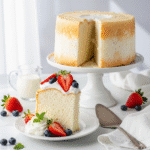
This classic angel food cake recipe creates the most heavenly light, fluffy, and tender cake you’ve ever tasted. Made with whipped egg whites, cake flour, and just a touch of vanilla, this homemade angel food cake delivers that signature cloud-like texture and delicate sweetness that makes it perfect for any celebration. Naturally low in fat and incredibly versatile, serve it with fresh berries, whipped cream, or your favorite toppings for an impressive dessert that’s easier to make than you think!
- Prep Time: 25 minutes
- Cook Time: 40 minutes
- Total Time: 3 hours 5 minutes (including cooling time)
- Yield: 12 servings 1x
- Category: Dessert
- Method: Baking
- Cuisine: American
- Diet: Low Fat
Ingredients
Scale
- 12 large egg whites (about 1½ cups), at room temperature
- 1½ teaspoons cream of tartar
- ¼ teaspoon salt
- 1½ cups granulated sugar, divided
- 1 cup cake flour, sifted
- 1½ teaspoons pure vanilla extract
- ½ teaspoon almond extract (optional, but delicious)
- 2 tablespoons water
For Serving (Optional):
- Fresh berries (strawberries, raspberries, blueberries)
- Whipped cream
- Powdered sugar for dusting
Instructions
- Prepare Your Pan and Oven: Position an oven rack in the lower third of your oven and preheat to 350°F (175°C). Make absolutely sure your 10-inch tube pan is clean, dry, and ungreased. Any grease will prevent the cake from rising properly. Set the pan aside.
- Sift Dry Ingredients: In a medium bowl, sift together the cake flour, ¾ cup of the sugar, and salt. Sift this mixture three more times (for a total of four siftings). This crucial step removes all lumps, aerates the flour, and ensures even distribution of ingredients. Set aside.
- Prepare Egg Whites: Ensure your large mixing bowl and whisk attachment are completely clean, dry, and grease-free. Add the room temperature egg whites to the bowl. Using an electric mixer on medium speed, beat the egg whites until foamy, about 1-2 minutes. The mixture should look frothy with small bubbles throughout.
- Add Cream of Tartar: Add the cream of tartar to the foamy egg whites. Continue beating on medium speed for another minute. The cream of tartar stabilizes the whites and helps them achieve maximum volume.
- Gradually Add Sugar: With the mixer running on medium-high speed, gradually add the remaining ¾ cup sugar, about 2 tablespoons at a time, beating for about 10 seconds between each addition. This slow, gradual addition is crucial—adding sugar too quickly can deflate the whites. Once all the sugar is added, increase speed to high and beat until the mixture forms stiff, glossy peaks, about 2-3 minutes. When you lift the whisk, the peaks should stand straight up without drooping. The mixture should look shiny and smooth, like marshmallow fluff.
- Add Flavorings: Gently beat in the vanilla extract, optional almond extract, and water on low speed for just 5-10 seconds until combined.
- Fold in Flour Mixture: This is the most critical step! Remove the bowl from the mixer. Sift about one-third of the flour mixture over the egg white mixture. Using a large rubber spatula, gently fold it in with a light hand, using broad, sweeping motions from the bottom of the bowl up and over the top. Rotate the bowl as you fold. Don’t stir or beat—you want to maintain as much air as possible. Repeat with the remaining flour mixture in two more additions, folding gently each time until just combined. A few small flour streaks are okay; overmixing will deflate the whites.
- Transfer to Pan: Gently pour or spoon the batter into the ungreased tube pan, spreading it evenly. Run a butter knife or skewer through the batter in a circular motion to release any large air pockets, but be gentle—don’t deflate the batter.
- Bake: Bake on the lower oven rack for 40-45 minutes, until the top is golden brown and springs back when lightly pressed. The cake should have risen significantly and the top should have visible cracks. A toothpick inserted near the center should come out clean or with just a few dry crumbs.
- Cool Inverted (CRITICAL STEP): Immediately upon removing from the oven, invert the pan upside down. If your pan has feet, let it rest on those. If not, place the center tube over a sturdy bottle neck (like a wine bottle) or funnel to suspend it. This upside-down cooling is absolutely essential—it prevents the cake from collapsing as it cools and helps maintain its height. Let the cake cool completely in this inverted position, about 2-3 hours. Do not try to remove it while warm or it will collapse!
- Remove from Pan: Once completely cool, run a thin knife or offset spatula around the outer edge and inner tube to loosen the cake. Gently push up on the removable bottom to lift the cake out. Run the knife under the bottom to release, then invert onto a serving plate.
- Slice and Serve: Use a long serrated knife in a gentle sawing motion to slice the cake. Clean the knife between cuts for the neatest slices. Serve plain, dusted with powdered sugar, or topped with fresh berries and whipped cream.
Notes
- Room Temperature Egg Whites: This is crucial for maximum volume. Take eggs out of the fridge 30 minutes before starting, or place whole eggs in warm (not hot) water for 5 minutes.
- Grease-Free Equipment: Even a tiny amount of fat prevents egg whites from whipping properly. Make sure bowls and beaters are spotlessly clean and completely dry.
- Don’t Grease the Pan: The batter needs to cling to the pan sides to rise. A greased pan will cause the cake to slip down and collapse.
- Sifting is Essential: Don’t skip the multiple siftings—they ensure a smooth, lump-free batter and incorporate air for lightness.
- Gentle Folding: This is where many angel food cakes fail. Fold gently and carefully—you’re trying to maintain the air bubbles you just created.
- Inverted Cooling: This cannot be skipped! The cake is too delicate when hot and will collapse under its own weight if cooled right-side up.
- Altitude Adjustments: If baking above 3,000 feet, reduce sugar by 2-3 tablespoons and increase flour by 2 tablespoons. 1 slice (1/12 of cake, without toppings)
Nutrition
- Serving Size: 1 slice (1/12 of cake, without toppings)
- Calories: 130
- Sugar: 25g
- Sodium: 85mg
- Fat: 0g
- Saturated Fat: 0g
- Unsaturated Fat: 0g
- Trans Fat: 0g
- Carbohydrates: 29g
- Fiber: 0g
- Protein: 4g
- Cholesterol: 0mg
Find it online: https://focialy.com/angel-food-cake-recipe/