Classic Vanilla Bundt Cake Recipe – Moist, Buttery Perfection Every Time
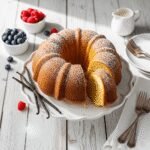
A classic, buttery vanilla Bundt cake with a tender, moist crumb and rich flavor. This foolproof recipe creates a beautiful, bakery-worthy cake that’s perfect for any occasion – from casual family dinners to special celebrations.
- Prep Time: 20 minutes
- Cook Time: 50-60 minutes
- Total Time: 1 hour 20 minutes (plus cooling)
- Yield: Yield: 12-14 servings
- Category: Dessert, Cake
- Method: Baking
- Cuisine: American
- Diet: Vegetarian
Ingredients
Scale
For the Cake:
- 3 cups all-purpose flour
- 1 teaspoon baking powder
- ½ teaspoon baking soda
- ½ teaspoon salt
- 1 cup (2 sticks) unsalted butter, room temperature
- 2 cups granulated sugar
- 4 large eggs, room temperature
- 1 cup sour cream, room temperature
- ½ cup whole milk, room temperature
- 2 teaspoons pure vanilla extract
For Greasing the Pan:
- 2 tablespoons melted butter or 1 tablespoon shortening plus 1 tablespoon flour
For Topping (Optional):
- Powdered sugar for dusting, OR
- Simple vanilla glaze: 1 cup powdered sugar + 2-3 tablespoons milk + ½ teaspoon vanilla extract
Instructions
- Prepare the pan: Preheat your oven to 325°F (165°C). Generously grease every crevice, ridge, and corner of your Bundt pan using melted butter and a pastry brush, or use the shortening and flour method (coat with shortening, then dust with flour, tapping out excess). This step is crucial for easy release.
- Combine dry ingredients: In a medium bowl, whisk together flour, baking powder, baking soda, and salt until evenly combined. Set aside.
- Cream butter and sugar: In a large bowl using a stand mixer (or hand mixer), beat the room temperature butter on medium speed for about 1 minute until smooth. Add sugar and beat on medium-high speed for 4-5 minutes until light, fluffy, and pale in color. Stop to scrape down the bowl sides at least twice during this process. Proper creaming is essential for texture.
- Add eggs: Reduce mixer speed to medium-low. Add eggs one at a time, beating well after each addition (about 30 seconds per egg). The mixture should look smooth and emulsified. Scrape down the bowl after adding all eggs.
- Combine wet ingredients: In a small bowl or measuring cup, whisk together sour cream, milk, and vanilla extract until smooth.
- Alternate additions: With mixer on low speed, add the flour mixture in three additions, alternating with the sour cream mixture in two additions. Begin and end with flour. Mix each addition just until the flour streaks disappear – about 10-15 seconds. Stop and scrape down the bowl between additions. Do not overmix or your cake will be tough.
- Fill the pan: Pour batter into your prepared Bundt pan, spreading it evenly. Tap the pan firmly on the counter 3-4 times to release any large air bubbles.
- Bake: Bake for 50-60 minutes, until the cake is golden brown and a toothpick inserted into the thickest part comes out clean or with just a few moist crumbs (no wet batter). Start checking at 50 minutes. The top should spring back when lightly pressed.
- Cool in pan: Remove from oven and place the pan on a wire cooling rack. Let the cake cool in the pan for exactly 15 minutes – no more, no less. This allows it to firm up enough to release cleanly without sticking.
- Unmold: After 15 minutes, place your serving plate upside-down on top of the Bundt pan. Holding both firmly, quickly flip them over together. Let the pan sit for a minute, then carefully lift it off. If the cake sticks, gently tap the pan or use an offset spatula to loosen stubborn spots. Let the cake cool completely on the rack before glazing or serving.
- Finish (optional): Once completely cool, dust generously with powdered sugar using a fine-mesh sieve, or drizzle with vanilla glaze (whisk powdered sugar, milk, and vanilla until smooth and pourable).
Notes
- Room temperature ingredients are crucial – Cold ingredients don’t combine properly and can cause a dense cake. Set everything out 30-60 minutes before baking.
- Don’t skip the greasing step – This is the most common reason Bundt cakes stick. Every ridge must be thoroughly coated.
- Measure flour correctly – Spoon flour into your measuring cup and level off with a knife. Scooping directly from the bag compacts flour, resulting in dry, dense cake.
- Don’t overmix – Once flour is added, mix just until combined. Overmixing develops gluten, making the cake tough.
- Oven temperature matters – Use an oven thermometer to verify accuracy. Too hot causes over-browning; too cool causes poor rise.
- The 15-minute cooling time is critical – Too short and the cake falls apart; too long and it sticks to the pan.
Nutrition
- Serving Size: 1 slice (1/12 of cake)
- Calories: 385
- Sugar: 32g
- Sodium: 195mg
- Fat: 18g
- Saturated Fat: 11g
- Unsaturated Fat: 6g
- Trans Fat: 0g
- Carbohydrates: 51g
- Fiber: 1g
- Protein: 5g
- Cholesterol: 105g
Find it online: https://focialy.com/bundt-cake-recipe/