Eggless Vanilla Cake Recipe
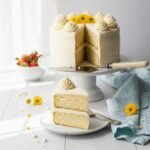
This easy eggless vanilla cake is soft, fluffy, and deliciously moist with a tender crumb. Made with simple pantry ingredients in just one bowl, this egg-free cake is perfect for anyone with egg allergies, vegans, or anyone who wants a quick and delicious homemade cake without eggs.
- Prep Time: 10 minutes
- Cook Time: 30 minutes
- Total Time: 40 minutes
- Yield: 8-10 servings 1x
- Category: Dessert
- Method: Baking
- Cuisine: American
- Diet: Gluten Free
Ingredients
Scale
- 1½ cups (190g) all-purpose flour
- 1 cup (200g) granulated sugar
- 1 teaspoon baking soda
- ½ teaspoon salt
- 1 cup (240ml) milk (dairy or non-dairy)
- ⅓ cup (80ml) vegetable oil
- 1 tablespoon white vinegar or apple cider vinegar
- 1 tablespoon pure vanilla extract
For the pan:
- Butter or oil for greasing
- Flour for dusting (or use parchment paper)
Instructions
- Preheat and prepare the pan: Preheat your oven to 350°F (175°C). Grease an 8-inch or 9-inch round cake pan with butter or oil, then dust with flour, or line the bottom with parchment paper and grease the sides. This ensures easy removal after baking.
- Mix dry ingredients: In a large mixing bowl, whisk together the flour, sugar, baking soda, and salt until well combined and there are no lumps. Whisking aerates the flour and ensures even distribution of the leavening agent.
- Create a well: Make a well in the center of the dry ingredients. This traditional method helps prevent overmixing when you add the wet ingredients.
- Add wet ingredients: Pour the milk, vegetable oil, vinegar, and vanilla extract into the well. Don’t mix yet—just pour everything in.
- Mix the batter: Whisk everything together, starting from the center and gradually incorporating the dry ingredients from the sides, until you have a smooth batter with no lumps. Mix just until combined—don’t overmix, which can make the cake tough. The batter will be slightly thin and pourable, which is perfect. You’ll see some bubbles forming as the vinegar reacts with the baking soda.
- Pour and settle: Pour the batter into the prepared pan and tap it gently on the counter 2-3 times to release any air bubbles and help the batter settle evenly.
- Bake: Bake for 28-32 minutes (28 minutes for a 9-inch pan, 30-32 minutes for an 8-inch pan) until the top is golden brown, the cake springs back when lightly touched, and a toothpick inserted in the center comes out clean or with just a few moist crumbs. Don’t overbake or the cake will be dry.
- Cool: Remove from the oven and let the cake cool in the pan on a wire rack for 10 minutes. Then run a knife around the edges and carefully invert onto the rack to cool completely before frosting or serving. The cake needs to be completely cool before frosting or it will melt.
- Serve and enjoy: Once cooled, dust with powdered sugar, frost with your favorite frosting, or serve plain. Slice with a serrated knife for the cleanest cuts.
Notes
- Don’t skip the vinegar—it’s essential for helping the cake rise properly and creating that fluffy texture.
- The batter should be mixed just until smooth; overmixing develops gluten and creates a tough, dense cake.
- For cupcakes: Divide batter among 12 lined muffin cups and bake for 18-20 minutes.
- For a sheet cake: Use a 9×13-inch pan and bake for 30-35 minutes.
- Make sure all ingredients are at room temperature for the best texture and even mixing.
- The cake can be made ahead and stored covered at room temperature for up to 3 days.
Nutrition
- Serving Size: 1 slice (1/10 of cake, unfrosted)
- Calories: 215
- Sugar: 21g
- Sodium: 220mg
- Saturated Fat: 1g
- Unsaturated Fat: 6g
- Trans Fat: 0g
- Carbohydrates: 33g
- Fiber: 1g
- Protein: 3g
- Cholesterol: 2mg
Find it online: https://focialy.com/eggless-vanilla-cake-recipe/