Japanese Cotton Cheesecake
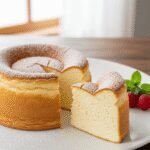
This Japanese cotton cheesecake (soufflé cheesecake) is incredibly light, fluffy, and jiggly with a delicate texture that melts in your mouth. Less sweet than traditional cheesecake, this elegant dessert features a golden top and cloud-like interior that’s achieved through carefully whipped meringue and gentle water bath baking.
- Prep Time: 30 minutes
- Cook Time: 70 minutes
- Total Time: 1 hour 40 minutes (plus cooling)
- Yield: 8-10 servings 1x
- Category: Dessert
- Method: Baking
- Cuisine: Japanese
- Diet: Gluten Free
Ingredients
Scale
For the Cheesecake:
- 8 ounces (226g) cream cheese, at room temperature
- 1/4 cup (60ml) whole milk
- 1/4 cup (56g) unsalted butter
- 6 large eggs, separated (at room temperature)
- 1/2 cup (100g) granulated sugar, divided
- 1/4 cup (30g) cornstarch
- 1 tablespoon fresh lemon juice
- 1 teaspoon vanilla extract
- 1/4 teaspoon cream of tartar (optional but recommended)
- Pinch of salt
For the Pan:
- Butter or cooking spray for greasing
- Parchment paper
For the Water Bath:
- Boiling water (about 6-8 cups)
Instructions
- Prep the Pan: Preheat oven to 320°F (160°C). Line the bottom of an 8-inch round cake pan with parchment paper. Cut a strip of parchment paper tall enough to come up the sides (about 3 inches high) and line the sides of the pan. Lightly grease the parchment. This double lining prevents sticking and helps the cake rise evenly.
- Melt Cream Cheese Base: In a double boiler or microwave-safe bowl, combine cream cheese, milk, and butter. Heat gently, stirring frequently, until completely melted and smooth. If using microwave, heat in 20-second intervals, stirring between each. Let cool for 5 minutes until just warm, not hot.
- Add Egg Yolks: Whisk the egg yolks into the cream cheese mixture one at a time until fully incorporated and smooth. Add vanilla extract and lemon juice, mixing well.
- Sift in Cornstarch: Sift the cornstarch over the cream cheese mixture. Whisk until completely smooth with no lumps. The mixture should be silky and pourable. Set aside.
- Make the Meringue: In a large, clean mixing bowl (no grease or water!), beat egg whites with an electric mixer on medium speed until foamy, about 1 minute. Add cream of tartar and salt. Gradually add the sugar one tablespoon at a time while continuing to beat. Increase speed to medium-high and beat until stiff, glossy peaks form, about 4-5 minutes. The meringue should stand straight up when you lift the beaters and not droop.
- Fold Meringue (First Addition): Add about 1/3 of the meringue to the cream cheese mixture. Using a rubber spatula, fold gently but thoroughly to lighten the batter. Use a cutting and folding motion, rotating the bowl as you go. This first addition can be mixed more thoroughly—it helps lighten the heavy base.
- Fold Remaining Meringue: Add half of the remaining meringue and fold very gently until mostly incorporated with some white streaks remaining. Add the final portion of meringue and fold very gently just until no white streaks remain. Work quickly but carefully—overmixing deflates the air bubbles, but undermixing leaves unmixed meringue pockets.
- Pour and Smooth: Pour the batter into the prepared pan. Tap the pan gently on the counter 2-3 times to release large air bubbles. Smooth the top with a spatula.
- Prepare Water Bath: Place the cake pan inside a larger roasting pan. Pull the oven rack out slightly and place the roasting pan on it. Carefully pour boiling water into the roasting pan until it reaches about halfway up the sides of the cake pan (about 1-1.5 inches deep).
- Bake: Bake at 320°F (160°C) for 25 minutes. Without opening the oven door, reduce temperature to 285°F (140°C) and bake for an additional 45 minutes. The top should be golden brown and the cake should jiggle slightly when gently shaken—it will firm up as it cools.
- Cool in Oven: Turn off the oven and crack the door open about 4 inches. Let the cheesecake cool in the oven for 15 minutes. This gradual temperature change prevents collapsing and cracking.
- Cool Completely: Remove from oven and water bath. Let cool to room temperature on a wire rack, about 1 hour. The cheesecake will deflate slightly—this is normal! It will shrink from its puffed height but should remain tall and fluffy.
- Chill: Once at room temperature, refrigerate for at least 4 hours or overnight before serving. The texture firms up and the flavors develop beautifully.
- Unmold and Serve: Run a thin knife around the edge, remove from pan, peel away parchment paper, and transfer to a serving plate. Dust with powdered sugar if desired. Slice with a hot, clean knife for neat cuts.
Notes
- Room Temperature Ingredients: This is crucial! Cold eggs won’t incorporate smoothly, and cold cream cheese won’t melt properly.
- No Peeking: Don’t open the oven door during baking except when reducing temperature. Opening the door causes temperature fluctuations that can make the cake crack or collapse.
- Water Bath is Essential: This provides gentle, even heat that prevents the cheesecake from drying out, cracking, or cooking unevenly.
- Meringue Matters Most: Properly whipped meringue is the key to that fluffy texture. Stiff peaks should stand straight up.
- Gentle Folding: The way you fold in the meringue determines the final texture. Be gentle to preserve air bubbles.
- Normal Deflation: The cake will deflate slightly as it cools—this is expected and normal for soufflé cheesecake.
Nutrition
- Serving Size: 1 slice (1/10 of cake)
- Calories: 195
- Sugar: 12g
- Sodium: 140mg
- Fat: 13g
- Saturated Fat: 7g
- Unsaturated Fat: 5g
- Trans Fat: 0g
- Carbohydrates: 14g
- Fiber: 0g
- Protein: 6g
- Cholesterol: 145mg
Find it online: https://focialy.com/japanese-cotton-cheesecake/