Layer Cake Recipe
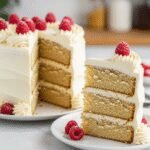
This classic layer cake recipe creates a perfectly moist, fluffy vanilla cake with three tender layers and silky buttercream frosting. It’s the ultimate celebration cake that’s easier to make than you think and tastes absolutely divine!
- Prep Time: 25 minutes
- Cook Time: 25-30 minutes
- Total Time: 1 hour (plus cooling time)
- Yield: 12-16 servings 1x
- Category: Dessert
- Method: Baking
- Cuisine: American
- Diet: Vegetarian
Ingredients
For the Cake:
- 3 cups all-purpose flour
- 2½ cups granulated sugar
- 1 cup (2 sticks) unsalted butter, room temperature
- 4 large eggs, room temperature
- 1 cup whole milk, room temperature
- ½ cup sour cream, room temperature
- 2 tablespoons pure vanilla extract
- 1 tablespoon baking powder
- ½ teaspoon baking soda
- ¾ teaspoon salt
For the Buttercream Frosting:
- 1½ cups (3 sticks) unsalted butter, room temperature
- 6 cups powdered sugar, sifted
- ⅓ cup heavy cream
- 2 tablespoons pure vanilla extract
- ¼ teaspoon salt
- Food coloring (optional)
Instructions
Prepare the Cake Pans:
- Preheat your oven to 350°F (175°C). Grease three 9-inch round cake pans generously with butter or baking spray, then line the bottoms with parchment paper rounds. Grease the parchment paper as well. This double protection ensures your cakes will release perfectly.
Mix the Dry Ingredients: 2. In a medium bowl, whisk together the flour, baking powder, baking soda, and salt. Sift the mixture twice to ensure everything is well combined and there are no lumps. This step is crucial for a tender, evenly textured cake. Set aside.
Cream Butter and Sugar: 3. In the bowl of a stand mixer fitted with the paddle attachment (or using a hand mixer), beat the softened butter on medium speed for about 2 minutes until it’s light and fluffy. Gradually add the sugar while continuing to beat, and cream together for 4-5 minutes until the mixture is pale, fluffy, and increased in volume. Scrape down the sides of the bowl as needed.
Add Eggs: 4. Add the eggs one at a time, beating well after each addition (about 30 seconds each). The mixture should look smooth and well-combined. Don’t worry if it looks slightly curdled – it will come together when you add the flour.
Combine Wet Ingredients: 5. In a separate bowl or large measuring cup, whisk together the milk, sour cream, and vanilla extract until smooth and well combined.
Alternate Additions: 6. With the mixer on low speed, add the flour mixture to the butter mixture in three additions, alternating with the milk mixture in two additions. Begin and end with the flour mixture. Mix each addition just until combined – the pattern should be: flour, milk, flour, milk, flour. After the final addition of flour, mix for no more than 10-15 seconds. Over-mixing develops gluten and creates a tough cake.
Final Mix: 7. Use a rubber spatula to scrape down the sides and bottom of the bowl, then gently fold the batter a few times to ensure everything is evenly incorporated. The batter should be smooth, thick, and creamy.
Divide and Bake: 8. Divide the batter evenly among the three prepared pans (about 2⅔ cups of batter per pan for even layers). Use a kitchen scale for precision if you have one. Smooth the tops with an offset spatula and gently tap the pans on the counter a few times to release any air bubbles.
- Bake for 25-30 minutes, rotating the pans halfway through baking for even browning. The cakes are done when they’re golden brown, spring back when lightly touched, and a toothpick inserted into the center comes out clean or with just a few moist crumbs.
Cool the Cakes: 10. Remove from the oven and let the cakes cool in the pans on wire racks for exactly 15 minutes. Run a thin knife around the edges of each pan, then carefully invert the cakes onto the cooling racks. Peel off the parchment paper and flip the cakes right-side up to cool completely (about 1 hour). The cakes must be completely cool before frosting.
Make the Buttercream: 11. In a large bowl using a hand mixer or in the bowl of a stand mixer, beat the softened butter on medium-high speed for 3-4 minutes until it’s pale, fluffy, and smooth.
- Reduce the speed to low and gradually add the sifted powdered sugar, one cup at a time, beating well after each addition. Add the vanilla extract and salt.
- Once all the sugar is incorporated, increase the speed to medium-high and beat for 3-4 minutes. The frosting should be light, fluffy, and smooth.
- Add the heavy cream one tablespoon at a time while beating, until you reach your desired consistency. For filling between layers, you want slightly thicker frosting. For the outside, you can add an extra tablespoon of cream for easier spreading.
Assemble the Cake: 15. If your cake layers have domed tops, use a serrated knife or cake leveler to trim them flat. Place the first cake layer on a cake stand or serving plate. You can place strips of parchment paper under the edges to keep the plate clean while frosting.
- Spread about 1 cup of buttercream evenly over the first layer, going almost to the edges (it will spread slightly when you add the next layer). Place the second layer on top and repeat with another cup of frosting.
- Place the final layer top-side down (so the flat bottom becomes the top for a perfectly smooth surface). Apply a thin “crumb coat” of frosting all over the entire cake – this seals in crumbs and creates a smooth base. Refrigerate for 20-30 minutes to set the crumb coat.
- Apply the final layer of frosting, using an offset spatula to create smooth sides and top. For the smoothest finish, dip your spatula in hot water, dry it, and then smooth the frosting. Use a cake turntable if you have one for easier frosting.
Decorate and Serve: 19. Decorate as desired with piped borders, sprinkles, fresh flowers, or fresh fruit. Carefully remove the parchment paper strips from under the cake. Slice with a sharp knife, wiping it clean between cuts for neat slices.
Notes
- Room Temperature Ingredients: This is crucial! Room temperature ingredients mix together more easily and create a better texture. Take butter, eggs, milk, and sour cream out of the fridge 30-60 minutes before starting.
- Measuring Flour: Spoon flour into measuring cups and level off with a knife. Don’t scoop directly from the bag or pack it down, as this adds too much flour and makes dry cake.
- Cake Layers: If baking only two pans at a time, refrigerate remaining batter and bake the third layer after the first batch. Keep batter refrigerated for no more than 30 minutes.
- Storing: Unfrosted cake layers can be wrapped tightly and frozen for up to 3 months. Thaw overnight in the refrigerator before frosting.
- Buttercream Consistency: If frosting is too thick, add more cream one teaspoon at a time. If too thin, add more powdered sugar ¼ cup at a time.
- Make-Ahead: Cake layers can be baked 2 days in advance and kept wrapped at room temperature. Frosted cake can be assembled 1 day ahead and refrigerated.
Nutrition
- Serving Size: 1 slice (1/12 of cake)
- Calories: 685
- Sugar: 72g
- Sodium: 285mg
- Fat: 32g
- Saturated Fat: 20g
- Unsaturated Fat: 10g
- Trans Fat: 0g
- Carbohydrates: 94g
- Fiber: 1g
- Protein: 6g
- Cholesterol: 145mg
Find it online: https://focialy.com/layer-cake-recipe/