Classic Pavlova Recipe – Crispy, Marshmallowy Meringue Dessert
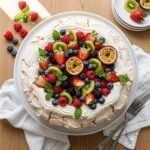
This classic pavlova recipe creates the perfect meringue dessert with a crispy outer shell and soft, marshmallowy center. Topped with freshly whipped cream and seasonal fruit, it’s an impressive yet surprisingly easy showstopper for any celebration or gathering.
- Prep Time: 20 minutes
- Cook Time: 90 minutes
- Total Time: 2 hours 10 minutes (plus cooling time)
- Yield: 8-10 servings 1x
- Category: Dessert
- Method: Baking
- Cuisine: Australian/New Zealand
- Diet: Gluten Free
Ingredients
Scale
For the Pavlova Meringue:
- 6 large egg whites, at room temperature
- 1½ cups (300g) superfine/caster sugar
- 1 tablespoon cornstarch
- 1 teaspoon white vinegar or fresh lemon juice
- 1 teaspoon pure vanilla extract
- Pinch of salt
For the Topping:
- 1½ cups heavy whipping cream, cold
- 2-3 tablespoons powdered sugar
- 1 teaspoon vanilla extract
- 3 cups fresh mixed berries (strawberries, raspberries, blueberries)
- 2 kiwis, peeled and sliced
- 2 passionfruit (optional, for drizzling)
- Fresh mint leaves for garnish (optional)
Instructions
- Prepare your oven and pan: Preheat oven to 300°F (150°C). Line a large baking sheet with parchment paper. Using a 9-inch plate or cake pan as a guide, trace a circle on the parchment with pencil, then flip the paper over so the pencil mark is on the bottom (this prevents graphite transfer to your meringue). This circle serves as your guide for shaping the pavlova.
- Separate eggs carefully: Separate your eggs one at a time into a small bowl first, then transfer each white to your large, completely clean mixing bowl. This prevents one bad egg or accidentally broken yolk from ruining the entire batch. Even the tiniest amount of yolk will prevent proper whipping. Let whites sit at room temperature for 15-20 minutes for best volume.
- Begin beating egg whites: Using a stand mixer with whisk attachment (or handheld mixer), beat egg whites and pinch of salt on medium speed until soft peaks form, about 2-3 minutes. Soft peaks should curl over when you lift the beater. Don’t rush this stage—proper aeration is crucial.
- Gradually add sugar: With mixer running on medium-high speed, add superfine sugar very gradually, about 1 tablespoon at a time, waiting 10-15 seconds between additions. This slow incorporation allows the sugar to fully dissolve into the egg whites, creating a stable, glossy meringue. Continue beating for 8-10 minutes total after all sugar is added. The meringue is ready when it’s thick, glossy, and holds stiff, upright peaks. Rub a small amount between your fingers—it should feel completely smooth with no sugar granules.
- Add stabilizers and flavorings: Sift cornstarch over the meringue. Add vinegar and vanilla extract. Using a rubber spatula, gently fold these ingredients into the meringue with just 3-4 strokes until barely combined. Don’t overmix—a few streaks are fine.
- Shape the pavlova: Spoon the meringue onto your prepared parchment, using the traced circle as a guide. Spread the meringue to fill the circle, then use the back of a spoon or offset spatula to create a shallow well in the center, building up the sides slightly higher (about 1 inch higher than the center). This nest shape will hold your cream and fruit later. Create decorative swirls and peaks around the edges with your spatula for a beautiful finish.
- Reduce oven temperature: Immediately reduce oven temperature to 250°F (120°C). This lower temperature is crucial for achieving the right texture.
- Bake low and slow: Place pavlova in the oven and bake for 90 minutes. The pavlova should be dry to the touch with a very pale cream color (not brown). It will sound hollow when tapped gently. The meringue will puff and crack slightly—this is normal and adds to its rustic charm.
- Cool completely in oven: Turn off the oven and crack the door open slightly (prop with a wooden spoon if needed). Let the pavlova cool completely inside the oven for at least 1 hour or overnight. This gradual cooling prevents cracking from temperature shock. Don’t rush this step—patience ensures the best texture.
- Prepare whipped cream: When ready to serve (no more than 2 hours before serving), beat cold heavy cream with powdered sugar and vanilla in a chilled bowl until soft peaks form, about 2-3 minutes. Don’t overbeat or you’ll end up with butter. The cream should be billowy and spreadable, not stiff.
- Assemble the pavlova: Carefully transfer the cooled meringue to your serving platter. Spread whipped cream generously over the top, leaving a small border around the edges so some meringue shows. Pile fresh berries, sliced kiwi, and any other fruit on top of the cream. If using passionfruit, cut in half and drizzle the pulp and seeds over everything. Garnish with fresh mint leaves if desired.
- Serve immediately: Pavlova is best served within 2 hours of topping. Slice with a sharp knife, cutting through the crispy exterior to reveal the soft, marshmallowy interior. Each serving should include meringue, cream, and fruit.
Notes
- Room temperature eggs are crucial: They whip up with more volume than cold eggs. Separate while cold, then let sit for 15-20 minutes.
- Sugar must be fully dissolved: Rub meringue between fingers—it should feel completely smooth with no grittiness.
- Don’t skip the cooling in the oven: This prevents cracks and achieves the perfect texture contrast.
- Assemble just before serving: Once topped with cream and fruit, pavlova should be served within 2 hours to prevent sogginess.
- Cracks are normal and charming: Embrace them! Even experienced bakers get cracks. They add rustic character.
- Humidity affects meringue: Avoid making pavlova on very humid or rainy days if possible, as moisture in the air can prevent proper crisping.
Nutrition
- Serving Size: 1 slice (1/10 of pavlova)
- Calories: 245
- Sugar: 37g
- Sodium: 55mg
- Fat: 9g
- Saturated Fat: 6g
- Unsaturated Fat: 2.5g
- Trans Fat: 0g
- Carbohydrates: 39g
- Fiber: 1g
- Protein: 3g
- Cholesterol: 33mg
Find it online: https://focialy.com/pavlova-recipe/