The Ultimate Homemade Halvah Recipe: A Sweet Middle Eastern Delight You Can Make at Home

There’s something absolutely magical about halvah—that crumbly, melt-in-your-mouth Middle Eastern confection that’s been captivating sweet lovers for centuries. If you’ve only ever tried store-bought halvah, you’re in for a revelation. This homemade halvah recipe transforms simple pantry ingredients into a luxurious treat that’s worlds apart from anything you can buy.
Halvah (also spelled halva, halwa, or halava) is a dense, sweet confection made primarily from tahini (sesame seed paste) and sugar or honey. The result is a uniquely textured dessert that’s simultaneously crumbly and smooth, with a rich, nutty flavor that’s utterly addictive. It’s perfect for special occasions, holiday gift-giving, everyday indulgences, or whenever you want to impress guests with something truly unique.
Whether you’re serving it alongside Turkish coffee, packaging it as homemade gifts, or simply enjoying a square with your afternoon tea, this halvah recipe will transport your taste buds straight to the bustling spice markets of Istanbul, Jerusalem, or Tehran.
History / Background
Halvah’s history is as rich and layered as its flavor profile. This beloved confection has roots that stretch back over a thousand years, with origins debated across the Middle East, Central Asia, and the Eastern Mediterranean. The word “halvah” comes from the Arabic word “halwa,” meaning “sweet,” which tells you everything you need to know about this dessert’s primary purpose—pure, unadulterated sweetness.
The earliest versions of halvah likely originated in Persia (modern-day Iran) around the 7th century, where it was considered a prestigious dish served in royal courts. From there, it spread throughout the Ottoman Empire, eventually becoming a staple in Turkish, Greek, Israeli, Arab, Iranian, Indian, and Balkan cuisines. Each region developed its own variation, creating a fascinating family of desserts all carrying the halvah name.
There are actually two main types of halvah: flour-based (semolina) halvah, popular in India, Greece, and Turkey, and tahini-based halvah, which is what we’re making today. Tahini halvah became particularly associated with Jewish and Middle Eastern cuisines and is the version most commonly found in Western markets.
In Jewish tradition, halvah holds special significance and is often enjoyed during celebrations and holidays. In Turkey, it’s traditionally served at weddings and special gatherings. Iranian families prepare it as a ceremonial dish for religious occasions. Throughout history, halvah has been more than just candy—it’s been a symbol of hospitality, celebration, and cultural identity.
The commercial production of halvah began in the late 19th century, but homemade versions have always been treasured for their superior flavor and texture. Making halvah at home connects you to centuries of tradition and allows you to customize the flavor and texture exactly to your liking.
Why You’ll Love This Recipe
Making halvah at home might seem intimidating, but this recipe breaks down the process into simple, manageable steps. Once you taste the difference between homemade and store-bought, you’ll never go back to the commercial version. The flavor is cleaner, the texture is perfectly customizable, and you control exactly what goes into your dessert.
Here’s why this recipe will become a staple in your kitchen:
- Surprisingly Simple – Only 5 basic ingredients and about 30 minutes of active time
- Customizable Texture – Adjust the consistency from crumbly to smooth based on your preference
- Naturally Gluten-Free – Perfect for guests with dietary restrictions
- Impressive to Serve – Looks and tastes like you spent hours in the kitchen
- Gift-Worthy – Package it beautifully for holiday gifts that wow
- Budget-Friendly – Costs a fraction of artisanal store-bought halvah
- No Special Equipment – Just a saucepan, thermometer, and mixing bowl
- Keeps Beautifully – Stores for weeks, making it perfect for meal prep
- Flavor Variations – Easily adapt with chocolate, pistachios, vanilla, or cardamom
Ingredient Notes
Tahini – This is the star ingredient, so quality matters. Use well-stirred, high-quality tahini (sesame seed paste) for the best flavor. Look for tahini with just one ingredient: sesame seeds. Some brands separate, so stir thoroughly before measuring. Middle Eastern or Israeli brands often have the most authentic flavor.
Granulated Sugar – Regular white sugar creates the classic texture and sweetness. The sugar will be cooked into a syrup, which gives halvah its structure.
Honey – Adding honey alongside sugar creates a more complex flavor profile and helps with texture. It also prevents the sugar from crystallizing too quickly. Use a mild honey so it doesn’t overpower the sesame flavor.
Vanilla Extract – Pure vanilla extract adds depth and rounds out the sweetness. You can substitute with other extracts like almond or orange for flavor variations.
Salt – Just a pinch enhances all the other flavors and balances the sweetness. Don’t skip it!
Optional Add-Ins – Chopped pistachios, almonds, or hazelnuts add crunch and visual appeal. Cocoa powder creates chocolate halvah. Ground cardamom or cinnamon adds warmth and complexity. Dried rose petals give it a Persian touch.
Equipment Needed
You don’t need any fancy equipment to make halvah at home. Here’s what you’ll need:
- Medium Heavy-Bottomed Saucepan – For cooking the sugar syrup without burning
- Candy Thermometer or Instant-Read Thermometer – Essential for getting the syrup to the right temperature (240°F/115°C)
- Large Mixing Bowl – For combining tahini with the hot syrup
- Wooden Spoon or Silicone Spatula – For stirring (heat-resistant is important)
- 8×8-inch Baking Pan or Loaf Pan – For setting the halvah
- Parchment Paper – Makes removal and slicing much easier
- Measuring Cups and Spoons – For accurate ingredient measurements
- Whisk – Optional but helpful for smooth mixing
Halvah Recipe
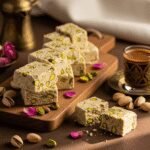
This authentic homemade halvah recipe creates a perfectly crumbly, melt-in-your-mouth Middle Eastern confection using tahini, honey, and sugar. Better than store-bought and customizable with your favorite mix-ins!
- Prep Time: 10 minutes
- Cooling Time: 2 hours
- Cook Time: 20 minutes
- Total Time: 2 hours 30 minutes
- Yield: 16 servings (2-inch squares) 1x
- Category: Dessert
- Method: Stovetop
- Cuisine: Middle Eastern
- Diet: Vegetarian
Ingredients
- 2 cups (480g) high-quality tahini, well-stirred
- 1 cup (200g) granulated sugar
- ½ cup (120ml) water
- ¼ cup (85g) honey
- 1 teaspoon pure vanilla extract
- ¼ teaspoon fine sea salt
- Optional: ½ cup chopped pistachios, almonds, or chocolate chips
- Optional: 1 teaspoon ground cardamom or cinnamon
Instructions
- Prepare your pan: Line an 8×8-inch baking pan with parchment paper, leaving overhang on two sides for easy removal. Set aside.
- Prep the tahini mixture: In a large mixing bowl, combine the tahini, vanilla extract, and salt. Stir well until completely smooth. If using spices like cardamom or cinnamon, add them now. Set aside at room temperature.
- Make the sugar syrup: In a medium heavy-bottomed saucepan, combine the sugar, water, and honey. Stir gently over medium heat until the sugar dissolves completely, about 3-4 minutes.
- Cook to temperature: Once dissolved, stop stirring and let the mixture come to a boil. Insert your candy thermometer and cook until the syrup reaches exactly 240°F (115°C), which is the soft-ball stage. This typically takes 10-15 minutes. Watch carefully as it approaches temperature.
- Combine carefully: Remove the syrup from heat immediately when it reaches temperature. Working quickly but carefully, pour the hot syrup in a steady stream into the tahini mixture while stirring constantly with a wooden spoon or heat-resistant spatula.
- Mix vigorously: Continue stirring vigorously for 3-5 minutes. The mixture will become lighter in color, thicker, and eventually start to pull away from the sides of the bowl. It should look grainy and somewhat crumbly—this is exactly what you want.
- Add mix-ins: If using nuts or other add-ins, fold them in now while the mixture is still workable.
- Press into pan: Transfer the halvah mixture to your prepared pan. Using the back of a spoon or your hands (lightly oiled if needed), press it firmly and evenly into the pan, smoothing the top.
- Cool completely: Let the halvah cool at room temperature for at least 2 hours, or until completely set and firm to the touch.
- Cut and serve: Using the parchment overhang, lift the halvah out of the pan. Cut into squares or rectangles with a sharp knife. Wipe the knife between cuts for clean edges.
Notes
- Temperature is crucial: Don’t guess—use a thermometer. Under-cooked syrup makes oily halvah; over-cooked syrup makes rock-hard halvah.
- Work quickly: Once you add the hot syrup to tahini, work fast. The mixture sets as it cools.
- Stirring matters: Vigorous stirring incorporates air, creating that characteristic crumbly texture.
- Storage: Store in an airtight container at room temperature for up to 3 weeks, or refrigerate for up to 6 weeks.
- Texture adjustment: For crumblier halvah, stir longer. For smoother halvah, stir less.
Nutrition
- Serving Size: 1 square (approximately 2 ounces)
- Calories: 245
- Sugar: 18g
- Sodium: 42mg
- Fat: 16g
- Saturated Fat: 2g
- Unsaturated Fat: 14g
- Trans Fat: 0g
- Carbohydrates: 21g
- Fiber: 2g
- Protein: 5g
- Cholesterol: 0mg
Tips & Variations
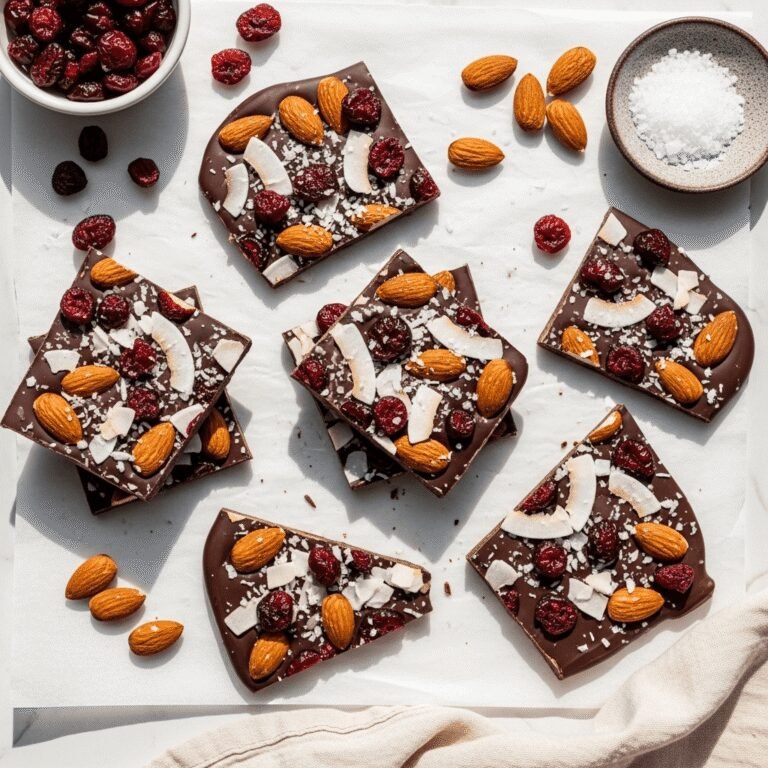
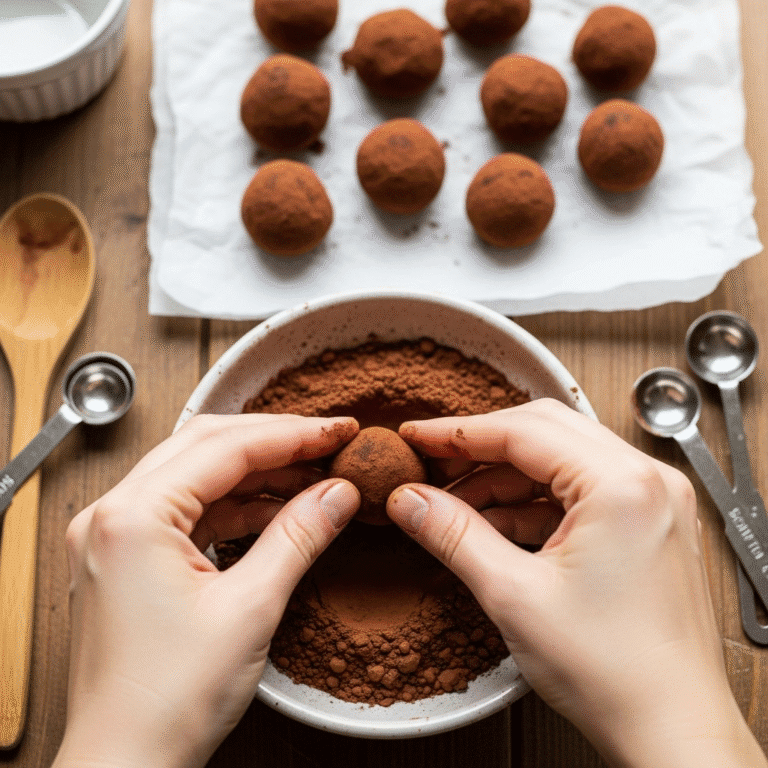
Chocolate Halvah: Add 3 tablespoons of unsweetened cocoa powder to the tahini before mixing with syrup. You can also swirl in melted dark chocolate after pressing into the pan.
Pistachio Halvah: Fold in ½ cup chopped raw pistachios and a few drops of green food coloring for that classic Middle Eastern look.
Marble Halvah: Divide the mixture in half after step 6. Add cocoa powder to one half, then layer or swirl together in the pan.
Coffee Halvah: Add 1 tablespoon instant espresso powder to the tahini mixture for a sophisticated mocha flavor.
Spiced Halvah: Incorporate 1 teaspoon ground cardamom, ½ teaspoon cinnamon, or a pinch of saffron threads to the tahini for warmth and complexity.
Healthier Version: Replace half the sugar with additional honey (adjust cooking time slightly) and use sugar-free sweetener for a portion of the sugar.
Nut-Free: Keep it simple with just tahini, or use sunflower seed butter for a nut and sesame-free version (though this won’t be traditional halvah).
Pro Chef Tips
Temperature precision is everything: The difference between perfect halvah and a failed batch often comes down to just 5-10 degrees. Invest in a reliable candy thermometer and calibrate it by testing in boiling water (should read 212°F at sea level).
Quality tahini makes all the difference: Professional pastry chefs always emphasize using fresh, high-quality tahini. Old or rancid tahini will ruin the entire batch. Taste your tahini before using—it should be nutty and pleasant, never bitter.
Stir direction matters: Always stir in the same direction (clockwise or counterclockwise) when mixing the syrup into tahini. This creates a more uniform texture and helps incorporate air consistently.
Room temperature is key: Make sure your tahini is at room temperature before adding hot syrup. Cold tahini can cause the syrup to seize or create an uneven texture.
The grainy transformation: When you stir vigorously, you’re actually encouraging tiny sugar crystals to form, which creates halvah’s signature texture. Don’t be alarmed when the mixture lightens and looks grainy—that’s the magic happening.
Patience with cooling: Resist the urge to refrigerate for faster setting. Slow cooling at room temperature creates better texture. Refrigeration can make it too hard and less crumbly.
Common Mistakes to Avoid
Not stirring tahini before measuring: Tahini separates naturally with oil rising to the top. If you don’t stir it thoroughly first, your measurements will be off and the texture will suffer. Stir until completely homogeneous.
Stirring the syrup too much: Once sugar dissolves and the mixture starts boiling, stop stirring. Agitation can cause premature crystallization, making your syrup grainy before you want it to be.
Incorrect syrup temperature: This is the number one mistake. Too low (under 235°F) and your halvah will be oily and won’t set properly. Too high (over 245°F) and it becomes rock-hard and difficult to eat. Aim for exactly 240°F.
Not stirring vigorously enough: Timid stirring when combining syrup and tahini creates a dense, smooth texture instead of the desired crumbly one. Really put some muscle into it for 3-5 minutes.
Cutting too soon: If you try to cut halvah before it’s completely cooled and set, it will crumble into a mess instead of clean squares. Wait the full 2 hours minimum, or even overnight for best results.
Storage & Meal Prep
Room Temperature Storage: Halvah keeps beautifully at room temperature for 2-3 weeks when stored properly. Place it in an airtight container with parchment paper between layers to prevent sticking. Store in a cool, dry place away from direct sunlight and heat sources.
Refrigeration: For longer storage, refrigerate halvah in an airtight container for up to 6 weeks. The texture becomes firmer when cold, so let it sit at room temperature for 10-15 minutes before serving for the best eating experience.
Wrapping Individual Pieces: For lunch boxes or gifts, wrap individual squares in wax paper or parchment paper, then store in a container. This prevents them from sticking together and makes portion control easy.
Reheating: Generally, halvah is enjoyed at room temperature and doesn’t require reheating. However, if it becomes too hard from refrigeration, let it warm up naturally on the counter rather than microwaving, which can make it oily.
Signs of Spoilage: While halvah is quite shelf-stable due to its high sugar content, watch for any signs of mold, off odors, or rancid taste (from tahini going bad). Properly stored, this is rare.
Make-Ahead & Freezer Notes
Make-Ahead Advantage: Halvah is actually an ideal make-ahead dessert. The flavor develops and improves over the first few days as it sits, making it perfect to prepare 3-5 days before you need it for a party or gift-giving occasion.
Freezer-Friendly: Yes! Halvah freezes exceptionally well for up to 3 months. Cut it into squares, wrap each piece individually in plastic wrap, then place all pieces in a freezer-safe container or zip-top bag. Remove as much air as possible to prevent freezer burn.
Freezing in Bulk: You can also freeze the entire uncut block wrapped tightly in plastic wrap and then aluminum foil. This method works well if you want to save half for later.
Thawing Instructions: Thaw frozen halvah in the refrigerator overnight, then bring to room temperature for 15-20 minutes before serving. Don’t thaw at room temperature directly from frozen, as condensation can make the surface sticky.
Gift Prep Timeline: If making halvah for gifts, prepare it up to 2 weeks ahead and store at room temperature, or make it a month ahead and freeze. This makes holiday baking much more manageable.
Serving Suggestions
Halvah is incredibly versatile and can be enjoyed in numerous ways:
Traditional Serving: Cut into small squares and serve alongside strong Turkish or Arabic coffee, mint tea, or espresso. The bitterness of the coffee beautifully balances the sweetness of the halvah.
Dessert Platter: Arrange halvah squares on a platter with fresh dates, dried apricots, baklava, and Turkish delight for a stunning Middle Eastern dessert spread.
Ice Cream Topping: Crumble halvah over vanilla, pistachio, or rose ice cream for added texture and flavor. It’s absolutely divine with tahini ice cream for a sesame-on-sesame experience.
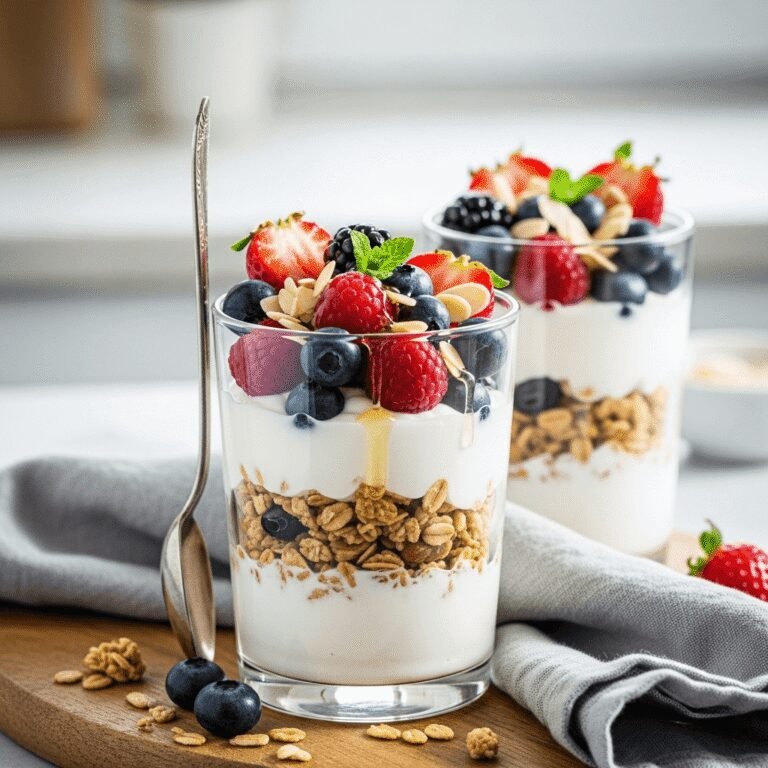
Breakfast Addition: Crumble small amounts over Greek yogurt with honey and fresh fruit, or swirl it into overnight oats for a sweet start to your day.
Cheese Pairing: Serve with mild, creamy cheeses like ricotta or mascarpone, along with fresh figs or pears. The combination is unexpectedly sophisticated.
Beverage Pairings: Besides coffee and tea, halvah pairs wonderfully with dessert wines, port, or even bourbon. The nutty, sweet flavors complement aged spirits beautifully.
Baking Applications: Chop halvah and fold it into brownie batter, cookie dough, or use it as a layer in cakes for an unexpected flavor twist.
FAQs Section
Can I make halvah without a candy thermometer?
While technically possible using the cold water test method (drop a bit of syrup into cold water and check if it forms a soft ball), a candy thermometer is highly recommended for consistent results. They’re inexpensive and make the process much more reliable, especially for beginners.
Why is my halvah oily instead of crumbly?
This usually happens when the sugar syrup didn’t reach the proper temperature (240°F). Under-cooked syrup won’t set properly, leaving excess oil. It can also occur if you didn’t stir vigorously enough when combining the syrup and tahini, or if your tahini was too old or separated.
Can I use natural or organic sugar instead of white sugar?
Yes, but keep in mind that less refined sugars may affect both color and texture. Organic cane sugar works fine. Brown sugar will give a slightly different flavor and darker color. Avoid very coarse sugars as they take longer to dissolve.
Is there a way to make halvah without honey?
Absolutely! You can replace the honey with an equal amount of additional sugar (so 1¼ cups total sugar) or use maple syrup, corn syrup, or agave nectar. The flavor will be slightly different, but the texture will still work.
How do I know when I’ve stirred enough?
You’ll notice the mixture lightens in color, becomes noticeably thicker, and starts pulling away from the sides of the bowl. It should transform from a smooth paste to a grainier, almost crumbly texture. This typically takes 3-5 minutes of vigorous stirring.
Can I double this recipe?
Yes, but be careful with timing. A larger batch of syrup takes longer to reach temperature, and you’ll need a very large bowl for mixing. It’s often easier to make two separate batches rather than doubling if you need a large quantity.
My halvah is too hard—what went wrong?
The syrup was likely cooked past 240°F, or it was over-mixed. Next time, watch your temperature carefully and stop stirring once you see the crumbly texture develop. You can try crumbling hard halvah and mixing it into softer desserts to salvage it.
Can I make this recipe vegan?
Traditional halvah with tahini is already vegan-friendly! Just replace the honey with maple syrup, agave nectar, or additional sugar to keep it completely plant-based.
Conclusion
Making homemade halvah is one of those magical kitchen experiences that seems complicated but is actually quite simple once you understand the technique. With just a few ingredients and about 30 minutes of your time, you can create a confection that would make any Middle Eastern grandmother proud. The rich, nutty flavor of tahini combined with perfectly sweetened syrup creates a texture that’s truly unlike anything else—simultaneously crumbly and creamy, sweet and savory.
Whether you’re exploring your culinary heritage, searching for unique homemade gift ideas, or simply want to expand your dessert repertoire, this halvah recipe delivers on every level. The beauty of halvah is its simplicity and versatility. Once you master the basic technique, you can experiment with endless flavor combinations and make it uniquely your own.
I’d love to hear about your halvah-making adventures! Did you try the chocolate version? Add pistachios? Create your own unique flavor combination? Drop a comment below sharing your experience, and don’t forget to rate this recipe. If you loved it (and I know you will!), please share it with your friends and save it to your favorite Pinterest board so you can find it again. There’s nothing quite like sharing a homemade treat that carries centuries of tradition in every bite.