Easy Homemade King Cake Recipe – The Ultimate Mardi Gras Tradition!

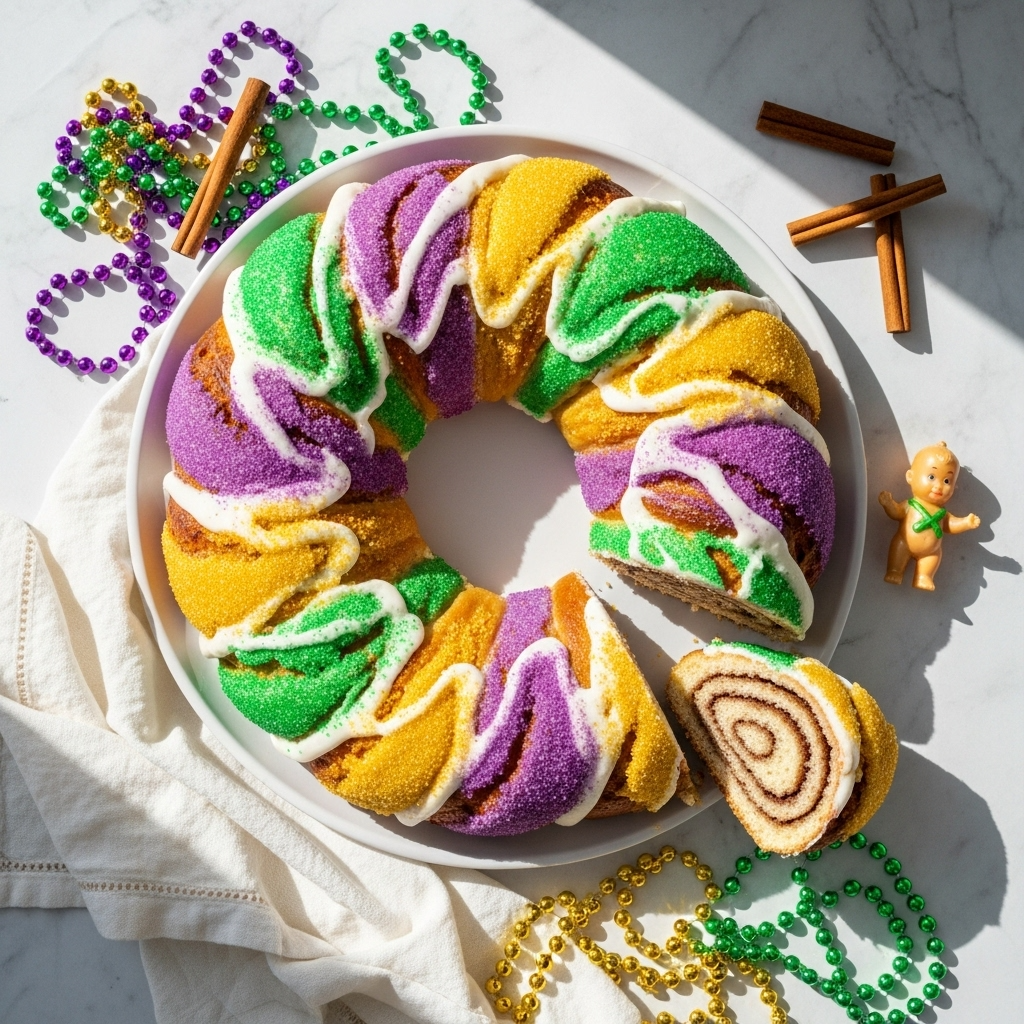
There’s something truly magical about King Cake – that vibrant, festive braided bread adorned with purple, green, and gold sugar that signals one thing: Mardi Gras season is here! This sweet, cinnamon-swirled yeast cake is more than just a dessert; it’s a celebration on a plate, a tradition that brings families together from January 6th (Epiphany) all the way through Fat Tuesday.
If you’ve ever wanted to bring a taste of New Orleans into your kitchen, this homemade King Cake recipe is your golden ticket. With a tender, brioche-like dough, a sweet cinnamon filling, and that iconic colorful topping, this cake is surprisingly approachable for home bakers. Whether you’re hosting a Mardi Gras party, celebrating Carnival season, or simply want to try your hand at this iconic Southern treat, this recipe will guide you through every step with confidence.
The best part? You don’t need to be in Louisiana to enjoy authentic King Cake anymore. With basic pantry ingredients and a little patience (mostly for the dough to rise), you’ll create a bakery-quality cake that would make any New Orleans native proud.
History / Background
King Cake has a fascinating history that stretches back centuries and crosses continents. The tradition originated in Europe, particularly in France and Spain, where similar cakes called “galette des rois” and “rosca de reyes” have been enjoyed since medieval times. These cakes were created to celebrate Epiphany, the Christian feast day commemorating the visit of the Three Wise Men to baby Jesus – hence the “king” in King Cake.
When French settlers arrived in Louisiana in the 1700s, they brought this beloved tradition with them. Over time, the recipe evolved to reflect the vibrant culture of New Orleans, becoming sweeter, more colorful, and deeply intertwined with Mardi Gras celebrations. The cake’s signature purple, green, and gold colors weren’t just random choices – they carry symbolic meaning. Purple represents justice, green symbolizes faith, and gold stands for power.
The most famous tradition associated with King Cake is the hidden baby figurine (originally a bean or pecan) baked inside. According to custom, whoever finds the baby in their slice is crowned “king” or “queen” for the day and is responsible for bringing the next King Cake or hosting the next party. This playful tradition keeps the celebration going throughout the entire Carnival season, from Epiphany through Mardi Gras.
Today, King Cake is so beloved in Louisiana that bakeries sell thousands of them each season, and families across the Gulf Coast eagerly await that first bite that signals the festive season has begun. Making your own at home connects you to this rich cultural tapestry while filling your kitchen with the most incredible aromas.
Why You’ll Love This Recipe
This King Cake recipe strikes the perfect balance between authentic tradition and home-kitchen accessibility. While it looks impressive and tastes like something from a New Orleans bakery, it’s surprisingly achievable for home bakers of all skill levels.
Here’s why this recipe will become your Mardi Gras staple:
- Bakery-quality results at home – Save money and impress your guests with a cake that looks and tastes professionally made
- Perfectly tender and sweet – The brioche-style dough creates a soft, pillowy texture that’s not too heavy or overly sweet
- Fun family activity – Kids love helping braid the dough and decorating with colorful sugars
- Customizable fillings – While we’re using classic cinnamon sugar, you can experiment with cream cheese, praline, or fruit fillings
- Freezer-friendly – Make it ahead and freeze for easy entertaining
- Feeds a crowd – One cake serves 10-12 people, perfect for parties and gatherings
- Authentic tradition – Bring a genuine taste of Louisiana culture to your table
- Instagram-worthy – Those vibrant colors make this cake incredibly photogenic and Pinterest-perfect
Ingredient Notes
Let’s break down what makes this King Cake so special, ingredient by ingredient:
All-Purpose Flour – The foundation of your dough. Bread flour works too if you want a slightly chewier texture, but all-purpose gives you that tender, cake-like crumb that’s traditional.
Active Dry Yeast – This gives the cake its light, airy rise. Make sure your yeast is fresh and your liquid is warm (not hot!) – around 110°F is perfect. If it’s too hot, it’ll kill the yeast.
Whole Milk – Enriches the dough and creates a tender crumb. You can substitute with 2% milk, but whole milk gives the best flavor and texture. For dairy-free, use oat milk or almond milk warmed with a tablespoon of vegan butter.
Granulated Sugar – Sweetens both the dough and the filling. Don’t reduce it too much or the cake will lack that characteristic sweetness.
Eggs – Adds richness and structure. Room temperature eggs incorporate more easily into the dough.
Butter – Use unsalted butter so you can control the salt level. European-style butter with higher fat content will make an even richer cake.
Cinnamon – The classic filling flavor. Ceylon cinnamon is milder and sweeter if you can find it, but regular cinnamon works beautifully.
Cream Cheese – For the glaze, this adds tanginess and helps the colored sugars stick. Regular or low-fat works fine.
Colored Sugars – The iconic purple, green, and gold. You can find these at craft stores, baking supply shops, or online. In a pinch, make your own with granulated sugar and food coloring.
Vanilla Extract – Enhances all the other flavors. Pure extract is worth it here.
Equipment Needed
Before you start, gather these tools to make the process smooth:
- Stand mixer with dough hook (or large bowl and wooden spoon for hand mixing)
- Large mixing bowls (at least 2)
- Measuring cups and spoons
- Kitchen towel or plastic wrap (for covering rising dough)
- Rolling pin
- Sharp knife or pizza cutter
- Baking sheet (half-sheet pan works perfectly)
- Parchment paper (prevents sticking and makes cleanup easy)
- Pastry brush (for egg wash)
- Small saucepan (for warming milk)
- Whisk
- Instant-read thermometer (optional but helpful for checking milk temperature)
- Cooling rack
King Cake Recipe
This authentic homemade King Cake features a tender, cinnamon-swirled brioche dough topped with the traditional purple, green, and gold colored sugars. Perfect for Mardi Gras celebrations and Carnival season!
- Prep Time: 30 minutes
- Rise Time: 2 hours 30 minutes
- Cook Time: 25 minutes
- Total Time: 3 hours 25 minutes
- Yield: 12 servings 1x
- Category: Dessert
- Method: Baking
- Cuisine: American
- Diet: Vegetarian
Ingredients
For the Dough:
- 4 cups all-purpose flour, plus more for dusting
- 2 ¼ teaspoons active dry yeast (1 standard packet)
- ½ cup whole milk, warmed to 110°F
- ⅓ cup granulated sugar
- ½ cup unsalted butter, melted and slightly cooled
- 3 large eggs, room temperature
- 1 teaspoon vanilla extract
- 1 teaspoon salt
- ½ teaspoon ground nutmeg
- Zest of 1 lemon
For the Filling:
- ½ cup light brown sugar, packed
- 2 tablespoons ground cinnamon
- 4 tablespoons unsalted butter, softened
For the Glaze:
- 2 cups powdered sugar
- 3-4 tablespoons whole milk
- 2 tablespoons cream cheese, softened
- ½ teaspoon vanilla extract
For Decoration:
- Purple colored sugar
- Green colored sugar
- Gold colored sugar
- 1 plastic baby figurine (optional, traditional)
Instructions
Step 1: Activate the Yeast
In a small bowl, combine the warm milk (110°F) with 1 tablespoon of the granulated sugar and the yeast. Stir gently and let sit for 5-10 minutes until foamy and bubbly. If it doesn’t foam, your yeast may be expired or your milk too hot – start over with fresh ingredients.
Step 2: Make the Dough
In the bowl of a stand mixer fitted with the dough hook (or a large bowl if mixing by hand), combine the flour, remaining sugar, salt, and nutmeg. Add the yeast mixture, melted butter, eggs, vanilla extract, and lemon zest. Mix on low speed for 2-3 minutes until a shaggy dough forms, then increase to medium speed and knead for 8-10 minutes until the dough is smooth, elastic, and slightly tacky but not sticky. If mixing by hand, knead on a lightly floured surface for 12-15 minutes.
Step 3: First Rise
Place the dough in a large, lightly greased bowl and turn it to coat all sides. Cover with a clean kitchen towel or plastic wrap and let rise in a warm, draft-free spot for 1.5 to 2 hours, until doubled in size. Pro tip: Place the bowl in your oven (turned off) with a pan of hot water on the bottom rack to create a perfect proofing environment.
Step 4: Prepare the Filling
While the dough rises, mix together the brown sugar and cinnamon in a small bowl. Set aside along with the softened butter.
Step 5: Roll and Fill
Once the dough has doubled, punch it down gently to release air bubbles. Turn it out onto a lightly floured surface and roll into a large rectangle, approximately 24 inches by 10 inches. Spread the softened butter evenly over the entire surface, leaving a ½-inch border on one long side. Sprinkle the cinnamon-sugar mixture over the butter, pressing it gently into the dough.
Step 6: Shape the Cake
Starting from the long side with filling all the way to the edge, tightly roll the dough into a log, keeping it as even as possible. Pinch the seam closed. Carefully transfer to a parchment-lined baking sheet and form the log into an oval ring, pinching the ends together firmly to seal. If desired, insert the plastic baby figurine from the bottom of the cake into the dough (warn guests to look for it before eating!).
Step 7: Second Rise
Cover the shaped cake loosely with a kitchen towel and let rise for 30-45 minutes until puffy and nearly doubled. Meanwhile, preheat your oven to 350°F.
Step 8: Bake
Bake the King Cake for 23-27 minutes, until golden brown and the internal temperature reaches 190°F. The cake should sound hollow when tapped on the bottom. Don’t overbake or it will be dry. Let cool completely on the baking sheet before decorating.
Step 9: Make the Glaze
In a medium bowl, beat together the powdered sugar, cream cheese, milk (start with 3 tablespoons and add more if needed for a pourable consistency), and vanilla extract until smooth and glossy. The glaze should be thick but pourable.
Step 10: Decorate
Drizzle or spread the glaze over the cooled cake, working quickly before it sets. Immediately sprinkle the colored sugars in alternating bands of purple, green, and gold around the entire cake, covering the glaze completely. Let the glaze set for 15-20 minutes before slicing.
Notes
- Make-ahead tip: You can prepare the dough through step 6, cover tightly, and refrigerate overnight. Let it come to room temperature for 30 minutes before the second rise.
- Baby figurine warning: Always announce that there’s a baby in the cake before serving to prevent choking hazards, especially with children.
- No colored sugar? Make your own by placing granulated sugar in ziplock bags with a few drops of gel food coloring, seal, and shake until evenly colored.
- Storage: Keep covered at room temperature for up to 3 days, or refrigerate for up to 5 days.
Nutrition
- Serving Size: 1 slice (1/12 of cake)
- Calories: 385
- Sugar: 32g
- Sodium: 245mg
- Fat: 14g
- Saturated Fat: 8g
- Unsaturated Fat: 5g
- Trans Fat: 0g
- Carbohydrates: 59g
- Fiber: 2g
- Protein: 6g
- Cholesterol: 75mg
Tips & Variations
Cream Cheese Filling King Cake
For a popular Louisiana variation, replace the cinnamon filling with a cream cheese mixture: Beat 8 oz softened cream cheese with ⅓ cup sugar, 1 egg yolk, and 1 teaspoon vanilla. Spread over the rolled dough before rolling up.
Praline King Cake
Add ½ cup chopped toasted pecans to your cinnamon filling for a praline-inspired version. Absolutely divine!
Chocolate Lovers’ Version
Add 2 tablespoons cocoa powder to the dough and use a chocolate-cinnamon filling (cinnamon sugar plus 2 tablespoons cocoa powder).
Make it Lighter
Substitute half the butter with Greek yogurt for a slightly less rich (but still delicious) version. The texture will be a bit denser but still wonderful.
Gluten-Free Adaptation
Use a 1:1 gluten-free flour blend with xanthan gum. The texture will be slightly different but still tasty. You may need to add 2-3 extra tablespoons of milk.
Smaller Cake
Cut this recipe in half for a smaller 6-8 serving cake, perfect for smaller gatherings. Reduce baking time by about 5 minutes.
Pro Chef Tips
Temperature is Everything – Your milk should be between 105-115°F for optimal yeast activation. Too cold and the yeast won’t activate; too hot and you’ll kill it. Invest in an instant-read thermometer for consistent results.
Don’t Rush the Rise – Yeast dough needs time. If your kitchen is cold, the rise will take longer. Be patient! Under-risen dough will result in a dense, heavy cake rather than the light, fluffy texture you want.
Use Bread Flour for Chewier Texture – While all-purpose works beautifully, bread flour (which has more protein) will give you a chewier, more substantial texture that some prefer. It’s closer to what you’d find in traditional French brioche.
Brush with Egg Wash Before Baking – For an extra-golden, glossy finish, brush the cake with a beaten egg mixed with 1 tablespoon of water before baking. This isn’t traditional for King Cake but adds a beautiful professional look.
Roll Tightly for No Gaps – When rolling your filled dough into a log, roll it as tightly as possible without tearing. Loose rolling creates gaps and uneven swirls. Use both hands and consistent pressure.
Let the Glaze Set Properly – Don’t slice the cake until the glaze has fully set (about 15-20 minutes) or your beautiful colored sugar decoration will slide right off and create a mess.
Common Mistakes to Avoid
Mistake #1: Using Old or Expired Yeast
Always check your yeast’s expiration date! Old yeast won’t activate properly, and your dough won’t rise. To test yeast before using it in the recipe, proof it in warm water with a pinch of sugar – it should foam within 10 minutes.
Mistake #2: Adding Too Much Flour
When kneading or rolling, use only enough flour to prevent sticking. Too much flour creates a dry, tough cake. The dough should be slightly tacky but not sticky to the touch.
Mistake #3: Overbaking
King Cake dries out quickly if overbaked. Pull it from the oven when it’s just golden brown and reaches 190°F internally. It will continue cooking slightly as it cools. Better to err on the side of slightly underbaked than overdone.
Mistake #4: Decorating While Warm
If you add the glaze and colored sugars before the cake is completely cool, the glaze will melt and run off, and the colors will bleed together. Patience is key!
Mistake #5: Not Sealing the Ends
When forming the ring shape, really pinch and press those ends together firmly. If they’re not sealed well, they’ll separate during baking and you’ll lose that classic oval shape.
Storage & Meal Prep
Room Temperature Storage: Store your King Cake in an airtight container or wrapped tightly in plastic wrap at room temperature for up to 3 days. The cake actually tastes better on day two when the flavors have melded together!
Refrigerator Storage: If your kitchen is particularly warm or humid, refrigerate the cake for up to 5 days. Bring slices to room temperature before serving for the best flavor and texture, or warm slightly in the microwave for 10-15 seconds.
Reheating: While King Cake is typically served at room temperature, you can warm individual slices in the microwave for 10-15 seconds or in a 300°F oven for 5 minutes. Don’t overheat or the glaze will melt.
Slicing and Serving: Use a sharp serrated knife and clean it between cuts for neat slices. If you’ve hidden the baby figurine, remember to warn guests!
Keeping it Fresh: The biggest enemy of King Cake is air exposure, which dries it out. Always store it wrapped tightly or in an airtight container.
Make-Ahead & Freezer Notes
Make-Ahead Dough: Prepare the dough through the first rise (step 3), then punch it down, wrap it tightly in plastic wrap, and refrigerate for up to 24 hours. When ready to continue, let it sit at room temperature for 30 minutes, then proceed with rolling, filling, and shaping.
Make-Ahead Shaped Cake: Shape the cake completely, place it on the baking sheet, cover tightly with plastic wrap, and refrigerate overnight. In the morning, let it sit at room temperature for 45 minutes to complete the second rise, then bake as directed. This is perfect for serving fresh King Cake for Mardi Gras breakfast!
Freezing Unbaked: After shaping the cake into a ring, wrap it extremely well in plastic wrap and then aluminum foil. Freeze for up to 2 months. Thaw overnight in the refrigerator, then let come to room temperature and complete the second rise before baking.
Freezing Baked Cake: Bake the cake completely and let it cool, but don’t add the glaze or colored sugars. Wrap tightly in plastic wrap and aluminum foil, then freeze for up to 3 months. Thaw at room temperature for 2-3 hours, then glaze and decorate just before serving.
Best Results: For the freshest taste and texture, I recommend freezing the cake unglazed and adding the glaze after thawing. The glaze doesn’t freeze quite as well and can become slightly watery.
Serving Suggestions
King Cake is traditionally served as a standalone dessert or breakfast treat during Mardi Gras season, but here are some delicious ways to serve it:
Classic Mardi Gras Party: Serve slices with hot coffee, Café du Monde-style chicory coffee, or French press coffee. Add mimosas or hurricanes (the famous New Orleans cocktail) for adults.
Breakfast Spread: Make it the centerpiece of a Mardi Gras brunch alongside beignets, fresh fruit, scrambled eggs, and bacon.
Dessert Course: Serve with a scoop of vanilla ice cream or fresh whipped cream for an indulgent dessert. A drizzle of caramel sauce or chocolate sauce is divine!
With Tea: This cake pairs beautifully with hot tea – try Earl Grey, English Breakfast, or a spiced chai.
Ice Cream Sandwiches: Slice the cake horizontally and create ice cream sandwiches with your favorite flavor (vanilla, cinnamon, or butter pecan work wonderfully).
Bread Pudding: Day-old King Cake makes incredible bread pudding! Cube it, soak in a custard mixture, and bake for a next-level New Orleans dessert.
Accompaniments: Fresh berries, whipped cream, or a bourbon sauce (for adults) complement the cinnamon flavors beautifully.
FAQs Section
Q: Can I make King Cake without a stand mixer?
A: Absolutely! You can mix and knead the dough entirely by hand. It will take a bit more time and elbow grease (about 12-15 minutes of kneading), but the results will be just as delicious. The dough is ready when it’s smooth, elastic, and springs back when poked.
Q: Why didn’t my dough rise?
A: The most common culprits are old yeast, liquid that was too hot (which killed the yeast) or too cold (which didn’t activate it), or a too-cold rising environment. Make sure your yeast is fresh, your milk is 105-115°F, and your kitchen is at least 70-75°F. Try the oven with a pan of hot water trick for a perfect proofing environment.
Q: Can I use instant yeast instead of active dry?
A: Yes! You can substitute instant yeast (also called rapid-rise yeast) in equal amounts. The advantage is you don’t need to proof it first – just mix it directly with the dry ingredients. The rise time will be slightly shorter.
Q: Where do I find the plastic baby figurine?
A: Cake decorating stores, craft stores like Michael’s or Hobby Lobby, and online retailers sell them in multi-packs. They’re often called “King Cake babies.” Make sure to get food-safe plastic ones. If you can’t find one, you can hide a whole almond or pecan instead (warn guests!).
Q: My cake is done baking but isn’t very brown. What happened?
A: Some ovens run cool, or you may have placed the rack too low. The cake should be golden brown and register 190°F internally. If it’s cooked through but pale, you can brush with butter and place under the broiler for 30-60 seconds (watch carefully!) for color.
Q: Can I make this dairy-free?
A: Yes! Use plant-based milk (oat milk works best), vegan butter, and substitute flax eggs (1 tablespoon ground flaxseed mixed with 3 tablespoons water per egg, let sit 5 minutes). For the glaze, use vegan cream cheese and plant-based milk. The texture will be slightly different but still delicious.
Q: How do I know when my King Cake is fully baked?
A: Look for a golden brown color and internal temperature of 190°F. The cake should also sound slightly hollow when tapped on the bottom. If you’re unsure, err on the side of baking an extra 2-3 minutes rather than underbaking, but don’t go beyond 30 minutes total or it may dry out.
Conclusion
There you have it – your complete guide to making authentic, bakery-quality King Cake right in your own kitchen! This recipe might seem involved at first glance, but take it step by step, and you’ll find that it’s surprisingly manageable and incredibly rewarding. The aroma of cinnamon and butter wafting through your home, the satisfaction of braiding and shaping the dough, and that first bite of tender, sweet cake makes every minute worth it.
King Cake isn’t just a recipe; it’s a celebration of culture, community, and the joy of sharing homemade treats with people you love. Whether you’re celebrating Mardi Gras in Louisiana or simply bringing a taste of New Orleans tradition to your table wherever you are, this cake will create memories and maybe even start some new family traditions of your own.
I’d love to hear how your King Cake turns out! Drop a comment below with your experience, any variations you tried, or photos of your beautiful creation. And if you loved this recipe, please share it with your friends and pin it to your Pinterest boards so you can find it easily next Mardi Gras season. Don’t forget to tag me in your photos – I can’t wait to see your colorful creations!