Perfect Portuguese Egg Tarts (Pastéis de Nata) – Crispy, Creamy & Irresistible!

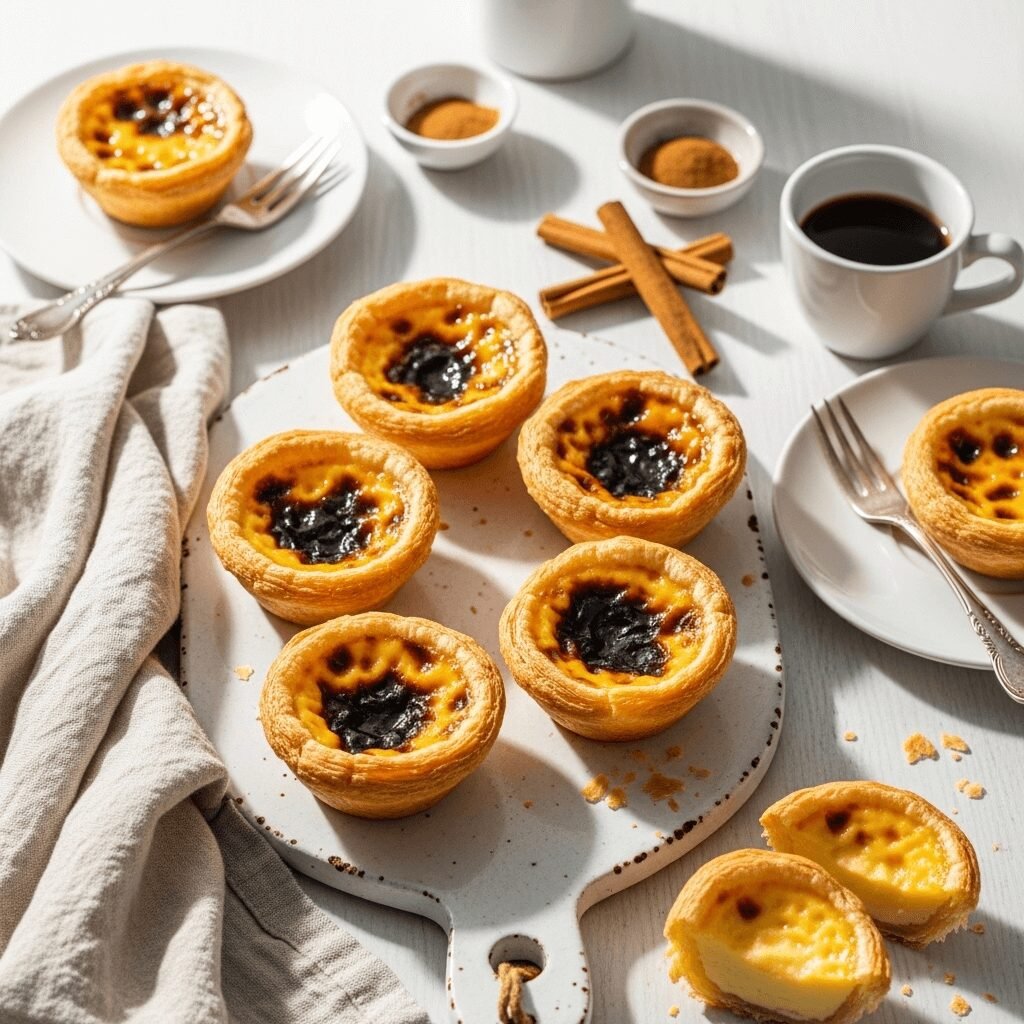
There’s something absolutely magical about biting into a Portuguese egg tart – that satisfying crack of caramelized, flaky pastry giving way to a silky-smooth custard filling that’s neither too sweet nor too rich. These golden beauties, known as Pastéis de Nata in Portugal, have captured hearts worldwide with their perfect balance of textures and flavors.
Whether you’re hosting a brunch gathering, looking for an impressive dessert to wow your guests, or simply craving a cozy afternoon treat with coffee, these egg tarts deliver every single time. They look fancy and bakery-worthy, but I’m here to tell you that making them at home is absolutely doable – and incredibly rewarding. The aroma of buttery pastry baking alongside vanilla-scented custard will have everyone in your house asking “what smells so amazing?”
What makes these tarts so special is their versatility. Serve them warm for breakfast with a cappuccino, present them as an elegant dessert at dinner parties, or pack them for picnics and potlucks. They’re equally at home at a casual weekend brunch or a sophisticated celebration. And here’s the best part – once you master this recipe, you’ll have a go-to impressive treat that costs a fraction of what you’d pay at a bakery.
History / Background
Portuguese egg tarts have a fascinating history that dates back to the 18th century, rooted in the Catholic monasteries and convents of Portugal. Before the liberal revolution of 1820, it was very common for convents and monasteries to use large quantities of egg whites for starching clothes and clearing wine. This left them with an abundance of leftover egg yolks, which the resourceful monks and nuns transformed into various sweets and pastries – and thus, the egg tart was born.
The original recipe is credited to the Jerónimos Monastery in the Belém district of Lisbon, where monks created these custard tarts using their secret recipe. When the monastery closed in the 1830s, the recipe was sold to a nearby sugar refinery, which opened the famous Fábrica de Pastéis de Belém in 1837. This bakery still operates today and claims to use the original secret recipe, known only to three master bakers at any given time.
From Portugal, these delectable tarts traveled the world through Portuguese colonization and trade routes, becoming especially popular in Macau, Hong Kong, and other parts of Asia. Each region added its own twist – the Macanese and Hong Kong versions often feature a slightly sweeter, more caramelized top, while the Portuguese original maintains a more delicate, less sweet custard.
Today, you’ll find egg tarts in bakeries from Lisbon to London, from Macau to Miami. They’ve become a beloved international treat that transcends cultural boundaries. The tarts you’ll make with this recipe honor that rich tradition while being perfectly achievable in your home kitchen, no monastery required!
Why You’ll Love This Recipe
This Portuguese egg tart recipe strikes the perfect balance between authentic flavor and home-kitchen accessibility. You don’t need professional pastry training or hard-to-find ingredients to create these bakery-quality treats. The recipe uses simple techniques that build your confidence while delivering impressive results that’ll have everyone convinced you’ve been secretly studying at a Portuguese pastry school.
Here’s why this recipe will become your new favorite:
- Bakery-quality results at home – Achieve those signature crispy, caramelized tops and creamy centers without special equipment
- Make-ahead friendly – Prepare components in advance for stress-free entertaining
- Freezer-friendly – Bake a big batch and freeze for future cravings
- Budget-conscious – Uses everyday ingredients that are significantly cheaper than buying from a bakery
- Impressive presentation – These look incredibly elegant and professional with minimal effort
- Perfectly portioned – Individual tarts mean no slicing, no mess, and easy serving
- Versatile for any occasion – Equally appropriate for breakfast, dessert, or afternoon tea
- Crowd-pleaser – The mild sweetness and familiar custard flavor appeals to all ages and palates
- Forgiving recipe – Small variations won’t ruin your tarts, making this great for beginners
Ingredient Notes
Puff Pastry: I recommend using store-bought puff pastry (either frozen sheets or blocks) to save time and ensure consistent results. Look for all-butter puff pastry if available – it provides superior flavor and flakiness. Pepperidge Farm and Dufour are excellent brands. Make sure your pastry is fully thawed but still cold when you work with it.
Egg Yolks: The star of the custard! Use large eggs at room temperature. The yolks provide richness, color, and that signature silky texture. You’ll need the yolks only – save those whites for meringues or omelets! Room temperature yolks blend more smoothly into the custard.
Heavy Cream: This creates the luxurious, creamy texture in your custard. Don’t substitute with milk or half-and-half – the higher fat content is essential for proper consistency and mouthfeel. Full-fat heavy cream (at least 36% fat) works best.
Granulated Sugar: Provides sweetness and helps achieve those beautiful caramelized spots on top. White granulated sugar works perfectly – don’t substitute with brown sugar, as it will alter the color and flavor profile.
All-Purpose Flour or Cornstarch: Acts as a thickening agent to stabilize the custard. Cornstarch creates a slightly smoother texture, while flour provides a more traditional result. Either works beautifully in this recipe.
Whole Milk: Balances the richness of the cream while keeping the custard from being too heavy. Whole milk is preferred, but 2% will work in a pinch.
Vanilla Extract: Adds warmth and enhances the eggy custard flavor. Use pure vanilla extract for the best taste – imitation vanilla lacks the complexity.
Cinnamon (Optional): Traditional Portuguese egg tarts are often dusted with cinnamon before serving. It’s not mixed into the custard but sprinkled on top for that authentic finishing touch.
Lemon Zest (Optional): Some recipes include a hint of citrus. A small strip of lemon peel steeped in the warm custard adds brightness without overpowering the delicate flavor.
Equipment Needed
- Muffin tin or tart pan – A standard 12-cup muffin tin works perfectly for making individual egg tarts
- Rolling pin – For rolling out and shaping your puff pastry to the right thickness
- Medium saucepan – To prepare your custard mixture on the stovetop
- Whisk – Essential for creating a smooth, lump-free custard
- Fine-mesh strainer – Crucial for removing any lumps and ensuring silky-smooth custard
- Measuring cups and spoons – Accuracy matters in baking, so proper measurements are key
- Mixing bowls – You’ll need at least two medium bowls for separating components
- Pastry brush – Optional but helpful for greasing the muffin cups
- Sharp knife or pastry cutter – For cutting pastry circles cleanly
- Cooling rack – Allows proper air circulation when cooling your finished tarts
- Kitchen torch (optional) – For achieving those authentic caramelized spots on top
Egg Tart Recipe

These Portuguese egg tarts feature flaky, buttery puff pastry shells filled with creamy vanilla custard. Baked until golden with caramelized spots on top, they’re the perfect balance of crispy and creamy – just like the famous Pastéis de Nata from Lisbon bakeries.
- Prep Time: 25 minutes
- Cook Time: 20-25 minutes
- Total Time: 45-50 minutes (plus 2 hours chilling time)
- Yield: 12 egg tarts 1x
- Category: Dessert
- Method: Baking
- Cuisine: Portuguese
- Diet: Vegetarian
Ingredients
For the Pastry:
- 1 sheet frozen puff pastry (about 8-9 ounces), thawed
- 1 tablespoon melted butter (for greasing)
For the Custard Filling:
- 1 cup whole milk
- ¾ cup heavy cream
- ⅔ cup granulated sugar
- 3 tablespoons all-purpose flour (or cornstarch)
- Pinch of salt
- 6 large egg yolks
- 2 teaspoons pure vanilla extract
- 1 strip lemon peel (optional)
For Serving:
- Ground cinnamon (optional)
- Powdered sugar (optional)
Instructions
Step 1: Prepare the Muffin Tin
Preheat your oven to 425°F (220°C). Generously brush a 12-cup muffin tin with melted butter, making sure to coat the bottom and sides of each cup thoroughly. This ensures your tarts release easily after baking.
Step 2: Shape the Pastry Shells
On a lightly floured surface, roll out the thawed puff pastry to about ⅛-inch thickness. Using a round cookie cutter or glass (about 4 inches in diameter), cut out 12 circles. Gently press each circle into a muffin cup, allowing the pastry to come up the sides naturally. The pastry should reach about ¾ of the way up the sides. Don’t stretch it too thin or it won’t hold the custard properly.
Step 3: Make the Custard Base
In a medium saucepan, combine the milk, heavy cream, and lemon peel (if using) over medium heat. Heat until the mixture is steaming and just beginning to simmer around the edges – don’t let it boil. Remove from heat and discard the lemon peel.
Step 4: Create the Sugar-Flour Mixture
In a mixing bowl, whisk together the sugar, flour (or cornstarch), and salt until well combined. This prevents lumps from forming in your custard.
Step 5: Temper the Egg Yolks
In a separate bowl, whisk the egg yolks until smooth. Gradually add the sugar-flour mixture to the yolks, whisking constantly until you have a thick, pale yellow paste.
Step 6: Combine and Cook the Custard
Slowly pour about ½ cup of the warm milk mixture into the egg mixture, whisking constantly. This tempers the eggs and prevents scrambling. Gradually whisk in the remaining milk mixture until completely smooth.
Step 7: Strain and Flavor
Pour the entire mixture back into the saucepan through a fine-mesh strainer to remove any lumps. Place back on medium-low heat and cook, stirring constantly with a whisk, for 3-5 minutes until the custard thickens slightly and coats the back of a spoon. Remove from heat and stir in vanilla extract.
Step 8: Chill the Custard
Transfer the custard to a bowl and press plastic wrap directly onto the surface to prevent a skin from forming. Refrigerate for at least 2 hours or until completely cold. This step is crucial – warm custard will make soggy pastry!
Step 9: Fill the Tarts
Once the custard is cold, give it a good stir. Fill each pastry shell about ¾ full with custard – they should be generously filled but not overflowing. The custard will puff slightly during baking.
Step 10: Bake to Perfection
Bake in the preheated oven for 20-25 minutes, until the pastry is golden brown and puffed, and the custard tops have developed those signature dark caramelized spots. The tarts should jiggle slightly in the center but be set around the edges.
Step 11: Cool and Serve
Remove from the oven and let cool in the pan for 5 minutes, then carefully transfer to a wire rack. The tarts are best served warm or at room temperature. Dust with cinnamon or powdered sugar just before serving if desired.
Notes
- The custard MUST be cold before filling the pastry shells, or your tarts will be soggy
- Don’t skip straining the custard – this ensures that silky-smooth texture
- For extra caramelization on top, use a kitchen torch to add more spots after baking
- These tarts are best enjoyed the day they’re made but will keep refrigerated for 2-3 days
- If your pastry is shrinking, make sure it’s cold when you work with it and press it firmly into the muffin cups
- The high oven temperature is intentional – it creates the characteristic puffed pastry and caramelized custard top
Nutrition
- Serving Size: 1 egg tart
- Calories: 245
- Sugar: 14g
- Sodium: 125mg
- Fat: 16g
- Saturated Fat: 9g
- Unsaturated Fat: 6g
- Trans Fat: 0g
- Carbohydrates: 21g
- Fiber: 0.5g
- Protein: 4g
- Cholesterol: 120mg
Tips & Variations
Flavor Variations:
- Chocolate Egg Tarts: Add 2 tablespoons of cocoa powder to the custard mixture for a rich chocolate version
- Coconut Twist: Replace ½ cup of the milk with coconut milk and add ½ teaspoon coconut extract for tropical flair
- Coffee Lovers: Dissolve 1 tablespoon instant espresso powder into the warm milk for coffee-flavored tarts
- Orange Blossom: Replace vanilla with 1 teaspoon orange blossom water for a Middle Eastern touch
- Matcha Green Tea: Whisk in 1 tablespoon matcha powder for a beautiful green tea version
Dietary Adaptations:
- For a lighter version, use half-and-half instead of heavy cream (though texture will be less rich)
- Make mini tarts using a mini muffin tin for portion control – reduce baking time to 12-15 minutes
- Use gluten-free puff pastry to make these celiac-friendly
Presentation Ideas:
- Dust with cinnamon and powdered sugar in a crosshatch pattern using a small sieve
- Drizzle with melted dark chocolate after cooling for an elegant finish
- Serve alongside fresh berries and whipped cream for a complete dessert
- Top with a small dollop of lemon curd before serving for extra brightness
Pro Chef Tips
Temperature Control is Everything: Professional bakers know that temperature control separates good egg tarts from extraordinary ones. Your custard must be completely cold before filling the pastry – this prevents the butter in the puff pastry from melting prematurely and creating soggy bottoms. Additionally, the high oven temperature (425°F) is non-negotiable. This intense heat creates the signature puffed, flaky pastry and those beautiful caramelized spots on the custard top.
Master the Art of Tempering: When combining your egg yolks with hot liquid, patience is key. Add the warm milk mixture very slowly – just a small stream at first – while whisking constantly. This gradually raises the temperature of the eggs without cooking them. Rush this step, and you’ll end up with scrambled egg custard. Take your time, and you’ll achieve that silky-smooth texture that defines a perfect egg tart.
Don’t Overfill: It’s tempting to fill those pastry cups to the brim, but restraint pays off. Fill to about ¾ full – this allows the custard to puff and develop those characteristic caramelized spots without overflowing. Overfilled tarts will bubble over, creating a mess in your oven and resulting in tarts that are difficult to remove cleanly from the pan.
Embrace the Dark Spots: Those dark, almost burnt-looking spots on top aren’t mistakes – they’re the hallmark of authentic Portuguese egg tarts! The high oven temperature causes the sugars in the custard to caramelize and even char slightly in spots. This creates complex flavor notes that balance the rich sweetness. Don’t pull your tarts too early out of fear – let them develop those beautiful dark freckles.
The Jiggle Test: Your tarts are done when they still have a slight jiggle in the very center but are set around the edges. The custard will continue to set as it cools, so overbaking creates a rubbery texture. Watch through your oven window in the final minutes and look for that tell-tale wobble – when you see it, they’re perfect.
Common Mistakes to Avoid
Filling with Warm Custard: This is the number one mistake that leads to disappointing results. Warm custard causes the butter in your puff pastry to melt before the pastry has a chance to properly bake and puff. Always chill your custard for at least 2 hours, preferably longer. Your patience will be rewarded with crispy, flaky shells instead of soggy disappointments.
Using Cold Puff Pastry: While you want cold custard, your puff pastry needs to be pliable. If it’s too cold straight from the freezer, it will crack when you try to roll and shape it. Let it thaw in the refrigerator overnight or at room temperature for 30-40 minutes until it’s flexible but still cool to the touch. It should bend easily without breaking.
Skipping the Strainer: It might seem like an unnecessary extra step, but straining your custard removes any small lumps of cooked egg or flour that can ruin the silky texture. Even the most careful whisking can leave tiny lumps. Those 30 seconds spent pushing custard through a strainer make the difference between a good tart and a great one.
Baking at Too Low a Temperature: Don’t be tempted to lower the oven temperature thinking it will give you more control. The high heat is essential for creating proper puff pastry texture and those caramelized custard tops. If your oven runs hot, rotate the pan halfway through baking, but don’t reduce the temperature.
Not Greasing Properly: Few things are more frustrating than perfect-looking tarts that won’t come out of the pan. Brush every surface of each muffin cup with melted butter, paying special attention to the bottom corners where tarts tend to stick. This small step ensures your beautiful creations release cleanly and maintain their shape.
Storage & Meal Prep
Portuguese egg tarts are definitely best enjoyed fresh – ideally within a few hours of baking when the pastry is at its crispiest and the custard is still slightly warm. However, life happens, and sometimes you need to store them!
Room Temperature Storage: If you plan to eat your tarts within 4-6 hours, store them at room temperature in an airtight container. The pastry will soften slightly but will still be delicious. Don’t cover them while still warm, as trapped steam will make the pastry soggy.
Refrigerator Storage: For longer storage, refrigerate your egg tarts in an airtight container for up to 3 days. The cold temperature will firm up the custard and make the pastry less crispy, but they’ll still taste wonderful. The custard actually develops deeper flavor after a day in the fridge.
Reheating for Best Results: To restore some of that fresh-baked magic, reheat refrigerated tarts in a 350°F oven for 8-10 minutes. This re-crisps the pastry and warms the custard beautifully. Avoid microwaving if possible, as it makes the pastry chewy and tough. If you must use a microwave, heat in 15-second intervals at 50% power.
Reviving Day-Old Tarts: If your tarts have lost their crispness, place them in a 375°F oven for 5-7 minutes. The dry heat will help evaporate excess moisture and restore some texture to the pastry. You can even use a kitchen torch to re-caramelize the tops for a fresh-from-the-oven appearance.
Make-Ahead & Freezer Notes
Prepare Custard in Advance: The custard can be made up to 2 days ahead and stored in the refrigerator with plastic wrap pressed directly on its surface. Give it a good whisk before using to restore smooth consistency. This is perfect for breaking up the work when entertaining.
Unbaked Assembled Tarts: You can assemble your tarts completely (pastry shells filled with cold custard) and refrigerate them for up to 4 hours before baking. Cover loosely with plastic wrap. Bake directly from the refrigerator, adding 2-3 minutes to the baking time.
Freezing Baked Tarts: While best fresh, you can freeze fully baked and cooled egg tarts for up to 1 month. Place them in a single layer on a baking sheet and freeze until solid (about 2 hours), then transfer to a freezer-safe container or bag with parchment paper between layers. This prevents them from sticking together.
Freezing Pastry Shells: For maximum freshness, freeze unbaked pastry shells in the muffin tin, wrapped tightly in plastic wrap and foil, for up to 1 month. When ready to use, fill frozen shells with cold custard and bake, adding 3-5 minutes to the baking time. The custard protects the pastry from overbrowning.
Best Thawing Method: Thaw frozen baked tarts overnight in the refrigerator, then reheat in a 350°F oven for 10-12 minutes to restore the crispy pastry texture. Never thaw at room temperature for food safety reasons, and avoid thawing in the microwave, which creates uneven results.
Batch Baking Strategy: Consider making a double or triple batch and freezing portions for future enjoyment. These tarts make excellent last-minute desserts for unexpected guests or satisfying treats when you need a pick-me-up but don’t have time to bake from scratch.
Serving Suggestions
Portuguese egg tarts are incredibly versatile and pair beautifully with various accompaniments depending on when and how you’re serving them.
Classic Portuguese Style: Serve warm with a dusting of cinnamon and powdered sugar alongside a strong espresso or Portuguese coffee. This is how they’re traditionally enjoyed in Lisbon’s cafés and captures the authentic experience.
Brunch Spread: Make these the star of your brunch table alongside fresh fruit salad, crispy bacon or sausage, scrambled eggs, and crusty bread. The sweet tarts provide a perfect counterpoint to savory breakfast items.
Afternoon Tea Service: Arrange on a tiered stand with other petit fours, finger sandwiches, and scones for an elegant afternoon tea. Serve with black tea, Earl Grey, or even champagne for something special.
Dessert Course: Present warm tarts with a small scoop of vanilla bean ice cream or a dollop of lightly sweetened whipped cream. Fresh berries (strawberries, raspberries, or blueberries) add color and a tart contrast to the sweet custard.
Beverage Pairings: Beyond coffee, these tarts pair wonderfully with Port wine (staying true to Portuguese tradition), sweet dessert wines like Moscato or Sauternes, hot chocolate, chai lattes, or even a glass of cold milk.
Party Presentation: For gatherings, serve at room temperature on a large platter garnished with fresh mint leaves and dusted with powdered sugar. Provide small dessert plates and forks for easy self-service.
FAQs Section
Can I use store-bought custard or pudding mix instead of making custard from scratch?
While convenient, store-bought custard or instant pudding won’t give you authentic results. The homemade custard in this recipe has a specific consistency and flavor profile designed to complement the puff pastry and withstand the high baking temperature. Prepared custards often contain stabilizers that create a different texture and may not caramelize properly on top.
Why did my pastry shrink down into the muffin cups?
Pastry shrinkage typically happens when the dough is overworked, stretched too thin, or not cold enough when placed in the oven. Make sure your puff pastry is cold but pliable when shaping, press it firmly into the muffin cups without stretching, and ensure your oven is properly preheated. Letting the filled shells rest in the refrigerator for 15 minutes before baking can also help prevent shrinkage.
My custard has a skin on top after chilling. Is it ruined?
Not at all! This skin forms when custard is exposed to air. Simply peel it off and discard before using your custard, or prevent it entirely by pressing plastic wrap directly onto the custard surface before refrigerating. Give the custard a good whisk after removing any skin to restore smooth consistency.
Can I make these in a regular tart pan instead of a muffin tin?
Yes! You can use small individual tart pans (about 3-4 inches) or even make one large tart. For individual tart pans, the baking time remains similar. For a large tart (9-10 inches), increase baking time to 30-35 minutes and watch for the custard to set around the edges while still having a slight jiggle in the center.
Why don’t my tarts have those dark caramelized spots on top?
Those signature spots require high heat and proper oven positioning. Make sure your oven is fully preheated to 425°F and position your muffin tin in the upper third of the oven where heat is more intense. If your spots are still too light, use a kitchen torch after baking to add more caramelization, or briefly turn on the broiler (watching carefully!) for 1-2 minutes at the end of baking.
The custard filling separated or curdled – what went wrong?
Curdling usually occurs when eggs are heated too quickly or when the custard is overcooked. Always temper your egg yolks by adding hot liquid slowly while whisking constantly, and cook the custard over medium-low heat while stirring continuously. The custard should thicken gradually and never come to a boil. If you do notice small lumps, strain the custard immediately through a fine-mesh strainer.
Can I make these egg tarts dairy-free?
Achieving authentic results without dairy is challenging since cream and butter are essential to the flavor and texture. However, you can experiment with full-fat coconut milk and coconut cream as substitutes, though the flavor will be noticeably different. For the pastry, look for dairy-free puff pastry brands (some use vegetable oils instead of butter). Be aware that results will vary from the traditional recipe.
Conclusion
Making Portuguese egg tarts at home is one of those magical baking experiences that looks incredibly impressive but is wonderfully achievable with the right guidance. Yes, there are a few steps involved, but each one builds on the last, and before you know it, you’re pulling golden, caramelized beauties from your oven that rival anything you’d find in a fancy bakery.
The beauty of this recipe is that it gets easier every time you make it. You’ll develop a feel for the custard consistency, learn exactly how your oven caramelizes the tops, and discover your personal preferences (maybe you love extra cinnamon, or perhaps you’re a purist who prefers them plain). These little tarts have a way of becoming a signature dish – the thing friends request and family members brag about.
Whether you’re making them for a special occasion or just because it’s Tuesday and you deserve something wonderful, these egg tarts deliver comfort, elegance, and that satisfying combination of crispy and creamy that makes every bite feel like a small celebration.
So preheat that oven, roll out that pastry, and get ready to fill your kitchen with the incredible aroma of buttery pastry and vanilla custard. Your future self (and everyone lucky enough to try these) will thank you.