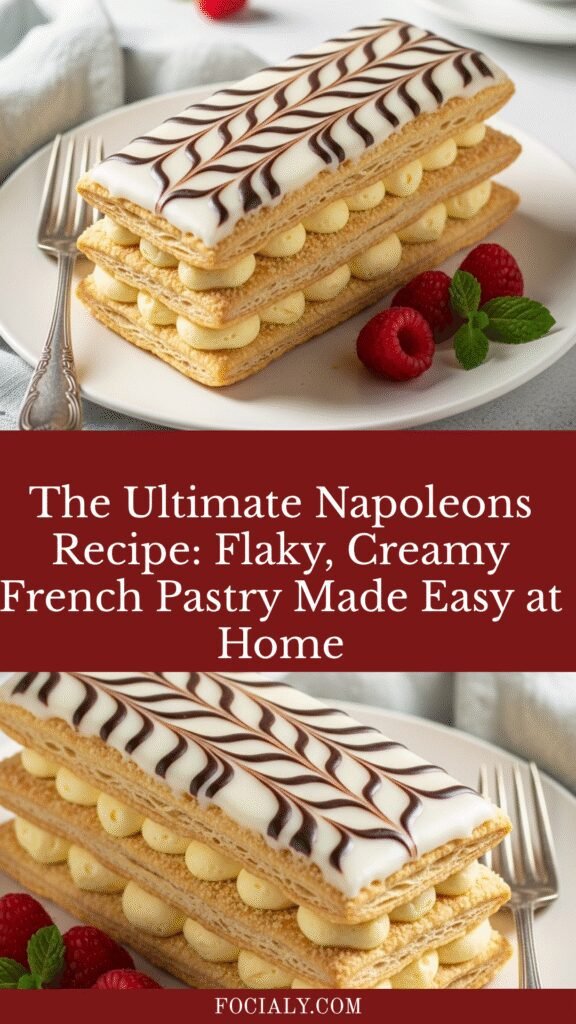
The Ultimate Napoleons Recipe: Flaky, Creamy French Pastry Made Easy at Home
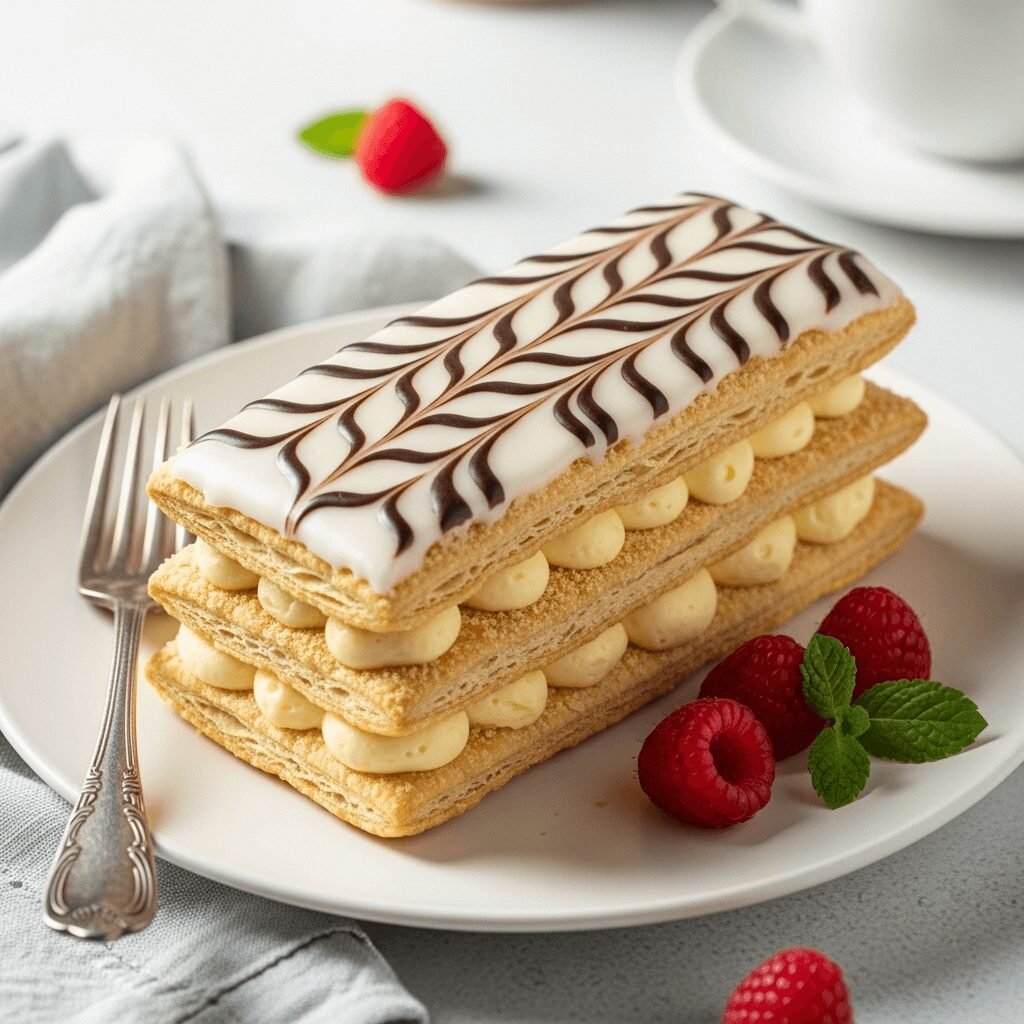
There’s something undeniably elegant about biting into a Napoleon pastry—those delicate layers of buttery, flaky puff pastry sandwiching smooth, vanilla-scented pastry cream, all topped with that gorgeous striped chocolate glaze. Also known as mille-feuille (which means “thousand leaves” in French), Napoleons have graced the windows of French patisseries for centuries, but you don’t need a culinary degree to make them at home. This Napoleons recipe breaks down the process into manageable steps that any home baker can follow, resulting in a dessert that looks like it came straight from a Parisian bakery. Whether you’re celebrating a special occasion, impressing dinner guests, or simply treating yourself to something extraordinary, homemade Napoleons deliver that perfect combination of crispy texture and creamy indulgence that makes every bite feel like a celebration.
Introduction of Recipe
Napoleons are classic French pastries consisting of three layers of crisp puff pastry alternating with two layers of silky pastry cream (crème pâtissière), traditionally finished with a distinctive white fondant icing decorated with chocolate stripes. This iconic dessert is a staple at bakeries and special occasions throughout France and has become beloved worldwide for its sophisticated appearance and delightful textural contrast. The name “Napoleon” likely doesn’t refer to the French emperor but rather comes from the Italian city of Naples, where similar layered pastries originated. This recipe is perfect for anniversary dinners, holiday celebrations, bridal showers, or any time you want to serve an impressive dessert that tastes as amazing as it looks. While Napoleons have a reputation for being complex, this recipe simplifies the process by using store-bought puff pastry (though you can certainly make your own if you’re feeling ambitious), allowing you to focus on creating the perfect pastry cream and achieving that beautiful bakery-style presentation.
History / Background
The Napoleon pastry has a rich history that spans several centuries and crosses multiple European borders. Despite its name, the dessert has no direct connection to Napoleon Bonaparte. The most widely accepted theory suggests that “Napoleon” is an anglicization of “Napolitain,” referring to Naples, Italy, where layered pastries were popular during the Renaissance period. The French perfected the dessert and renamed it “mille-feuille,” which poetically describes the countless thin layers created when puff pastry bakes and expands in the oven. Historical records show that François Pierre de La Varenne, a French chef, published one of the earliest recipes for puff pastry in his 1651 cookbook “Le Cuisinier François,” though the technique likely existed earlier. The mille-feuille as we know it today—with its distinctive three-layer construction and pastry cream filling—became standardized in French patisseries during the 19th century. The dessert gained international fame and spread throughout Europe and America, where it became known as a “Napoleon.” French pastry chefs take immense pride in their mille-feuille, and the dessert is often used as a test of a baker’s technical skill. The traditional topping features a marbled pattern created by dragging a toothpick through alternating lines of white fondant and chocolate, creating the iconic feathered design that has become synonymous with this elegant pastry. Today, Napoleons remain a beloved classic, representing the pinnacle of French pastry artistry while being surprisingly achievable for home bakers willing to invest a bit of time and care.
Why You’ll Love This Recipe
Making Napoleons at home might seem intimidating at first, but this recipe demystifies the process and gives you a roadmap to pastry success. Once you taste your first bite of homemade Napoleon—with its shattering crispy layers giving way to cool, creamy vanilla custard—you’ll understand why this dessert has captivated dessert lovers for centuries. The satisfaction of creating something this beautiful and delicious in your own kitchen is truly unmatched.
- Impressive presentation: These pastries look like they came from an expensive French bakery, making you look like a pastry chef extraordinaire
- Simplified process: Using quality store-bought puff pastry cuts your work time significantly without sacrificing taste or texture
- Make-ahead friendly: You can prepare components in advance and assemble closer to serving time, perfect for dinner party planning
- Customizable flavors: The basic technique allows for endless variations—chocolate cream, coffee-flavored filling, fruit additions, and more
- Textural perfection: The contrast between crispy, buttery pastry and smooth, cool cream creates an irresistible eating experience
- Smaller batch option: This recipe can be scaled to make individual servings or a larger sheet for slicing
- Special occasion worthy: Perfect for impressing guests without requiring professional equipment or training
- Surprisingly approachable: Step-by-step instructions make this classic French technique accessible to intermediate home bakers
Ingredient Notes
Puff Pastry: The foundation of your Napoleons. Store-bought all-butter puff pastry (like Dufour brand) works beautifully and saves hours of lamination work. If you’re feeling ambitious, homemade puff pastry will give you even more buttery flavor, but frozen pastry yields excellent results. Make sure it’s fully thawed in the refrigerator before rolling to prevent cracking.
Whole Milk: Forms the base of your pastry cream. Whole milk provides the richness needed for proper custard texture. Don’t substitute with low-fat milk, as you’ll lose that luxurious mouthfeel. Some bakers use a combination of milk and heavy cream for extra richness.
Granulated Sugar: Sweetens the pastry cream and helps stabilize the egg mixture. The amount can be adjusted slightly to your taste preference, but don’t reduce it too much or the cream won’t set properly.
Egg Yolks: The thickening agents that transform milk into silky custard. Use fresh, high-quality eggs for the best flavor and color. The yolks create that beautiful yellow hue in traditional pastry cream.
Cornstarch: Works with the egg yolks to thicken the pastry cream and prevent it from becoming too eggy. Some recipes use flour instead, but cornstarch creates a smoother, more refined texture that’s ideal for Napoleons.
Vanilla Extract: Provides that classic, aromatic flavor. Use pure vanilla extract rather than imitation for the best taste. For extra vanilla flavor, you can also add a vanilla bean scraped into the milk while heating.
Butter: A small amount of butter whisked into the finished pastry cream adds richness and gives it a beautiful sheen. Use unsalted butter so you can control the sweetness level.
Powdered Sugar (Confectioners’ Sugar): Used for the classic fondant-style icing. It dissolves smoothly into milk or cream to create that pristine white glaze.
Semi-Sweet or Dark Chocolate: Melted for creating the decorative chocolate stripes. Choose quality chocolate that melts smoothly—chocolate chips can work but bar chocolate melts more evenly.
Equipment Needed
- Baking sheet (half-sheet pan, approximately 18×13 inches)
- Parchment paper or silicone baking mat
- Rolling pin for evening out puff pastry if needed
- Fork for docking (pricking) the pastry
- Medium saucepan for cooking pastry cream
- Whisk (both balloon whisk and flat whisk are helpful)
- Mixing bowls (medium and large)
- Fine-mesh strainer for silky-smooth pastry cream
- Plastic wrap for preventing skin formation on pastry cream
- Sharp knife or pizza cutter for trimming pastry
- Offset spatula for spreading cream and icing
- Small microwave-safe bowl for melting chocolate
- Toothpick or skewer for creating marbled pattern
- Ruler for measuring even pastry rectangles
- Cooling rack
- Pastry bag (optional, for neater cream application)
Napoleons Recipe
Classic French Napoleon pastries (mille-feuille) featuring crispy layers of golden puff pastry, smooth vanilla pastry cream, and elegant chocolate-striped icing. This impressive dessert looks bakery-perfect but is surprisingly achievable at home.
- Prep Time: 45 minutes (plus 2 hours chilling)
- Cook Time: 25 minutes
- Total Time: 3 hours 10 minutes
- Yield: 8 servings 1x
- Category: Dessert
- Method: Baking
- Cuisine: American
- Diet: Vegetarian
Ingredients
For the Puff Pastry:
- 2 sheets frozen puff pastry (1 package, about 17.3 oz), thawed according to package directions
- 1 large egg, beaten (for egg wash, optional)
For the Pastry Cream (Crème Pâtissière):
- 2 cups whole milk
- ½ cup granulated sugar, divided
- 4 large egg yolks
- 3 tablespoons cornstarch
- 2 teaspoons pure vanilla extract
- 2 tablespoons unsalted butter
- Pinch of salt
For the Icing:
- 1½ cups powdered sugar
- 2-3 tablespoons milk or heavy cream
- ½ teaspoon vanilla extract
- 2 ounces semi-sweet or dark chocolate, melted
Instructions
Prepare the Puff Pastry:
- Preheat your oven to 400°F (200°C). Line two large baking sheets with parchment paper.
- Unfold the thawed puff pastry sheets on a lightly floured surface. If needed, gently roll each sheet to smooth out any creases and create an even rectangle approximately 10×12 inches.
- Transfer each pastry sheet to a prepared baking sheet. Using a fork, dock the entire surface of each sheet by pricking it all over at ½-inch intervals. This prevents the pastry from puffing up unevenly.
- Place a second sheet of parchment paper on top of each pastry sheet, then place another baking sheet on top to weight it down. This technique ensures flat, even layers perfect for stacking.
- Bake for 20-25 minutes until deep golden brown and completely crisp. Remove the top baking sheets and parchment carefully, then return pastry to oven for 2-3 minutes to crisp up the top surface if needed. Transfer to cooling racks and cool completely.
- Once cooled, carefully trim the edges of each pastry sheet to create clean rectangles. Cut each sheet into thirds lengthwise, creating 6 strips total (you’ll need 3 strips for one large Napoleon or use all 6 for two Napoleons).
Make the Pastry Cream:
- In a medium saucepan, heat the milk with ¼ cup of sugar over medium heat, stirring occasionally until it just begins to steam and small bubbles form around the edges. Do not boil.
- While the milk heats, whisk together the egg yolks, remaining ¼ cup sugar, cornstarch, and salt in a medium bowl until smooth and pale yellow, about 1-2 minutes.
- When the milk is hot, slowly pour about ½ cup of the hot milk into the egg mixture while whisking constantly. This tempers the eggs and prevents them from scrambling.
- Pour the tempered egg mixture back into the saucepan with the remaining hot milk, whisking constantly.
- Cook over medium heat, whisking continuously and making sure to scrape the bottom and corners of the pan, until the mixture thickens considerably and begins to bubble, about 3-5 minutes. Continue cooking and whisking for 1-2 minutes more to cook out the starchy taste.
- Remove from heat and whisk in the butter and vanilla extract until the butter melts and is fully incorporated.
- Pour the pastry cream through a fine-mesh strainer into a clean bowl to remove any lumps and ensure silky-smooth texture.
- Press plastic wrap directly onto the surface of the cream to prevent a skin from forming. Refrigerate for at least 2 hours or until completely chilled and set. Before using, whisk the chilled pastry cream until smooth.
Assemble the Napoleons:
- Place one pastry layer on a serving platter or cutting board. Using an offset spatula, spread half of the chilled pastry cream evenly over the surface, leaving about ¼ inch border around the edges.
- Carefully place the second pastry layer on top of the cream, pressing down very gently to help it adhere.
- Spread the remaining pastry cream over the second layer in the same manner.
- Place the third and final pastry layer on top, pressing down gently. The pastry should be level and stable.
Prepare the Icing and Decorate:
- In a medium bowl, whisk together the powdered sugar, 2 tablespoons milk, and vanilla extract until smooth and pourable but not too thin. Add an additional tablespoon of milk if needed to reach the consistency of thick honey.
- Pour the white icing over the top pastry layer and use an offset spatula to spread it evenly to the edges.
- Melt the chocolate in a microwave-safe bowl in 20-second intervals, stirring between each, until smooth.
- Transfer the melted chocolate to a small piping bag or a small zip-top bag with a tiny corner snipped off. Pipe thin parallel lines of chocolate across the width of the white icing, spacing them about ¾ inch apart.
- Working quickly before the icing sets, drag a toothpick or skewer through the chocolate lines perpendicular to them, alternating directions (pull toward you for one line, then push away for the next) to create the classic feathered pattern.
- Refrigerate the assembled Napoleon for 30 minutes to set the icing before slicing.
- Use a sharp serrated knife to cut into individual portions. Wipe the knife clean between cuts for neat slices. Serve chilled.
Notes
- The pastry cream can be made up to 2 days in advance and stored covered in the refrigerator.
- For easiest slicing, use a very sharp serrated knife and a gentle sawing motion.
- Napoleons are best served the day they’re assembled, as the pastry can soften over time from the moisture in the cream.
- If your puff pastry puffs unevenly despite docking and weighting, you can carefully press it flat while still warm.
- For individual Napoleons, cut the baked pastry into 3×2-inch rectangles before assembling.
Nutrition
- Serving Size: 1 Napoleon (1/8 of recipe)
- Calories: 425
- Sugar: 24g
- Sodium: 195mg
- Fat: 24g
- Saturated Fat: 11g
- Unsaturated Fat: 11g
- Trans Fat: 0g
- Carbohydrates: 47g
- Fiber: 1g
- Protein: 6g
- Cholesterol: 128mg
Tips & Variations
Flavor Variations:
- Chocolate Napoleons: Add 3 tablespoons cocoa powder to the pastry cream for chocolate cream, or fold in melted chocolate after straining
- Coffee Napoleons: Dissolve 2 tablespoons instant espresso powder into the hot milk for coffee-flavored cream
- Fruit Napoleons: Layer fresh sliced strawberries, raspberries, or caramelized apples between the cream layers
- Almond Napoleons: Replace vanilla extract with almond extract and sprinkle toasted sliced almonds on top
Dietary Adaptations:
- For a lighter version, fold whipped cream into the cooled pastry cream (called “diplomat cream”) for a mousse-like texture
- Use dairy-free puff pastry and coconut milk-based pastry cream for a vegan adaptation
- Add a tablespoon of liqueur (Grand Marnier, rum, or Frangelico) to the pastry cream for an adult version
Presentation Ideas:
- Make individual Napoleons by cutting pastry into 3×2-inch rectangles—perfect for elegant dinner parties
- Create round Napoleons using a biscuit cutter to cut circles from the baked pastry
- Top with fresh berries, mint leaves, or edible flowers for a romantic presentation
- Dust with powdered sugar instead of fondant icing for a simpler, rustic look
- Add a layer of fruit preserves (raspberry or apricot) along with the pastry cream for extra flavor
Pro Chef Tips
Achieving Maximum Flakiness: The secret to shatteringly crisp puff pastry is keeping it cold before baking and weighing it down during baking. If your kitchen is warm, chill the docked pastry sheets in the refrigerator for 15 minutes before baking. The weighted baking sheet on top is crucial—it creates those compact, even layers that make Napoleons so texturally satisfying.
Silky Pastry Cream Every Time: The key to lump-free pastry cream is constant whisking and proper tempering. When adding hot milk to eggs, pour slowly while whisking vigorously. Many home cooks stop cooking too soon—you need to bring the mixture to a full boil and cook for the full time to activate the cornstarch completely. Straining is insurance against any small lumps that might have formed.
Assembly Timing Matters: Assemble your Napoleons no more than 2-4 hours before serving for optimal texture. The pastry will gradually absorb moisture from the cream, becoming softer (though still delicious). Professional bakers often assemble these to order because that textural contrast between crisp pastry and cool cream is most dramatic when fresh.
Perfect Chocolate Feathering: Work quickly when creating the decorative pattern—the icing begins to set within minutes. Pipe the chocolate lines in one smooth motion, then immediately drag your toothpick through them. Wipe the toothpick clean between each drag to keep the pattern sharp and distinct.
Cutting Without Crushing: The biggest challenge with Napoleons is slicing them without shattering the pastry or squishing the cream. Use a long serrated knife with a gentle sawing motion rather than pressing straight down. Some chefs prefer to score the top pastry layer with a sharp knife before assembly, creating cutting guides that make it easier to slice through later.
Common Mistakes to Avoid
Not Docking the Pastry Thoroughly: Skipping the fork-pricking step or not docking thoroughly enough will result in wildly uneven puffing. Every square inch should be pricked to allow steam to escape evenly. Without proper docking and weighting, your pastry will puff into a dome rather than staying flat.
Scrambling the Eggs: Adding hot milk too quickly to the egg yolks without proper tempering causes the eggs to scramble into little cooked bits. Always add the hot liquid slowly while whisking constantly, and make sure your whisk reaches every part of the bowl.
Undercooking the Pastry Cream: Many home cooks remove the cream from heat as soon as it thickens, but you need to continue cooking for 1-2 minutes after it reaches a boil. This fully activates the cornstarch and cooks out any starchy flavor. Undercooked cream will taste raw and may not set properly.
Assembling Too Far in Advance: While tempting to prepare everything early, assembling Napoleons more than 4 hours before serving results in soggy pastry. The moisture from the cream gradually softens those crispy layers. For best results, bake pastry and make cream ahead, but assemble within a few hours of serving.
Using Warm Pastry Cream: Spreading warm or room-temperature cream onto the pastry will immediately start softening those crisp layers. Always ensure your pastry cream is completely chilled before assembly. This also makes spreading easier and neater.
Storage & Meal Prep
Refrigerator Storage: Assembled Napoleons should be stored in the refrigerator, loosely covered with plastic wrap or in an airtight container. They’re best enjoyed within 24 hours of assembly, as the pastry gradually softens from the moisture in the cream. Individual components keep much longer—baked puff pastry can be stored airtight at room temperature for 2-3 days, and pastry cream keeps refrigerated for up to 3 days.
Leftover Tips: If you have leftover Napoleon, embrace the slightly softer texture as a different but still delicious experience. Some people actually prefer the pastry after it’s had time to absorb some cream. You can refresh leftover pastry (before assembling) by placing it in a 350°F oven for 3-5 minutes to re-crisp.
Component Storage: Store each component separately for maximum flexibility. Keep baked, cooled puff pastry sheets in an airtight container at room temperature separated by parchment paper. Refrigerate pastry cream in an airtight container with plastic wrap pressed directly against the surface. The icing can be made fresh when assembling.
Reheating Notes: Napoleons are meant to be served cold, so reheating isn’t recommended. However, if you want to refresh the pastry before assembly, place the baked sheets on a baking sheet and warm in a 325°F oven for 3-5 minutes to restore crispness.
Make-Ahead & Freezer Notes
Make-Ahead Strategy: This dessert is perfect for make-ahead preparation if you break it into components. Bake the puff pastry up to 2 days ahead and store airtight at room temperature. Prepare the pastry cream up to 3 days ahead and keep refrigerated. On serving day, simply assemble, ice, and decorate—the whole process takes about 20 minutes once components are ready.
Freezing Baked Puff Pastry: Baked puff pastry layers freeze exceptionally well for up to 1 month. Let them cool completely, then wrap each layer individually in plastic wrap and place in a freezer bag. Thaw at room temperature for 30 minutes before assembling. You can even refresh them in a 350°F oven for 5 minutes after thawing to restore maximum crispness.
Freezing Pastry Cream: While technically possible, freezing pastry cream can affect its texture, sometimes making it slightly grainy when thawed. If you must freeze it, transfer to an airtight container and freeze for up to 1 month. Thaw overnight in the refrigerator and whisk vigorously to restore smoothness before using.
Do Not Freeze Assembled: Never freeze assembled Napoleons. The pastry becomes irretrievably soggy when thawed, and the cream may separate. Always freeze components separately and assemble after thawing.
Best Reheating Method: For frozen pastry sheets, thaw at room temperature, then place in a 350°F preheated oven for 5-7 minutes to restore that just-baked crispness. Let cool completely before assembling with the cream.
Serving Suggestions
Napoleons are such a show-stopping dessert that they rarely need accompaniments, but the right pairings can elevate the experience even further. Serve these beauties on individual dessert plates with a small pool of raspberry or chocolate sauce artfully drizzled alongside. Fresh berries—especially raspberries, strawberries, or blackberries—provide a bright, tart contrast to the rich, sweet pastry and make for stunning presentation.
Beverage Pairings: A classic French dessert deserves equally refined beverage choices. Serve with freshly brewed espresso or a French press coffee to cut through the richness. Champagne or sweet dessert wines like Sauternes or Moscato d’Asti complement the elegant nature of Napoleons beautifully. For a non-alcoholic option, try earl grey tea or a vanilla-flavored latte.
Occasion Ideas: Napoleons are ideal for special occasions including anniversary dinners, bridal or baby showers, Mother’s Day brunches, Valentine’s Day desserts, or holiday celebrations. They’re sophisticated enough for formal dinner parties yet approachable enough for family gatherings. Consider making individual portions for plated desserts at elegant dinners, or create one large Napoleon for family-style serving.
Plating Suggestions: Dust the plate with cocoa powder or powdered sugar before placing the Napoleon. Add a small quenelle of whipped cream on the side. Garnish with a fresh mint sprig or a few berries. For restaurant-style presentation, add a tuile cookie or brandy snap standing upright beside the Napoleon.
FAQs Section
Can I make Napoleons without puff pastry?
While puff pastry is traditional and creates that signature flaky texture, you can experiment with phyllo dough brushed with butter between layers, though the result will be crisper and more delicate. Some bakers also use layers of crisp cookies or meringue, but these create a different dessert entirely. For authentic Napoleons, puff pastry is really essential.
Why did my pastry cream turn out lumpy?
Lumps typically form when eggs aren’t properly tempered (hot milk added too quickly), when the mixture isn’t whisked constantly during cooking, or when it’s heated too rapidly. Always strain your pastry cream through a fine-mesh sieve to remove any lumps. Whisking the mixture constantly and cooking over medium (not high) heat prevents lumps from forming in the first place.
How do I prevent the Napoleon from sliding apart when cutting?
Chilling the assembled Napoleon for at least 30 minutes before slicing helps the cream set and holds everything together. Use a long serrated knife with a gentle sawing motion rather than pressing straight down. Wiping the knife clean between cuts also prevents cream buildup that can cause dragging. Some professionals score the top layer before assembly as a cutting guide.
Can I use store-bought pudding instead of homemade pastry cream?
While convenient, instant pudding doesn’t have the same luxurious texture and authentic flavor as true pastry cream. If you’re short on time, vanilla pudding mix made with milk (not the instant variety) works better than no-cook instant pudding. For best results, it’s worth making real pastry cream—it’s not difficult and makes all the difference.
My puff pastry puffed up too much. What went wrong?
This happens when the pastry isn’t docked thoroughly enough with a fork before baking. You need to prick the entire surface densely. Also, make sure you’re weighing the pastry down with a second baking sheet during baking. If it still puffs, you can gently press it flat while it’s still warm from the oven.
How far in advance can I assemble Napoleons?
For optimal texture with crispy pastry layers, assemble no more than 2-4 hours before serving. The pastry gradually absorbs moisture from the cream, becoming softer. For entertaining, prepare all components ahead and assemble a few hours before guests arrive. If texture isn’t critical, you can assemble up to 8 hours ahead, though the pastry will be softer.
What’s the difference between a Napoleon and a mille-feuille?
They’re the same dessert with different names. “Mille-feuille” is the French term meaning “thousand leaves,” referring to the many layers of puff pastry. “Napoleon” is the English name, possibly derived from “Napolitain” (from Naples, Italy) or simply a popular anglicization. In France, you’ll ask for mille-feuille; in American bakeries, it’s usually called a Napoleon.
Conclusion
Creating homemade Napoleons is truly a labor of love, but one that rewards you with an absolutely spectacular dessert that tastes every bit as good as it looks. While this classic French pastry might seem intimidating at first glance, breaking the process down into manageable steps makes it completely achievable for home bakers. The combination of crispy, buttery puff pastry layers with cool, silky vanilla pastry cream creates a textural and flavor experience that’s simply unforgettable. Whether you’re celebrating a milestone, impressing dinner guests, or just treating yourself to something extraordinary, these Napoleons deliver sophistication and elegance right from your own kitchen.
Now it’s your turn to experience the magic of homemade Napoleons! I’d love to hear how your baking adventure goes—drop a comment below sharing your results, any variations you tried, or questions you might have. Did you add fresh berries? Try a chocolate cream filling? Your feedback helps other home bakers on their Napoleon journey! And if you loved this recipe, please save it to your Pinterest boards so you can find it again and share this beautiful French pastry with your friends and family. Don’t forget to snap a photo of your finished Napoleons and tag us on social media—there’s nothing better than seeing your gorgeous creations! Happy baking, and enjoy every flaky, creamy bite!