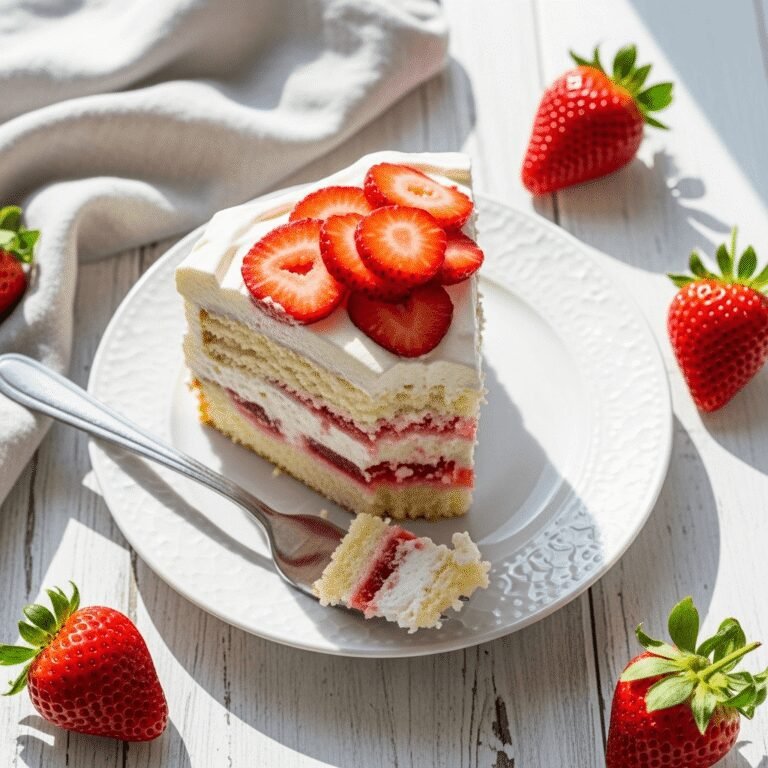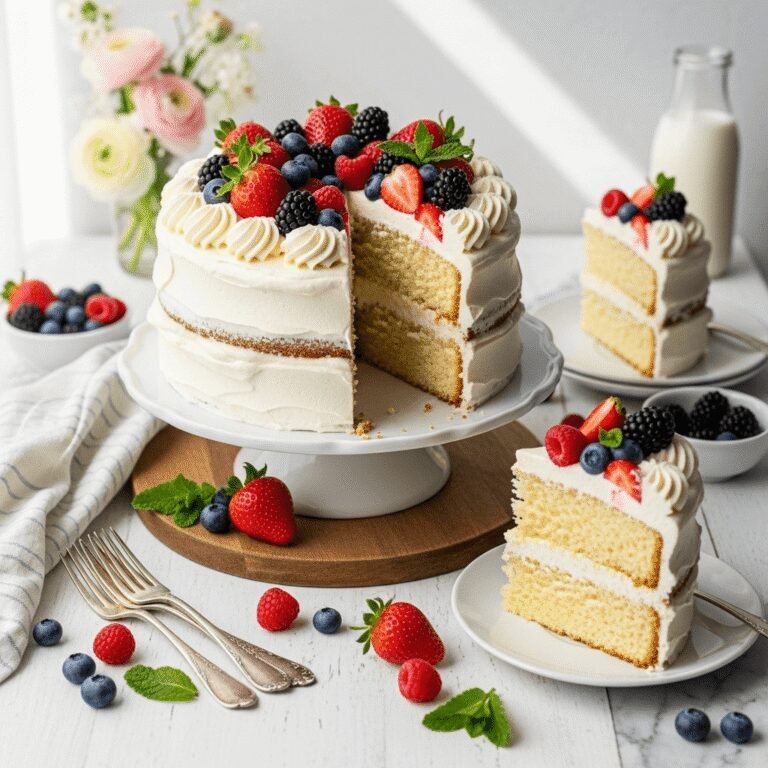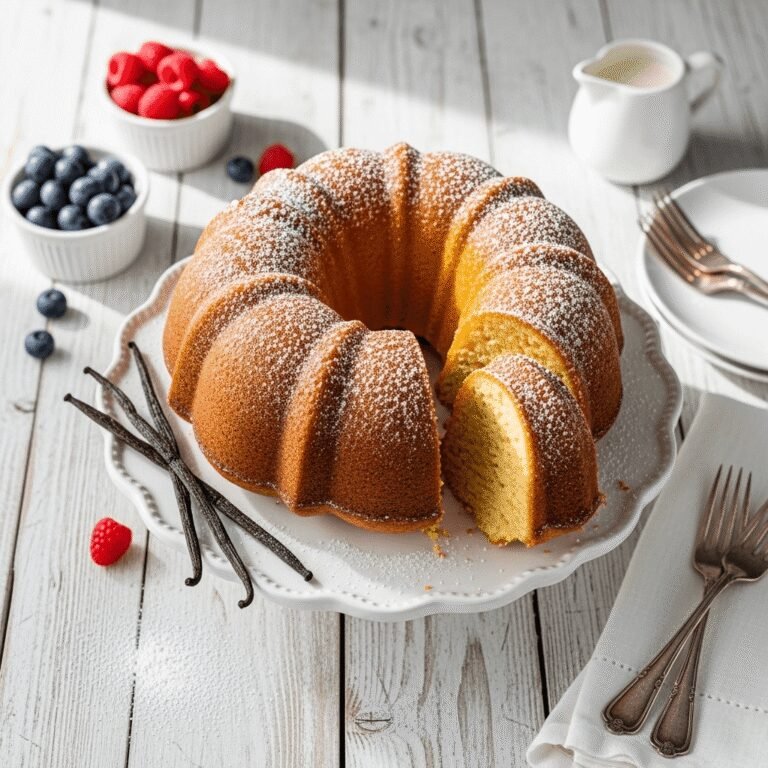
The Best Almond Cake Recipe – Moist, Buttery & Naturally Gluten-Free!
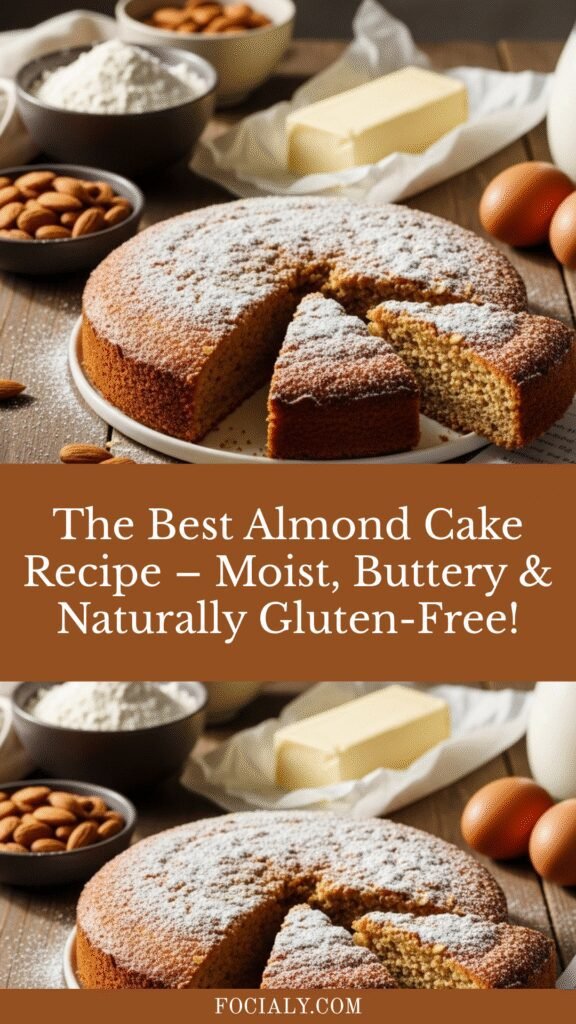
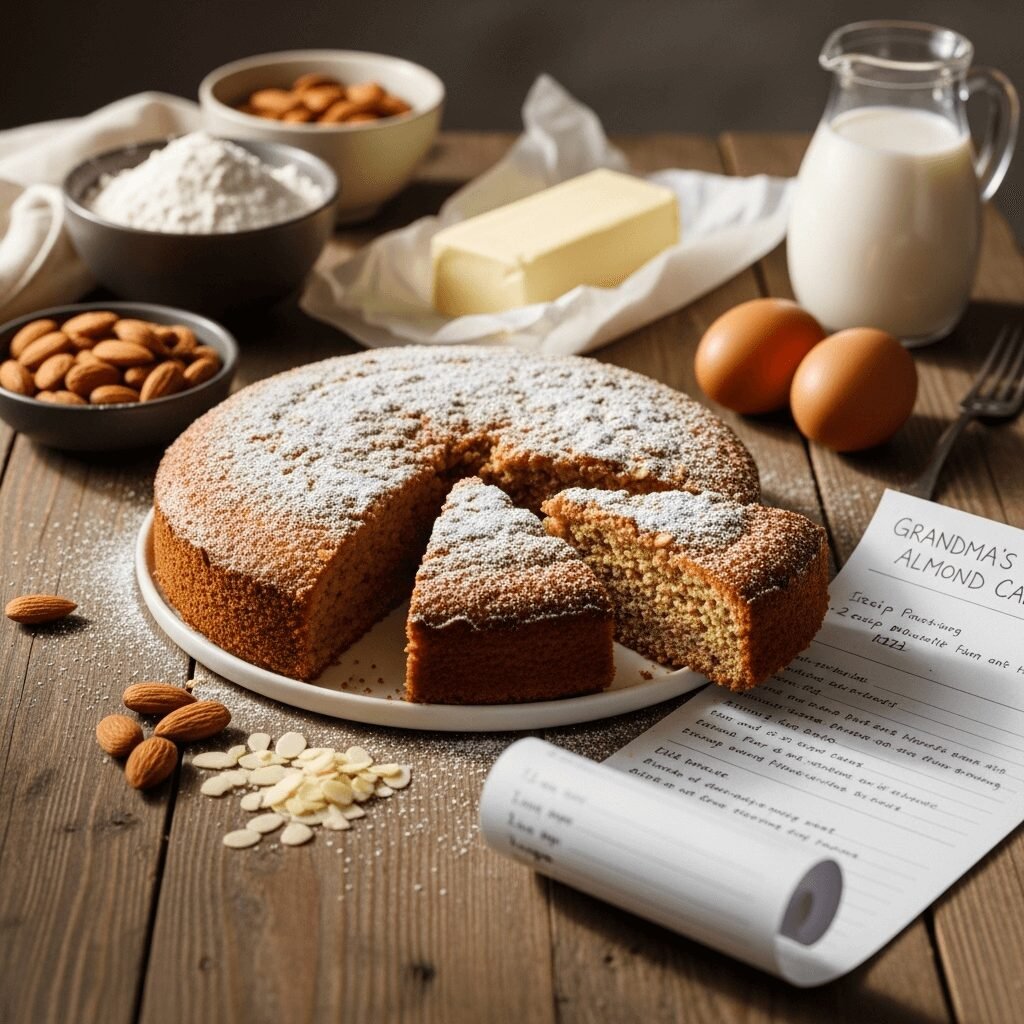
There’s something truly magical about a perfectly baked almond cake. This isn’t your typical flour-heavy dessert – it’s a luxuriously moist, tender cake that celebrates the delicate, sweet flavor of almonds in every single bite. Whether you’re looking for an elegant dessert to serve at your next dinner party, a special treat for afternoon tea, or a naturally gluten-free option that doesn’t compromise on taste or texture, this almond cake recipe delivers on all fronts.
What makes this almond cake so special is its incredible versatility. It’s fancy enough for celebrations yet simple enough for a casual Sunday afternoon. The cake has a beautiful golden crust, a tender crumb that practically melts on your tongue, and a subtle almond flavor that’s sophisticated without being overpowering. Plus, since it’s made primarily with almond flour (or finely ground almonds), it’s naturally gluten-free, making it the perfect choice for guests with dietary restrictions.
I love serving this almond cake during spring and summer gatherings when you can top it with fresh berries, but honestly, it’s delicious year-round. Dust it with powdered sugar for a classic presentation, serve it with whipped cream and fruit, or enjoy it plain with your morning coffee – it’s absolutely perfect no matter how you choose to serve it.
History / Background
Almond cake has a rich and fascinating history that spans multiple cultures and centuries. The use of almonds in baking dates back to ancient civilizations in the Middle East and Mediterranean regions, where almond trees flourished in the warm climate. These nutrient-dense nuts were prized not only for their flavor but also for their ability to be ground into a fine meal that could replace or supplement wheat flour.
The modern almond cake as we know it today has particularly strong roots in European baking traditions. In France, there’s the beloved “gâteau aux amandes,” a rustic yet elegant cake that showcases the pure flavor of almonds. Italian bakers have their own versions, often incorporating amaretto or almond extract for an extra punch of flavor. Spanish cuisine features tarta de Santiago, a famous almond cake from Galicia that’s been made since the Middle Ages and is traditionally decorated with a cross of powdered sugar.
During the Renaissance period, almond-based cakes became especially popular among the wealthy European aristocracy. Almonds were expensive and considered luxurious, so serving an almond cake was a way to display prosperity and refinement. Jewish communities throughout Europe also embraced almond flour cakes because they were naturally appropriate for Passover celebrations when leavened wheat products were forbidden.
In more recent times, almond cake has experienced a resurgence in popularity, particularly in the United States, as more people discover its naturally gluten-free properties. What was once a necessity for those with celiac disease or gluten sensitivities has become a preferred choice for many home bakers who appreciate the cake’s superior moisture, tender texture, and rich flavor. The health-conscious baking movement has also championed almond flour as a nutritious alternative to refined wheat flour, packed with protein, healthy fats, and vitamin E.
Today’s almond cake represents a beautiful marriage of old-world European baking traditions and modern dietary awareness, proving that some recipes truly do get better with age and adaptation.
Why You’ll Love This Recipe
This almond cake is about to become your new go-to dessert, and here’s why: it strikes that perfect balance between being impressively delicious and surprisingly simple to make. You don’t need any fancy techniques or professional pastry skills – just a few quality ingredients, a mixing bowl, and about an hour from start to finish.
Here’s what makes this recipe truly special:
- Naturally gluten-free – Made with almond flour, so everyone at your table can enjoy a slice without worry
- Incredibly moist texture – This cake stays tender for days thanks to the natural oils in almonds
- Simple ingredient list – No complicated or hard-to-find ingredients required
- Foolproof method – Even beginner bakers will have success with this straightforward recipe
- Elegant presentation – Looks like it came from a fancy bakery with minimal effort
- Versatile serving options – Dress it up or down depending on the occasion
- Make-ahead friendly – Actually tastes better the next day as the flavors develop
- Budget-friendly – Almond flour may seem pricey, but you only need one bag and no other expensive ingredients
- Lower in carbs – Compared to traditional cakes, this has fewer carbs and more protein
- Perfect for special diets – Easily adaptable for keto, paleo, or dairy-free needs
- Not overly sweet – The subtle almond flavor shines through without being masked by excessive sugar
- Quick prep time – Active work time is only about 15 minutes
Ingredient Notes
Let’s talk about what goes into making this beautiful almond cake and why each ingredient matters:
Almond Flour (or Finely Ground Almonds) – This is the star of the show and the foundation of your cake. Almond flour creates that incredibly moist, tender crumb that makes this cake so special. You can use store-bought blanched almond flour for the finest texture, or make your own by grinding blanched almonds in a food processor until very fine (just be careful not to over-process or you’ll end up with almond butter!). Blanched almond flour (made from almonds with skins removed) gives a lighter color and more delicate texture, while almond flour with skins will create a slightly denser, more rustic cake. Substitution: You can substitute part of the almond flour with hazelnut flour for a different flavor profile.
Granulated Sugar – Provides sweetness and helps create structure in the cake. The sugar also contributes to the beautiful golden crust. Substitution: You can use coconut sugar for a lower glycemic option, though it will make the cake slightly darker in color and add a subtle caramel flavor.
Eggs – These are crucial for binding everything together and creating lift and structure. Make sure your eggs are at room temperature for better incorporation into the batter. Substitution: For a vegan version, try using flax eggs (3 tablespoons ground flaxseed mixed with 9 tablespoons water), though the texture will be slightly different.
Butter (or Oil) – Adds richness, moisture, and flavor. Melted butter creates a beautiful taste, while neutral oil like avocado or light olive oil will make the cake dairy-free. Substitution: Coconut oil works well but will add a subtle coconut flavor.
Almond Extract – This intensifies the almond flavor and makes the cake taste even more special. A little goes a long way! Substitution: Vanilla extract works if you prefer a more subtle flavor, or use a combination of both.
Baking Powder – Provides gentle lift to help the cake rise properly. Make sure yours is fresh (check the expiration date) for best results.
Salt – Just a pinch enhances all the other flavors and balances the sweetness.
Lemon Zest (Optional) – Adds a bright, fresh note that complements the almonds beautifully without overpowering them.
Equipment Needed
You don’t need a fancy kitchen to make this almond cake! Here’s what you’ll need:
- 9-inch round cake pan or springform pan – A springform makes removal easier, but a regular pan works great too
- Mixing bowls (2-3 medium to large)
- Electric mixer (hand mixer or stand mixer) – Or good old-fashioned elbow grease with a whisk
- Measuring cups and spoons – For accurate measurements
- Fine-mesh sieve or sifter – For dusting with powdered sugar
- Parchment paper – For lining the pan bottom (makes removal foolproof)
- Rubber spatula – For scraping down the bowl and smoothing the batter
- Toothpick or cake tester – To check for doneness
- Cooling rack – Allows air to circulate around the cake as it cools
- Zester or microplane (optional) – If you’re adding lemon zest
- Food processor (optional) – If you’re grinding your own almonds into flour
Almond Cake Recipe

This moist and tender almond cake is naturally gluten-free and incredibly easy to make. With its delicate almond flavor, buttery texture, and beautiful golden crust, it’s the perfect elegant dessert for any occasion. Serve it plain, dusted with powdered sugar, or topped with fresh berries and whipped cream.
- Prep Time: 15 minutes
- Cook Time: 40 minutes
- Total Time: 55 minutes
- Yield: 8-10 servings 1x
- Category: Dessert
- Method: Baking
- Cuisine: European-inspired
- Diet: Vegetarian
Ingredients
- 2½ cups (240g) blanched almond flour
- ¾ cup (150g) granulated sugar
- 4 large eggs, room temperature
- ½ cup (115g) unsalted butter, melted and slightly cooled (or ½ cup neutral oil)
- 1½ teaspoons pure almond extract
- 1 teaspoon pure vanilla extract
- 1½ teaspoons baking powder
- ¼ teaspoon fine sea salt
- Zest of 1 lemon (optional but recommended)
- Powdered sugar for dusting (optional)
Instructions
- Preheat and prepare the pan: Preheat your oven to 350°F (175°C). Grease a 9-inch round cake pan or springform pan with butter or cooking spray, then line the bottom with parchment paper. Grease the parchment paper as well for easy release.
- Mix the dry ingredients: In a large mixing bowl, whisk together the almond flour, sugar, baking powder, and salt until well combined and no lumps remain. If you notice any clumps in your almond flour, break them up with your fingers or press through a sieve.
- Prepare the wet ingredients: In a separate medium bowl, whisk together the eggs, melted butter (make sure it’s not too hot or it will cook the eggs), almond extract, vanilla extract, and lemon zest (if using) until smooth and well combined.
- Combine wet and dry: Pour the wet ingredients into the bowl with the dry ingredients. Using a rubber spatula or wooden spoon, gently fold everything together until just combined. Be careful not to overmix – you want a smooth batter, but overworking it can make the cake dense. The batter will be thicker than traditional cake batter, more like a thick pancake batter.
- Transfer to pan: Pour the batter into your prepared pan and smooth the top with a spatula, making sure it’s evenly distributed. Tap the pan gently on the counter a few times to release any air bubbles.
- Bake: Place the pan in the preheated oven and bake for 35-40 minutes, or until the cake is golden brown on top and a toothpick inserted into the center comes out clean or with just a few moist crumbs. The edges should be pulling away slightly from the sides of the pan, and the center should spring back lightly when touched.
- Cool: Remove the cake from the oven and let it cool in the pan for 10-15 minutes. This cooling period is important – it allows the cake to set up properly so it won’t fall apart when you remove it. After 15 minutes, run a knife around the edge of the pan to loosen it, then invert onto a cooling rack. Remove the parchment paper and flip the cake right-side up to finish cooling completely.
- Serve: Once completely cooled, dust with powdered sugar if desired. Slice and serve plain, or top with fresh berries, whipped cream, or a dollop of mascarpone.
Notes
- Room temperature matters: Make sure your eggs are at room temperature for better incorporation. Just place them in warm water for 5-10 minutes if you forgot to take them out earlier.
- Don’t overbake: Almond flour cakes can dry out if overbaked. Start checking at 35 minutes and remove as soon as a toothpick comes out clean.
- Butter vs. oil: Butter gives the best flavor, but oil creates a moister cake that stays fresh longer. Choose based on your preference.
- Storage: This cake actually improves overnight as the flavors meld. Store covered at room temperature for 2-3 days, or refrigerate for up to 5 days.
- Make it your own: Add ½ cup of chocolate chips, dried cherries, or sliced almonds on top before baking for variation.
Nutrition
- Serving Size: 1 slice (based on 10 servings)
- Calories: 285
- Sugar: 16g
- Sodium: 125mg
- Fat: 21g
- Saturated Fat: 6g
- Unsaturated Fat: 14g
- Trans Fat: 0g
- Carbohydrates: 19g
- Fiber: 3g
- Protein: 8g
- Cholesterol: 95mg
Tips & Variations
Flavor Variations:
- Chocolate Almond Cake: Add 3 tablespoons of cocoa powder to the dry ingredients and reduce almond flour by 3 tablespoons
- Orange Almond Cake: Replace lemon zest with orange zest and add 1 tablespoon of orange juice
- Amaretto Almond Cake: Replace 2 tablespoons of the butter with amaretto liqueur for an adult version
- Berry Almond Cake: Gently fold in 1 cup of fresh blueberries or raspberries before baking
- Coconut Almond Cake: Add ½ cup of shredded unsweetened coconut to the batter
Dietary Modifications:
- Dairy-Free: Use coconut oil or a neutral-flavored oil instead of butter
- Sugar-Free: Replace sugar with a 1:1 sugar substitute like erythritol or monk fruit sweetener
- Keto-Friendly: Use the sugar-free version above – almond flour is already low-carb
- Vegan: Use flax eggs (1 tablespoon ground flaxseed + 3 tablespoons water per egg) and oil instead of butter
Texture Variations:
- Extra Moist: Add 2 tablespoons of sour cream or Greek yogurt to the batter
- Lighter Texture: Separate the eggs, beat the whites to stiff peaks, and fold them in at the end
- Denser, Fudgier Cake: Reduce baking powder to 1 teaspoon
Topping Ideas:
- Classic powdered sugar dusting
- Cream cheese frosting
- Lemon glaze (powdered sugar + lemon juice)
- Chocolate ganache
- Fresh berry compote
- Sliced toasted almonds
- Whipped cream with vanilla
Pro Chef Tips
Toast Your Almonds First: If you’re grinding your own almond flour, lightly toast the almonds first (350°F for 5-7 minutes) before cooling and grinding. This deepens the nutty flavor significantly and adds an extra layer of complexity to your cake.
Use a Kitchen Scale: Almond flour can compact differently depending on humidity and storage, so weighing your ingredients (especially the almond flour) ensures perfect results every time. 240g is more accurate than volume measurements.
The Fold Technique: When combining wet and dry ingredients, use a folding motion rather than vigorous stirring. Scrape from the bottom of the bowl upward, turning the bowl as you go. This gentle method prevents overdevelopment of the protein structure, keeping your cake tender.
Test for Doneness Early: Almond cakes can go from perfectly baked to overbaked quickly. Start checking at 35 minutes, and remember that the cake will continue to cook slightly as it cools in the pan. A few moist crumbs on your toothpick are actually perfect.
The Upside-Down Cooling Trick: For an ultra-flat top perfect for layering or frosting, flip the cake upside down while cooling. The weight will gently compress and flatten any dome.
Enhance with Salt: A tiny sprinkle of flaky sea salt on top before baking creates a sophisticated sweet-salty contrast that makes the almond flavor pop.
Double Your Flavor: Use both almond extract and vanilla. The vanilla rounds out the almond and prevents it from tasting artificial or one-dimensional.
Common Mistakes to Avoid
Using Old Almond Flour: Almond flour contains natural oils that can go rancid. Always smell your almond flour before using – it should smell fresh and nutty, not bitter or off. Store almond flour in the refrigerator or freezer for maximum freshness.
Skipping the Parchment Paper: Even in a well-greased pan, almond cakes can stick because of their moisture content. Always line the bottom with parchment paper for worry-free release. Trust me on this one!
Adding Mix-Ins Without Adjusting: If you add fresh fruit, chocolate chips, or other mix-ins, toss them in a tablespoon of almond flour first. This prevents them from sinking to the bottom during baking.
Overmixing the Batter: Unlike traditional cakes that need creaming and beating, this almond cake should be mixed gently just until combined. Overmixing can make the cake gummy and dense.
Cutting While Hot: I know it’s tempting, but cutting into a hot almond cake will cause it to crumble and fall apart. Patience is key – wait until it’s completely cooled for the cleanest slices and best texture.
Storage & Meal Prep
This almond cake is actually a dream when it comes to storage and meal prep, which makes it perfect for busy home cooks who like to plan ahead.
Room Temperature Storage: Store the cooled cake in an airtight container or cover tightly with plastic wrap. It will stay fresh at room temperature for 2-3 days. The cake actually improves after the first day as the flavors meld and develop, so don’t worry if you’re making it ahead for a party.
Refrigerator Storage: For longer storage, keep the cake in an airtight container in the refrigerator for up to 5 days. Some people actually prefer the texture chilled – it becomes slightly denser and more decadent. Let it come to room temperature for 15-20 minutes before serving for the best flavor, or enjoy it cold if you prefer.
Individual Slices: If you’re meal prepping for the week, slice the cake and wrap individual portions in plastic wrap, then store in an airtight container. This makes it easy to grab a slice for breakfast or a snack without exposing the entire cake to air repeatedly.
Reheating Tips: While this cake is delicious cold or at room temperature, you can warm individual slices in the microwave for 10-15 seconds if you prefer it slightly warm. Alternatively, wrap a slice in foil and warm in a 300°F oven for 5-7 minutes.
Make-Ahead & Freezer Notes
This is one of those wonderful recipes that’s incredibly freezer-friendly and perfect for preparing in advance.
Make-Ahead Instructions:
- Batter: You can make the batter up to 2 hours ahead and store it covered in the refrigerator. Let it sit at room temperature for 15 minutes before baking, and you may need to add 2-3 extra minutes to the baking time.
- Fully Baked Cake: Bake the cake up to 3 days in advance. Store it tightly wrapped at room temperature or in the refrigerator. The flavor actually deepens and improves over the first 24 hours.
- Day-Before Strategy: For parties or special occasions, I always bake this cake the day before. It gives the flavors time to develop and removes the stress of day-of baking.
Freezing Instructions:
- Whole Cake: Let the cake cool completely, then wrap tightly in two layers of plastic wrap followed by a layer of aluminum foil. Freeze for up to 3 months. Thaw overnight in the refrigerator, then bring to room temperature before serving.
- Individual Slices: Wrap each slice individually in plastic wrap, then place all slices in a freezer-safe zip-top bag. This is perfect for portion control – you can grab a single slice whenever you want a treat.
- Frosted vs. Unfrosted: I recommend freezing the cake unfrosted (just dusted with powdered sugar after thawing). However, if you’ve added a glaze or frosting, it will freeze fine – just know that the texture might change slightly upon thawing.
Best Reheating Method from Frozen: For individual slices, microwave on 50% power for 45-60 seconds until just thawed and slightly warm. For a whole frozen cake, thaw overnight in the refrigerator in its wrapping, then unwrap and let come to room temperature for the best texture.
Serving Suggestions
The beauty of this almond cake is its versatility – it works for everything from casual coffee time to elegant dinner parties. Here are my favorite ways to serve it:
Classic Presentation:
- Dust with powdered sugar through a fine-mesh sieve for a beautiful snow-dusted look
- Serve with a cup of strong coffee or espresso
- Add a dollop of lightly sweetened whipped cream on the side
Fancy Occasion:
- Top each slice with mixed fresh berries (strawberries, raspberries, blueberries) and a sprig of fresh mint
- Drizzle with a simple lemon glaze made from powdered sugar and fresh lemon juice
- Serve with vanilla bean ice cream or gelato
- Add a side of berry coulis or raspberry sauce
Afternoon Tea Style:
- Serve small slices alongside other petit fours and tea sandwiches
- Pair with Earl Grey, chamomile, or green tea
- Garnish with edible flowers for a garden party feel
Breakfast or Brunch:
- Serve with Greek yogurt and honey
- Top with sliced peaches or nectarines in summer
- Pair with a cappuccino or latte
- Spread with a thin layer of apricot jam or orange marmalade
Complementary Sides:
- Fresh fruit salad with mint
- Vanilla custard or crème anglaise
- Mascarpone cream with a touch of vanilla
- Caramel sauce for extra decadence
- A glass of dessert wine like Moscato or late-harvest Riesling
Beverage Pairings:
- Strong black coffee or espresso
- Herbal tea (especially chamomile or lavender)
- Prosecco or champagne for celebrations
- Amaretto liqueur as an after-dinner treat
- Cold milk for a simple, comforting combination
FAQs Section
Q: Can I make this cake without almond flour?
A: Almond flour is really the foundation of this recipe and what makes it special, so I don’t recommend substituting it with all-purpose flour – you’d end up with an entirely different cake. However, you can use hazelnut flour for a similar texture with a different nutty flavor. If you need to avoid nuts entirely, look for a different cake recipe designed for regular flour, as the ratios and technique are quite different.
Q: Why is my almond cake dense and gummy?
A: This usually happens for one of three reasons: overmixing the batter (which overdevelops the proteins), using almond meal instead of almond flour (meal includes the skins and is coarser), or underbaking. Make sure you mix just until combined, use finely ground blanched almond flour, and bake until a toothpick comes out clean. Also, ensure your baking powder is fresh and active.
Q: Can I use almond extract instead of almond flour?
A: No, almond extract and almond flour serve completely different purposes. Almond flour is the structural base of the cake (replacing wheat flour), while almond extract is just for flavoring. You need both for this recipe to work properly.
Q: How do I know when the almond cake is done?
A: Look for three signs: the edges should be pulling away slightly from the pan, the top should be golden brown and spring back lightly when touched, and a toothpick inserted in the center should come out clean or with just a few moist crumbs (no wet batter). Because almond flour is naturally moist, don’t expect a completely dry toothpick, but it shouldn’t have liquid batter on it either.
Q: Can I make this cake in a different sized pan?
A: Absolutely! For an 8-inch pan, the batter will be slightly deeper and may need an extra 5-8 minutes of baking time. For a 10-inch pan, check for doneness a few minutes early as it will bake faster. You can also make this in a loaf pan (bake for 45-50 minutes) or as cupcakes (bake for 18-22 minutes). Always use the toothpick test to determine doneness.
Q: Is almond cake healthy?
A: Compared to traditional cakes, almond cake has some nutritional advantages. Almond flour is higher in protein, fiber, and healthy fats than white flour, and it has a lower glycemic index. However, it’s still a dessert with sugar and butter, so enjoy it in moderation. If you’re looking for a healthier treat or have specific dietary needs, this is a great choice since it’s naturally gluten-free and can be modified to be lower in sugar.
Q: Why did my cake sink in the middle?
A: A sunken center usually means one of these things: the oven temperature was too high (causing the outside to set before the inside was done), you opened the oven door too early (causing a temperature drop), or there was too much leavening agent. Make sure your oven temperature is accurate (use an oven thermometer if possible), don’t peek until at least 30 minutes into baking, and measure your baking powder carefully.
Q: Can I double this recipe?
A: Yes! This recipe doubles beautifully. You can bake it in two 9-inch pans to make a layer cake, or use a 9×13-inch rectangular pan (which will need about 35-40 minutes baking time). Just make sure your mixing bowl is large enough to hold the doubled batter comfortably.
Conclusion
There you have it – everything you need to know to bake the most delicious, tender, and naturally gluten-free almond cake right in your own kitchen! This recipe has been a staple in my baking rotation for years, and I’m so excited for you to try it. Whether you’re serving it at a special celebration, bringing it to a potluck, or just treating yourself on a quiet afternoon, this almond cake never disappoints.
What I love most about this recipe is how it makes you look like a professional baker without requiring professional skills. It’s elegant, sophisticated, and absolutely delicious, yet the method is straightforward enough for even novice bakers to master. Plus, knowing that you’ve created something that’s naturally gluten-free, higher in protein than regular cake, and made with wholesome almond flour makes each bite even more satisfying.
I’d absolutely love to hear how your almond cake turns out! Did you add any fun variations? Serve it with a special topping? Make it for a celebration? Leave a comment below and let me know how it went. And if you loved this recipe, please consider sharing it on Pinterest – your pin helps other home cooks discover delicious recipes like this one, and I’m so grateful for your support!
Happy baking, friends! Here’s to creating delicious memories in your kitchen, one slice of cake at a time. 🍰