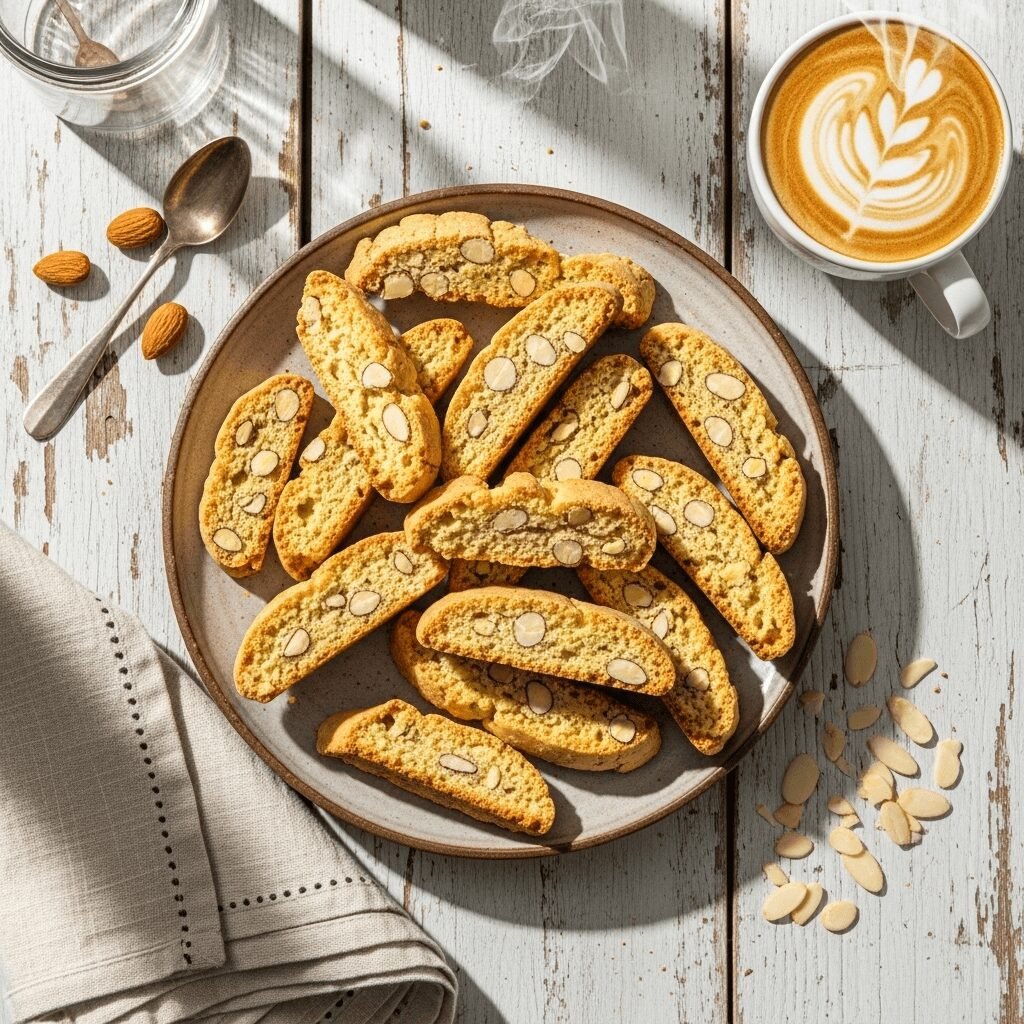
Classic Italian Biscotti Recipe – Twice-Baked Cookies Perfect for Coffee Dipping

There’s something utterly magical about dunking a perfectly crispy biscotti into your morning coffee or afternoon espresso. These iconic Italian twice-baked cookies are beloved worldwide for their satisfying crunch, subtle sweetness, and incredible versatility. Whether you’re hosting a brunch, looking for an elegant homemade gift, or simply want a sophisticated treat to enjoy with your daily caffeine fix, homemade biscotti is the answer you’ve been searching for.
Unlike soft, chewy cookies that disappear in seconds, biscotti offers a more refined eating experience. Their distinctive oblong shape and firm texture make them ideal for dipping without falling apart – a quality that has made them a coffeehouse staple across America and beyond. What many home bakers don’t realize is that making authentic biscotti at home is surprisingly straightforward, requiring just basic pantry ingredients and a little patience during the double-baking process.
This classic almond biscotti recipe strikes the perfect balance between traditional Italian authenticity and American convenience. You’ll create golden, crunchy cookies studded with toasted almonds that taste like they came straight from a Tuscan bakery. Serve them at your next gathering, package them as thoughtful gifts, or simply keep a batch on hand for those moments when you need something special alongside your favorite hot beverage.
History / Background
Biscotti’s story begins centuries ago in the heart of Italy, where these durable cookies were born out of both culinary ingenuity and practical necessity. The name “biscotti” literally translates to “twice-cooked” or “twice-baked” in Italian – a perfect description of the unique preparation method that gives these cookies their signature texture and remarkable shelf life.
The origins of biscotti can be traced back to the Roman Empire, where soldiers and sailors relied on long-lasting foods during extended military campaigns and sea voyages. The twice-baking process removed nearly all moisture from the dough, creating a virtually indestructible food that could survive months without spoiling. These early versions were more utilitarian than delicious, designed purely for sustenance rather than pleasure.
The biscotti we know and love today evolved in the medieval city of Prato, located in the Tuscany region of Italy. There, bakers refined the recipe into something worthy of celebration rather than mere survival. They added almonds, anise, and other flavorings, transforming humble twice-baked bread into a delicacy worthy of being served alongside Vin Santo, Tuscany’s famous dessert wine. The resulting “Biscotti di Prato” or “Cantucci” became so popular that they earned protected geographical status in Italy.
During the Renaissance, biscotti gained favor among the Italian upper classes and spread throughout Europe. Their ability to stay fresh for weeks made them ideal for travelers, while their elegant appearance and refined flavor made them suitable for sophisticated gatherings. Italian immigrants eventually brought biscotti recipes to America, where they became beloved in Italian-American communities.
The late 20th century saw biscotti experience a major revival in the United States, thanks largely to the specialty coffee movement. As espresso bars and coffeehouses proliferated across America in the 1980s and 1990s, biscotti became the perfect accompaniment to lattes and cappuccinos. Today, you’ll find endless variations – from chocolate-dipped to cranberry-studded – but the classic almond version remains the gold standard that every home baker should master.
Why You’ll Love This Recipe
This authentic biscotti recipe delivers everything you want in a homemade cookie while surprising you with how achievable it is, even for novice bakers. Unlike fussy pastries that require specialized techniques or hard-to-find ingredients, these Italian cookies come together with straightforward mixing and shaping, making them accessible to anyone who can measure flour and crack an egg.
Here’s why this biscotti recipe deserves a permanent spot in your baking rotation:
- Foolproof technique – The twice-baking method is more forgiving than traditional cookie recipes since you’re aiming for a dry, crisp texture rather than worrying about underbaking or overbaking
- Incredible shelf life – These cookies stay fresh and crunchy for 2-3 weeks when stored properly, making them perfect for advance preparation or gift-giving
- Endlessly customizable – Once you master the basic recipe, you can swap in different nuts, add dried fruits, incorporate citrus zest, or drizzle with chocolate
- Budget-friendly ingredients – Made with pantry staples like flour, sugar, eggs, and almonds, without requiring expensive specialty items
- Impressive presentation – The professional-looking diagonal slices and golden color make these cookies look bakery-quality with minimal effort
- Perfect for gifting – Package them in cellophane bags or decorative tins for thoughtful homemade presents that actually keep well during shipping
- Portion control friendly – The firm texture means you’ll naturally eat these more slowly, savoring each bite rather than mindlessly munching
- Coffee shop quality at home – Save money by creating your own coffeehouse-worthy treats for a fraction of the cost
Whether you’re a confident baker or someone who rarely ventures beyond slice-and-bake cookies, this recipe will make you feel like an accomplished Italian nonna sharing her treasured family recipe.
Ingredient Notes
Understanding your ingredients is the first step toward biscotti success. Each component plays a specific role in achieving that perfect balance of flavor and texture that makes authentic biscotti so irresistible.
All-Purpose Flour – The foundation of your dough, providing structure without making the cookies too heavy. Don’t substitute bread flour or cake flour, as they’ll alter the texture significantly. If you must use a gluten-free blend, choose one designed for baking and expect a slightly different texture.
Granulated Sugar – Provides sweetness while keeping the cookies appropriately dry and crunchy. The amount here creates a cookie that’s sweetened but not cloying, allowing the almond flavor to shine. You can reduce sugar by up to ¼ cup if you prefer less sweet treats.
Eggs – These bind the dough together and provide structure. Large eggs are essential for the proper dough consistency. Room temperature eggs incorporate more easily, so let them sit out for 30 minutes before baking.
Butter – A small amount of melted butter adds richness and helps with browning. European-style butter with higher fat content will yield even more flavorful results. For dairy-free biscotti, use melted coconut oil instead.
Whole Almonds – Traditional biscotti features whole, toasted almonds throughout the dough. Toasting them first intensifies their flavor dramatically. You can substitute hazelnuts, pistachios, or walnuts, though almonds remain the most authentic choice.
Baking Powder – Provides just a touch of lift without making the cookies cakey. Too much leavening would create an undesirable texture, so measure carefully.
Vanilla Extract – Pure vanilla extract adds warmth and depth. Almond extract can be added (use just ½ teaspoon) for even more pronounced almond flavor.
Salt – Essential for balancing sweetness and enhancing all the other flavors. Don’t skip this ingredient, even though the amount seems small.
Anise Extract or Anise Seeds (Optional) – Traditional Tuscan biscotti often includes anise for a subtle licorice flavor. This is entirely optional and can be omitted if you’re not a fan.
Equipment Needed
One of the beautiful aspects of making biscotti is that you don’t need specialized or expensive equipment. Here’s what you’ll want to have on hand before beginning:
- Large mixing bowl – For combining your dry ingredients and mixing the dough
- Medium mixing bowl – For whisking together wet ingredients
- Whisk – To thoroughly combine eggs, butter, and extracts
- Wooden spoon or sturdy spatula – For mixing the dough, which becomes quite thick
- Measuring cups and spoons – Accurate measurements ensure consistent results
- Baking sheet – A standard half-sheet pan works perfectly; you’ll need at least one, preferably two
- Parchment paper or silicone baking mat – Prevents sticking and makes cleanup effortless
- Sharp serrated knife – Essential for slicing the baked logs without crumbling; a bread knife works beautifully
- Cooling rack – Allows air circulation for proper cooling between baking stages
- Small baking sheet or dish – For toasting almonds before adding them to the dough
- Pastry brush (optional) – Useful if you want to brush the logs with egg wash for extra shine
Classic Italian Biscotti Recipe – Twice-Baked Cookies Perfect for Coffee Dipping

Crispy, golden Italian biscotti loaded with toasted almonds – perfect for dunking in coffee or enjoying as an elegant afternoon treat. This authentic twice-baked cookie recipe delivers bakery-quality results with simple ingredients and foolproof techniques.
- Prep Time: 20 minutes
- Cook Time: 50 minutes
- Total Time: 1 hour 10 minutes (plus cooling)
- Yield: 24-28 biscotti 1x
- Category: Dessert
- Method: Baking
- Cuisine: French
- Diet: Vegetarian
Ingredients
- 2 ½ cups all-purpose flour
- 1 ½ teaspoons baking powder
- ¼ teaspoon salt
- ¾ cup granulated sugar
- ½ cup (1 stick) unsalted butter, melted and slightly cooled
- 3 large eggs
- 1 ½ teaspoons pure vanilla extract
- ½ teaspoon almond extract (optional)
- 1 cup whole almonds, toasted and roughly chopped
- 1 egg beaten with 1 tablespoon water (for egg wash, optional)
Instructions
- Preheat and prepare: Preheat your oven to 350°F (175°C). Line a large baking sheet with parchment paper or a silicone baking mat. Set aside.
- Toast the almonds: Spread almonds on a small baking sheet and toast in the preheated oven for 8-10 minutes, stirring halfway through, until fragrant and lightly golden. Remove and let cool, then roughly chop. Leave oven on.
- Mix dry ingredients: In a large mixing bowl, whisk together flour, baking powder, and salt until evenly combined. Set aside.
- Combine wet ingredients: In a medium bowl, whisk together the melted butter and sugar until combined. Add the eggs one at a time, whisking well after each addition. Stir in vanilla extract and almond extract (if using).
- Form the dough: Pour the wet ingredients into the dry ingredients. Mix with a wooden spoon or sturdy spatula until a shaggy dough forms. Add the toasted almonds and mix until evenly distributed. The dough will be thick and slightly sticky.
- Shape the logs: Turn the dough out onto a lightly floured surface. Divide it into two equal portions. With floured hands, shape each portion into a log about 12 inches long, 2-3 inches wide, and ¾ inch tall. The logs will spread during baking, so don’t make them too wide.
- First bake: Transfer both logs to your prepared baking sheet, spacing them at least 3 inches apart. If desired, brush the tops lightly with egg wash for a glossy finish. Bake for 25-30 minutes until the logs are firm to the touch and lightly golden. They should no longer look wet or shiny.
- Cool and slice: Remove from the oven and let the logs cool on the baking sheet for 10-15 minutes – they need to firm up enough to slice without crumbling. Reduce oven temperature to 325°F (165°C). Using a sharp serrated knife, cut the logs diagonally into ½-inch to ¾-inch thick slices, using a gentle sawing motion.
- Second bake: Arrange the sliced biscotti cut-side down on the baking sheet (you may need two sheets now). Return to the oven and bake for 12-15 minutes. Flip each biscotti over and bake for another 12-15 minutes until both sides are golden and crispy.
- Cool completely: Transfer the twice-baked biscotti to a cooling rack. Let them cool completely – they’ll continue to crisp up as they cool. Once completely cool, they’re ready to enjoy or store.
Notes
- Dough consistency: If your dough seems too dry and crumbly, add water one tablespoon at a time. If too sticky, add flour one tablespoon at a time.
- Slicing tip: Use a smooth, confident sawing motion when cutting the logs. Don’t press down hard or the biscotti will crumble.
- Crispiness preference: For extra-crispy biscotti, leave them in the turned-off oven for an additional 10 minutes after the second bake.
- Nut-free option: Omit the almonds and add ¾ cup dried cranberries, chocolate chips, or chopped dried apricots instead.
- Even baking: Rotate your baking sheet halfway through each baking stage for more uniform browning.
Nutrition
- Serving Size: 1 biscotti
- Calories: 128
- Sugar: 8g
- Sodium: 52mg
- Fat: 6g
- Saturated Fat: 2g
- Unsaturated Fat: 3.5g
- Trans Fat: 0g
- Carbohydrates: 16g
- Fiber: 1g
- Protein: 3g
- Cholesterol: 30g
Note: Nutrition information is approximate and will vary based on specific ingredients used and portion sizes.
Tips & Variations
The beauty of biscotti lies in its incredible versatility. Once you’ve mastered this classic almond version, the possibilities for customization are virtually endless.
Chocolate Lover’s Variations:
- Mix ½ cup mini chocolate chips into the dough along with the almonds
- Dip one end of cooled biscotti in melted dark chocolate, then let set on parchment paper
- Replace ½ cup flour with ½ cup cocoa powder for chocolate biscotti, adding an extra 2 tablespoons sugar
Fruit & Nut Combinations:
- Swap almonds for pistachios and add ½ cup dried cranberries for a festive version
- Use hazelnuts and add the zest of one orange for a sophisticated flavor profile
- Try walnuts with ½ cup chopped dried figs for an earthy, complex cookie
Citrus Variations:
- Add the zest of two lemons for bright, refreshing lemon biscotti
- Mix in orange zest and replace almonds with candied orange peel
- Add lime zest and macadamia nuts for a tropical twist
Spice It Up:
- Add 1 teaspoon ground cinnamon and ½ teaspoon ground cardamom for chai-spiced biscotti
- Mix in 1 teaspoon ground ginger and add crystallized ginger pieces
- Include ½ teaspoon ground anise seed for traditional Italian flavoring
Healthier Modifications:
- Replace half the all-purpose flour with whole wheat flour for added fiber
- Reduce sugar to ½ cup and add a mashed ripe banana to the wet ingredients
- Use coconut oil instead of butter and add unsweetened coconut flakes
Pro Chef Tips
Professional bakers know that small techniques can make a dramatic difference in the final product. Here are insider secrets that will elevate your biscotti from good to absolutely exceptional.
Temperature matters more than you think: Room temperature eggs incorporate more smoothly and create better structure. Cold eggs can cause the melted butter to solidify into lumps. Let your eggs sit out for 30 minutes before baking, or place them (still in shells) in warm water for 5 minutes.
Toast your nuts properly: Many home bakers skip toasting or don’t toast long enough. Proper toasting transforms almonds from bland to intensely flavorful. Spread them in a single layer and shake the pan halfway through. You should smell a distinct nutty aroma – that’s when they’re perfectly done.
The dough should be slightly sticky: If your dough is perfectly smooth and not at all tacky, it’s actually too dry. Biscotti dough should feel slightly sticky to the touch but still be shapeable. This ensures the finished cookies aren’t rock-hard.
Shape matters for even baking: Keep your logs uniform in thickness from end to end. Tapered ends will overbake and burn while thicker middles stay underdone. Use a bench scraper or ruler to check that your logs are consistent.
Don’t rush the cooling period: This is where patience really pays off. If you try to slice the logs while they’re too hot, they’ll crumble into a mess. But if you wait too long, they become difficult to cut. The sweet spot is 10-15 minutes – they should feel firm but still give slightly when pressed.
Use the right slicing technique: Hold the serrated knife at a 45-degree angle and use long, smooth strokes rather than pressing down. Let the knife do the work. If you notice crumbling, your logs need a few more minutes to cool.
Second-bake positioning is crucial: Laying the slices flat (cut-side down) rather than standing them up ensures even crisping on both sides. This is why you flip them halfway through the second bake.
Storage affects texture: Biscotti continues to dry out slightly during storage, which is actually desirable. If you prefer softer biscotti, store them in an airtight container. For maximum crunch, store them in a container that’s not completely sealed, allowing a tiny bit of air circulation.
Common Mistakes to Avoid
Even experienced bakers can run into trouble with biscotti if they’re not aware of these common pitfalls. Here’s how to sidestep the most frequent issues.
Over-mixing the dough: Once you add the wet ingredients to the dry, mix just until combined. Over-mixing develops too much gluten, resulting in tough, dense biscotti instead of crispy, delicate ones. Stop mixing as soon as you no longer see dry flour.
Making the logs too thick: Logs that are more than 1 inch tall in the center won’t bake through properly during the first bake, leaving you with doughy centers even after slicing and the second bake. Remember, they spread and rise slightly during baking, so err on the flatter side.
Slicing while too hot: This is the number one cause of crumbly biscotti disasters. Those logs need time to set up. If you’re impatient, pop them in the refrigerator for 5 minutes to speed up cooling, but don’t skip this crucial step.
Using a dull knife: A sharp serrated bread knife is non-negotiable for clean slices. A dull knife or a straight-edge chef’s knife will crush and crumble the cookies instead of cleanly cutting through them.
Not checking for doneness properly: After the first bake, the logs should feel firm when gently pressed – not squishy in the middle. If they still feel soft, they need more time. An underbaked first bake leads to cookies that never crisp up properly, no matter how long you do the second bake.
Skipping the flip during second bake: Both cut sides need direct exposure to the oven’s heat to achieve even crispness. Forgetting to flip means one side stays pale and slightly softer while the other gets perfectly golden.
Storing before completely cool: Putting warm biscotti into a storage container creates condensation, which makes your crispy cookies turn soft and potentially promotes mold growth. Always wait until they’re completely cool to the touch – about 30-45 minutes on the cooling rack.
Storage & Meal Prep
One of biscotti’s greatest advantages is its exceptional keeping quality – these cookies were literally designed to last. Proper storage ensures you can enjoy your homemade batch for weeks.
Room Temperature Storage: Once completely cooled, store biscotti in an airtight container at room temperature for up to 3 weeks. For maximum crispness, you can also store them in a container that’s not completely sealed, allowing minimal air circulation. Layer them between sheets of parchment paper if stacking to prevent any potential sticking.
Maintaining Crispness: If your stored biscotti seems to lose some crunch after a week, you can re-crisp them by placing them on a baking sheet in a 300°F oven for 5-10 minutes. Let them cool completely before returning to storage.
Preventing Staleness: While biscotti rarely goes truly stale due to its dry nature, keeping them away from moisture is key. Never store biscotti in the refrigerator, as the humidity will make them soggy. Store them in a cool, dry place away from direct sunlight.
Reheating Tips: Biscotti is typically enjoyed at room temperature or dunked in hot beverages. If you want to refresh them slightly, warm them in a 300°F oven for 5 minutes. This intensifies the toasted flavors beautifully.
Batch Baking: Biscotti is ideal for meal prep baking sessions. The dough can be shaped into logs, wrapped tightly in plastic wrap, and refrigerated for up to 3 days before the first bake. This makes it easy to have fresh-baked biscotti whenever you want without doing all the work at once.
Make-Ahead & Freezer Notes
Biscotti is wonderfully freezer-friendly, making it perfect for advance preparation for holidays, gifts, or simply having a stash of homemade treats on hand.
Freezing Unbaked Dough Logs: After shaping your dough into logs but before the first bake, you can freeze them for up to 3 months. Wrap each log tightly in plastic wrap, then place in a freezer-safe bag or container. When ready to bake, you don’t need to thaw – simply add 5-10 minutes to the first baking time and proceed with the recipe as written.
Freezing After First Bake: You can freeze the baked logs before slicing them for up to 3 months. Let them cool completely, wrap well, and freeze. When ready to continue, thaw at room temperature for 30 minutes, slice, and proceed with the second bake.
Freezing Finished Biscotti: Completely baked and cooled biscotti freezes beautifully for up to 3 months. Arrange them in a single layer on a baking sheet and freeze until solid (about 1 hour), then transfer to freezer bags or containers. This prevents them from sticking together. Thaw at room temperature for 15-20 minutes before serving, or enjoy them straight from the freezer dunked in hot coffee – the heat will thaw them quickly.
Best Reheating Method: For frozen finished biscotti, let them come to room temperature naturally, or place them on a baking sheet in a 300°F oven for 5-7 minutes to refresh and re-crisp them. The oven method is particularly nice as it makes them taste freshly baked.
Make-Ahead for Gifting: Biscotti is one of the best cookies for holiday gift-giving because it can be made weeks in advance. Bake your batches throughout November and early December, freeze them, then package them a few days before giving. They’ll taste fresh and be at peak crispness.
Serving Suggestions
While biscotti is undeniably delicious on its own, the right accompaniments can transform it from simple cookie to complete experience.
Coffee & Tea Pairings: The classic combination is biscotti with espresso or strong coffee. The robust coffee flavor complements the almond sweetness perfectly. Try these pairings: cappuccino with classic almond biscotti, Earl Grey tea with lemon biscotti, chai latte with spiced biscotti variations, or hot chocolate with chocolate-dipped biscotti.
Wine Pairings: Following Italian tradition, serve biscotti with dessert wine for an elegant after-dinner treat. Vin Santo (Tuscan dessert wine) is the most traditional pairing, but you can also try sweet Moscato, tawny port, or late-harvest Riesling. Dip the biscotti directly into the wine for an authentic Italian experience.
Cheese Board Addition: Biscotti makes an unexpected but delightful addition to cheese boards. The subtle sweetness and crunch contrast beautifully with creamy cheeses. Serve alongside: aged Parmesan or Pecorino Romano, mild goat cheese with honey drizzle, or creamy mascarpone with fresh berries.
Breakfast & Brunch: Biscotti isn’t just for dessert – it makes a sophisticated breakfast cookie. Serve it alongside: Greek yogurt parfaits with granola and berries, fresh fruit salad with mint, smoked salmon and cream cheese bagels, or Italian-style breakfast spreads with cappuccino and fresh pastries.
Ice Cream & Gelato: Crumble biscotti over your favorite ice cream or gelato for added texture. Vanilla gelato with whole biscotti on the side makes a simple but impressive Italian-style dessert. The temperature contrast between cold ice cream and room-temperature biscotti is absolutely divine.
Holiday Entertaining: Present biscotti on a beautiful platter with other Italian cookies for holiday gatherings. Package individual pieces in clear bags tied with ribbon for party favors. Create a coffee and biscotti bar where guests can choose their perfect pairing.
FAQs Section
Q: Why are my biscotti too hard and difficult to bite?
A: Overly hard biscotti usually results from baking too long during the second bake or cutting the slices too thin. Aim for ½-inch to ¾-inch thick slices, and watch carefully during the second bake – they should be golden and crisp but not deeply browned. Also, if you reduce the butter or use less than called for, the cookies will be harder. Remember, biscotti should be crunchy but not tooth-breaking!
Q: Can I make biscotti without nuts for allergies?
A: Absolutely! Simply omit the almonds and either leave the cookies plain or substitute with ¾ cup of dried fruit (cranberries, cherries, apricots), chocolate chips, or seeds like pepitas or sunflower seeds. The texture will be slightly different but still delicious. You might also want to omit the almond extract if serving someone with tree nut allergies.
Q: My biscotti crumbled when I tried to slice them. What went wrong?
A: The most common cause is slicing too soon before the logs have had adequate cooling time. The structure needs 10-15 minutes to set up. Using a dull knife or pressing down instead of using a gentle sawing motion also causes crumbling. If this happens, let the remaining log cool longer and try again with a sharper serrated knife.
Q: How do I know when the first bake is done?
A: The logs should feel firm when gently pressed and no longer look wet or shiny on top. They’ll be lightly golden on the bottom and edges. If you press the center and it still feels soft or squishy, give them another 5 minutes. An underbaked first bake is better than overbaked, as they’ll get plenty more oven time during the second bake.
Q: Can I make smaller or larger biscotti?
A: Yes! For smaller biscotti, cut your slices about ½ inch thick and reduce the second baking time by a few minutes. For larger, bakery-style biscotti, cut them ¾ inch to 1 inch thick and add a few minutes to the second bake. Just remember that thickness dramatically affects crispness – thicker cookies will have a slightly softer interior.
Q: Do I have to dunk biscotti in coffee, or can I eat them plain?
A: While dunking is traditional and practical (the moisture softens the cookie slightly), you can absolutely enjoy biscotti plain as a crunchy cookie. Some people prefer dunking, while others love the extended eating experience of slowly nibbling a whole biscotti. There’s no wrong way to enjoy them!
Q: My biscotti turned out more like soft cookies than crispy biscotti. What happened?
A: This usually means the second bake wasn’t long enough, or they were stored in an airtight container before completely cooling. Make sure both sides get golden during the second bake – it should take about 25-30 minutes total. Also ensure your oven temperature is accurate; an oven thermometer can help confirm this. You can always re-crisp soft biscotti in a 300°F oven for 10 minutes.
Conclusion
There’s something deeply satisfying about pulling a batch of golden, aromatic biscotti from your oven, knowing you’ve created an authentic Italian treat that would make any nonna proud. These twice-baked cookies prove that the best things in life really are worth the wait – and the double baking process.
Whether you’re dunking them into your morning coffee, packaging them as heartfelt homemade gifts, or serving them at your next gathering, these classic almond biscotti will quickly become a staple in your baking repertoire. The beauty lies not just in their delicious simplicity, but in their versatility – once you’ve mastered this foundational recipe, you can explore endless flavor variations to suit any occasion or craving.
The extended shelf life means you can always have a batch ready for unexpected guests or those moments when you need something special to accompany your afternoon tea. And unlike many homemade treats that disappear within days, biscotti actually improves with a little time, developing even more flavor and crunch as it sits.
Ready to fill your kitchen with the irresistible aroma of homemade Italian biscotti? Grab your mixing bowl and get baking! These cookies are easier than you think and infinitely more delicious than store-bought versions. Once you’ve tried this recipe, come back and let me know how it turned out in the comments below – I’d love to hear about your favorite variations and how you enjoyed them.
Don’t forget to pin this recipe to your Pinterest boards so you can find it whenever the biscotti craving strikes. Share it with your fellow coffee lovers and baking enthusiasts who deserve to experience the joy of authentic homemade biscotti. Happy baking, and here’s to many cozy moments with coffee, biscotti, and good company!