Easy Rustic Galette Recipe – Buttery, Flaky & Endlessly Versatile

There’s something undeniably charming about a galette. Unlike its more formal cousin, the pie, a galette doesn’t need to be perfect. In fact, its rustic, free-form edges and golden, buttery crust are what make it so irresistibly beautiful. Whether you’re filling it with sweet summer fruits or savory vegetables and cheese, this galette recipe is your ticket to impressive homemade baking without the fuss of crimping pie crusts or worrying about soggy bottoms.
A galette is essentially a flat, round pastry that’s folded up around a filling—think of it as a lazy baker’s dream. It’s perfect for weekend brunches, potluck dinners, holiday desserts, or any time you want to impress guests without spending hours in the kitchen. The best part? This recipe uses a simple, all-butter pastry dough that comes together in minutes and can be filled with just about anything your heart desires. From classic apple cinnamon to savory tomato and goat cheese, the possibilities are truly endless.
History / Background
The galette has deep roots in French culinary tradition, where it’s been beloved for centuries as a humble, rustic pastry. The word “galette” comes from the Norman word “gale,” meaning flat cake, and it refers to various flat, round cakes throughout France. In Brittany, galettes are made with buckwheat and filled with savory ingredients like ham, cheese, and eggs. In other regions, they’re sweet pastries topped with fruit and dusted with powdered sugar.
What makes the galette so special in French baking culture is its approachable nature. Unlike elaborate tarts and pies that require specialized pans and precise techniques, galettes are baked directly on a baking sheet with minimal equipment. They represent the heart of rustic French cooking—simple, honest, and focused on quality ingredients rather than complicated presentation.
The galette gained popularity in America through the farm-to-table movement, as home bakers and professional chefs alike embraced its rustic charm and versatility. It became a favorite way to showcase seasonal produce, from summer stone fruits to autumn apples and pears. Today, the galette has become a Pinterest darling and Instagram favorite, celebrated for its effortlessly beautiful appearance and endless customization options. It’s the kind of recipe that makes you look like a professional baker even if you’re still learning the basics.
Why You’ll Love This Recipe
This galette recipe strikes the perfect balance between impressive presentation and easy execution. The all-butter crust is tender, flaky, and deeply flavorful, while the simple technique means you don’t need advanced baking skills to achieve stunning results.
Here’s why this recipe will become your new favorite:
- Foolproof and forgiving – No need for perfect edges or fancy crimping; rustic imperfections are part of the charm
- Incredibly versatile – Works beautifully with sweet or savory fillings, so you can make it year-round with whatever’s in season
- Minimal equipment needed – No special pans or tools required, just basic kitchen essentials
- Make-ahead friendly – The dough can be prepared days in advance and frozen for up to 3 months
- Faster than pie – No rolling out two crusts or blind-baking required
- Budget-friendly – Uses simple pantry staples and a small amount of filling goes a long way
- Impressive presentation – Looks bakery-worthy without requiring professional skills
- Perfect for any occasion – Works for breakfast, brunch, dinner, or dessert depending on your filling choice
Ingredient Notes
All-Purpose Flour – The foundation of your galette dough. All-purpose flour provides the right balance of structure and tenderness. For a nuttier flavor, you can substitute up to half the flour with whole wheat flour, though this will make the crust slightly denser.
Unsalted Butter – This is what gives the crust its incredible flaky texture and rich flavor. Use cold butter straight from the refrigerator and cut it into small cubes before incorporating it into the flour. European-style butter with higher fat content will make an even more tender crust. Don’t substitute with margarine—real butter is essential here.
Ice Water – Cold water helps keep the butter from melting as you work the dough, which is crucial for creating flaky layers. Have ice water ready and add it gradually—you may need slightly more or less depending on humidity.
Sugar – Just a tablespoon adds a subtle sweetness to the dough that works for both sweet and savory applications. For savory galettes, you can reduce this to 1 teaspoon.
Salt – Enhances all the flavors in the dough and balances sweetness. Don’t skip it!
Egg Wash – Brushing the crust with beaten egg (or milk) before baking gives it that gorgeous golden-brown shine.
Filling Ingredients – This recipe is designed for flexibility. For sweet galettes, use 3-4 cups of sliced fruit (apples, pears, peaches, berries, plums) tossed with sugar, cornstarch, and spices. For savory galettes, try vegetables (tomatoes, zucchini, mushrooms), cheese (goat cheese, feta, gruyere), and fresh herbs.
Equipment Needed
- Food processor or large mixing bowl – For making the dough quickly and easily
- Pastry cutter or fork (if mixing by hand) – To cut butter into the flour
- Rolling pin – For rolling out the dough into a round shape
- Parchment paper – Prevents sticking and makes cleanup a breeze
- Baking sheet – A standard half-sheet pan works perfectly
- Pastry brush – For applying egg wash to the crust
- Sharp knife or pizza cutter – For cutting slices to serve
- Plastic wrap – For wrapping the dough while it chills
- Small bowl – For whisking egg wash
- Measuring cups and spoons – For accurate measurements
Galette Recipe

A rustic, free-form galette with a buttery, flaky all-butter crust that can be filled with sweet or savory ingredients. This foolproof recipe delivers bakery-worthy results without requiring advanced baking skills or special equipment.
- Prep Time: 20 minutes (plus 30 minutes chilling)
- Cook Time: 40 minutes
- Total Time: 1 hour 30 minutes
- Yield: 6-8 servings 1x
- Category: Dessert
- Method: Baking
- Cuisine: French
- Diet: Vegetarian
Ingredients
For the Galette Dough:
- 1¼ cups (155g) all-purpose flour
- 1 tablespoon granulated sugar
- ½ teaspoon salt
- ½ cup (113g) unsalted butter, cold and cut into small cubes
- 3-4 tablespoons ice water
For Sweet Fruit Filling (Apple Cinnamon):
- 3 medium apples, peeled and thinly sliced
- 2 tablespoons granulated sugar
- 1 tablespoon cornstarch
- 1 teaspoon ground cinnamon
- ¼ teaspoon nutmeg
- 1 tablespoon lemon juice
- 1 tablespoon butter, cut into small pieces
For Egg Wash:
- 1 egg, beaten
- 1 tablespoon milk or cream
- 1 tablespoon coarse sugar (for sprinkling)
Instructions
Make the Dough:
- In a food processor, combine flour, sugar, and salt. Pulse 2-3 times to mix. Add the cold cubed butter and pulse 8-10 times until the mixture resembles coarse crumbs with some pea-sized butter pieces remaining.
- Drizzle 3 tablespoons of ice water over the mixture and pulse just until the dough starts to come together. If it’s still too dry and crumbly, add the remaining tablespoon of water, one teaspoon at a time.
- Turn the dough out onto a clean work surface and gently knead it 2-3 times until it forms a cohesive ball. Don’t overwork it—you should still see small butter streaks, which create flakiness.
- Flatten the dough into a disc, wrap tightly in plastic wrap, and refrigerate for at least 30 minutes or up to 3 days.
Prepare the Filling:
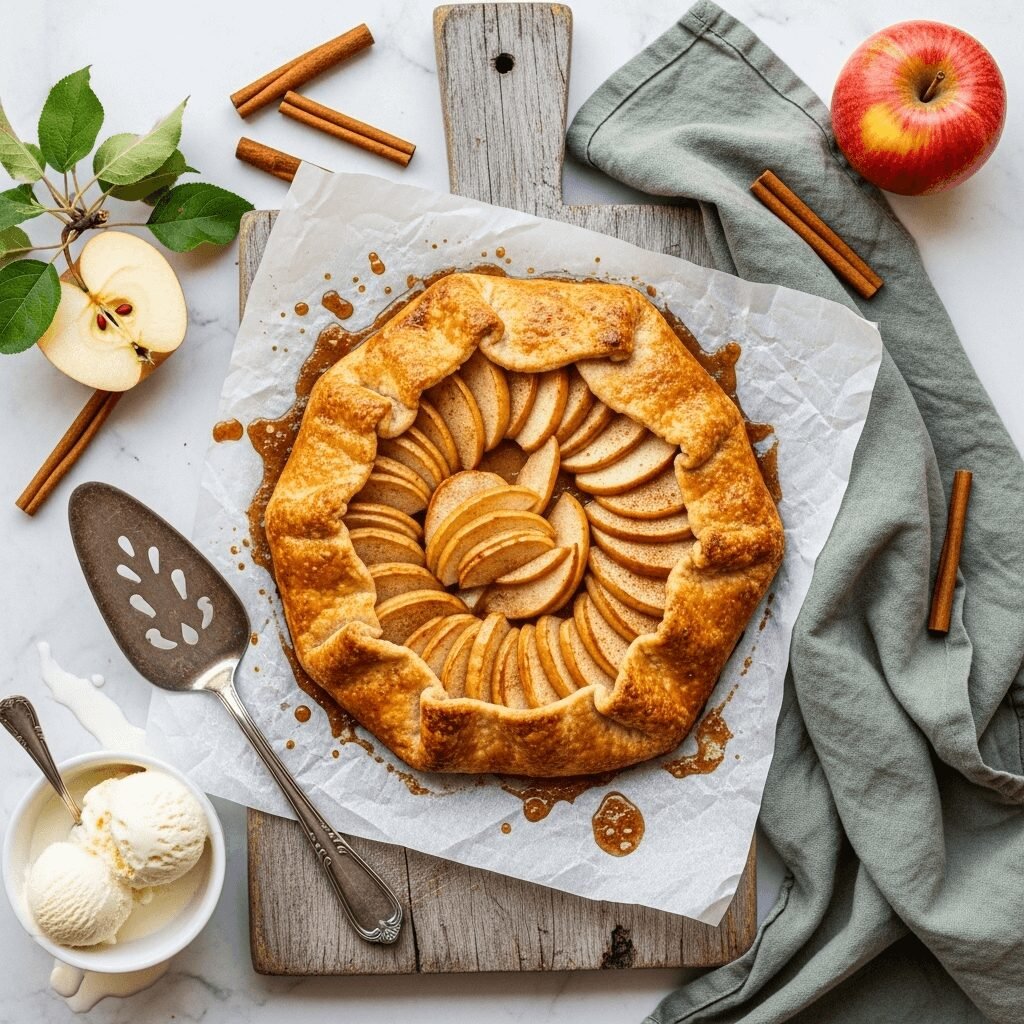
- While the dough chills, prepare your filling. For apple galette, combine sliced apples, sugar, cornstarch, cinnamon, nutmeg, and lemon juice in a bowl. Toss until apples are evenly coated. Set aside.
Assemble the Galette:
- Preheat your oven to 400°F (200°C). Line a large baking sheet with parchment paper.
- On a lightly floured surface, roll the chilled dough into a 12-inch circle, about ⅛-inch thick. Don’t worry about perfect edges—rustic is the goal! Transfer the dough to the prepared baking sheet by loosely rolling it around your rolling pin, then unrolling it onto the parchment.
- Arrange the filling in the center of the dough, leaving a 2-inch border around the edges. Dot the fruit with small pieces of butter.
- Gently fold the edges of the dough up and over the filling, overlapping and pleating as you go around the circle. The center will remain open.
- Brush the folded edges with egg wash and sprinkle with coarse sugar for a beautiful golden finish.
Bake:
- Bake for 38-42 minutes, until the crust is deep golden brown and the filling is bubbling. If the crust browns too quickly, tent the edges with aluminum foil.
- Remove from the oven and let cool on the baking sheet for 10 minutes before transferring to a wire rack. Serve warm or at room temperature.
Notes
- Dough Temperature: Keep everything cold! If your kitchen is warm or the dough becomes too soft while working with it, pop it back in the refrigerator for 10-15 minutes.
- Savory Variation: For a savory galette, reduce sugar in the dough to 1 teaspoon. Fill with roasted vegetables, cheese, and fresh herbs. Brush with olive oil instead of egg wash.
- Blind Baking: Not necessary for galettes since the bottom bakes directly on the hot baking sheet.
- Serving: Galettes are best enjoyed the day they’re made, but leftovers can be stored and reheated.
Nutrition
- Serving Size: 1 slice
- Calories: 245
- Sugar: 12g
- Sodium: 155mg
- Fat: 13g
- Saturated Fat: 8g
- Unsaturated Fat: 4g
- Trans Fat: 0g
- Carbohydrates: 30g
- Fiber: 2g
- Protein: 3g
- Cholesterol: 55mg
Tips & Variations
Sweet Variations:
- Berry Medley: Use a mix of strawberries, blueberries, and raspberries with a tablespoon of lemon zest
- Peach & Blackberry: Combine sliced peaches with fresh blackberries and a hint of vanilla extract
- Pear & Ginger: Toss sliced pears with crystallized ginger and a drizzle of honey
- Chocolate Hazelnut: Spread Nutella on the dough base before adding sliced bananas or strawberries
Savory Variations:
- Tomato & Goat Cheese: Layer heirloom tomato slices with creamy goat cheese and fresh basil
- Mushroom & Gruyere: Sauté mushrooms with garlic, then top with shredded Gruyere and thyme
- Caramelized Onion & Brie: Spread caramelized onions on the base and top with sliced Brie cheese
- Zucchini & Ricotta: Layer thin zucchini rounds with ricotta, parmesan, and fresh herbs
Dietary Adjustments:
- Vegan: Use vegan butter and brush the crust with plant-based milk instead of egg wash
- Gluten-Free: Substitute with a 1:1 gluten-free baking flour blend (dough may be slightly more delicate)
- Reduced Sugar: Cut the sugar in half for a less sweet crust, or use a sugar substitute
Pro Chef Tips
Butter Temperature is Everything: The secret to an incredibly flaky crust is cold butter that creates steam pockets as it melts during baking. If you’re working in a hot kitchen, freeze your butter cubes for 10 minutes before mixing, and chill your flour in the freezer too.
Don’t Overwork the Dough: When you see those little streaks and chunks of butter in the dough, that’s exactly what you want. Overworking develops gluten, which makes the crust tough rather than tender and flaky.
Prevent a Soggy Bottom: If using very juicy fruits, sprinkle a thin layer of ground almonds, breadcrumbs, or crushed cookies on the dough before adding the fruit. This creates a barrier that absorbs excess moisture without affecting flavor.
Create Contrast in Texture: For sweet galettes, brush the baked galette with warm apricot jam to create a beautiful glaze. For savory versions, finish with a drizzle of high-quality olive oil and flaky sea salt.
Roll Between Parchment: Instead of rolling on a floured surface, roll the dough between two sheets of parchment paper. This prevents adding excess flour (which can make the crust tough) and makes transferring the dough to the baking sheet foolproof.
Chill Before Baking: After assembling your galette, you can refrigerate it for 15-20 minutes before baking. This helps the butter firm up again, leading to even flakier layers.
Common Mistakes to Avoid
Using Warm Butter: Room temperature or melted butter will incorporate into the flour rather than creating those essential butter pockets. This results in a dense, cookie-like crust instead of flaky layers. Always keep your butter refrigerator-cold.
Adding Too Much Water: It’s tempting to add more water when the dough looks crumbly, but too much liquid creates a tough, dense crust. The dough should just barely come together—it will hydrate more as it rests.
Overfilling the Galette: Piling on too much filling makes it impossible to fold the edges properly and can cause leaking during baking. Stick to 3-4 cups of filling for a standard 12-inch galette, and keep it within the boundaries you’ve set.
Skipping the Egg Wash: The egg wash isn’t just for looks—it creates a barrier that helps keep the crust crispy and adds rich color and flavor. Don’t skip this step!
Not Preheating the Baking Sheet: For an extra-crispy bottom crust, place your baking sheet in the oven while it preheats, then carefully transfer the assembled galette onto the hot pan. The immediate heat jump-starts the baking process from below.
Storage & Meal Prep
Room Temperature: Freshly baked galettes are best enjoyed within 6-8 hours of baking. If your filling isn’t overly moist, you can leave the galette at room temperature, loosely covered with foil, for up to 8 hours.
Refrigerator Storage: Store leftover galette in an airtight container in the refrigerator for up to 3 days. The crust will soften slightly, but it’s still delicious. Sweet galettes hold up better than savory ones.
Reheating: To revive a refrigerated galette and restore some crispness to the crust, reheat individual slices in a 350°F oven for 8-10 minutes. Avoid the microwave, which will make the crust soggy and chewy.
Storing Unbaked Dough: The prepared dough disc can be wrapped tightly and refrigerated for up to 3 days or frozen for up to 3 months. Thaw frozen dough overnight in the refrigerator before rolling.
Make-Ahead & Freezer Notes
Make-Ahead Dough: This is one of the best make-ahead components. Prepare the dough up to 3 days in advance and keep it refrigerated, or freeze it for up to 3 months. Having galette dough in your freezer means you’re always 30 minutes away from an impressive homemade pastry.
Freezing Assembled Galettes: You can assemble the entire galette (without egg wash) and freeze it unbaked. Place it on a parchment-lined baking sheet and freeze until solid, then wrap tightly in plastic wrap and foil. It will keep for up to 2 months. Bake directly from frozen, adding 10-15 minutes to the baking time. Brush with egg wash just before baking.
Freezing Baked Galettes: While possible, I don’t recommend freezing baked galettes as the crust loses its texture. If you must freeze a baked galette, wrap it very tightly in plastic wrap and foil. Thaw overnight in the refrigerator and reheat at 350°F for 15-20 minutes.
Best Reheating Method: For frozen unbaked galettes, go straight from freezer to oven—no thawing needed. This actually helps maintain the flaky texture since the butter stays cold longer during initial baking.
Serving Suggestions
For Sweet Galettes:
- Serve warm with a generous scoop of vanilla ice cream or whipped cream
- Drizzle with salted caramel sauce or honey for added decadence
- Pair with a cup of coffee or hot tea for an afternoon treat
- Dust with powdered sugar and serve alongside fresh berries
- Serve with crème fraîche or Greek yogurt for a less-sweet option
For Savory Galettes:
- Pair with a simple arugula salad dressed with lemon vinaigrette
- Serve alongside tomato soup or butternut squash soup
- Offer as part of a brunch spread with fresh fruit and yogurt
- Cut into small wedges for elegant appetizers at dinner parties
- Accompany with a crisp white wine like Sauvignon Blanc or Pinot Grigio
Presentation Tips:
- Transfer the galette to a wooden cutting board for rustic presentation
- Garnish sweet versions with fresh mint or basil leaves
- Add fresh herbs like thyme or rosemary to savory galettes just before serving
- Slice into even wedges using a sharp chef’s knife or pizza cutter
- Serve on simple white plates to let the galette’s natural beauty shine
FAQs Section
Can I make galette dough without a food processor? Absolutely! Use a pastry cutter, two forks, or even your fingers to cut the cold butter into the flour until it resembles coarse crumbs. Just work quickly to keep everything cold, and be careful not to overwork the dough. The food processor is faster and easier, but hand-mixing produces equally delicious results.
Why is my galette crust tough instead of flaky? This usually happens from overworking the dough or adding too much water. When you mix the dough, you should still see visible butter pieces—these create the flaky layers. Mix just until the dough barely comes together, and let it rest in the refrigerator to relax the gluten.
How do I prevent my galette from leaking? Make sure you’re not overfilling (stick to 3-4 cups of filling), and leave a full 2-inch border for folding. Toss juicy fruits with cornstarch or flour to absorb excess moisture, and avoid placing the galette near the oven door where temperature fluctuations can cause issues. A light layer of ground almonds on the base helps too.
Can I use frozen fruit for galettes? Yes, but thaw and drain frozen fruit first, and pat it dry with paper towels to remove excess moisture. You may need to increase the cornstarch slightly since frozen fruit releases more liquid. Frozen fruit works better for cooked fillings than fresh arrangements.
What’s the difference between a galette and a crostata? They’re essentially the same thing! Galette is the French term, while crostata is Italian. Both refer to rustic, free-form pastries with folded edges. The dough recipes are very similar, though some crostata recipes include lemon zest.
Do I need to blind-bake the crust first? No! That’s one of the beauties of galettes. Because they’re baked directly on a hot baking sheet and the filling is exposed, there’s no risk of a soggy bottom. The crust bakes through perfectly without pre-baking.
Can I make mini galettes instead of one large one? Definitely! Divide the dough into 4-6 portions, roll each into a smaller circle, and create individual galettes. Reduce the baking time to 20-25 minutes. Mini galettes are perfect for parties and portion control.
Conclusion
This rustic galette recipe is proof that the most impressive dishes are often the simplest. With just a handful of basic ingredients and minimal technique, you can create a stunning pastry that looks like it came from a French bakery. Whether you fill it with summer’s juiciest peaches, autumn’s crisp apples, or savory combinations of cheese and vegetables, the buttery, flaky crust is the perfect vehicle for showcasing whatever ingredients you love most.
The beauty of a galette lies not just in its delicious flavor, but in its forgiving nature. Those imperfect, rustic edges aren’t mistakes—they’re the signature of homemade charm. Every galette is unique, and each one tells the story of the hands that made it.
I’d love to hear how your galette turns out! Drop a comment below with your favorite filling combination, and don’t forget to save this recipe to your Pinterest boards so you can find it whenever the craving strikes. Share your beautiful galette photos and tag them so we can all admire your creations. Happy baking, friends!