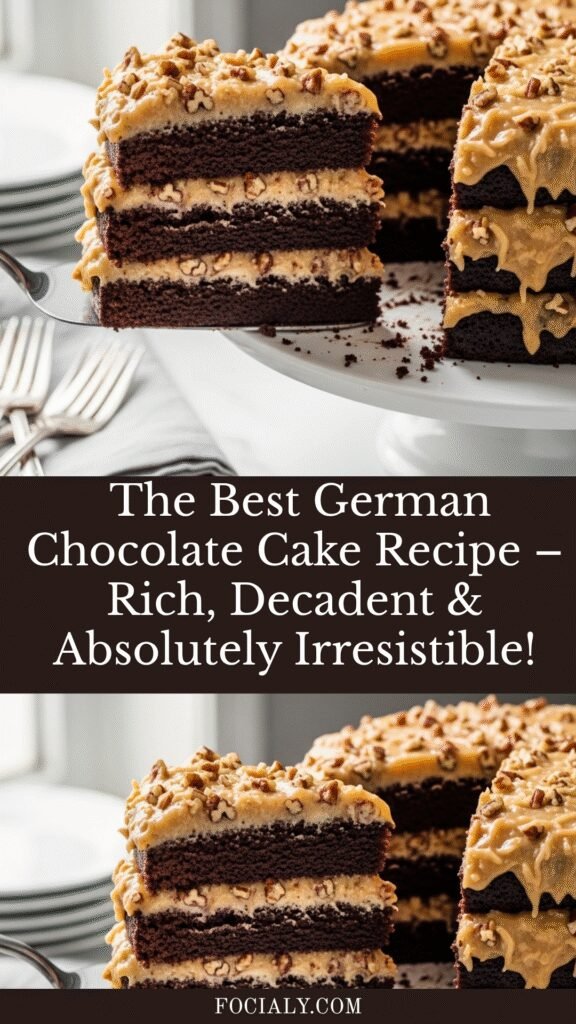
The Best German Chocolate Cake Recipe – Rich, Decadent & Absolutely Irresistible!
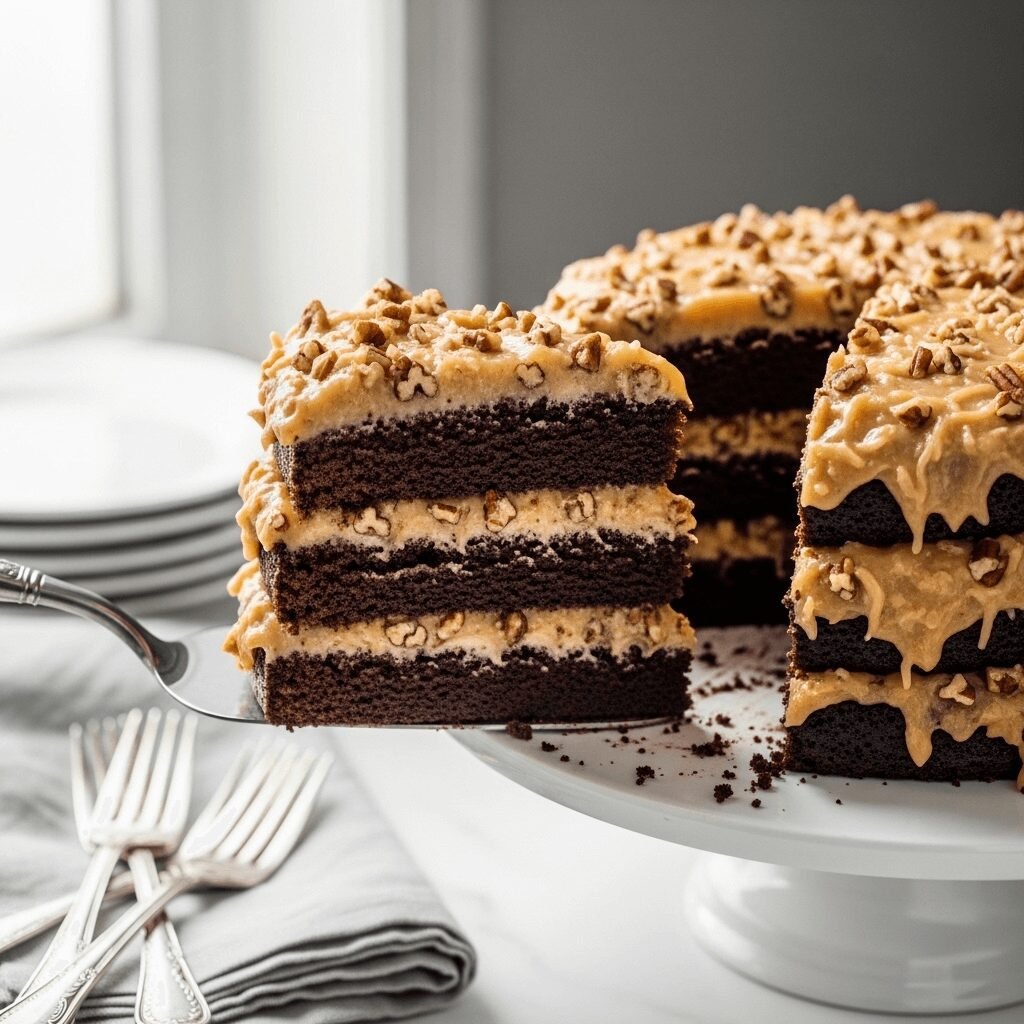
German chocolate cake is one of those legendary desserts that turns ordinary occasions into unforgettable celebrations. This show-stopping cake features rich, moist chocolate layers paired with the iconic coconut-pecan frosting that makes it so distinctively delicious. Unlike traditional chocolate cakes that rely on heavy buttercream, this homemade German chocolate cake is crowned with a luscious, caramel-like frosting loaded with toasted coconut and crunchy pecans that perfectly balances the deep chocolate flavor.
What makes this German chocolate cake recipe truly special is the combination of textures and flavors—the tender, cocoa-rich cake layers provide a perfect canvas for that signature sweet, nutty, coconut frosting. Each bite delivers a symphony of flavors: deep chocolate, buttery caramel, tropical coconut, and toasted pecans all working together in perfect harmony. It’s not overly sweet, which makes it surprisingly balanced and sophisticated despite its indulgent appearance.
This classic dessert is perfect for birthdays, anniversaries, holiday gatherings, potlucks, or any time you want to wow your guests with something truly memorable. While it might look complicated, this recipe breaks everything down into easy-to-follow steps that even beginner bakers can master. With a little patience and attention to detail, you’ll create a bakery-quality German chocolate cake that will have everyone asking for seconds—and the recipe!
History / Background
Despite its name, German chocolate cake isn’t actually from Germany—it’s a thoroughly American creation with a fascinating backstory. The cake gets its name from Samuel German, an English-American chocolate maker who developed a type of dark baking chocolate for the Baker’s Chocolate Company in 1852. This sweeter chocolate, which became known as “Baker’s German’s Sweet Chocolate,” required less sugar than traditional baking chocolate, making it perfect for cake recipes.
The German chocolate cake as we know it today was born over a century later. In 1957, a homemaker from Dallas, Texas, named Mrs. George Clay submitted her “German’s Chocolate Cake” recipe to a local newspaper. The recipe was then featured in newspapers across the country, and Baker’s Chocolate Company saw such a tremendous spike in sales of their German’s Sweet Chocolate that they began printing the recipe on the chocolate bar packaging.
The cake quickly became a sensation throughout the 1960s and 1970s, cementing its place as an iconic American dessert. What made it stand out was that unique coconut-pecan frosting—so different from the buttercream and cream cheese frostings that dominated the cake landscape at the time. The combination was revolutionary and delicious, creating a new standard for celebration cakes.
Over the decades, German chocolate cake has remained a beloved classic, particularly in the South and Midwest, where it’s a staple at church suppers, family reunions, and special celebrations. It’s become so ingrained in American baking culture that many people are surprised to learn it’s not a German recipe at all. The cake represents that beautiful tradition of American home baking—taking simple ingredients and transforming them into something extraordinary that brings people together.
Why You’ll Love This Recipe
This isn’t just another chocolate cake recipe—it’s THE German chocolate cake that will become your go-to for every special occasion. The recipe has been perfected to deliver consistent, impressive results with a tender, moist crumb and that unforgettable coconut-pecan frosting that makes this cake legendary.
Here’s why this German chocolate cake recipe will become your new favorite:
- Incredibly Moist Texture – The cake stays tender and delicious for days thanks to the perfect balance of ingredients and the addition of buttermilk
- Not Too Sweet – Beautifully balanced sweetness that lets the chocolate and caramel flavors shine without being cloying
- That Famous Frosting – The coconut-pecan topping is absolutely addictive with its caramel-like richness and perfect texture
- Impressive Presentation – Looks like it came from a professional bakery but made with straightforward home kitchen techniques
- Make-Ahead Friendly – Can be prepared in stages, making it perfect for party planning without last-minute stress
- Crowd-Pleaser – Appeals to chocolate lovers, coconut fans, and nut enthusiasts all at once
- Feeds a Crowd – Generously serves 12-16 people, making it ideal for gatherings and celebrations
- Timeless Classic – A nostalgic recipe that creates memories and starts conversations
- Clear Instructions – Detailed steps ensure success even for less experienced bakers
- Worth the Effort – While it requires some time, the incredible results make every minute worthwhile
Ingredient Notes
Understanding your ingredients helps you achieve the best possible results and make smart substitutions when needed. Let’s break down what goes into this magnificent cake.
Baker’s German’s Sweet Chocolate – This is the traditional chocolate used in authentic German chocolate cake. It’s sweeter and milder than regular baking chocolate. If you can’t find it, you can substitute with semi-sweet chocolate, though the flavor will be slightly different. Do not use German’s Sweet Chocolate bars if making substitutions—use quality baking chocolate.
All-Purpose Flour – The foundation of your cake structure. Measure correctly by spooning into the cup and leveling off. Cake flour will make the cake too delicate, and bread flour will make it too tough.
Unsweetened Cocoa Powder – Adds additional chocolate depth and that beautiful dark color. Use regular unsweetened cocoa, not Dutch-processed, as the recipe relies on the natural acidity.
Buttermilk – Creates incredible tenderness and adds a subtle tang that balances the sweetness. The acidity also activates the baking soda for proper rise. If you don’t have buttermilk, make your own by adding 1 tablespoon of white vinegar or lemon juice to 1 cup of regular milk and letting it sit for 5 minutes.
Butter – Use unsalted butter so you can control the salt level. Real butter is essential for both flavor and texture—don’t substitute with margarine or oil in this recipe.
Granulated Sugar – Provides sweetness and helps create that tender, fine crumb. The sugar also helps the cake stay moist by attracting and holding moisture.
Eggs – Add structure, richness, and help bind everything together. Room temperature eggs incorporate more easily and create better volume.
Vanilla Extract – Enhances all the other flavors. Always use pure vanilla extract, never imitation, for the best taste.
Baking Soda – Works with the buttermilk’s acidity to help the cake rise and creates a tender crumb.
Salt – Essential for balancing flavors and making the chocolate taste more pronounced.
Evaporated Milk – Used in the frosting to create that signature caramel-like consistency. Don’t substitute with regular milk or sweetened condensed milk.
Sweetened Shredded Coconut – The star of the frosting! Use sweetened coconut for authentic flavor. You can lightly toast it first for extra depth.
Pecans – Choose fresh, good-quality pecans and chop them medium-fine. Toasting them before adding to the frosting intensifies their flavor beautifully.
Egg Yolks – Used in the frosting to create richness and help thicken it to the perfect consistency.
Equipment Needed
Having the right tools makes the baking process smoother and more enjoyable. Here’s everything you’ll need:
- Three 9-inch Round Cake Pans – For traditional three-layer presentation, or use two pans for taller layers
- Parchment Paper – To line pan bottoms for easy cake removal
- Large Mixing Bowls – At least three: one for dry ingredients, one for wet, and one for frosting
- Electric Mixer (stand mixer or hand mixer) – Makes creaming butter and sugar much easier
- Medium Saucepan – For making the coconut-pecan frosting
- Measuring Cups and Spoons – Accurate measurements are crucial in baking
- Whisk – For combining dry ingredients and whisking the frosting
- Rubber Spatula – For scraping bowls and folding ingredients gently
- Cooling Rack – Essential for cooling cakes properly
- Toothpick or Cake Tester – To check for doneness
- Offset Spatula – Makes frosting between layers easier
- Small Sharp Knife – For loosening cakes from pans
- Cake Stand or Serving Plate – For beautiful presentation
The Best German Chocolate Cake Recipe – Rich, Decadent & Absolutely Irresistible!
This classic homemade German chocolate cake features three layers of rich, moist chocolate cake topped with the iconic coconut-pecan frosting. It’s the perfect balance of deep chocolate flavor, sweet caramel notes, crunchy pecans, and tropical coconut—a truly legendary dessert that’s perfect for celebrations!
- Prep Time: 30 minutes
- Cook Time: 35 minutes
- Total Time: 2 hours (including cooling and frosting time)
- Yield: 12-16 servings 1x
- Category: Dessert
- Method: Baking
- Cuisine: American
- Diet: Vegetarian
Ingredients
For the Chocolate Cake:
- 4 ounces Baker’s German’s Sweet Chocolate, chopped
- ½ cup boiling water
- 2 cups all-purpose flour
- 1 teaspoon baking soda
- ¼ teaspoon salt
- 1 cup (2 sticks) unsalted butter, softened
- 2 cups granulated sugar
- 4 large eggs, separated and at room temperature
- 1 teaspoon vanilla extract
- 1 cup buttermilk, at room temperature
For the Coconut-Pecan Frosting:
- 1 cup evaporated milk
- 1 cup granulated sugar
- 3 large egg yolks, lightly beaten
- ½ cup (1 stick) unsalted butter
- 1 teaspoon vanilla extract
- 1⅓ cups sweetened shredded coconut
- 1 cup chopped pecans, lightly toasted
Instructions
Prepare the Cake:
- Preheat and Prep: Preheat your oven to 350°F (175°C). Grease three 9-inch round cake pans with butter or non-stick spray, line the bottoms with parchment paper circles, then grease and flour the parchment. This ensures easy removal.
- Melt the Chocolate: Place the chopped German’s Sweet Chocolate in a small heatproof bowl. Pour the boiling water over it and stir until completely melted and smooth. Set aside to cool slightly.
- Combine Dry Ingredients: In a medium bowl, whisk together the flour, baking soda, and salt. Set aside.
- Cream Butter and Sugar: In a large mixing bowl, using an electric mixer on medium-high speed, beat the softened butter and sugar together for 4-5 minutes until light, fluffy, and pale in color. This incorporates air for a tender cake.
- Add Egg Yolks: Add the egg yolks one at a time, beating well after each addition. Scrape down the sides of the bowl as needed. Mix in the vanilla extract and the melted chocolate mixture until fully combined.
- Alternate Dry and Wet: With the mixer on low speed, add the flour mixture in three additions, alternating with the buttermilk in two additions. Begin and end with the flour mixture. Mix just until combined after each addition—overmixing creates a tough cake.
- Beat Egg Whites: In a separate clean, dry bowl, using clean beaters, beat the egg whites on high speed until stiff peaks form (3-4 minutes). The whites should stand up straight when you lift the beaters.
- Fold in Egg Whites: Gently fold the beaten egg whites into the cake batter in three additions using a rubber spatula. Use a folding motion (cutting down through the center, across the bottom, and up the side) to maintain the airiness. Fold just until no white streaks remain.
- Bake: Divide the batter evenly among the three prepared pans (about 2 cups of batter per pan). Smooth the tops with a spatula. Bake for 30-35 minutes, until a toothpick inserted in the center comes out clean or with just a few moist crumbs. The tops should spring back when lightly pressed.
- Cool: Let the cakes cool in the pans on wire racks for 15 minutes. Run a knife around the edges, then invert onto the racks, remove the pans and parchment paper, and let cool completely before frosting (about 1 hour).
Make the Coconut-Pecan Frosting:
- Combine Ingredients: In a medium saucepan, whisk together the evaporated milk, sugar, egg yolks, and butter.
- Cook the Frosting: Place the saucepan over medium heat and cook, stirring constantly, for about 12-15 minutes. The mixture will thicken and turn a light caramel color. It should coat the back of a spoon. Don’t let it boil rapidly or the eggs will scramble.
- Add Coconut and Pecans: Remove from heat and immediately stir in the vanilla extract, shredded coconut, and chopped pecans. Mix well to combine.
- Cool the Frosting: Transfer to a bowl and let cool to room temperature, stirring occasionally. The frosting will thicken as it cools to a spreadable consistency (about 45 minutes to 1 hour). You can speed this up by placing the bowl over an ice bath and stirring frequently.
Assemble the Cake:
- Layer the Cake: Place one cake layer on your serving plate. Spread about one-third of the cooled coconut-pecan frosting over the top, spreading it to the edges. Place the second cake layer on top and spread with another third of the frosting. Top with the final cake layer.
- Frost the Top: Spread the remaining frosting over the top of the cake, leaving the sides exposed for that classic German chocolate cake look. The frosting naturally cascades down the sides slightly, which is perfect.
- Serve: Let the cake sit for at least 30 minutes before slicing to allow the frosting to set. This cake is delicious at room temperature or slightly chilled.
Notes
- Room Temperature Ingredients: Butter, eggs, and buttermilk should all be at room temperature for best results. Cold ingredients don’t mix as well and can create a dense cake.
- Don’t Skip the Egg White Beating: Beating the egg whites separately and folding them in creates an incredibly light, tender cake. Don’t skip this step!
- Frosting Consistency: The frosting should be thick enough to stay on the cake but spreadable. If it’s too thin, let it cool longer. If too thick, you can warm it slightly and stir in a tablespoon of milk.
- Toast the Pecans: Toasting pecans at 350°F for 5-7 minutes brings out their flavor significantly. Watch carefully so they don’t burn.
- Traditional Presentation: German chocolate cake is traditionally frosted only on top and between layers, with the sides left naked to show off the beautiful layers.
- Make It Easier: You can make this as a two-layer cake using two pans instead of three if you prefer. Adjust baking time to 35-40 minutes.
Nutrition
- Serving Size: 1 slice (1/14 of cake)
- Calories: 520
- Sugar: 48g
- Sodium: 220mg
- Fat: 28g
- Saturated Fat: 15g
- Unsaturated Fat: 11g
- Trans Fat: 0g
- Carbohydrates: 62g
- Fiber: 2g
- Protein: 7g
- Cholesterol: 145mg
Tips & Variations
This classic recipe is delicious as written, but here are some creative ways to customize it for different preferences and occasions:
Cupcake Version: This batter makes approximately 36 cupcakes. Fill cupcake liners two-thirds full and bake at 350°F for 18-22 minutes. Top each with a dollop of coconut-pecan frosting.
Sheet Cake Alternative: Pour the batter into a greased and floured 9×13-inch pan. Bake at 350°F for 40-45 minutes. Spread all the frosting on top for an easier presentation.
Extra Chocolate: Add ½ cup mini chocolate chips folded into the batter just before adding the egg whites for even more chocolate flavor throughout.
Toasted Coconut: Toast the shredded coconut in a dry skillet over medium heat for 3-5 minutes, stirring constantly, before adding it to the frosting. This adds a deeper, nuttier coconut flavor.
Different Nuts: While pecans are traditional, you can substitute with walnuts or even chopped almonds if you prefer or have allergies. Hazelnuts also create an interesting variation.
Chocolate Ganache Sides: For an extra-fancy presentation, frost the sides with a simple chocolate ganache (equal parts heavy cream and chocolate, heated and stirred until smooth) while leaving the coconut-pecan frosting on top.
Reduced Sugar: You can reduce the sugar in the cake layers by ¼ cup without significantly affecting texture, though it will be less sweet.
Rum Variation: Add 2 tablespoons of dark rum to the frosting along with the vanilla for a sophisticated adult version.
Mini Layer Cakes: Use 6-inch pans to make adorable mini German chocolate cakes—perfect for smaller gatherings or gifts.
Pro Chef Tips
These professional techniques will elevate your German chocolate cake from good to absolutely extraordinary:
Proper Egg White Beating: Make sure your bowl and beaters are completely clean and dry—even a trace of fat will prevent egg whites from reaching full volume. Beat until stiff peaks form, meaning the peaks stand straight up when you lift the beaters. Under-beaten whites won’t provide enough lift.
The Folding Technique Matters: When folding beaten egg whites into batter, work gently but confidently. Cut down through the center with your spatula, sweep across the bottom, and bring it up the side. Rotate the bowl a quarter turn and repeat. Don’t stir or you’ll deflate those precious air bubbles.
Test Frosting Doneness: The coconut-pecan frosting is ready when it coats the back of a spoon and when you draw your finger through it, the line remains clear. If you have an instant-read thermometer, it should reach about 170°F, which is enough to cook the egg yolks safely.
Cool Cakes Completely: This seems obvious, but it’s crucial. Even slightly warm cake layers will melt the frosting and create a sliding, messy disaster. Plan ahead and give yourself plenty of cooling time—at least an hour.
Level Your Layers: For the most professional-looking cake, use a serrated knife or cake leveler to trim any domed tops off your cake layers so they’re perfectly flat. This creates stable, even layers.
Chill for Cleaner Slicing: While this cake can be served at room temperature, chilling it for an hour before slicing results in much cleaner, prettier slices. The frosting firms up just enough to cut through easily.
Make Extra Frosting: The recipe makes just enough frosting, but if you want extra-thick layers or fuller coverage that drips down the sides more dramatically, consider making 1.5 times the frosting recipe.
Quality Ingredients Matter: Since this cake has relatively few ingredients, quality really shines through. Use good chocolate, fresh pecans, and real vanilla extract for the best flavor.
Common Mistakes to Avoid
Even experienced bakers can stumble with this recipe. Here are the most common pitfalls and how to avoid them:
Not Melting the Chocolate Properly: The German’s Sweet Chocolate must be completely smooth with no lumps. If the boiling water doesn’t fully melt it, you can microwave it in 10-second bursts, stirring between each, until smooth. Lumps in the chocolate create lumps in your cake batter.
Overmixing After Adding Flour: Once you add flour to the batter, mix only until you can’t see dry flour anymore. Overmixing develops gluten, which makes the cake tough and chewy instead of tender and light. This is one of the most common cake-baking mistakes.
Deflating the Egg Whites: Those beaten egg whites are what make this cake so light and tender. If you stir them in instead of gently folding, or if you over-fold, you’ll lose all that air and end up with a denser cake. Be gentle but work relatively quickly—about 30 seconds of folding should do it.
Cooking the Frosting Too Hot or Too Fast: If the heat is too high, the egg yolks can scramble, creating an unpleasant grainy texture with bits of cooked egg. Use medium heat and stir constantly. Patience is key here—the 12-15 minute cooking time ensures smooth, creamy frosting.
Frosting While the Cake is Warm: This is a disaster waiting to happen. Warm cake will melt the frosting, causing it to slide off or soak into the cake instead of staying on top as a distinct layer. Always cool completely—there’s no shortcut here.
Not Toasting the Pecans: Raw pecans taste okay, but toasted pecans bring a whole new level of flavor to the frosting. It takes just 5-7 minutes and makes a noticeable difference. Don’t skip this step!
Using the Wrong Coconut: Make sure you’re using sweetened shredded coconut, not unsweetened or coconut flakes. The sweetened version is traditional and provides the right flavor and texture. Unsweetened coconut can taste too savory.
Storage & Meal Prep
Proper storage keeps your German chocolate cake tasting fresh and delicious. Here’s how to handle it:
Room Temperature Storage: The cake can be stored covered at room temperature for up to 2 days. Use a cake dome or cover loosely with plastic wrap or aluminum foil. Because of the eggs in the frosting, many people prefer refrigeration, though the cake stays more moist at room temperature.
Refrigerator Storage: Store the cake covered in the refrigerator for up to 5 days. The coconut-pecan frosting contains eggs and dairy, so refrigeration is the safest option if you won’t finish it within 2 days. The cake actually tastes wonderful when slightly chilled—many people prefer it this way!
Bring to Room Temperature: If you’ve refrigerated the cake, let it sit at room temperature for 30-45 minutes before serving. This allows the butter in both the cake and frosting to soften, bringing back the full flavor and ideal texture.
Preventing Drying Out: The coconut-pecan frosting naturally helps keep the cake moist, but if you’re storing it for several days, make sure it’s well-covered to prevent the edges from drying out. A cake keeper with a seal works best.
Freezing Slices: Individual slices can be wrapped tightly in plastic wrap, then in foil, and frozen for up to 3 months. Thaw in the refrigerator overnight and bring to room temperature before eating.
Make-Ahead & Freezer Notes
German chocolate cake is perfect for advance preparation, making party planning much less stressful:
Bake Cake Layers Ahead: You can bake the cake layers up to 2 days in advance. Let them cool completely, wrap each layer tightly in plastic wrap, and store at room temperature. This actually makes frosting easier because the layers are firmer and less likely to tear.
Make Frosting Ahead: The coconut-pecan frosting can be made up to 3 days in advance and stored in an airtight container in the refrigerator. Let it come to room temperature and stir well before using—you may need to warm it very gently if it’s too thick.
Freeze Unfrosted Cake Layers: Wrapped tightly in plastic wrap and then aluminum foil, unfrosted cake layers freeze beautifully for up to 3 months. Label with the date. Thaw wrapped at room temperature for 2-3 hours before frosting.
Freeze Assembled Cake: You can freeze the fully assembled and frosted cake. First, freeze it unwrapped until the frosting is solid (about 2 hours), then wrap carefully in plastic wrap and foil. Freeze for up to 2 months. Thaw overnight in the refrigerator, still wrapped, then bring to room temperature before serving.
Day-Before Assembly: For the freshest presentation, bake the layers and make the frosting the day before your event. Store separately, then assemble the cake the morning of serving. This gives you great flavor with minimal day-of work.
Partial Assembly: You can frost and stack the cake layers, then cover and refrigerate overnight. Add the final top layer of frosting on the day of serving for the prettiest presentation.
Serving Suggestions
This stunning cake deserves an equally impressive presentation. Here are some serving ideas:
Classic Presentation: Serve slices on simple white dessert plates to let the beautiful layers show. The contrast of the dark chocolate cake and caramel-colored frosting looks stunning against white china.
With Whipped Cream: A small dollop of lightly sweetened whipped cream on the side balances the richness and adds a light, airy element to each bite.
Coffee Pairing: German chocolate cake pairs beautifully with fresh hot coffee—try it with a medium roast that won’t overpower the chocolate. The coffee’s slight bitterness complements the cake’s sweetness perfectly.
Ice Cream Addition: Serve with a scoop of vanilla ice cream, coffee ice cream, or even coconut ice cream for an extra-indulgent dessert experience.
Milk and Cake: For a nostalgic, comforting experience, serve with ice-cold whole milk—just like childhood birthday parties!
Chocolate Sauce Drizzle: While not traditional, a drizzle of dark chocolate sauce or warm chocolate ganache on the plate under the slice adds drama and extra chocolate flavor.
Fresh Berries: Add fresh raspberries or strawberries on the side for a pop of color and a tart contrast to the sweet frosting.
Dessert Wine Pairing: For adult gatherings, pair with a sweet dessert wine like Port, late-harvest Riesling, or even a coffee-flavored liqueur on the side.
Birthday Presentation: Add birthday candles and serve on a beautiful cake stand as the centerpiece of your celebration table.
FAQs Section
Can I use regular baking chocolate instead of German’s Sweet Chocolate?
Yes, but the flavor will be different. German’s Sweet Chocolate is milder and sweeter. If substituting, use 4 ounces of semi-sweet chocolate plus 4 teaspoons of sugar. The cake will have a deeper, more intense chocolate flavor—still delicious, just not quite as traditional.
Why do I need to separate the eggs?
Beating the egg whites separately and folding them in creates an incredibly light, tender cake with a fine crumb. This technique incorporates air that makes the cake rise beautifully and creates that distinctive tender texture. You could skip this step and add whole eggs, but the texture won’t be quite the same.
Can I make this as a two-layer cake instead of three?
Absolutely! Use two 9-inch pans and divide the batter evenly. Increase the baking time to 35-40 minutes. You’ll have one layer of frosting between the layers and one on top. The cake will be taller and easier to assemble.
My frosting is too runny—what do I do?
The frosting needs time to cool and thicken. If it’s still too thin after cooling to room temperature, you can refrigerate it for 15-20 minutes, stirring every 5 minutes, until it reaches spreading consistency. The coconut and pecans will absorb moisture as it sits, which helps thicken it.
Do I really need buttermilk, or can I use regular milk?
Buttermilk is important for the tender crumb and subtle tang that balances the sweetness. If you don’t have buttermilk, make your own by adding 1 tablespoon of white vinegar or lemon juice to 1 cup of regular milk. Let it sit for 5 minutes before using. This creates the acidity needed for proper texture.
Can I toast the coconut in the frosting?
Yes! Toasting the coconut before adding it to the frosting adds wonderful depth of flavor. Toast it in a dry skillet over medium heat for 3-5 minutes, stirring constantly, until golden and fragrant. Let it cool before adding to the frosting.
How do I know when the frosting is cooked enough?
The frosting should coat the back of a spoon, and when you draw your finger through the coating, the line should remain clear. It will also have thickened noticeably and turned a light caramel color. An instant-read thermometer should read about 170°F. Don’t worry if it seems thin—it thickens significantly as it cools.
Conclusion
There you have it—everything you need to create an absolutely stunning, bakery-quality German chocolate cake right in your own kitchen! This timeless classic is the kind of dessert that creates lasting memories and becomes the talk of every gathering. Yes, it requires a bit of time and attention, but I promise you, the incredible results are worth every single minute.
The combination of rich, tender chocolate layers with that famous coconut-pecan frosting is simply magical. There’s a reason this cake has remained a beloved favorite for over 60 years—it’s just that good. Once you master this recipe, you’ll have a signature dessert that you can proudly make for every special occasion, from birthdays to holidays to “just because” celebrations.
Don’t be intimidated by the multiple steps—just take your time, follow the instructions, and trust the process. Even if your first attempt isn’t picture-perfect, it will still taste absolutely amazing. And with each cake you make, you’ll get better and more confident. Soon, you’ll be that person everyone asks to bring “that incredible German chocolate cake” to every event!
Now it’s your turn to create some magic in your kitchen! I’d love to hear how your German chocolate cake turns out. Did you try any of the variations? What did your family think? Drop a comment below and share your experience. And please don’t forget to pin this recipe to your Pinterest boards so you can find it easily whenever you need an impressive dessert. Tag me in your cake photos—I absolutely love seeing your beautiful creations!
Happy baking, and enjoy every rich, coconutty, chocolatey bite of your masterpiece! 🍫🥥✨