The Ultimate Mille Feuille Recipe: French Elegance Made Simple at Home

Mille Feuille, which translates to “thousand leaves” in French, is one of the most elegant and impressive desserts you can create in your home kitchen. This stunning French pastry features layers of crispy, buttery puff pastry alternating with silky vanilla pastry cream, all topped with a glossy fondant icing and signature chocolate stripes. While it looks like something you’d find in a Parisian patisserie window, I’m here to tell you that making Mille Feuille at home is absolutely achievable with the right guidance and a little patience.
This classic dessert is perfect for special occasions like birthdays, anniversaries, dinner parties, or holiday gatherings. It’s also wonderful for impressing guests at brunch or serving as the showstopping finale to an elegant meal. The combination of textures—crispy pastry that shatters with each bite, smooth cream that melts on your tongue, and sweet glaze—creates an unforgettable experience that’s both sophisticated and comforting.
History / Background
The Mille Feuille has a rich history dating back centuries in French pastry-making tradition. While the exact origins are debated among culinary historians, most agree that the dessert as we know it today was perfected in France during the 17th century. Some credit François Pierre de la Varenne, who published one of the first French cookbooks in 1651, while others attribute the modern version to Marie-Antoine Carême, the legendary French chef of the early 19th century who revolutionized pastry arts.
The dessert is also known as “Napoleon” in English-speaking countries, though this name has nothing to do with the French emperor. The term likely comes from “Napolitain,” referring to the Italian city of Naples, or it may be a corruption of “napolitain,” a type of pastry. Regardless of its name, the Mille Feuille has remained a cornerstone of French patisserie for generations.
Traditionally served in rectangular portions, this dessert showcases the pinnacle of French baking technique. The puff pastry must be perfectly laminated to create hundreds of paper-thin layers that puff up beautifully when baked. The pastry cream needs to be smooth, stable, and richly flavored with vanilla. The fondant topping should be glossy and set just right. Each component requires attention to detail, which is why mastering Mille Feuille is considered a rite of passage for pastry chefs.
Why You’ll Love This Recipe
This Mille Feuille recipe strikes the perfect balance between authenticity and accessibility. While I’ve stayed true to the classic French technique, I’ve simplified certain steps and provided clear guidance to help home bakers achieve professional results.
Here’s why this recipe will become your go-to for impressive desserts:
- Restaurant-quality results at home – Create a dessert that rivals anything from a French bakery without culinary school training
- Make-ahead friendly – Components can be prepared separately over a few days, making it perfect for stress-free entertaining
- Customizable flavors – The basic technique works beautifully with chocolate, coffee, fruit, or any flavor profile you love
- Stunning presentation – Few desserts photograph better than Mille Feuille, making it perfect for celebrations and social media
- Impressive but achievable – While it looks complex, breaking down the recipe into manageable steps makes it surprisingly doable
- Crowd-pleasing taste – The combination of buttery pastry, sweet cream, and vanilla appeals to virtually everyone
- Special occasion worthy – This dessert elevates any gathering and shows guests you’ve put thought and effort into their experience
Ingredient Notes
Puff Pastry: The foundation of any great Mille Feuille is high-quality puff pastry. You can absolutely make your own from scratch (which takes several hours with multiple resting periods), but I recommend using store-bought all-butter puff pastry for convenience without sacrificing flavor. Look for brands like Dufour or Trader Joe’s that use real butter rather than shortening. If making from scratch, you’ll need flour, butter, salt, and ice water.
Whole Milk: This forms the base of your pastry cream. Whole milk provides the richness and body needed for a luxurious cream. You can substitute 2% milk if needed, but avoid skim milk as it lacks the fat content necessary for proper texture.
Granulated Sugar: Used in both the pastry cream and for caramelizing the pastry. Regular white sugar works perfectly here.
Egg Yolks: These are crucial for thickening the pastry cream and giving it that gorgeous golden color. You’ll need about 6 large egg yolks. Save the whites for meringues or another recipe.
Cornstarch: This helps thicken the pastry cream and gives it stability. Some traditional recipes use flour, but cornstarch creates a smoother, more refined texture.
Vanilla: Use the best quality vanilla you can find—either pure vanilla extract, vanilla bean paste, or real vanilla beans. This is where the primary flavor comes from, so don’t skimp here.
Butter: Unsalted butter gets whisked into the finished pastry cream for extra richness and silky texture. It also helps the cream set properly when chilled.
Powdered Sugar (Confectioners’ Sugar): Used for making the fondant icing that tops the pastry. It dissolves smoothly and creates that characteristic glossy finish.
White Chocolate or Fondant: For the classic white topping. You can use melted white chocolate or traditional fondant icing.
Dark Chocolate: Melted and piped in lines across the white icing, then dragged through to create the iconic feathered pattern.
Equipment Needed
- Baking sheets (at least 2, preferably 3)
- Parchment paper or silicone baking mats
- Rolling pin (if working with puff pastry that needs rolling)
- Sharp knife or pizza cutter
- Ruler for measuring pastry rectangles
- Medium saucepan for making pastry cream
- Whisk (balloon whisk preferred)
- Fine-mesh strainer for straining pastry cream
- Mixing bowls in various sizes
- Plastic wrap for covering pastry cream
- Offset spatula for spreading cream and icing
- Piping bag or small zip-top bag for chocolate decoration
- Bench scraper (optional but helpful)
- Wire cooling rack
- Serrated knife for cutting final portions
Mille Feuille Recipe

This classic French Mille Feuille features crispy layers of golden puff pastry, silky vanilla pastry cream, and elegant fondant icing with signature chocolate stripes. A show-stopping dessert that’s surprisingly achievable at home.
- Prep Time: 45 minutes
- Chill Time: 3 hours
- Cook Time: 30 minutes
- Total Time: 4 hours 15 minutes
- Yield: 8 servings 1x
- Category: Dessert
Ingredients
For the Puff Pastry:
- 1 package (14-16 oz) all-butter puff pastry, thawed
- 3 tablespoons granulated sugar (for sprinkling)
For the Vanilla Pastry Cream:
- 2 cups whole milk
- ½ cup granulated sugar, divided
- 6 large egg yolks
- ¼ cup cornstarch
- 2 teaspoons pure vanilla extract (or 1 vanilla bean, split and scraped)
- 3 tablespoons unsalted butter, cut into pieces
- Pinch of salt
For the Fondant Icing:
- 1½ cups powdered sugar
- 2-3 tablespoons whole milk or heavy cream
- ½ teaspoon vanilla extract
- 2 ounces white chocolate, melted (optional, for shine)
For the Chocolate Decoration:
- 2 ounces dark chocolate, melted
Instructions
Step 1: Prepare the Puff Pastry
Preheat your oven to 400°F (200°C). Line two baking sheets with parchment paper. Unfold the puff pastry on a lightly floured surface. If needed, roll it slightly to smooth out fold lines. Cut the pastry into three equal rectangles, approximately 10×4 inches each. Place them on the prepared baking sheets, leaving space between each piece. Prick the pastry all over with a fork (this prevents excessive puffing). Place another piece of parchment on top of each pastry rectangle, then place another baking sheet on top to weigh them down. This creates flat, even layers rather than puffy, uneven ones.
Step 2: Bake the Pastry
Bake for 20 minutes with the weight on top. Remove the top baking sheet and parchment, sprinkle each pastry layer generously with granulated sugar, and continue baking for 8-10 more minutes until deep golden brown and caramelized. The sugar will create a beautiful caramel crust. Transfer to a wire rack and let cool completely. These can be made a day ahead and stored in an airtight container.
Step 3: Make the Pastry Cream
In a medium saucepan, heat the milk with ¼ cup of sugar and the vanilla (if using a vanilla bean, add the seeds and pod to the milk now). Bring just to a simmer, then remove from heat. In a separate bowl, whisk together the egg yolks, remaining ¼ cup sugar, cornstarch, and salt until smooth and pale yellow. This is called tempering. Slowly pour about half of the hot milk into the egg mixture while whisking constantly. This gradually raises the temperature of the eggs without scrambling them.
Step 4: Cook the Pastry Cream
Pour the tempered egg mixture back into the saucepan with the remaining milk. Cook over medium heat, whisking constantly, until the mixture comes to a boil and thickens considerably—this takes about 2-3 minutes. It should be thick enough to coat the back of a spoon and hold its shape. Remove from heat and whisk in the butter pieces and vanilla extract (if you haven’t already used vanilla bean). Whisk vigorously to ensure the butter is fully incorporated.
Step 5: Strain and Chill
Strain the pastry cream through a fine-mesh strainer into a clean bowl to remove any cooked egg bits and ensure a silky texture. Press plastic wrap directly onto the surface of the cream to prevent a skin from forming. Refrigerate for at least 3 hours or overnight until thoroughly chilled and set.
Step 6: Prepare the Fondant Icing
In a medium bowl, whisk together the powdered sugar, milk, and vanilla extract until smooth and pourable but not too thin—it should be about the consistency of thick cream. If using melted white chocolate, whisk it in now for extra shine and stability. Adjust consistency with more powdered sugar (to thicken) or milk (to thin) as needed.
Step 7: Assemble the Mille Feuille
Whisk the chilled pastry cream until smooth and spreadable. Place one pastry layer on your serving platter. Spread half of the pastry cream evenly over it using an offset spatula—aim for about ½-inch thickness. Place the second pastry layer on top and press gently. Spread the remaining pastry cream over this layer. Top with the third and final pastry layer, placing it sugar-side down (save the prettiest side for the top).
Step 8: Ice and Decorate
Pour the fondant icing over the top pastry layer and use an offset spatula to spread it evenly to the edges. Work quickly before it sets. Immediately pipe thin parallel lines of melted dark chocolate across the white icing, spacing them about ½ inch apart. While both are still wet, drag a toothpick or knife perpendicular through the chocolate lines, alternating directions (forward, then backward) to create the classic feathered pattern.
Step 9: Chill and Serve
Refrigerate the assembled Mille Feuille for at least 1 hour to let everything set. This makes cutting much easier. When ready to serve, use a sharp serrated knife to cut into portions, wiping the knife clean between each cut for neat slices. Serve chilled.
Notes
- The pastry cream can be made up to 2 days ahead and stored in the refrigerator.
- Baked puff pastry layers can be made 1 day ahead and stored airtight at room temperature.
- Once assembled, the Mille Feuille is best enjoyed within 4-6 hours for optimal crispness.
- For cleaner cuts, chill the assembled dessert for at least 2 hours and use a hot, sharp knife.
- If your pastry cream seems too stiff after chilling, whisk it vigorously or beat with a mixer until smooth before assembling.
Nutrition
- Serving Size: 1 slice (1/8 of recipe)
- Calories: 385
- Sugar: 28g
- Sodium: 180mg
- Fat: 22g
- Saturated Fat: 13g
- Unsaturated Fat: 7g
- Trans Fat: 0g
- Carbohydrates: 42g
- Fiber: 1g
- Protein: 6g
- Cholesterol: 175mg
Tips & Variations
Chocolate Mille Feuille: Add 3 tablespoons of cocoa powder to the pastry cream along with the cornstarch, or fold in melted dark chocolate after cooking. Top with chocolate fondant instead of white.
Coffee Variation: Dissolve 2 tablespoons of instant espresso powder into the hot milk before making the pastry cream. This creates a sophisticated mocha-flavored dessert that coffee lovers will adore.
Berry Mille Feuille: Layer fresh raspberries, strawberries, or mixed berries between the pastry cream layers. You can also fold berry puree into the cream for extra flavor.
Citrus Version: Add lemon or orange zest to the pastry cream, and use citrus juice in place of some of the milk for a bright, refreshing twist.
Lighter Option: Fold whipped cream (about 1 cup) into the finished pastry cream for a lighter, mousse-like texture called “crème légère” or diplomat cream.
Individual Portions: Instead of one large rectangle, cut smaller individual rectangles and assemble personal-sized Mille Feuilles for elegant plated desserts.
Gluten-Free Adaptation: Use gluten-free puff pastry (available from brands like Schar) and ensure your cornstarch is certified gluten-free.
Pro Chef Tips
Keep Everything Cold: Work with cold puff pastry and keep it refrigerated until you’re ready to bake. Warm pastry won’t puff properly and can become greasy.
Weight the Pastry: Don’t skip weighing down the puff pastry while baking. This is the secret to getting flat, even layers that stack beautifully rather than irregular, puffy sheets.
Constant Whisking: When cooking pastry cream, never stop whisking once you’ve combined the hot milk with the eggs. This prevents scorching and ensures a smooth, lump-free cream.
Strain for Perfection: Always strain your pastry cream. This single step is what separates restaurant-quality from homemade-looking pastry cream. It removes any bits of cooked egg and creates an impossibly smooth texture.
Chill Before Assembly: Make sure your pastry cream is completely cold before assembling. Warm cream will make the pastry soggy and won’t hold its shape when you stack the layers.
Sharp Knife is Key: Use a very sharp serrated knife and a gentle sawing motion when cutting the assembled Mille Feuille. Press down too hard and you’ll squish all the cream out the sides.
Score Before Cutting: If you want perfect portions, lightly score the top fondant layer with a knife to mark where you’ll cut before the icing fully sets. This gives you a guide for neat slices.
Common Mistakes to Avoid
Not Pricking the Pastry: If you forget to prick the puff pastry with a fork before baking, it will puff up unevenly with large air pockets, making it impossible to create flat, stackable layers.
Scrambled Pastry Cream: Adding hot milk too quickly to the egg yolks will scramble them. Always temper slowly, whisking constantly, and never let your pastry cream stop moving while it’s on the heat.
Soggy Pastry: Assembling the Mille Feuille too far in advance will result in soggy pastry layers as moisture from the cream soaks in. For best results, assemble no more than 4-6 hours before serving, and definitely keep it refrigerated until the last moment.
Icing Too Thick or Too Thin: If your fondant is too thick, it won’t spread smoothly. Too thin, and it will run off the sides and won’t hold the chocolate pattern. Aim for the consistency of thick cream that slowly drips from a spoon.
Cutting While Warm: Never try to cut Mille Feuille while it’s still warm or the cream will ooze everywhere. Chill it thoroughly first, and even better, put it in the freezer for 15 minutes before cutting for ultra-clean slices.
Storage & Meal Prep
Refrigerator Storage: Assembled Mille Feuille should be stored in the refrigerator and is best consumed within 24 hours. The pastry will gradually lose its crispness as it absorbs moisture from the cream. Cover loosely with plastic wrap or store in an airtight container.
Component Storage: Unassembled components can be stored separately for longer freshness. Baked puff pastry layers will keep for 2 days at room temperature in an airtight container (place parchment between layers). Pastry cream will keep refrigerated for up to 3 days in a covered container with plastic wrap pressed directly against the surface.
Reheating: While you wouldn’t reheat the assembled dessert, you can refresh leftover baked puff pastry layers by placing them in a 350°F oven for 3-5 minutes to re-crisp them before assembling.
Leftover Management: If you have leftover portions, understand that they won’t be as crispy as when first assembled, but they’ll still taste delicious. The flavors actually meld together nicely after a day in the refrigerator.
Make-Ahead & Freezer Notes
Make-Ahead Schedule: For stress-free entertaining, follow this timeline: 2 days before, make the pastry cream; 1 day before, bake and cool the puff pastry layers; day of serving, prepare the fondant and assemble 2-4 hours before serving.
Freezing Baked Pastry: The baked puff pastry layers freeze beautifully for up to 1 month. Let them cool completely, then wrap each layer individually in plastic wrap and place in a freezer bag. Thaw at room temperature for 30 minutes, then crisp in a 350°F oven for 5 minutes before using.
Freezing Pastry Cream: Technically you can freeze pastry cream for up to 2 months, but the texture may be slightly grainy after thawing. If freezing, thaw overnight in the refrigerator and whisk vigorously or blend briefly to restore smoothness.
Freezing Assembled Mille Feuille: This is not recommended. The contrast between crispy pastry and creamy filling is the whole point of this dessert, and freezing destroys that textural magic. The pastry becomes irreversibly soggy once thawed.
Best Approach: The best make-ahead strategy is to prep all components separately, freeze the baked pastry layers if needed, and assemble fresh on the day you plan to serve.
Serving Suggestions
Mille Feuille is a rich, decadent dessert that stands beautifully on its own, but thoughtful accompaniments can enhance the experience.
Beverages: Serve with hot espresso, cappuccino, or a cafe au lait to cut through the sweetness. For an elegant dinner party, pair with dessert wine like Sauternes, late-harvest Riesling, or champagne. A strong black tea like Earl Grey or English Breakfast also complements the vanilla beautifully.
Fresh Fruit: A side of fresh berries—raspberries, strawberries, or blackberries—adds brightness and cuts the richness. Lightly macerate them with a touch of sugar and lemon juice for extra flavor.
Whipped Cream: A small dollop of unsweetened whipped cream on the side provides a lighter textural contrast.
Fruit Coulis: Drizzle the plate with raspberry or strawberry coulis (puréed fruit strained and sweetened) for a restaurant-style presentation and a tart counterpoint to the sweet pastry.
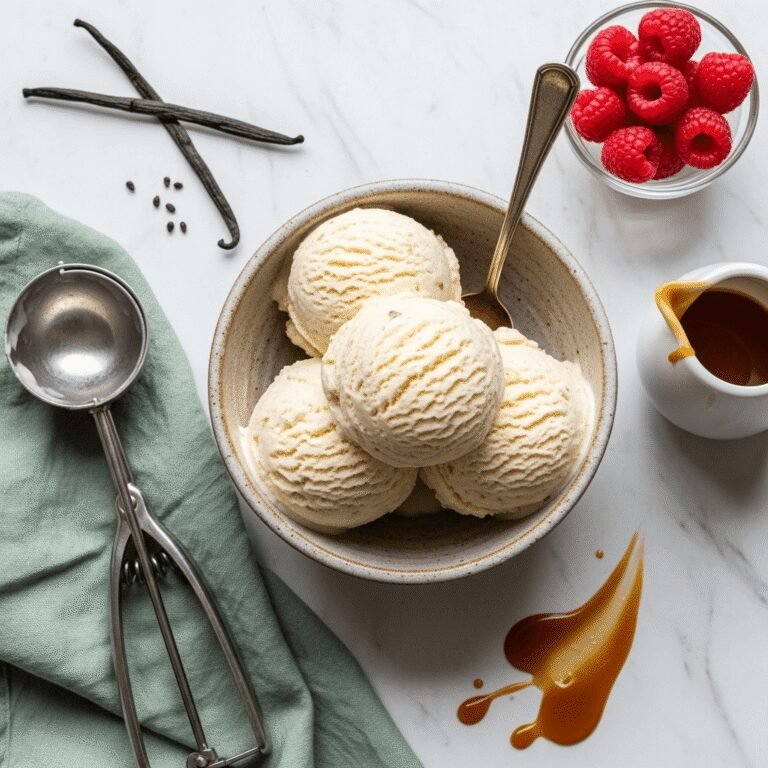
Ice Cream: For pure indulgence, serve with a small scoop of vanilla bean, salted caramel, or coffee ice cream on the side.
Afternoon Tea: Mille Feuille is perfect for an elegant afternoon tea service alongside finger sandwiches, scones, and other petit fours.
Plating: Dust the plate lightly with powdered sugar, add a few fresh mint leaves for color, or place a few candied violets or edible flowers for a truly Instagram-worthy presentation.
FAQs Section
Q: Can I use store-bought puff pastry or do I have to make it from scratch?
A: Absolutely use store-bought! Even professional pastry chefs often use high-quality frozen puff pastry to save time. Look for all-butter puff pastry (like Dufour brand) for the best flavor. Making puff pastry from scratch takes several hours and requires advanced technique, so there’s no shame in using the frozen stuff.
Q: Why did my pastry cream turn out lumpy?
A: Lumps usually form when the egg mixture gets too hot too quickly (scrambling) or when it’s not whisked constantly during cooking. The fix: always temper your eggs gradually, and strain the finished cream through a fine-mesh sieve. This removes any lumps and guarantees silky-smooth results every time.
Q: How far in advance can I assemble the Mille Feuille?
A: For the crispiest results, assemble no more than 4-6 hours before serving. The pastry cream’s moisture will gradually soften the crispy pastry layers. If you need more time, prep all components ahead (pastry cream and baked layers store separately for days) and assemble closer to serving time.
Q: My puff pastry didn’t puff up properly. What went wrong?
A: Several things can prevent proper puffing: the oven wasn’t hot enough (needs to be at least 400°F), the pastry was too warm when it went in the oven (always work with cold pastry), or the pastry was old and the butter layers had separated. For Mille Feuille specifically though, you’re actually weighing down the pastry to keep it flat, so lack of puffing isn’t really an issue.
Q: Can I make this gluten-free?
A: Yes, but with caveats. Use a good gluten-free puff pastry brand (they do exist, though they’re harder to find). The pastry cream is naturally gluten-free as long as you use pure cornstarch. The texture won’t be exactly the same as traditional Mille Feuille, but it will still be delicious.
Q: What’s the best way to cut Mille Feuille without making a mess?
A: Chill the assembled dessert for at least 2 hours (or pop it in the freezer for 15 minutes). Use a long, sharp serrated knife with a gentle sawing motion rather than pressing straight down. Wipe the knife clean with a hot, damp towel between each cut. Some chefs even prefer to lightly score the top layer before the fondant fully sets, marking where they’ll cut later.
Q: Can I flavor the pastry cream with something other than vanilla?
A: Definitely! The pastry cream base is incredibly versatile. Try chocolate (add cocoa powder or melted chocolate), coffee (dissolve instant espresso in the hot milk), citrus (add zest and some juice), almond extract, or even liqueurs like Grand Marnier or Kahlua for adult versions. Just maintain the same ratio of milk, eggs, and cornstarch for proper thickening.
Conclusion
There you have it—the complete guide to creating an authentic French Mille Feuille in your own kitchen! While this classic dessert has a reputation for being difficult, I hope I’ve shown you that with the right techniques and a little patience, it’s absolutely achievable for home bakers. The combination of crispy, caramelized puff pastry and silky vanilla cream is truly magical, and the look on your guests’ faces when you bring this stunning dessert to the table will make every minute of effort worthwhile.
Remember, the key to success is taking your time with each component—perfectly baked pastry, smooth pastry cream, and elegant finishing touches all come together to create something truly special. Don’t stress if your first attempt isn’t picture-perfect; even slightly imperfect Mille Feuille tastes absolutely incredible!
I’d love to hear how your Mille Feuille turns out! Leave a comment below sharing your experience, any creative variations you tried, or any questions you have. And please, if you loved this recipe, save it to your Pinterest boards so you can find it easily next time, and share it with your fellow baking enthusiasts. There’s nothing better than helping others discover the joy of French pastry making!
Happy baking, and bon appétit! 🥐✨