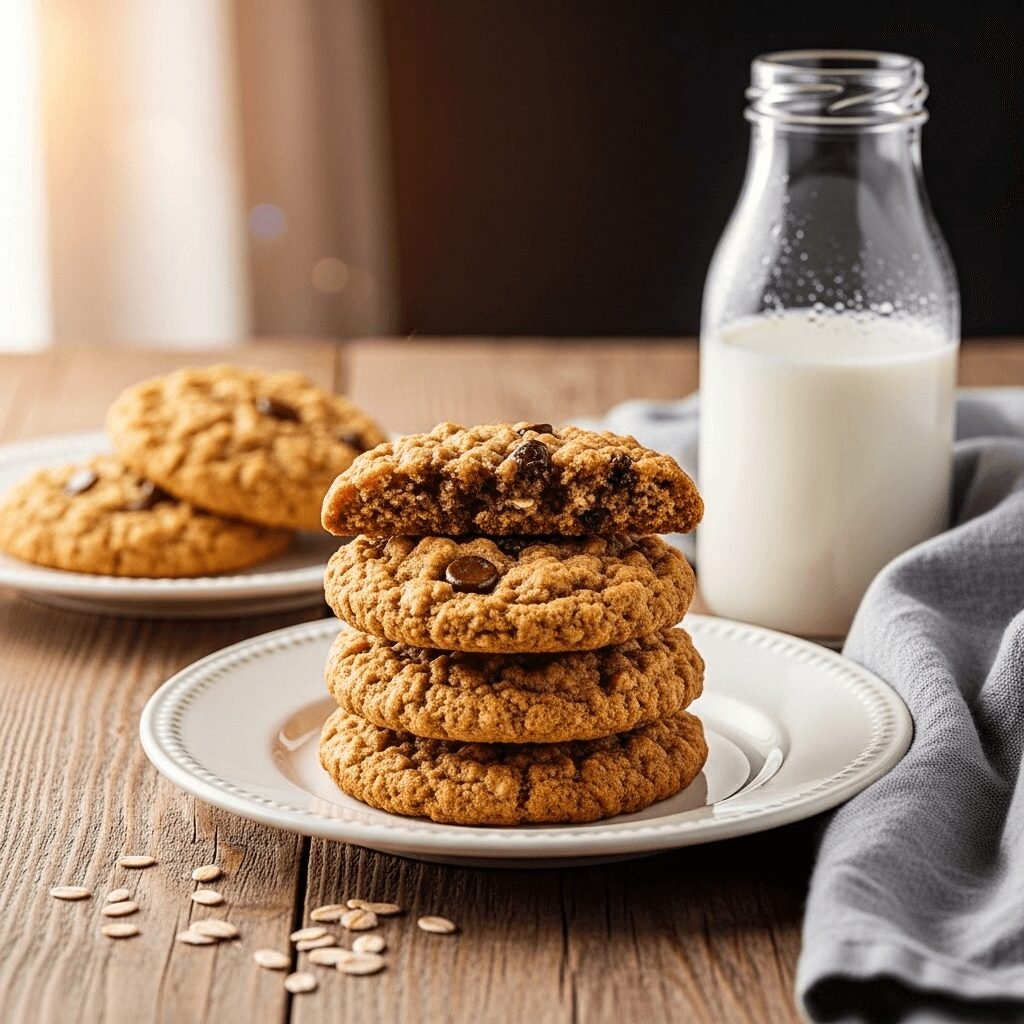
The Ultimate Oatmeal Cookie Recipe – Soft, Chewy & Perfectly Classic

There’s something magical about homemade oatmeal cookies fresh from the oven—that irresistible combination of soft, chewy centers with slightly crisp edges, the warm scent of cinnamon filling your kitchen, and those comforting oats in every bite. This oatmeal cookie recipe delivers everything you want in a classic cookie: they’re perfectly sweet, incredibly satisfying, and have that nostalgic flavor that reminds you of baking with grandma on a lazy Sunday afternoon.
Whether you’re baking for a school fundraiser, looking for an after-school snack that’ll make you the neighborhood favorite, or simply craving something sweet to enjoy with your afternoon coffee, these oatmeal cookies are the answer. They’re wonderfully versatile too—you can enjoy them plain, add chocolate chips, toss in some raisins, or even fold in chopped nuts for extra texture. Best of all, they come together with simple pantry ingredients and bake up in just about 10 minutes, making them perfect for both experienced bakers and those just starting their baking journey.
History / Background
Oatmeal cookies have a rich history that dates back to the late 1800s, though oats themselves have been a dietary staple for thousands of years. The modern oatmeal cookie as we know it really took off in America during the early 20th century, partly thanks to the Quaker Oats Company’s aggressive marketing campaigns that promoted oats as a healthy, versatile ingredient.
During World War I, oatmeal cookies gained massive popularity because they were economical to make during food rationing periods and stayed fresh longer than many other baked goods—perfect for sending to soldiers overseas. The cookies were often packed into care packages because they traveled well and provided hearty nutrition.
The classic oatmeal cookie recipe became a true American staple during the Great Depression when families needed to stretch their food budgets. Oats were inexpensive and filling, making these cookies both affordable and satisfying. By the 1950s, oatmeal cookies had secured their place in American cookie culture, with recipes appearing on Quaker Oats containers and in every community cookbook across the country.
Interestingly, oatmeal cookies were sometimes called “oatmeal wafers” in early cookbooks, and original recipes were often much thinner and crispier than today’s versions. Over time, American tastes evolved to prefer thicker, chewier cookies with more brown sugar for that caramel-like flavor we all love. Today, oatmeal cookies remain one of the top five most popular cookie varieties in the United States, beloved for their wholesome taste and satisfying texture.
Why You’ll Love This Recipe
This isn’t just any oatmeal cookie recipe—it’s the one you’ll return to again and again. These cookies strike the perfect balance between wholesome and indulgent, giving you that feel-good factor of eating something with oats while still satisfying your sweet tooth completely.
Here’s why this recipe is absolutely worth making:
- Perfectly balanced texture – These cookies have soft, chewy centers with just slightly crisp edges, giving you the best of both worlds in every bite
- Simple pantry ingredients – No specialty items needed; you probably have everything in your kitchen right now
- Quick and easy – From start to finish, you can have warm cookies in under 30 minutes, including prep time
- Customizable – This recipe serves as a perfect base for adding your favorite mix-ins like chocolate chips, raisins, cranberries, or nuts
- Kid-friendly baking project – Simple enough for children to help with, making it a fun family activity
- Crowd-pleaser – These cookies appeal to virtually everyone, making them perfect for parties, bake sales, or gift-giving
- Make-ahead friendly – The dough freezes beautifully, so you can have fresh-baked cookies whenever the craving hits
- Budget-friendly – Oats are inexpensive, and this recipe makes a generous batch without breaking the bank
- Lunchbox perfect – They pack well and stay fresh for days, making them ideal for school lunches or afternoon snacks
Ingredient Notes
Understanding your ingredients is the first step to baking success. Here’s what you’ll need and why each component matters:
Old-Fashioned Rolled Oats – The star of the show! Use old-fashioned rolled oats, not quick oats or steel-cut oats. Old-fashioned oats provide the perfect chewy texture and hold their shape during baking. Quick oats will make your cookies too soft and crumbly, while steel-cut oats won’t soften enough. If you need a gluten-free version, certified gluten-free oats work perfectly.
All-Purpose Flour – This provides structure to your cookies. For a healthier twist, you can substitute up to half of the all-purpose flour with whole wheat flour, though this will make the cookies slightly denser and give them a nuttier flavor.
Butter – Use unsalted butter so you can control the salt level in your cookies. The butter should be softened to room temperature—not melted, not cold—so it creams properly with the sugars. This creates air pockets that give your cookies their tender texture.
Brown Sugar & Granulated Sugar – The combination of both sugars is crucial. Brown sugar adds moisture and that deep, caramel-like flavor, while granulated sugar helps with spreading and creates a slightly crisp exterior. The molasses in brown sugar also keeps these cookies soft for days.
Eggs – These bind everything together and add richness. Make sure your eggs are at room temperature for better incorporation into the dough.
Vanilla Extract – Pure vanilla extract is always preferable to imitation for the best flavor. This enhances all the other flavors in your cookies.
Baking Soda – This is your leavening agent, helping the cookies rise slightly and creating that tender crumb. Make sure it’s fresh—old baking soda won’t work as well.
Cinnamon & Salt – Cinnamon adds warmth and depth, while salt balances the sweetness and makes all the other flavors pop. Don’t skip the salt even though these are sweet cookies!
Optional Mix-ins – Chocolate chips, raisins, dried cranberries, chopped walnuts, pecans, or even butterscotch chips all work beautifully in this recipe.
Equipment Needed
Having the right tools makes baking so much easier. Here’s what you’ll need:
- Large mixing bowl – For combining wet and dry ingredients
- Medium mixing bowl – For whisking together your dry ingredients
- Electric mixer (stand mixer or hand mixer) – While you can cream butter and sugar by hand, a mixer makes it much easier and faster
- Measuring cups and spoons – Accurate measurements are crucial in baking
- Wooden spoon or rubber spatula – For mixing in the oats and any add-ins
- Baking sheets (2-3 recommended) – Light-colored aluminum sheets work best; dark pans can cause over-browning
- Parchment paper or silicone baking mats – These prevent sticking and make cleanup effortless
- Cookie scoop or tablespoon – A cookie scoop (about 2 tablespoons) ensures evenly-sized cookies that bake uniformly
- Wire cooling rack – Essential for cooling cookies properly so they don’t get soggy
- Whisk – For combining dry ingredients
- Timer – Oatmeal cookies can go from perfect to overbaked quickly, so timing matters
Oatmeal Cookie Recipe

These classic oatmeal cookies are perfectly soft and chewy with crisp edges, featuring warm cinnamon and wholesome oats. This easy recipe creates bakery-quality cookies using simple pantry ingredients—ideal for family snacking, lunchboxes, or cookie swaps.
- Prep Time: 15 minutes
- Cook Time: 10-12 minutes
- Total Time: 27 minutes
- Yield: 36-40 cookies 1x
- Category: Dessert
- Method: Baking
- Cuisine: American
- Diet: Vegetarian
Ingredients
- 1 cup (2 sticks) unsalted butter, softened to room temperature
- 1 cup packed light brown sugar
- ½ cup granulated white sugar
- 2 large eggs, room temperature
- 2 teaspoons pure vanilla extract
- 1½ cups all-purpose flour
- 1 teaspoon baking soda
- 1 teaspoon ground cinnamon
- ½ teaspoon salt
- 3 cups old-fashioned rolled oats
- Optional: 1 cup chocolate chips, raisins, or chopped nuts
Instructions
- Preheat and prepare: Preheat your oven to 350°F (175°C). Line two large baking sheets with parchment paper or silicone baking mats and set aside.
- Cream butter and sugars: In a large mixing bowl, use an electric mixer to beat the softened butter, brown sugar, and granulated sugar together on medium speed for 3-4 minutes until the mixture is light, fluffy, and pale in color. This creaming process is crucial for tender cookies, so don’t rush it.
- Add eggs and vanilla: Beat in the eggs one at a time, mixing well after each addition. Add the vanilla extract and mix until fully combined. Scrape down the sides of the bowl with a rubber spatula to ensure everything is incorporated.
- Combine dry ingredients: In a separate medium bowl, whisk together the flour, baking soda, cinnamon, and salt until evenly distributed.
- Mix dry into wet: Gradually add the dry ingredients to the wet ingredients, mixing on low speed or stirring by hand just until combined. Don’t overmix—stop as soon as you no longer see streaks of flour.
- Fold in oats: Using a wooden spoon or sturdy spatula, fold in the oats until they’re evenly distributed throughout the dough. If you’re adding chocolate chips, raisins, or nuts, fold those in now as well.
- Scoop cookies: Using a cookie scoop or tablespoon, drop rounded portions of dough onto your prepared baking sheets, spacing them about 2 inches apart. The cookies will spread during baking, so don’t crowd them.
- Bake: Bake for 10-12 minutes, until the edges are lightly golden but the centers still look slightly underdone. The cookies will continue to cook on the hot baking sheet after you remove them from the oven.
- Cool properly: Let the cookies cool on the baking sheet for 5 minutes—this is when they’ll firm up. Then transfer them to a wire cooling rack to cool completely. If you try to move them too soon, they’ll fall apart.
- Store and enjoy: Once completely cooled, store your oatmeal cookies in an airtight container at room temperature. They’ll stay fresh and delicious for up to one week.
Notes
- Don’t overbake: Oatmeal cookies continue cooking on the hot pan after removal from the oven. They should look slightly underdone in the center when you take them out.
- Room temperature ingredients matter: Cold eggs and butter won’t incorporate properly, affecting texture.
- Measure flour correctly: Spoon flour into your measuring cup and level it off with a knife. Scooping directly from the bag packs in too much flour, making dry cookies.
- Chill the dough: If your kitchen is warm or your dough seems too soft, refrigerate it for 30 minutes before scooping. This prevents excessive spreading.
- Uniform size: Use a cookie scoop for evenly sized cookies that bake at the same rate.
Nutrition
- Serving Size: 1 cookie Calories
- Calories: 118
- Sugar: 9g
- Sodium: 67mg
- Fat: 5g
- Saturated Fat: 3g
- Unsaturated Fat: 2g
- Trans Fat: 0g
- Carbohydrates: 17g
- Fiber: 1g
- Protein: 2g
- Cholesterol: 20mg
Note: Nutrition information is approximate and based on one cookie without optional add-ins. Values will vary depending on specific ingredients used and cookie size.
Tips & Variations
The beauty of this oatmeal cookie recipe is how incredibly versatile it is. Here are some delicious ways to customize these cookies to suit your taste:
Classic Oatmeal Raisin: Add 1 cup of raisins (regular or golden) for the traditional version that’s been beloved for generations.
Chocolate Chip Oatmeal: Fold in 1-1½ cups of semi-sweet or dark chocolate chips for a more indulgent treat that chocolate lovers will devour.
Cranberry Walnut: Add ½ cup dried cranberries and ½ cup chopped walnuts for a tangy, crunchy variation that’s perfect for the holidays.
Peanut Butter Oatmeal: Replace ¼ cup of the butter with peanut butter and add peanut butter chips for an extra nutty flavor.
Apple Cinnamon: Add ½ cup finely diced dried apples and increase the cinnamon to 1½ teaspoons for a fall-inspired cookie.
Coconut Oatmeal: Fold in ½ cup sweetened shredded coconut and use coconut extract instead of vanilla for a tropical twist.
Healthier Version: Substitute half the all-purpose flour with whole wheat flour, reduce the sugar by ¼ cup, and add ground flaxseed for extra fiber.
Monster Oatmeal Cookies: Add chocolate chips, M&Ms, and mini peanut butter cups for a loaded cookie that kids go absolutely crazy for.
Spiced Oatmeal: Add ¼ teaspoon each of nutmeg and ground ginger along with the cinnamon for a warm, spiced cookie perfect with tea.
Pro Chef Tips
Want bakery-quality oatmeal cookies every time? These professional techniques will take your cookies from good to absolutely incredible:
Toast your oats first: Spread the oats on a baking sheet and toast them at 350°F for 5-7 minutes before adding them to your dough. This deepens their flavor and adds a subtle nuttiness that makes your cookies taste gourmet.
Use a kitchen scale: Professional bakers weigh their ingredients rather than using volume measurements. For this recipe, that’s 128g flour, 200g brown sugar, and 100g granulated sugar for perfect consistency every time.
Let dough rest: After mixing, let your dough rest in the refrigerator for at least 30 minutes (or up to 24 hours). This allows the oats to hydrate fully and the flavors to meld together, resulting in cookies with better texture and deeper flavor.
Underbake slightly: The secret to chewy cookies is removing them when they look barely set. They should still appear slightly underdone in the center—they’ll firm up as they cool.
Use European-style butter: If you want to splurge, European butter (which has a higher fat content) creates richer, more tender cookies with superior flavor.
Add a touch of molasses: For even deeper flavor, replace 1 tablespoon of the brown sugar with molasses. This adds complexity and keeps cookies soft longer.
Cream butter and sugar longer: Professional bakers cream for 5-7 minutes rather than the typical 2-3 minutes. This incorporates more air, creating lighter, more tender cookies.
Use parchment paper: Never bake directly on the pan—parchment paper ensures even baking and prevents over-browning on the bottoms.
Common Mistakes to Avoid
Even experienced bakers can run into issues with oatmeal cookies. Here are the most common problems and how to prevent them:
Mistake #1: Using quick oats instead of old-fashioned oats. Quick oats are more finely cut and absorb liquid differently, resulting in cookies that are too soft, lack texture, and can even turn mushy. Always use old-fashioned rolled oats for the best results.
Mistake #2: Overmixing the dough. Once you add the flour, mix just until it’s incorporated. Overmixing develops too much gluten, which makes cookies tough and dense instead of tender. Stop mixing as soon as you no longer see flour streaks.
Mistake #3: Baking cookies too long. Oatmeal cookies should come out of the oven looking slightly underdone in the center. They’ll continue to cook on the hot baking sheet. If they look completely done in the oven, they’ll be overbaked and hard once cooled.
Mistake #4: Crowding the baking sheet. Cookies need room to spread. Place them at least 2 inches apart on the baking sheet, or they’ll bake into one giant cookie mass. Bake in batches if necessary.
Mistake #5: Using cold ingredients. Cold butter won’t cream properly with the sugar, and cold eggs don’t incorporate well into the dough. Let your butter and eggs sit at room temperature for 30-60 minutes before baking for the best texture.
Mistake #6: Not measuring flour correctly. Scooping flour directly from the bag compacts it, leading to too much flour and dry, crumbly cookies. Always spoon flour into your measuring cup and level it off with a knife.
Storage & Meal Prep
Proper storage keeps your oatmeal cookies fresh and delicious for days. Here’s everything you need to know:
Room Temperature Storage: Once completely cooled, store cookies in an airtight container at room temperature for up to 7 days. Layer them with parchment paper if stacking to prevent sticking. Add a slice of bread to the container—it keeps cookies soft by releasing moisture as it becomes stale.
Refrigerator Storage: While not necessary, refrigerating cookies extends their life to about 2 weeks. Just know they’ll firm up a bit when cold. Let them sit at room temperature for 10-15 minutes before eating, or warm them briefly in the microwave.
Preventing Cookies from Hardening: If your cookies do become hard, place them in an airtight container with a damp (not wet) paper towel overnight. The cookies will absorb the moisture and soften up.
Reheating Tips: To refresh cookies and make them taste fresh-baked again, warm them in a 300°F oven for 3-5 minutes, or microwave individual cookies for 8-10 seconds. This brings back that just-baked softness and makes the chocolate chips melty if you added them.
Keeping Cookies Crispy: If you prefer crispy cookies, don’t store them in an airtight container. Instead, keep them in a container with a loose-fitting lid or cover with paper towels, which allows air circulation and maintains crispness.
Make-Ahead & Freezer Notes
One of the best things about this oatmeal cookie recipe is how freezer-friendly it is. You can easily make cookies ahead for busy days or unexpected guests.
Freezing Cookie Dough: Scoop the cookie dough into balls and place them on a parchment-lined baking sheet. Freeze until solid (about 2 hours), then transfer the frozen dough balls to a freezer-safe bag or container. They’ll keep for up to 3 months. When you’re ready to bake, place frozen dough balls on a baking sheet and bake at 350°F for 12-14 minutes—no need to thaw! This is my favorite method because you can have fresh, warm cookies any time you want.
Freezing Baked Cookies: Let cookies cool completely, then layer them between sheets of parchment paper in an airtight container or freezer bag. They’ll stay fresh for up to 3 months. Thaw at room temperature for about 30 minutes, or warm them in a 300°F oven for 5 minutes for that fresh-baked taste.
Refrigerating Dough: Cookie dough can be refrigerated for up to 3 days before baking. In fact, chilling the dough improves flavor and texture, so this is actually a great make-ahead strategy even if you’re not trying to save time.
Make-Ahead for Events: If you’re baking for a party or gathering, make the dough 1-2 days ahead and refrigerate it. Bake the cookies the morning of your event so they’re as fresh as possible. Cookies are always best within 24 hours of baking.
Freezer-to-Oven Method: For the ultimate convenience, keep frozen cookie dough balls on hand. You can bake as few or as many as you need—perfect for satisfying sudden cookie cravings or when unexpected guests arrive.
Serving Suggestions
Oatmeal cookies are wonderfully versatile and can be served in so many delicious ways. Here are some ideas to make your cookies even more enjoyable:
Classic Pairing – Milk: Nothing beats a glass of cold milk with warm oatmeal cookies. The combination is timeless for a reason—the creamy milk perfectly balances the sweet, slightly spiced cookies.
Afternoon Tea or Coffee: These cookies are substantial enough to serve as a light snack with your afternoon coffee or tea. The cinnamon and oats pair especially well with chai tea or a cinnamon-spiced latte.
Ice Cream Sandwiches: Take two cookies and sandwich your favorite ice cream between them (vanilla, cinnamon, or caramel work beautifully). Roll the edges in mini chocolate chips or chopped nuts for an extra-special treat.
Breakfast On-the-Go: While technically a dessert, an oatmeal cookie with a piece of fruit and some nuts makes a satisfying grab-and-go breakfast when you’re running late. The oats provide lasting energy.
Dessert Platter: Arrange your oatmeal cookies on a platter alongside brownies, chocolate chip cookies, and fruit for a varied dessert spread at parties or potlucks.
With Apple Cider: During fall, serve these cookies alongside warm apple cider or mulled wine for a cozy seasonal treat that guests absolutely love.
Crumbled Over Yogurt: Crush a cookie and sprinkle it over Greek yogurt with fresh berries for a quick breakfast or snack that feels indulgent but provides good nutrition.
Gift Giving: Package cookies in cellophane bags tied with ribbon, or layer them in a decorative tin for teacher gifts, neighbor treats, or holiday giving. They ship well and stay fresh for days.
FAQs Section
Q: Can I use quick oats instead of old-fashioned oats?
A: I don’t recommend it. Quick oats are more finely cut and will make your cookies too soft and potentially mushy. They also don’t provide that wonderful chewy texture that makes oatmeal cookies so satisfying. Old-fashioned rolled oats are essential for the best results. If you absolutely must substitute, you can try it, but expect a different texture.
Q: Why are my oatmeal cookies flat and spreading too much?
A: There are several possible causes. Your butter might have been too soft or melted—it should be softened but still hold its shape. Your dough might have been too warm; try chilling it for 30 minutes before baking. You might not have enough flour (make sure you’re measuring correctly by spooning and leveling). Or your baking soda might be old and not providing enough lift. Also ensure your oven temperature is accurate using an oven thermometer.
Q: Can I make these cookies gluten-free?
A: Yes! Simply use a 1:1 gluten-free flour blend (like King Arthur or Bob’s Red Mill) instead of all-purpose flour, and use certified gluten-free oats. The texture will be very similar to the original recipe. Make sure your baking soda and other ingredients are also certified gluten-free if you’re baking for someone with celiac disease.
Q: How do I make my oatmeal cookies chewy instead of crispy?
A: The key to chewy cookies is more brown sugar (which adds moisture), slightly underbaking them, and proper storage. Make sure you’re removing cookies from the oven when they still look slightly underdone in the center—they’ll firm up as they cool. Also, using a higher proportion of brown sugar to white sugar creates chewier cookies. Store them in an airtight container to maintain softness.
Q: Can I substitute the eggs?
A: Yes, there are several egg substitutes that work in oatmeal cookies. For each egg, you can use: 1 tablespoon ground flaxseed mixed with 3 tablespoons water (let sit 5 minutes), ¼ cup unsweetened applesauce, or ¼ cup mashed banana. Commercial egg replacers like Bob’s Red Mill also work well. The texture may be slightly different, but the cookies will still be delicious.
Q: Why do my cookies turn hard after a day or two?
A: This usually happens when cookies are overbaked or stored improperly. Make sure you’re removing them from the oven while they still look slightly soft in the center. Store them in an airtight container—exposure to air makes cookies hard. The bread slice trick (adding a slice of bread to your cookie container) really does work to keep cookies soft by releasing moisture gradually.
Q: Can I add protein powder to make these healthier?
A: Yes, you can replace up to ¼ cup of the flour with protein powder (vanilla or unflavored works best). Don’t replace more than that, or the texture will be affected. You might need to add 1-2 tablespoons of milk to the dough if it seems too dry. Keep in mind that protein powder will make the cookies denser and potentially drier, so watch your baking time carefully.
Conclusion
There’s nothing quite like homemade oatmeal cookies warm from the oven, and this recipe truly delivers on every level. These cookies have it all—they’re soft and chewy with perfectly crisp edges, loaded with wholesome oats, and filled with that comforting cinnamon flavor we all crave. Whether you keep them classic or customize them with your favorite mix-ins, these oatmeal cookies are guaranteed to become a staple in your baking rotation.
The best part? This recipe is so forgiving and versatile that you can make it your own. Add chocolate chips for the kids, fold in nuts for texture, or toss in dried fruit for a healthier twist. Make them exactly as written or experiment with the variations suggested above—you really can’t go wrong.
I hope you love these oatmeal cookies as much as my family does. They’ve been requested for every school event, bake sale, and family gathering for years now, and they never disappoint. The smell of cinnamon and vanilla filling your kitchen, the satisfaction of that first warm bite—this is what home baking is all about.
Now it’s your turn! I’d love to hear how these oatmeal cookies turn out for you. Did you add any special mix-ins? Serve them a unique way? Leave a comment below sharing your experience and any creative variations you tried. And if you loved this recipe, please pin it to your Pinterest boards so you can find it easily and share it with other home bakers. Happy baking, friends!