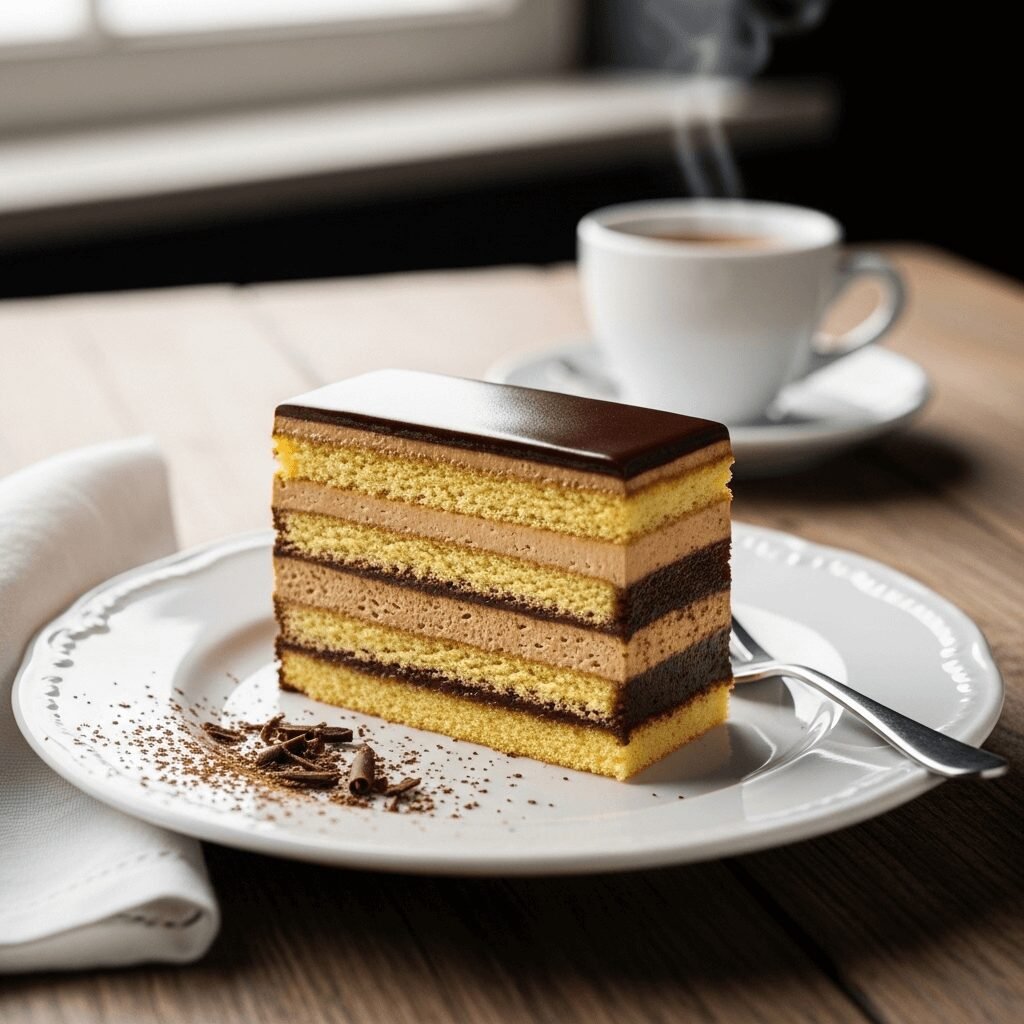
Opera Cake Recipe: A Show-Stopping French Dessert Made Easy at Home
If you’ve ever wanted to impress your dinner guests with a dessert that looks like it came straight from a Parisian patisserie, Opera Cake is your answer. This stunning French layer cake combines delicate almond sponge cake (known as joconde biscuit), rich coffee buttercream, smooth chocolate ganache, and a coffee syrup that ties everything together in perfect harmony. Each bite delivers an elegant balance of coffee and chocolate flavors with a melt-in-your-mouth texture that’s absolutely unforgettable.
Opera Cake is traditionally served at special occasions, celebrations, and upscale dinner parties. It’s the kind of dessert that makes people pause and admire before taking that first indulgent bite. While it has a reputation for being complex, I’m going to walk you through every step so you can create this masterpiece in your own kitchen. Yes, it requires some time and patience, but the result is absolutely worth it—and honestly, it’s more approachable than you might think!
History & Background of Opera Cake
Opera Cake (or “Gâteau Opéra” in French) has a fascinating history rooted in Parisian culinary tradition. This iconic dessert was created in 1955 at Dalloyau, one of Paris’s most prestigious patisseries. The cake was invented by Cyriaque Gavillon, and his wife Andrée gave it the name “Opéra” because she thought the layers of gold leaf on top resembled the stage of the Palais Garnier opera house in Paris.
However, there’s some delicious controversy here! Another famous pastry chef, Gaston Lenôtre, also claimed to have created a similar cake around the same time. Regardless of who truly invented it first, Opera Cake has become a staple of French pastry arts and is considered one of the most elegant desserts in classical French cuisine.
The cake’s design is intentionally minimalist yet sophisticated—featuring clean, geometric layers that showcase the precision and technique of French pastry-making. Each of the multiple thin layers serves a purpose, creating a harmonious blend of textures and complementary flavors. The combination of coffee and chocolate wasn’t accidental; these two ingredients have been beloved partners in French cuisine for centuries, and Opera Cake celebrates this timeless pairing beautifully.
Today, Opera Cake is served in high-end restaurants and patisseries worldwide, but it’s also become a badge of honor for home bakers who want to challenge themselves and create something truly spectacular.
Why You’ll Love This Opera Cake Recipe
This Opera Cake recipe brings the elegance of French pastry into your home kitchen without requiring professional equipment or culinary school training. While it does take some time, each component is surprisingly straightforward when broken down into manageable steps.
Here’s why you’ll fall in love with this recipe:
- Impressive presentation – The beautiful striped layers and glossy chocolate glaze make this cake look like a work of art
- Balanced flavors – The coffee and chocolate combination is sophisticated without being overly sweet
- Make-ahead friendly – You can prepare components in advance, making it perfect for planned entertaining
- Customizable intensity – Adjust the coffee strength to match your personal preference
- Restaurant-quality results – Achieve bakery-level elegance at home for a fraction of the cost
- Perfect portion control – The rich nature of this cake means small slices are satisfying, and it serves many guests
- Special occasion showstopper – This is the dessert that will have everyone asking for the recipe
Ingredient Notes
Almond Flour: The foundation of the joconde sponge, almond flour gives the cake its signature delicate, slightly nutty flavor and tender crumb. Make sure to use blanched almond flour (not almond meal) for the finest texture. If someone has a nut allergy, you can substitute with additional all-purpose flour, though you’ll lose that characteristic almond flavor.
Eggs: You’ll need quite a few eggs for this recipe—they’re separated to create both the sponge cake structure and the airy meringue that keeps the layers light. Use room temperature eggs for better volume when whipping.
Instant Espresso Powder: This ingredient is crucial for authentic Opera Cake flavor. It dissolves easily into the coffee syrup and buttercream, delivering intense coffee flavor without adding extra liquid. If you don’t have espresso powder, very finely ground espresso beans or strong brewed coffee (reduced) can work in a pinch.
Unsalted Butter: Used in both the buttercream and the joconde, butter adds richness and helps create that silky, luxurious mouthfeel. Always use unsalted so you can control the salt level in your cake.
Bittersweet Chocolate: Choose high-quality chocolate (60-70% cacao) for the ganache. The chocolate you select will significantly impact the final flavor, so this is where you want to invest in a good brand. Avoid using chocolate chips, which contain stabilizers that prevent smooth melting.
Heavy Cream: Essential for the ganache, heavy cream (also called heavy whipping cream) should have at least 36% fat content for proper consistency.
Powdered Sugar: Also called confectioners’ sugar, this creates smooth buttercream without any graininess. Don’t substitute with granulated sugar.
Granulated Sugar: Used in the sponge cake and the meringue for structure and sweetness.
Equipment Needed
- Three 9×13-inch baking sheets (or two if you’re patient enough to bake in batches)
- Parchment paper (essential for preventing sticking)
- Stand mixer or electric hand mixer (whipping egg whites by hand is not recommended)
- Medium saucepan (for making ganache and syrup)
- Offset spatula (for spreading layers evenly)
- Wire cooling racks
- Mixing bowls (various sizes)
- Fine-mesh sieve (for sifting dry ingredients)
- Sharp serrated knife (for trimming and cutting)
- Ruler (for measuring and cutting perfect rectangles)
- Small brush (for applying coffee syrup)
- Rubber spatula
- Whisk
- Measuring cups and spoons
Opera Cake Recipe
This stunning French Opera Cake features layers of delicate almond sponge cake, coffee buttercream, and chocolate ganache. It’s an elegant dessert perfect for special occasions that tastes just like it came from a Parisian patisserie.
- Prep Time: 1 hour
- Cook Time: 15 minutes
- Total Time: 5 hours 15 minutes
- Yield: 12-16 servings 1x
- Category: Dessert
- Method: Baking, No-Bake Assembly
- Cuisine: French
- Diet: Vegetarian
Ingredients
For the Joconde Sponge Cake:
- 2 cups (200g) almond flour
- 2 cups (240g) powdered sugar
- 6 large eggs
- 6 large egg whites
- ½ cup (60g) all-purpose flour
- ¼ cup (60g) unsalted butter, melted and cooled
- ¼ cup (50g) granulated sugar
- Pinch of salt
For the Coffee Syrup:
- ⅔ cup (160ml) water
- ½ cup (100g) granulated sugar
- 3 tablespoons instant espresso powder
- 2 tablespoons coffee liqueur (optional)
For the Coffee Buttercream:
- 4 large egg yolks
- ½ cup (100g) granulated sugar
- ⅓ cup (80ml) water
- 1½ cups (340g) unsalted butter, softened
- 2 tablespoons instant espresso powder dissolved in 1 tablespoon hot water
- 1 teaspoon vanilla extract
For the Chocolate Ganache:
- 8 ounces (225g) bittersweet chocolate, finely chopped
- ¾ cup (180ml) heavy cream
- 2 tablespoons (30g) unsalted butter
Instructions
Make the Joconde Sponge Cake:
- Prepare your pans: Preheat oven to 425°F (220°C). Line three 9×13-inch baking sheets with parchment paper and lightly spray with cooking spray. This high temperature creates the characteristic thin, tender cake layers.
- Mix the almond base: In a large bowl, whisk together almond flour, powdered sugar, and whole eggs until completely smooth and well combined. This forms the base of your batter and should be pale and fluffy.
- Create the meringue: In a separate clean, dry bowl, beat egg whites with a pinch of salt until soft peaks form. Gradually add granulated sugar and continue beating until stiff, glossy peaks form. This meringue gives the cake its light, airy texture.
- Combine carefully: Gently fold the sifted all-purpose flour into the almond mixture. Then fold in one-third of the meringue to lighten the batter. Add the remaining meringue in two additions, folding gently to maintain as much air as possible. Finally, fold in the melted butter until just combined.
- Bake the layers: Divide batter evenly among the three prepared pans, spreading thin and even (about ¼-inch thick). Bake for 5-7 minutes until lightly golden and the cake springs back when touched. The cakes should be thin and delicate. Let cool completely on wire racks.
Make the Coffee Syrup:
- Prepare the syrup: In a small saucepan, combine water and sugar. Bring to a simmer, stirring until sugar dissolves completely. Remove from heat and stir in espresso powder until dissolved. Add coffee liqueur if using. Let cool to room temperature. This syrup keeps the cake layers moist and adds essential coffee flavor.
Make the Coffee Buttercream:
- Prepare the base: In a stand mixer, beat egg yolks on medium speed until pale and thick, about 3-4 minutes.
- Make sugar syrup: Meanwhile, combine sugar and water in a small saucepan. Heat over medium-high until mixture reaches 238°F (soft ball stage) on a candy thermometer. This creates a stable Italian meringue base.
- Combine carefully: With mixer running on medium speed, slowly pour hot sugar syrup into the beaten egg yolks in a thin, steady stream. Continue beating on medium-high speed until mixture cools to room temperature, about 5-7 minutes. The bowl should no longer feel warm to the touch.
- Add the butter: With mixer on medium speed, add softened butter 2 tablespoons at a time, beating well after each addition. The mixture may look curdled initially—don’t panic! Keep beating and it will come together into silky buttercream. Once all butter is incorporated, add the dissolved espresso and vanilla. Beat until smooth and fluffy.
Make the Chocolate Ganache:
- Create the ganache: Place chopped chocolate in a heatproof bowl. Heat cream in a saucepan until just beginning to simmer. Pour hot cream over chocolate and let sit for 2 minutes. Whisk until completely smooth and glossy. Stir in butter until melted and incorporated. Let cool slightly until spreadable but still pourable, about 10-15 minutes.
Assemble the Opera Cake:
- Prepare layers: Trim edges of each sponge cake layer to create clean rectangles of equal size (approximately 8×12 inches). Save trimmed pieces for snacking!
- Build the first layer: Place one cake layer on a serving platter or cake board. Brush generously with coffee syrup—the cake should be quite moist but not soggy.
- Add buttercream: Spread half of the coffee buttercream in an even layer over the soaked cake. Use an offset spatula for smooth, professional results.
- Second cake layer: Place second sponge cake layer on top, press gently, and brush with coffee syrup.
- Add ganache: Spread half of the chocolate ganache in an even layer over the second cake layer. Reserve the remaining ganache for the final top layer.
- Third cake layer: Place the final sponge layer on top, press gently, and brush with remaining coffee syrup.
- Final buttercream: Spread remaining coffee buttercream smoothly over the top layer.
- Final ganache coating: Refrigerate for 20 minutes to firm up the buttercream. Then spread the remaining chocolate ganache over the top in a smooth, glossy layer. For a professional finish, drag a small offset spatula or fork across the ganache to create decorative lines.
- Chill and set: Refrigerate the assembled cake for at least 4 hours or overnight. This allows all the layers to meld together and makes slicing much easier.
- Serve: Remove from refrigerator 20 minutes before serving for best flavor and texture. Use a sharp knife dipped in hot water and wiped clean between cuts to create beautiful, clean slices.
Notes
- The coffee syrup should be generously applied but not to the point of making the cake soggy. You want moist layers, not wet ones.
- If your buttercream looks curdled after adding the butter, keep beating! It will come together—this is a common phase in Italian meringue buttercream.
- For cleaner ganache spreading, chill each layer briefly before adding the next component.
- Opera Cake tastes even better on day two after the flavors have had time to meld.
- Room temperature ingredients are crucial for smooth buttercream—cold butter will cause lumps and separation.
Nutrition
- Serving Size: 1 slice
- Calories: 485
- Sugar: 32g
- Sodium: 65mg
- Fat: 34g
- Saturated Fat: 17g
- Unsaturated Fat: 15g
- Trans Fat: 0g
- Carbohydrates: 40g
- Fiber: 2g
- Protein: 7g
- Cholesterol: 165mg
Tips & Variations
Flavor Variations:
- Mocha Opera Cake: Increase the espresso powder in both the syrup and buttercream for a more intense coffee flavor
- Hazelnut Opera: Replace almond flour with hazelnut flour for a Nutella-inspired twist
- White Chocolate Version: Use white chocolate ganache for one of the layers to create visual contrast
- Liqueur Enhancement: Add 2 tablespoons of Kahlúa, Tia Maria, or Amaretto to your coffee syrup for adult-only gatherings
Dietary Modifications:
- Gluten-Free: The joconde is already nearly gluten-free—simply replace the ½ cup all-purpose flour with a gluten-free flour blend
- Dairy-Free: While challenging, you can use high-quality vegan butter and coconut cream to make dairy-free versions of the buttercream and ganache
Texture Adjustments:
- For a lighter cake, use milk chocolate instead of bittersweet in the ganache
- For extra richness, add 2 tablespoons of cocoa powder to one batch of buttercream to create a chocolate coffee buttercream layer
Size Modifications:
- Make mini Opera Cakes by cutting the assembled cake into individual 2×3-inch rectangles—perfect for elegant dinner party portions
- Create an Opera Cake log by spreading all components on a single sheet of joconde and rolling it up
Pro Chef Tips
Temperature Control is Everything: The success of Opera Cake heavily depends on temperature management. Your butter must be truly softened (around 65-70°F) for buttercream, the ganache needs to be spreadable but not hot, and the assembled cake must be properly chilled before cutting.
Use a Candy Thermometer: Don’t guess when making the sugar syrup for buttercream. Investing in an accurate candy thermometer ensures you hit that crucial 238°F soft-ball stage, which creates stable, silky buttercream every time.
The Fold Technique Matters: When incorporating the meringue into your joconde batter, use a gentle cutting and folding motion. Cut down through the center with your spatula, sweep along the bottom, and bring it up the side while rotating the bowl. This preserves those precious air bubbles that make the sponge light and delicate.
Freeze for Easier Cutting: For absolutely perfect, clean slices, freeze the completely assembled cake for 30 minutes before cutting. The firmed-up layers slice like butter and you’ll get picture-perfect edges. Dip your knife in hot water and wipe clean between each cut.
Layer with Precision: Use an offset spatula and work from the center outward when spreading buttercream and ganache. This ensures even distribution and prevents tearing the delicate sponge layers underneath.
Don’t Skip the Resting Time: Opera Cake actually tastes better after sitting in the refrigerator overnight. The coffee syrup continues to hydrate the layers, and all the flavors meld together into perfect harmony.
Common Mistakes to Avoid
Over-beating the joconde batter: Once you add the meringue, fold gently and minimally. Over-mixing deflates the batter and results in dense, flat cake layers instead of tender, airy ones.
Adding butter to hot buttercream base: If you add butter before your egg-sugar mixture has cooled completely, the butter will melt and your buttercream will be soupy and broken. Be patient and let it cool to room temperature first.
Not trimming the cake layers: Those edges might look fine, but they’re usually darker and slightly crispy. Trimming creates uniform layers that stack perfectly and look professional when sliced.
Using cold ganache or buttercream: If your components are too cold, they won’t spread smoothly and can tear the delicate cake layers. Let ganache cool just until spreadable, and ensure buttercream is at proper room temperature consistency.
Rushing the chilling time: I know it’s tempting to cut into this beauty right away, but cutting too soon results in messy slices with layers that slide apart. The minimum 4-hour chill time allows everything to set properly and makes slicing infinitely easier.
Storage & Meal Prep
Refrigerator Storage: Store Opera Cake covered in the refrigerator for up to 5 days. The cake actually improves over the first 2-3 days as flavors meld. Use a cake dome or loosely tent with plastic wrap, being careful not to let the wrap touch the ganache surface.
Serving from Cold: Always remove Opera Cake from the refrigerator 15-20 minutes before serving. Cold dulls the flavors, and you want the buttercream to be creamy rather than firm. This brief tempering time makes all the difference.
Slicing Tips for Storage: If you’ve cut the cake and have partial slices remaining, press a piece of plastic wrap directly against the cut edge before refrigerating to prevent drying.
Portion Control: Because Opera Cake is so rich, small slices are satisfying. Consider cutting smaller pieces initially—guests can always ask for seconds!
Make-Ahead & Freezer Notes
Opera Cake is excellent for advance preparation, which makes it perfect for stress-free entertaining.
Component Prep Timeline:
- 3 days ahead: Bake joconde layers, wrap tightly in plastic wrap, and refrigerate
- 2 days ahead: Make buttercream, store in airtight container in refrigerator (bring to room temperature and re-whip before using)
- 1 day ahead: Assemble entire cake and refrigerate overnight
Freezing Instructions:
- Unassembled components: Wrap joconde layers individually in plastic wrap, then aluminum foil. Freeze up to 1 month. Thaw overnight in refrigerator before assembling.
- Assembled cake: Freeze fully assembled, unchilled Opera Cake on a baking sheet until solid (about 2 hours), then wrap carefully in plastic wrap and foil. Freeze up to 2 months.
- Thawing: Transfer frozen assembled cake to refrigerator and thaw overnight. This slow thaw prevents condensation and maintains texture.
Best Reheating Method: Opera Cake shouldn’t be reheated—it’s meant to be served chilled or at cool room temperature. The butter-based components would melt if warmed.
Serving Suggestions
Opera Cake is luxurious enough to stand alone, but here are some beautiful accompaniments:
Beverages: Serve with freshly brewed espresso, cappuccino, or French press coffee to complement the coffee flavors. A sweet dessert wine like Sauternes or a coffee liqueur over ice also pairs beautifully.
Fresh Elements: A small handful of fresh raspberries or a few strawberry slices alongside each slice adds a pop of color and a tart contrast to the rich chocolate and coffee.
Whipped Cream: A small dollop of lightly sweetened whipped cream (not too sweet—you don’t want to overpower the cake) adds a lovely lightness.
Garnishes: Dust with cocoa powder, add a chocolate curl, or place a single coffee bean on each slice for that professional patisserie touch.
Plating Style: Serve on white or simple plates to let the beautiful striped layers shine. A small drizzle of chocolate sauce on the plate adds elegance.
Occasion Ideas: Opera Cake is perfect for dinner parties, anniversary celebrations, birthday dinners, holiday dessert tables, bridal showers, or any time you want to create a memorable culinary moment.
FAQs
Can I make Opera Cake without a candy thermometer?
While technically possible, I strongly recommend using one for the buttercream. You can test for soft-ball stage by dropping a small amount of the sugar syrup into cold water—if it forms a soft ball that flattens when removed, you’ve reached the right temperature. However, a thermometer provides much more reliable results.
Why did my buttercream separate or look curdled?
This usually happens when the butter is too cold or added too quickly. If it looks curdled, keep beating—it should come together within 2-3 minutes. If it doesn’t, gently warm the bottom of the bowl with a kitchen torch or place briefly over simmering water while beating, just until it smooths out.
Can I use regular flour instead of almond flour?
You can, but you’ll lose the signature almond flavor and slightly chewy texture that makes joconde special. If you must substitute, use 1¾ cups all-purpose flour instead of the 2 cups almond flour.
How far in advance can I assemble Opera Cake?
Opera Cake is best assembled 1-2 days before serving. This gives the flavors time to meld beautifully. You can push it to 3 days if needed, but beyond that, the cake layers may become too soft.
My ganache is too thick/thin to spread. What do I do?
If too thick, gently warm it over a double boiler or in 5-second microwave bursts, stirring between each. If too thin, refrigerate for 5-10 minutes, stirring occasionally until it reaches spreadable consistency.
Can I make a smaller version?
Absolutely! Cut all ingredients in half and use two 8×8-inch pans instead. You’ll have a beautiful smaller Opera Cake perfect for intimate gatherings.
What’s the best way to cut Opera Cake cleanly?
Use a long, thin sharp knife. Dip it in very hot water, wipe completely dry, then make your cut in one smooth motion. Wipe the knife clean and repeat for each slice. The hot knife melts through the chocolate cleanly.
Conclusion
Congratulations—you’re now ready to create an authentic French Opera Cake that would make any Parisian pastry chef proud! While this recipe requires some time and attention to detail, the result is an absolutely stunning dessert that tastes every bit as incredible as it looks. The combination of tender almond sponge, bold coffee buttercream, and silky chocolate ganache creates a sophisticated flavor profile that’s truly unforgettable.
Remember, even if your first attempt isn’t picture-perfect, it will still taste absolutely amazing. Opera Cake is as much about the process and the love you put into it as it is about the final presentation. Each time you make it, you’ll get more comfortable with the techniques and your results will become even more beautiful.
I’d love to see your Opera Cake creations! Share your photos in the comments below and let me know how it turned out. Did you try any of the variations? What did your guests think? And don’t forget to save this recipe to your Pinterest boards so you can find it easily when you’re ready to impress at your next special gathering!
Happy baking, and here’s to creating your own little piece of Paris at home! ☕🍫