The Best Southern Chess Pie Recipe – Simple, Sweet, and Utterly Irresistible!

Chess pie is one of those magical desserts that proves the most incredible things often come from the simplest ingredients. This classic Southern custard pie features a silky, sweet filling with a delicate crispy top that forms as it bakes, creating a heavenly contrast of textures. With just butter, sugar, eggs, and a few pantry staples, you can create a dessert that tastes like it came straight from your grandmother’s kitchen.
This beloved pie is perfect for holidays, family gatherings, Sunday dinners, or any time you’re craving something sweet and comforting. It’s the kind of dessert that makes people ask for the recipe, and you’ll love telling them how surprisingly easy it is to make. Whether you’re serving it at Thanksgiving, bringing it to a potluck, or just treating your family on a weekend, chess pie delivers that homemade warmth that store-bought desserts simply can’t match.
The beauty of chess pie lies in its versatility and foolproof nature. Even beginner bakers can achieve bakery-quality results, and the ingredient list is so basic that you probably have everything you need in your kitchen right now. Let’s dive into this timeless Southern treasure that’s been bringing joy to dessert tables for generations!
History / Background
Chess pie holds a cherished place in Southern culinary history, with origins that spark delightful debate among food historians and home cooks alike. This humble custard pie became a staple across the American South during the 19th century, particularly beloved in rural communities where simple, shelf-stable ingredients were the foundation of everyday cooking.
The name “chess pie” has several charming origin stories. One popular theory suggests it comes from the English “cheese pie,” which didn’t actually contain cheese but referred to the curd-like texture of the filling. Over time and through regional dialects, “cheese” may have evolved into “chess.” Another endearing tale claims that when asked what kind of pie she’d made, a Southern cook replied, “It’s jes’ pie” – and the drawled pronunciation stuck as “chess pie.”
Some historians believe the name derives from the pie chest or pie safe – a screened cabinet where pies were stored before refrigeration became common. Since chess pie contains no dairy other than butter and keeps remarkably well at room temperature, it was perfect for storing in these pie chests, potentially earning the name “chest pie” that later became “chess pie.”
Regardless of its naming origins, chess pie emerged as a resourceful dessert during times when fresh fruits might be scarce or expensive. Enslaved cooks and resourceful homemakers in the South created this marvel using basic ingredients that were almost always on hand: eggs, sugar, butter, and cornmeal or flour for thickening. The recipe was passed down through generations, with each family adding their own special touches – a splash of vinegar for tang, a hint of vanilla for warmth, or a sprinkle of nutmeg for depth.
During the Great Depression, chess pie’s popularity soared even higher because it was economical yet impressive, proving that simple ingredients could create something truly special. Today, chess pie remains a proud symbol of Southern hospitality and culinary ingenuity, served everywhere from church suppers to fine dining establishments celebrating regional cuisine.
Why You’ll Love This Recipe
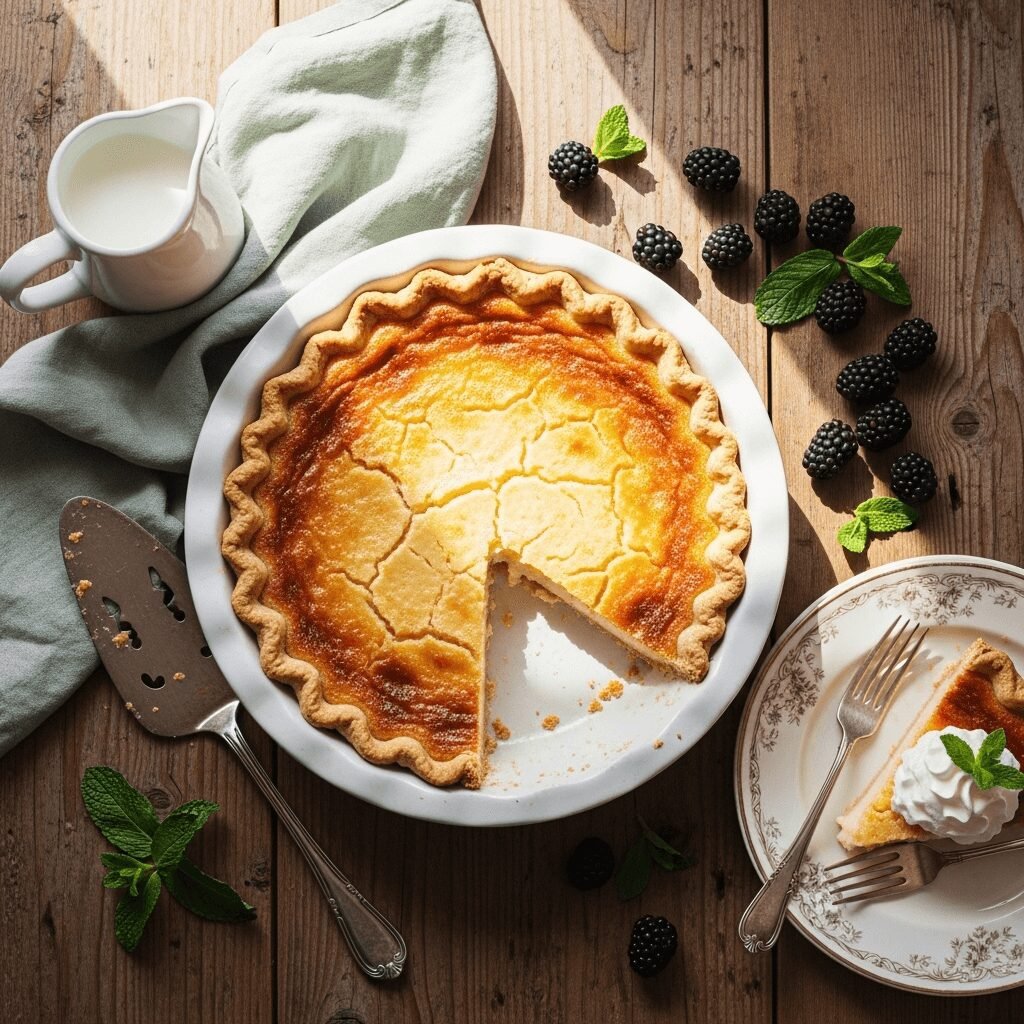
This chess pie recipe captures everything wonderful about traditional Southern baking while being incredibly accessible for modern home cooks. The filling transforms into a custard-like texture with a characteristic thin, crispy top layer that crackles gently when you slice into it – absolutely divine!
Here’s why this chess pie will become your new favorite dessert:
- Incredibly simple – Just 7 basic ingredients and one bowl for mixing the filling
- Budget-friendly – No expensive or exotic ingredients required, perfect for feeding a crowd without breaking the bank
- Beginner-friendly – No complicated techniques or special skills needed; if you can whisk, you can make this pie
- Make-ahead perfect – Actually tastes better the next day, making it ideal for stress-free entertaining
- Crowd-pleasing sweetness – That classic Southern dessert flavor everyone loves, with just the right amount of richness
- Impressive presentation – Looks beautiful with minimal effort, especially when topped with fresh whipped cream or berries
- Versatile serving options – Delicious served warm, at room temperature, or chilled from the refrigerator
- Long shelf life – Keeps well for several days, so you can enjoy it throughout the week
- Customizable – Easy to add your own twist with citrus, chocolate, or different extracts
Ingredient Notes
Let’s talk about what goes into this magical pie and why each ingredient matters:
Pie Crust – You can use a store-bought refrigerated crust to save time (absolutely no judgment here!), or make your own flaky homemade crust if you’re feeling ambitious. Either way works beautifully. A standard 9-inch deep-dish pie crust is perfect.
Granulated Sugar – The main sweetener and backbone of the filling. Don’t reduce this; the sweetness is essential to the classic chess pie flavor profile.
Butter (Unsalted) – Melted butter adds richness and that beautiful golden color. Use unsalted so you can control the salt level. Salted butter works in a pinch, just omit the additional salt.
Eggs – The star ingredient that creates the custard texture. Use large eggs at room temperature for the best incorporation. The eggs provide structure and that silky mouthfeel.
Whole Milk – Adds creaminess and helps create the perfect custard consistency. You can substitute with 2% milk, but whole milk gives the richest result. Some recipes use evaporated milk for extra richness.
White Vinegar – This secret ingredient adds a subtle tang that balances the sweetness and adds complexity. Don’t worry, you won’t taste vinegar – it just makes the flavor more interesting. You can substitute with apple cider vinegar or lemon juice.
Vanilla Extract – Pure vanilla extract is best for the warmest, most authentic flavor. This enhances all the other flavors.
Cornmeal – Just a tablespoon or two gives chess pie its characteristic slightly grainy texture and helps the filling set properly. Yellow or white cornmeal both work. Some bakers use all-purpose flour instead, which creates a slightly smoother texture.
Salt – A small pinch enhances all the flavors and prevents the pie from tasting flat or one-dimensional.
Equipment Needed
You won’t need any fancy equipment for this recipe – just basic kitchen tools:
- 9-inch pie dish (deep-dish preferred for maximum filling)
- Large mixing bowl for combining the filling ingredients
- Whisk or electric hand mixer for beating the eggs and sugar
- Measuring cups and spoons for accuracy
- Small saucepan or microwave-safe bowl for melting butter
- Spatula or wooden spoon for mixing
- Pie weights or dried beans (if blind-baking your crust)
- Aluminum foil or pie crust shield to prevent over-browning
- Cooling rack for the finished pie
Chess Pie Recipe

This classic Southern Chess Pie features a silky-sweet custard filling with a delicate crispy top, all nestled in a flaky pie crust. Simple ingredients create an unforgettable dessert that’s perfect for any occasion!
- Prep Time: 15 minutes
- Cook Time: 50 minutes
- Total Time: 1 hour 5 minutes (plus cooling time)
- Yield: 8 servings 1x
- Category: Dessert
- Method: Baking
- Cuisine: Southern American
- Diet: Vegetarian
Ingredients
- 1 unbaked 9-inch pie crust (store-bought or homemade)
- 1½ cups granulated sugar
- ½ cup (1 stick) unsalted butter, melted and slightly cooled
- 4 large eggs, room temperature
- ¼ cup whole milk
- 1 tablespoon white vinegar
- 1 tablespoon cornmeal (yellow or white)
- 1 tablespoon all-purpose flour
- 1 teaspoon pure vanilla extract
- ¼ teaspoon salt
Instructions
- Prepare your oven and crust: Preheat your oven to 350°F (175°C). If using a store-bought crust, place it in your pie dish and crimp the edges decoratively. If using homemade, roll out your dough and fit it into the pie dish, trimming and crimping as desired. Place in the refrigerator while you prepare the filling.
- Melt the butter: In a small saucepan over low heat or in a microwave-safe bowl, melt the butter. Set aside to cool slightly – you don’t want it hot enough to scramble the eggs when you add them.
- Mix the dry ingredients: In a large mixing bowl, whisk together the sugar, cornmeal, flour, and salt until evenly combined. This ensures these ingredients are evenly distributed throughout the filling.
- Beat in the eggs: Add the eggs to the sugar mixture and whisk vigorously (or use a hand mixer on medium speed) until the mixture is smooth, thick, and pale yellow, about 2-3 minutes. You want the sugar to start dissolving and the mixture to become creamy.
- Add the wet ingredients: Pour in the melted butter, milk, vinegar, and vanilla extract. Whisk until everything is completely combined and the mixture is smooth with no streaks. The filling should be pourable but thick enough to coat the back of a spoon.
- Fill the pie crust: Remove your prepared pie crust from the refrigerator. Give the filling one final stir, then pour it into the unbaked crust. The filling should come to about ¾ inch from the top of the crust.
- Protect the crust edges: Cover the crimped edges of your pie crust with aluminum foil or a pie crust shield. This prevents the edges from burning while the filling bakes through.
- Bake the pie: Place the pie on the center rack of your preheated oven. Bake for 50-55 minutes, or until the filling is set around the edges but still has a slight jiggle in the center (about a 2-inch circle). The top should be golden brown with that characteristic slight crackle.
- Cool completely: Remove the pie from the oven and place it on a cooling rack. Remove the foil from the edges. Allow the pie to cool completely at room temperature, about 2-3 hours. The filling will continue to set as it cools. Resist the urge to cut into it early – patience is rewarded!
- Serve and enjoy: Once cooled, slice the pie and serve at room temperature, or chill in the refrigerator for a firmer texture. Top with whipped cream, fresh berries, or enjoy it plain to appreciate the pure chess pie flavor.
Notes
- Testing for doneness: The pie is done when the edges are set and puffed slightly, but the center still jiggles a bit when you gently shake the pan. It will continue cooking from residual heat as it cools.
- Cracking prevention: Avoid opening the oven door frequently during baking, as temperature fluctuations can cause cracks. If your pie does crack, don’t worry – it still tastes amazing, and whipped cream covers all imperfections!
- Room temperature eggs: This helps them incorporate more smoothly into the filling. If your eggs are cold, place them in a bowl of warm water for 5-10 minutes.
- Cornmeal texture: If you prefer a completely smooth filling, you can omit the cornmeal and use 2 tablespoons of flour instead, though this creates a slightly different texture than traditional chess pie.
Nutrition
- Serving Size: 1 slice (⅛ of pie)
- Calories: 385
- Sugar: 38g
- Sodium: 195mg
- Fat: 18g
- Saturated Fat: 10g
- Unsaturated Fat: 7g
- Trans Fat: 0g
- Carbohydrates: 52g
- Fiber: 0.5g
- Protein: 5g
- Cholesterol: 125mg
Tips & Variations
Lemon Chess Pie: Add 2 tablespoons of fresh lemon juice and 1 tablespoon of lemon zest to the filling for a bright, citrusy twist. Reduce the vinegar to 1 teaspoon.
Chocolate Chess Pie: Whisk ¼ cup of unsweetened cocoa powder into the sugar mixture before adding the wet ingredients. Absolutely decadent!
Buttermilk Chess Pie: Replace the whole milk and vinegar with ¼ cup plus 1 tablespoon of buttermilk for extra tanginess and a slightly different flavor profile.
Coconut Chess Pie: Stir in ¾ cup of sweetened shredded coconut into the filling before pouring into the crust. The coconut sinks slightly, creating a wonderful texture.
Brown Sugar Chess Pie: Replace half of the granulated sugar with packed light brown sugar for a deeper, more caramel-like flavor.
Bourbon Chess Pie: Add 2 tablespoons of bourbon to the filling for a sophisticated adult version (reduce the milk slightly to compensate).
Mini Chess Pies: Use a muffin tin lined with small pie crusts to create individual servings. Reduce baking time to 25-30 minutes.
Pro Chef Tips
Temperature matters: Bringing your eggs and milk to room temperature before mixing creates a smoother, more homogeneous filling that bakes more evenly. Cold ingredients can cause the butter to seize up and create lumps.
Don’t over-whisk: While you want to combine everything thoroughly, over-mixing can incorporate too much air, which may cause the pie to puff up excessively during baking and then collapse, creating cracks.
Blind-bake for a crisper bottom: If you have time, blind-bake your crust for 10 minutes before adding the filling. Line it with parchment paper, fill with pie weights or dried beans, and bake at 375°F. This prevents a soggy bottom crust.
The jiggle test is key: Chess pie should still have a slight wobble in the center when you remove it from the oven. The residual heat will finish cooking the center as it cools. If you bake until the center is completely firm, you’ll end up with an overcooked, rubbery texture.
Strain your filling: For an ultra-silky filling, pour your mixture through a fine-mesh strainer into a large measuring cup before pouring into the crust. This removes any lumps and creates a refined texture.
Serve at the right temperature: Chess pie is delicious at any temperature, but many Southerners prefer it at room temperature or slightly warm, which allows the flavors to shine. If you refrigerate it, let it sit at room temperature for 20-30 minutes before serving.
Common Mistakes to Avoid
Over-baking the pie: This is the most common error. An over-baked chess pie will have a rubbery, tough texture instead of that custardy creaminess. Remember, it continues cooking as it cools, so embrace the jiggle!
Using hot butter: Adding butter that’s too hot can partially cook the eggs on contact, creating lumps or an uneven texture. Let your melted butter cool for 5 minutes before adding it to the egg mixture.
Skipping the crust shield: Without protecting your crust edges, they’ll burn before the filling is done. Cover those edges from the start, or at least after the first 20 minutes of baking.
Cutting too soon: I know it’s hard to wait, but cutting into a warm chess pie will result in a runny mess. The filling needs time to set properly as it cools. Plan for at least 2-3 hours of cooling time.
Not adjusting oven temperature: Every oven is different. If your pie is browning too quickly, reduce the temperature to 325°F and bake a bit longer. An oven thermometer is a worthwhile investment.
Storage & Meal Prep
Room Temperature Storage: Chess pie can sit at room temperature, loosely covered with plastic wrap or aluminum foil, for up to 2 days. This is actually how it was traditionally stored in the South, and many people prefer the texture this way.
Refrigerator Storage: For longer storage, cover the cooled pie tightly with plastic wrap or place it in an airtight container and refrigerate for up to 5 days. The pie will firm up in the fridge, creating a denser, fudgier texture that’s equally delicious.
Reheating: If you prefer your chess pie warm, reheat individual slices in the microwave for 15-20 seconds, or warm the whole pie in a 300°F oven for 10-15 minutes. You can also enjoy it cold straight from the fridge – it’s a completely different but equally wonderful experience.
Serving after refrigeration: For the best flavor, let refrigerated chess pie sit at room temperature for 20-30 minutes before serving. This allows the flavors to bloom and the texture to soften slightly.
Make-Ahead & Freezer Notes
Make-Ahead Instructions: Chess pie is actually an excellent make-ahead dessert! You can bake it up to 2 days in advance and store it in the refrigerator. The flavors meld and develop beautifully overnight, and many bakers swear that day-old chess pie tastes even better than fresh.
Freezing the Baked Pie: Yes, you can freeze chess pie! Once completely cooled, wrap the entire pie (or individual slices) tightly in plastic wrap, then wrap again in aluminum foil. Freeze for up to 3 months. Thaw overnight in the refrigerator, then bring to room temperature before serving.
Freezing Unbaked Filling: While you can freeze the unbaked crust, I don’t recommend freezing the unbaked filling, as the texture may suffer when thawed and baked.
Best Reheating Method from Frozen: Thaw the pie completely in the refrigerator overnight. If you want to serve it warm, reheat in a 300°F oven for 15-20 minutes, covering the edges with foil if they start to darken.
Preparing Components in Advance: You can prepare your pie crust up to 3 days ahead and keep it refrigerated, or freeze it for up to 3 months. Have it ready in your pie dish so all you need to do is mix the filling and bake on the day you need it.
Serving Suggestions
Chess pie is delicious on its own, but these accompaniments take it to the next level:
Classic Pairings:
- Sweetened Whipped Cream: The light, fluffy cream cuts through the richness beautifully
- Fresh Berries: Strawberries, blueberries, or raspberries add freshness and color
- Vanilla Ice Cream: A scoop of quality vanilla creates an amazing warm-cold contrast
Beverage Pairings:
- Strong Black Coffee: Balances the sweetness perfectly for an afternoon treat
- Sweet Iced Tea: A Southern classic combo that feels just right
- Bourbon or Whiskey: For adults, a small pour alongside a slice is divine
- Cold Milk: Simple, nostalgic, and perfect
Special Occasion Presentations:
- Dust with powdered sugar and add fresh mint leaves for an elegant touch
- Drizzle with caramel or chocolate sauce for extra decadence
- Serve with a dollop of lemon curd on the side for citrus lovers
- Top with toasted pecans or sliced almonds for crunch
- Pair with sharp cheddar cheese (a surprisingly traditional Southern combination!)
Seasonal Variations:
- Summer: Top with macerated strawberries and basil
- Fall: Serve with spiced apple compote
- Winter: Add a sprinkle of cinnamon and nutmeg on top
- Spring: Garnish with edible flowers and lemon zest
FAQs Section
Why is my chess pie runny? The most common reason is not baking it long enough. Chess pie should still have a slight jiggle in the center when you remove it from the oven, but it should be set around the edges. If you cut into it before it’s completely cooled, it will also appear runny. Always allow at least 2-3 hours of cooling time for the filling to set properly.
Can I make chess pie without cornmeal? Absolutely! While cornmeal gives chess pie its characteristic slightly grainy texture, you can substitute it with an equal amount of all-purpose flour for a smoother custard pie. Some regions actually make chess pie exclusively with flour, so both versions are authentic.
What’s the difference between chess pie and buttermilk pie? They’re very similar! Chess pie traditionally uses milk or cream with vinegar for tang, while buttermilk pie uses buttermilk. Chess pie also typically includes cornmeal, while buttermilk pie may or may not. Both are beloved Southern custard pies with slightly different flavor profiles.
How do I prevent my chess pie from cracking? Cracks usually form from over-baking or temperature shock. Don’t over-bake – remove the pie when the center still jiggles slightly. Avoid opening the oven door frequently during baking. Let the pie cool gradually at room temperature rather than in a cold area. If it does crack, don’t worry – it still tastes amazing!
Can I use a pre-made frozen pie crust? Yes! A frozen store-bought crust works perfectly for chess pie. Just make sure it’s a deep-dish crust to accommodate all the filling. No need to thaw it first – you can pour the filling directly into the frozen crust.
Why does my chess pie have a crusty top? That’s actually a desirable characteristic! The crusty, slightly crackled top is one of the hallmarks of a traditional chess pie. It forms as the sugar caramelizes slightly during baking, creating a wonderful textural contrast with the custardy filling beneath.
Is chess pie supposed to be jiggly? When you first remove it from the oven, yes – the center should have a gentle jiggle about the size of a quarter. As it cools, it will continue to set. Once completely cooled, it should be firm enough to slice cleanly but still have a soft, custardy texture, not rubbery or completely solid.
Conclusion
There you have it – your complete guide to making the most incredible Southern chess pie! This humble dessert has been bringing smiles to faces for generations, and now you have all the secrets to create your own perfect version. Whether you’re honoring a family tradition, discovering this classic for the first time, or looking for an easy yet impressive dessert, this chess pie recipe delivers every single time.
The beauty of chess pie lies in its simplicity. You don’t need fancy equipment, expensive ingredients, or complicated techniques – just a little patience and love. Yet the result is a dessert that tastes like it took hours of work and generations of knowledge to perfect. That’s the magic of Southern baking at its finest.
I’d love to hear about your chess pie adventures! Did you try one of the variations? Did your family request it for every holiday now? Drop a comment below and share your experience. And please don’t forget to pin this recipe to your favorite Pinterest boards so you can find it easily whenever that chess pie craving hits. Happy baking, friends! 🥧✨