The Ultimate Ginger Cookies Recipe: Crispy, Chewy & Perfectly Spiced

There’s something magical about ginger cookies that makes them utterly irresistible. These beautifully crackled, warmly spiced cookies deliver the perfect balance of crispy edges and chewy centers, with that signature kick of ginger that makes your taste buds dance. Whether you’re baking for the holidays, need a cozy afternoon treat, or want to fill your kitchen with the most amazing aroma, these homemade ginger cookies are exactly what you need.
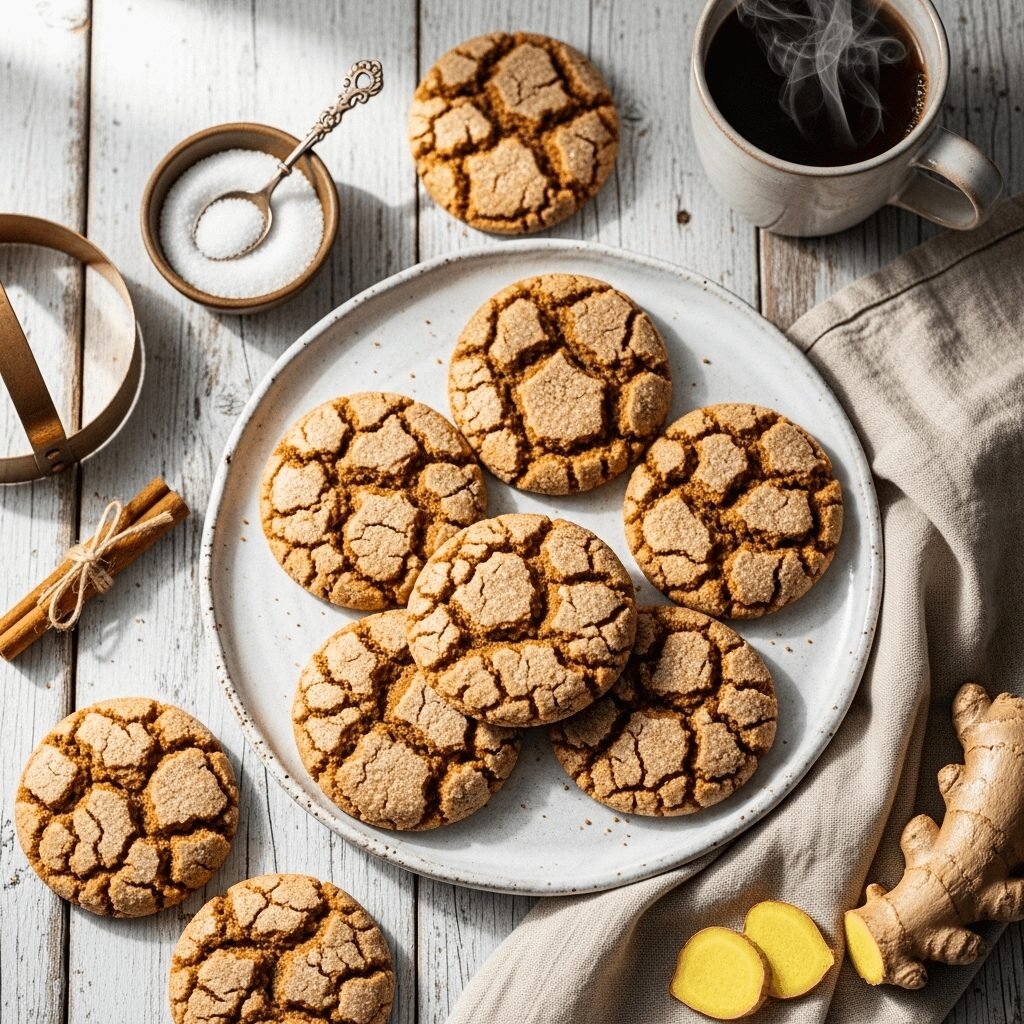
What sets these ginger cookies apart is their incredible depth of flavor. We’re using a combination of ground ginger, cinnamon, and molasses to create that classic spicy-sweet profile that’s become synonymous with comfort and nostalgia. They’re rolled in sparkling sugar before baking, which gives them that gorgeous crackled appearance and adds a delightful crunch to every bite. Perfect for cookie exchanges, holiday gift boxes, or simply enjoying with a cup of tea or coffee, these cookies are guaranteed to become a staple in your baking repertoire.
These cookies are incredibly versatile too. Serve them at Christmas gatherings, pack them in lunchboxes, bring them to potlucks, or keep a stash in your cookie jar for whenever the craving strikes. They’re equally at home at fancy holiday parties and casual family dinners, making them one of the most beloved cookie recipes across America.
History / Background
Ginger cookies have a rich and fascinating history that spans continents and centuries. The story begins in medieval Europe, where ginger was prized as an exotic spice brought along the Silk Road from Asia. Because ginger was expensive and associated with luxury, ginger-spiced treats were often reserved for special occasions and the wealthy classes.
The tradition of ginger cookies as we know them today has strong roots in Germany, where lebkuchen (gingerbread) became popular in monasteries during the 13th century. German immigrants brought these recipes to America, where they evolved and adapted to local tastes and available ingredients. The Pennsylvania Dutch community, in particular, played a significant role in popularizing ginger cookies in colonial America.
By the 18th and 19th centuries, ginger cookies had become firmly established in American baking traditions. The addition of molasses—a readily available sweetener in the colonies—gave American ginger cookies their distinctive dark color and robust flavor, differentiating them from their European cousins. These cookies were practical too; they stored well, traveled beautifully, and could be made with pantry staples that most households kept on hand.
The iconic crackled appearance of ginger cookies became popular in the early 20th century when bakers discovered that rolling the dough in granulated sugar before baking created that stunning crisscross pattern as the cookies expanded in the oven. This not only made them visually appealing but also added textural contrast that elevated the eating experience.
Today, ginger cookies remain one of America’s most beloved cookie varieties, especially during fall and winter. They’ve transcended their holiday-only status to become a year-round favorite, with bakeries, coffee shops, and home kitchens across the country turning out batch after batch of these spicy, aromatic treats.
Why You’ll Love This Recipe
This ginger cookie recipe has been tested, tweaked, and perfected to deliver bakery-quality results every single time. It combines traditional techniques with modern convenience, ensuring that even beginner bakers can achieve professional-looking and delicious cookies. The recipe strikes that elusive perfect balance between crispy and chewy—crisp around the edges with a tender, slightly soft center that has just the right amount of chew.
Here’s why this recipe will become your go-to:
- Incredible flavor depth – The combination of fresh and ground ginger, plus warm spices, creates a complex, warming flavor that’s never one-dimensional
- Perfect texture – Crispy edges meet chewy centers in cookie perfection
- Stunning presentation – That gorgeous crackled sugar coating makes these cookies Pinterest-worthy every time
- Make-ahead friendly – The dough can be prepared in advance and even frozen for future baking sessions
- Pantry-friendly ingredients – No specialty items or hard-to-find ingredients required
- Consistent results – This recipe has been tested countless times and delivers perfect cookies every batch
- Customizable spice level – Easily adjust the ginger intensity to suit your preference
- Great for gifting – These cookies stay fresh for days and look beautiful packaged in tins or cellophane bags
- Kid-approved – The sweet-spicy balance appeals to both children and adults
- Budget-friendly – Makes a generous batch without breaking the bank
Ingredient Notes
Understanding your ingredients is key to baking success, so let’s break down what makes these ginger cookies so special:
All-Purpose Flour – Forms the structure of your cookies. Make sure to measure correctly by spooning flour into your measuring cup and leveling it off. Don’t pack it down, or you’ll end up with dense, tough cookies.
Ground Ginger – The star of the show! This provides that warm, spicy kick. Fresh ground ginger has more potency, so if your ginger has been sitting in your spice cabinet for years, consider replacing it for maximum flavor impact.
Ground Cinnamon – Adds warmth and complements the ginger beautifully. It rounds out the spice profile and adds depth.
Ground Cloves – Just a small amount creates complexity. Cloves have a strong flavor, so don’t be tempted to add more than called for.
Baking Soda – This is what creates those beautiful cracks and helps the cookies spread. Don’t substitute with baking powder—they’re not interchangeable here.
Salt – Enhances all the flavors and balances the sweetness. Never skip the salt in baking!
Unsalted Butter – Provides rich flavor and the right texture. It should be softened to room temperature (not melted) for proper creaming. If you only have salted butter, reduce the added salt in the recipe by half.
Granulated Sugar – Used both in the dough and for rolling the cookies. This creates sweetness and that irresistible crunchy coating.
Brown Sugar – Adds moisture, chewiness, and a subtle molasses flavor that deepens the overall taste profile.
Molasses – This is what gives ginger cookies their characteristic dark color and robust, slightly bitter-sweet flavor. Use unsulphured molasses for the best results. Don’t use blackstrap molasses—it’s too bitter and intense.
Egg – Binds everything together and adds structure. Make sure it’s at room temperature for best incorporation.
Vanilla Extract – Enhances all the other flavors. Pure vanilla extract is worth the investment over imitation.
Possible Substitutions: You can use coconut sugar instead of brown sugar for a slightly deeper flavor. If you don’t have molasses, you can substitute with honey or maple syrup, though the flavor will be different. For a gluten-free version, use a 1:1 gluten-free baking flour blend.
Equipment Needed
Having the right tools makes baking so much easier and more enjoyable. Here’s what you’ll need for perfect ginger cookies:
- Mixing bowls (at least 2 medium-sized)
- Electric mixer (stand mixer or hand mixer)
- Measuring cups and spoons
- Whisk
- Rubber spatula
- Baking sheets (2-3 cookie sheets)
- Parchment paper or silicone baking mats
- Cookie scoop (1.5 tablespoon size for uniform cookies)
- Small bowl (for rolling sugar)
- Cooling rack
- Sifter or fine-mesh strainer (optional, for flour)
Ginger Cookies Recipe

These classic ginger cookies feature crispy edges, chewy centers, and warm spices that create the perfect balance of sweet and spicy. Rolled in sparkling sugar and baked to crackled perfection, they’re an irresistible treat for any occasion.
- Prep Time: 20 minutes
- Cook Time: 12 minutes
- Total Time: 32 minutes (plus chilling time)
- Yield: 36 cookies 1x
- Category: Dessert
- Method: Baking
- Cuisine: American
- Diet: Vegetarian
Ingredients
- 2¼ cups all-purpose flour
- 2 teaspoons ground ginger
- 1 teaspoon baking soda
- 1 teaspoon ground cinnamon
- ½ teaspoon ground cloves
- ¼ teaspoon salt
- ¾ cup unsalted butter, softened
- 1 cup granulated sugar
- ¼ cup packed light brown sugar
- ¼ cup molasses
- 1 large egg, room temperature
- 1 teaspoon vanilla extract
- ⅓ cup granulated sugar (for rolling)
Instructions
- Prepare dry ingredients: In a medium bowl, whisk together flour, ground ginger, baking soda, cinnamon, cloves, and salt. Set aside.
- Cream butter and sugars: In a large bowl using an electric mixer, beat softened butter, 1 cup granulated sugar, and brown sugar on medium speed for 3-4 minutes until light and fluffy. The mixture should look pale and increase in volume.
- Add wet ingredients: Beat in molasses, egg, and vanilla extract until fully combined and smooth. Scrape down the sides of the bowl as needed.
- Combine wet and dry: Gradually add the flour mixture to the butter mixture, mixing on low speed until just combined. Don’t overmix—stop as soon as no flour streaks remain.
- Chill the dough: Cover the bowl with plastic wrap and refrigerate for at least 1 hour (or up to 24 hours). Chilled dough is essential for preventing excessive spreading.
- Preheat oven: When ready to bake, preheat your oven to 350°F (175°C). Line baking sheets with parchment paper.
- Shape and roll cookies: Place ⅓ cup granulated sugar in a small bowl. Using a cookie scoop or tablespoon, portion dough into 1.5-tablespoon sized balls. Roll each ball between your palms to smooth, then roll generously in the sugar to coat completely.
- Arrange on baking sheets: Place cookie dough balls 2 inches apart on prepared baking sheets (about 9-12 per sheet).
- Bake: Bake for 11-13 minutes, until edges are set and tops are crackled. The centers will look slightly underdone—this is perfect! They’ll continue cooking on the hot pan.
- Cool: Let cookies cool on the baking sheet for 5 minutes, then transfer to a cooling rack to cool completely. They’ll firm up as they cool.
Nutrition
- Serving Size: 1 cookie
- Calories: 95
- Sugar: 9g
- Sodium: 65mg
- Fat: 4g
- Saturated Fat: 2.5g
- Unsaturated Fat: 1.3g
- Trans Fat: 0g
- Carbohydrates: 14g
- Fiber: 0.3g
- Protein: 1g
- Cholesterol: 15mg
Tips & Variations
Spicier Version: Double the ground ginger or add ¼ teaspoon cayenne pepper for cookies with serious heat.
Chocolate Chip Addition: Fold in ½ cup mini chocolate chips to the dough after adding the flour mixture for chocolate ginger cookies.
Crystallized Ginger: Add ⅓ cup finely chopped crystallized ginger to the dough for intense ginger flavor and chewy texture pockets.
Orange Ginger: Add 1 tablespoon fresh orange zest to the dough and substitute 1 teaspoon of the vanilla with orange extract.
Larger Bakery-Style Cookies: Use 3 tablespoon portions of dough and bake for 14-16 minutes for giant cookies.
Vegan Option: Substitute butter with vegan butter and replace the egg with a flax egg (1 tablespoon ground flaxseed mixed with 3 tablespoons water, left to gel for 5 minutes).
Soft and Chewy: Reduce baking time by 1-2 minutes and let cookies cool completely on the baking sheet for softer cookies.
Decorative Touch: After rolling in sugar, gently press the cookie dough balls with the bottom of a glass to create a flatter, more uniform shape before baking.
Pro Chef Tips
Temperature matters: Ensure all ingredients are at proper temperature. Room temperature butter should leave a slight indent when pressed but shouldn’t be greasy or melted. Room temperature eggs incorporate more smoothly and create better texture.
Use quality spices: Spices lose potency over time. For the most flavorful cookies, replace ground spices that are older than a year. The difference in flavor is remarkable.
The creaming method is key: When beating butter and sugar, don’t rush this step. Proper creaming incorporates air, creating lighter, more tender cookies. Beat for the full 3-4 minutes.
Molasses temperature trick: If your molasses is thick and difficult to measure, warm the measuring cup with hot water first, dry it, then measure. The molasses will slide right out.
Even baking: Rotate baking sheets halfway through baking time and switch racks if baking multiple sheets for even browning.
Rest between batches: Let baking sheets cool completely between batches, or use multiple pans. Placing dough on hot baking sheets causes premature spreading.
The poke test: Gently press the center of a cookie at minimum bake time. It should feel set but still soft. If it leaves an indent, it’s perfect—remember, they’ll firm up while cooling.
Common Mistakes to Avoid
Using melted or too-soft butter: This causes cookies to spread excessively and become thin and crispy rather than chewy. Butter should be softened (about 65°F) but still hold its shape.
Skipping the chill time: Warm dough spreads too much in the oven, resulting in flat, thin cookies. Chilling solidifies the fats and allows the flour to hydrate fully, creating the perfect texture.
Overmixing the dough: Once you add flour, mix only until just combined. Overmixing develops gluten, leading to tough, cake-like cookies instead of tender ones.
Crowding the baking sheet: Cookies need space to spread. Place them at least 2 inches apart, or they’ll bake into each other and won’t develop crispy edges.
Overbaking: Ginger cookies can go from perfect to overdone quickly. Set a timer and check them at the minimum bake time. They should look slightly underdone in the center when you remove them.
Storage & Meal Prep
Room Temperature Storage: Store completely cooled cookies in an airtight container at room temperature for up to 1 week. Layer cookies between parchment paper to prevent sticking. They actually improve in flavor after a day or two as the spices meld.
Keeping Cookies Soft: Place a slice of bread in the container with the cookies. The cookies will absorb moisture from the bread, staying soft and chewy. Replace the bread slice every 2-3 days.
Refrigerator Storage: While not necessary, you can refrigerate cookies in an airtight container for up to 2 weeks. Bring to room temperature before serving for best flavor and texture.
Reheating: Warm cookies in a 300°F oven for 3-5 minutes to restore that fresh-baked texture. Alternatively, microwave for 8-10 seconds for a warm, soft cookie.
Make-Ahead & Freezer Notes
Freezing Cookie Dough: This dough freezes beautifully! After chilling, portion into balls and place on a baking sheet. Freeze until solid (about 2 hours), then transfer to a freezer-safe bag or container. Freeze for up to 3 months. When ready to bake, roll frozen dough balls in sugar and bake directly from frozen, adding 1-2 minutes to baking time.
Freezing Baked Cookies: Once completely cooled, layer cookies between parchment paper in an airtight container or freezer bag. Freeze for up to 3 months. Thaw at room temperature for 30-45 minutes before serving.
Make-Ahead Dough: Prepare the dough up to 3 days in advance and keep it refrigerated. Actually, the flavor improves with time! Just let it sit at room temperature for 10-15 minutes before shaping if it becomes too firm.
Best Reheating Method: For frozen baked cookies, thaw at room temperature, then warm in a 300°F oven for 5 minutes to restore that fresh-baked quality. They’ll taste like you just pulled them from the oven.
Serving Suggestions
These ginger cookies are incredibly versatile and pair wonderfully with both beverages and complementary desserts:
Hot Beverages: Serve alongside spiced chai tea, hot apple cider, coffee, hot chocolate, or a creamy latte. The spices in the cookies complement warm drinks perfectly.
Cold Beverages: Pair with cold milk, iced coffee, or a creamy vanilla milkshake for a delightful contrast.
Ice Cream Sandwiches: Use two ginger cookies to sandwich vanilla, cinnamon, or pumpkin ice cream for an elevated dessert.
Cheese Board Addition: Add these to a dessert cheese board with sharp cheddar, creamy brie, fresh fruit, and nuts for an unexpected but delicious combination.
Crumbled Topping: Crush cookies and use as a topping for yogurt parfaits, ice cream sundaes, or baked fruit crisps.
With Dips: Serve with cream cheese frosting, lemon glaze, or vanilla icing for dipping.
Holiday Cookie Platters: Include these on mixed cookie trays alongside sugar cookies, chocolate chip cookies, and snickerdoodles for variety.
FAQs Section
Q: Why did my cookies spread too much?
A: The most common cause is not chilling the dough long enough or using butter that was too soft/melted. Make sure to chill for at least 1 hour and ensure your butter is properly softened (not melted). Also check that your baking soda is fresh—old leavening agents don’t work properly.
Q: Can I make these cookies without molasses?
A: While molasses is essential for authentic ginger cookie flavor, you can substitute with honey or dark corn syrup in a pinch. The flavor will be different—less robust and complex—but they’ll still be delicious. You could also use maple syrup, though this will give a distinct maple flavor.
Q: My cookies turned out hard—what went wrong?
A: Overbaking is usually the culprit. Ginger cookies should be removed from the oven when they still look slightly soft in the center. They continue baking on the hot pan and will firm up as they cool. Also, measuring flour correctly is crucial—too much flour creates dry, hard cookies.
Q: Do I have to roll the cookies in sugar?
A: While not absolutely necessary, the sugar coating is what creates that beautiful crackled appearance and adds wonderful textural contrast. The sugar also prevents the dough from sticking to your hands when rolling. If you skip it, the cookies will still taste great but won’t have that signature look.
Q: Can I use fresh ginger instead of ground ginger?
A: Yes! Use about 2 tablespoons of freshly grated ginger for a brighter, more intense flavor. Add it when you mix in the molasses and egg. Keep the ground ginger in the recipe too for that warm, classic flavor profile.
Q: Why are my cookies flat and crispy instead of chewy?
A: This usually happens when the dough is too warm when it goes into the oven, there’s too much sugar, or they’re baked too long. Make sure to chill the dough properly, measure ingredients accurately, and remove cookies when they still look slightly underdone in the center.
Q: How can I make my cookies more/less spicy?
A: Easily! To increase heat, double the ginger or add a pinch of cayenne pepper. For milder cookies, reduce the ginger by half and omit the cloves. You can also add more cinnamon, which provides warmth without heat, to balance a less spicy version.
Conclusion
These ginger cookies truly represent everything wonderful about home baking—they’re aromatic, flavorful, beautifully textured, and fill your home with the most incredible scent. Whether you’re an experienced baker or just starting your baking journey, this recipe delivers consistent, bakery-worthy results that will have everyone asking for seconds (and the recipe!).
The combination of warm spices, the perfect chewy-crispy texture, and that gorgeous crackled appearance make these cookies absolute showstoppers. They’re equally appropriate for casual weeknight treats and special holiday celebrations, proving their versatility time and time again.
I’d love to hear how your ginger cookies turn out! Did you add any fun variations? What did your family think? Drop a comment below sharing your experience, and don’t forget to pin this recipe to your favorite Pinterest board so you can find it easily whenever the cookie craving strikes. If you make these, tag me on social media—I genuinely love seeing your beautiful baking creations!
Happy baking, and enjoy every spicy, sweet, perfectly crackled bite!