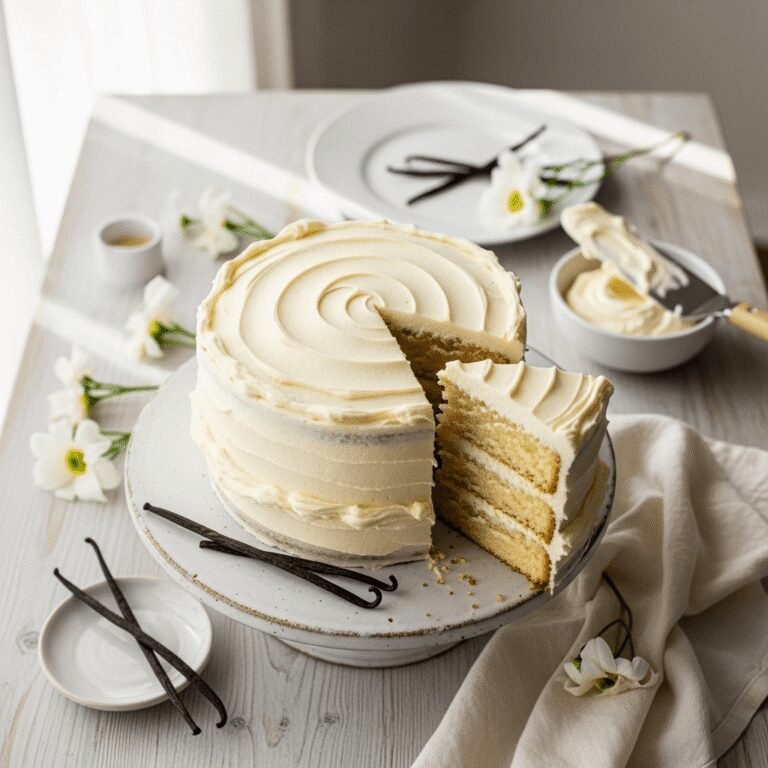
Perfect Vanilla Cupcakes Recipe – Light, Fluffy & Bakery-Style

If there’s one recipe every home baker needs in their arsenal, it’s a foolproof vanilla cupcake recipe. These aren’t just any cupcakes—they’re the kind that make people’s eyes light up at birthday parties, the ones that disappear from bake sale tables in minutes, and the cupcakes that’ll have everyone convinced you bought them from a fancy bakery. With their tender, fluffy crumb, perfectly domed tops, and pure vanilla flavor, these cupcakes are pure perfection in a paper wrapper.
What makes these vanilla cupcakes so special is their versatility. They’re the perfect blank canvas for any frosting, filling, or decoration you can dream up, yet they’re also delicious enough to enjoy completely plain. The texture is what really sets them apart—light and airy, never dense or dry, with a delicate crumb that melts on your tongue. And that vanilla flavor? It’s warm, sweet, and comforting without being overwhelming.
These cupcakes are perfect for absolutely any occasion. Birthday parties, baby showers, school celebrations, office gatherings, wedding dessert tables, holiday parties, or simply a Sunday afternoon treat with your family. They’re kid-approved, elegant enough for adults, and endlessly customizable. Whether you’re frosting them with classic buttercream, filling them with fruit preserves, or keeping them simple with a dusting of powdered sugar, these vanilla cupcakes deliver every single time.
History / Background
The cupcake has a fascinating history that’s deeply intertwined with American baking culture. The term “cupcake” first appeared in American cookbooks in the early 19th century, around 1796, though the concept of small cakes has existed for much longer. The name originally came from the measurements used—ingredients were measured by the cup rather than weighed, making them more accessible to home bakers who didn’t have kitchen scales.
In the early days, cupcakes were actually called “number cakes” or “1234 cakes” because recipes followed a simple pattern: one cup of butter, two cups of sugar, three cups of flour, and four eggs. This easy-to-remember formula made baking less intimidating for everyday cooks. The individual serving size was revolutionary at the time, as it allowed for portion control and eliminated the need for cake-cutting at gatherings.
The vanilla cupcake specifically rose to prominence in America during the mid-1800s when vanilla extract became more widely available and affordable. Before this, vanilla was an expensive luxury imported from Mexico and Madagascar. Once commercial vanilla extract production began in the 1850s, vanilla-flavored desserts exploded in popularity, and the vanilla cupcake became an American classic.
Throughout the 20th century, cupcakes experienced waves of popularity. They were beloved during World War II for their simplicity and minimal ingredient requirements during rationing. The 1950s saw the rise of box cake mixes, making cupcakes even more accessible. Then, in the early 2000s, cupcakes experienced a massive renaissance thanks to trendy bakeries and pop culture references, transforming from a simple homemade treat into gourmet desserts with elaborate decorations.
Today, the classic vanilla cupcake remains one of the most searched-for recipes online. It’s stood the test of time because it delivers exactly what people want: a delicious, reliable, crowd-pleasing treat that tastes like home, childhood, and celebration all at once.
Why You’ll Love This Recipe
I’ve tested countless vanilla cupcake recipes over the years, and this one has earned its permanent place in my recipe box. What makes it truly exceptional is the perfect balance between ease and impressive results—you get bakery-quality cupcakes without any complicated techniques or specialty ingredients.
The texture is the first thing you’ll notice. These cupcakes are impossibly light and fluffy, with a tender crumb that’s never dry or crumbly. They hold together beautifully whether you’re eating them straight from the wrapper or piling on frosting, and they stay moist for days. The vanilla flavor shines through clearly—it’s the star of the show without being artificial or overwhelming.
Here’s why this recipe will become your favorite:
- Beginner-friendly: Simple steps with clear instructions that guarantee success even if you’re new to baking
- One-bowl method: Less cleanup means more time enjoying your cupcakes and less time doing dishes
- Consistent results: These cupcakes turn out perfect every single time—no flat tops, no dense centers, no dry edges
- Room temperature stable: Made with oil instead of butter, so they stay soft and tender at room temperature
- Perfect for decorating: The flat, sturdy tops provide an ideal canvas for frosting and decorations
- Customizable base: Works beautifully with any frosting flavor or add-ins you can imagine
- Budget-friendly: Uses affordable pantry staples without sacrificing quality
- Kid-approved: The mild, sweet vanilla flavor appeals to even the pickiest eaters
- Makes exactly 12: Perfect portion for small gatherings, and the recipe doubles easily for larger crowds
- Freezer-friendly: Bake ahead and freeze for stress-free party planning
Ingredient Notes
Understanding the role of each ingredient will help you achieve perfect cupcakes every time. Let me break down what makes this recipe work so beautifully.
All-Purpose Flour: The foundation of your cupcake structure. I recommend measuring by spooning the flour into your measuring cup and leveling it off, rather than scooping directly from the bag, which packs in too much flour and results in dense cupcakes. For an even lighter texture, you can substitute cake flour—use 1⅔ cups cake flour in place of 1½ cups all-purpose flour.
Granulated Sugar: Provides sweetness and helps create that tender, moist texture. Sugar also contributes to the lovely golden color on top. Don’t be tempted to reduce the sugar significantly, as it plays an important structural role in the cupcakes.
Eggs: Two large eggs at room temperature provide structure, moisture, and help the cupcakes rise beautifully. Room temperature eggs incorporate more smoothly into the batter. If you forget to take them out ahead of time, place them in a bowl of warm water for 5-10 minutes.
Vegetable Oil: This is the secret to cupcakes that stay moist for days! Unlike butter, which solidifies at room temperature, oil remains liquid, keeping the crumb tender even after the cupcakes have cooled. You can use canola oil, light olive oil, or melted coconut oil as substitutes.
Whole Milk: Adds richness and helps create a tender crumb. Whole milk is preferred for the best flavor and texture, but 2% milk works in a pinch. If you only have non-dairy milk, use unsweetened almond milk or oat milk for the closest results.
Pure Vanilla Extract: Please don’t skimp here! Pure vanilla extract makes an enormous difference in flavor compared to imitation vanilla. You’ll need 2 teaspoons for that gorgeous vanilla flavor to really shine through. Mexican or Madagascar vanilla both work beautifully.
Baking Powder: The leavening agent that gives your cupcakes their rise and fluffy texture. Make sure your baking powder is fresh (less than 6 months old) for optimal lift. You can test it by dropping a bit into hot water—if it bubbles vigorously, it’s still good.
Salt: Essential for balancing the sweetness and enhancing all the other flavors. Don’t skip it, even though it seems like a tiny amount.
Sour Cream: This is an optional ingredient that adds incredible moisture and a slight tang that enhances the vanilla flavor. If you don’t have sour cream, you can use Greek yogurt, buttermilk, or simply increase the milk by 2 tablespoons.
Equipment Needed
Having the right tools makes cupcake baking a breeze. Here’s what you’ll need:
- Standard muffin tin (12-cup capacity)
- Paper cupcake liners (standard size, not mini or jumbo)
- Large mixing bowl for combining ingredients
- Medium bowl for dry ingredients
- Electric mixer (hand mixer or stand mixer) for smooth, lump-free batter
- Rubber spatula for scraping down the bowl and folding
- Measuring cups (both dry and liquid measures)
- Measuring spoons for precise measurements
- Whisk for combining dry ingredients
- Ice cream scoop or ¼ cup measure for portioning batter evenly
- Toothpick or cake tester to check doneness
- Wire cooling rack to prevent soggy bottoms
- Offset spatula (optional, for frosting)
Perfect Vanilla Cupcakes Recipe – Light, Fluffy & Bakery-Style

These classic vanilla cupcakes are perfectly light, fluffy, and moist with a delicate crumb that melts in your mouth. Made with simple pantry ingredients and pure vanilla extract, they deliver bakery-quality results every time. Perfect for birthdays, celebrations, or any time you need a foolproof, crowd-pleasing dessert. Top with your favorite frosting or enjoy them plain—they’re delicious either way!
- Prep Time: 15 minutes
- Cook Time: 18 minutes
- Total Time: 33 minutes (plus cooling time)
- Yield: 12 cupcakes 1x
- Category: Dessert
- Method: Baking
- Cuisine: American
- Diet: Vegetarian
Ingredients
For the Vanilla Cupcakes:
- 1½ cups (190g) all-purpose flour
- 1 cup (200g) granulated sugar
- 1½ teaspoons baking powder
- ½ teaspoon salt
- 2 large eggs, at room temperature
- ½ cup (120ml) vegetable oil
- ½ cup (120ml) whole milk, at room temperature
- 2 teaspoons pure vanilla extract
- 2 tablespoons sour cream (optional, but recommended)
For Simple Vanilla Buttercream (Optional):
- 1 cup (2 sticks/226g) unsalted butter, softened
- 4 cups (500g) powdered sugar
- 2 teaspoons pure vanilla extract
- 3-4 tablespoons heavy cream or whole milk
- Pinch of salt
Instructions
For the Cupcakes:
- Preheat and prep: Preheat your oven to 350°F (175°C). Line a standard 12-cup muffin tin with paper cupcake liners. This prevents sticking and makes for easy cleanup.
- Mix dry ingredients: In a medium bowl, whisk together the flour, sugar, baking powder, and salt until well combined with no lumps. Whisking aerates the flour and ensures even distribution of the leavening agents.
- Combine wet ingredients: In a large mixing bowl, using an electric mixer on medium speed, beat together the eggs, oil, milk, vanilla extract, and sour cream (if using) until smooth and well combined, about 1-2 minutes. The mixture should be pale and slightly frothy.
- Add dry to wet: With the mixer on low speed, gradually add the dry ingredients to the wet ingredients. Mix until just combined—do not overmix. Stop mixing as soon as you can’t see any more dry flour streaks. A few small lumps are perfectly fine and will dissolve during baking.
- Fill liners: Using an ice cream scoop or ¼ cup measure, divide the batter evenly among the 12 cupcake liners, filling each about ⅔ full (roughly 3 tablespoons of batter per cupcake). This ensures nice domed tops without overflow.
- Bake: Bake for 18-20 minutes, or until the tops spring back when lightly touched and a toothpick inserted into the center comes out clean or with just a few moist crumbs (not wet batter). The tops should be just barely starting to turn golden.
- Cool: Remove the muffin tin from the oven and let the cupcakes cool in the pan for 5 minutes. Then carefully transfer them to a wire cooling rack to cool completely before frosting, at least 30-45 minutes.
For the Vanilla Buttercream (Optional):
- Beat butter: In a large bowl using an electric mixer, beat the softened butter on medium speed for 2-3 minutes until light, fluffy, and pale in color.
- Add sugar: Gradually add the powdered sugar, about 1 cup at a time, beating on low speed after each addition to avoid a sugar cloud. Once all the sugar is incorporated, increase speed to medium and beat for 2 minutes.
- Add flavorings: Add the vanilla extract, salt, and 3 tablespoons of cream. Beat on medium-high speed for 3-4 minutes until light and fluffy. If the frosting seems too thick to pipe or spread, add the remaining tablespoon of cream.
- Frost: Frost the completely cooled cupcakes using a piping bag with your favorite tip, an offset spatula, or a simple butter knife.
Notes
- Room temperature ingredients: Make sure eggs and milk are at room temperature for the smoothest batter and best rise.
- Don’t overmix: Mix only until the flour disappears. Overmixing develops gluten, resulting in tough, dense cupcakes.
- Even portioning: Use an ice cream scoop to ensure all cupcakes are the same size so they bake evenly.
- Check early: Start checking for doneness at 17 minutes. Every oven is different, and overbaking is the enemy of moist cupcakes.
- Cool completely: Make absolutely sure cupcakes are completely cool before frosting, or the frosting will melt and slide off.
- Flavor variations: Add ½ teaspoon almond extract for almond cupcakes, or 1 tablespoon lemon zest for lemon vanilla cupcakes.1 cupcake (unfrosted)
Nutrition
- Serving Size: 1 cupcake (unfrosted)
- Calories: 218
- Sugar: 18g
- Sodium: 142mg
- Fat: 11g
- Saturated Fat: 1.5g
- Unsaturated Fat: 9g
- Trans Fat: 0g
- Carbohydrates: 28g
- Fiber: 0.5g
- Protein: 3g
- Cholesterol: 35mg
Nutrition information is approximate and calculated per unfrosted cupcake.
Tips & Variations
One of the best things about this vanilla cupcake recipe is how easily you can customize it to suit any occasion or flavor preference.
Flavor Variations:
- Funfetti Cupcakes: Fold ½ cup rainbow sprinkles into the finished batter for celebratory confetti cupcakes
- Lemon Vanilla: Add 2 tablespoons fresh lemon zest and reduce vanilla to 1 teaspoon for bright, citrusy cupcakes
- Almond Vanilla: Replace 1 teaspoon of vanilla extract with ½ teaspoon almond extract for sophisticated almond-flavored cupcakes
- Strawberry Vanilla: Add ½ cup finely diced fresh strawberries and a drop of pink food coloring to the batter
- Chocolate Chip: Fold ½ cup mini chocolate chips into the batter just before scooping
Frosting Options:
- Classic vanilla buttercream (recipe included)
- Cream cheese frosting for tangy richness
- Chocolate buttercream for chocolate lovers
- Swiss meringue buttercream for silky elegance
- Whipped cream frosting for a lighter option
- Simple glaze made with powdered sugar and milk
Decoration Ideas:
- Fresh berries and mint leaves
- Colorful sprinkles or edible glitter
- Chocolate shavings or curls
- Edible flowers for elegant occasions
- Candies and themed toppers for parties
Dietary Modifications:
- Gluten-Free: Use a 1:1 gluten-free baking flour blend
- Dairy-Free: Substitute almond milk and use melted coconut oil instead of vegetable oil; frost with dairy-free buttercream
- Reduced Sugar: You can reduce sugar by up to ¼ cup, though texture will be slightly less tender
Pro Chef Tips
These professional techniques will elevate your cupcakes from good to absolutely spectacular:
Bring everything to room temperature: This is the single most important step for smooth, lump-free batter that bakes evenly. Room temperature ingredients emulsify better, creating a more stable batter that produces tender cupcakes with better rise.
Use an ice cream scoop: A standard ice cream scoop (about 3 tablespoons or ¼ cup capacity) ensures every cupcake is exactly the same size. This means they’ll all bake at the same rate and be ready at the same time, with no over or underbaked cupcakes.
Don’t fill too full: The sweet spot is ⅔ full—this gives cupcakes room to rise into beautiful domes without spilling over the edges. Overfilled liners result in flat-topped cupcakes or muffin-top overflow.
Tap out air bubbles: After filling the liners, gently tap the muffin tin on the counter once or twice. This releases any large air bubbles in the batter that could create holes or tunnels in your finished cupcakes.
Rotate halfway through: If your oven has hot spots, rotate the muffin tin 180 degrees halfway through baking for more even browning and rise.
The toothpick test: Insert a toothpick in the center of one cupcake. It should come out completely clean or with just a few tiny moist crumbs—never wet batter. If you see wet batter, give them another 2-3 minutes.
Cool on a rack: Transfer cupcakes to a wire cooling rack as soon as they’re cool enough to handle (about 5 minutes). This allows air circulation and prevents the bottoms from getting soggy from condensation.
Freeze before frosting: For the cleanest frosting job, freeze unfrosted cupcakes for 30 minutes first. This firms them up and prevents crumbs from mixing into your frosting.
Common Mistakes to Avoid
Even a simple recipe like cupcakes can go wrong if you’re not careful. Here’s how to avoid the most common pitfalls:
Overmixing the batter: This is the number one mistake that leads to dense, tough cupcakes. Once you add the flour, mix only until it disappears—about 20-30 seconds on low speed. Overmixing develops gluten strands that make cupcakes chewy instead of tender.
Using cold ingredients: Cold eggs and milk don’t incorporate smoothly, resulting in a lumpy batter that can bake unevenly. Always let refrigerated ingredients sit at room temperature for 30-60 minutes before starting. In a pinch, warm them slightly in warm water.
Opening the oven door too early: Every time you open the oven, the temperature drops dramatically. Don’t peek until the minimum baking time is reached (17 minutes), or your cupcakes might sink in the middle as they lose heat.
Incorrect oven temperature: Use an oven thermometer to verify your oven’s actual temperature. Many ovens run 25°F hotter or cooler than the dial indicates. Too hot and the tops brown before the centers cook; too cool and you’ll get pale, dense cupcakes.
Overbaking: This is a close second to overmixing as a cause of dry cupcakes. Start checking at 17 minutes—the toothpick should come out clean or with just the tiniest crumbs. Remember that cupcakes continue cooking slightly from residual heat even after removal from the oven.
Frosting warm cupcakes: Patience is crucial here. If your cupcakes are even slightly warm, the frosting will melt into an unappetizing puddle. Wait until they’re completely cool to the touch—at least 30-45 minutes on a cooling rack.
Storage & Meal Prep
Proper storage keeps your vanilla cupcakes tasting fresh and delicious for days.
Room Temperature Storage: Unfrosted cupcakes can be stored in an airtight container at room temperature for up to 3 days. They’ll actually taste even better on day two as the flavors meld and develop. Frosted cupcakes should be stored under a cake dome or in a large container with a lid at room temperature for 2-3 days, depending on your frosting type.
Refrigerator Storage: If you’ve used frosting with cream cheese, whipped cream, or other perishable ingredients, refrigerate the cupcakes in an airtight container. Buttercream-frosted cupcakes can also be refrigerated if your kitchen is very warm. Let them come to room temperature for 30 minutes before serving for the best texture and flavor.
Protecting Frosting: If you need to stack frosted cupcakes, insert a toothpick in the top of each one to keep the container lid or plastic wrap from smashing the frosting.
Shelf Life: Thanks to the oil and sour cream, these cupcakes stay incredibly moist. Properly stored unfrosted cupcakes remain fresh and delicious for up to 4 days at room temperature or up to a week refrigerated.
Make-Ahead & Freezer Notes
These vanilla cupcakes are perfect for advance preparation, making party planning stress-free.
Baking Ahead: You can bake cupcakes up to 2 days in advance. Let them cool completely, then store in an airtight container at room temperature. They’ll actually be easier to frost after they’ve had time to settle and firm up slightly.
Freezing Unfrosted Cupcakes: For longer storage, freeze unfrosted cupcakes for up to 3 months. Let them cool completely, then wrap individually in plastic wrap and place in a freezer-safe bag or container. Freeze flat to prevent squishing. Thaw at room temperature for 1-2 hours before frosting and serving.
Freezing Frosted Cupcakes: Yes, you can freeze frosted cupcakes! Place them on a baking sheet and freeze uncovered for 1 hour until the frosting is solid. Then wrap individually in plastic wrap and store in a freezer container for up to 2 months. Thaw in the refrigerator overnight, then bring to room temperature before serving.
Make-Ahead Frosting: Buttercream frosting can be made up to 1 week ahead and refrigerated in an airtight container, or frozen for up to 3 months. Before using, bring to room temperature and beat with an electric mixer for 1-2 minutes to restore the fluffy texture.
Best Thawing Method: For frozen cupcakes, always thaw at room temperature rather than in the microwave, which can make them gummy. Individual cupcakes thaw in about 1 hour, while a whole batch might take 2-3 hours.
Day-Of Assembly: If you’re preparing for a party, bake and freeze cupcakes up to a month ahead, then frost them the morning of or night before your event for the freshest presentation.
Serving Suggestions
These versatile vanilla cupcakes pair beautifully with so many accompaniments and beverages.
Classic Pairings:
- Cold glass of whole milk (a childhood classic!)
- Hot coffee or cappuccino for adults
- Fresh fruit salad for balance
- Vanilla ice cream for an indulgent dessert
- Hot chocolate or hot tea
Beverage Pairings:
- Champagne or prosecco for celebrations
- Dessert wine like Moscato
- Flavored sparkling water
- Fresh-squeezed lemonade
- Iced coffee for afternoon treats
Party Presentation Ideas:
- Display on a tiered cupcake stand for visual impact
- Arrange by frosting color for a rainbow effect
- Add themed toppers for holidays or special occasions
- Create a cupcake bar with various frostings and toppings for guests to customize
- Package individually in clear boxes tied with ribbons as party favors
Complementary Desserts:
- Serve alongside cookies for a dessert buffet
- Pair with fresh berries and cream
- Offer with chocolate truffles for variety
- Add to an ice cream sundae bar
FAQs Section
Can I use this recipe to make a layer cake instead of cupcakes?
Absolutely! This recipe converts beautifully. Pour the batter into two greased and parchment-lined 8-inch round cake pans and bake at 350°F for 25-30 minutes, or until a toothpick comes out clean. Let cool for 10 minutes in the pans before turning out onto cooling racks.
Why do my cupcakes have a dome shape instead of being flat on top?
A slight dome is actually a sign of properly baked cupcakes! The dome forms as the batter rises during baking. If you prefer flat tops for decorating, you can gently level them with a serrated knife once they’re completely cool. Very high domes can indicate your oven is too hot or the batter was overmixed.
Can I make these cupcakes without an electric mixer?
Yes, but you’ll need to work harder! Whisk the wet ingredients vigorously by hand for 2-3 minutes until well combined and slightly frothy. When adding the dry ingredients, switch to a rubber spatula and fold gently until just combined. The texture might be slightly less fluffy than mixer-made cupcakes, but they’ll still be delicious.
My cupcakes sank in the middle. What went wrong?
Several factors can cause sinking: opening the oven door too early (before 15 minutes), using old baking powder that’s lost its leavening power, overmixing the batter which creates too many air pockets that collapse, or underbaking so the structure hasn’t set properly. Make sure to follow the recipe precisely and don’t peek too early!
How can I tell when the cupcakes are perfectly done?
Use three tests: (1) The tops should spring back when lightly touched with your finger, (2) a toothpick inserted in the center should come out clean or with just a few tiny moist crumbs, and (3) the edges should just be starting to pull away from the paper liners. Start checking at 17 minutes to avoid overbaking.
Can I reduce the sugar in this recipe?
You can reduce the sugar by up to ¼ cup (4 tablespoons), but I don’t recommend cutting more than that. Sugar doesn’t just provide sweetness—it also contributes to the tender texture, moisture retention, and browning. Reducing it too much will result in dense, dry cupcakes that don’t keep well.
What’s the best way to frost cupcakes for a professional look?
For bakery-style results, use a piping bag fitted with a large star tip (Wilton 1M is popular). Hold the bag perpendicular to the cupcake top, squeeze with steady pressure while moving in a spiral from outside to center, then release pressure and lift up quickly for a swirled peak. Practice makes perfect! Alternatively, use an offset spatula to spread frosting in smooth swirls.
Conclusion
There you have it—the ultimate vanilla cupcake recipe that’ll become your go-to for every celebration, big or small. These cupcakes have been tested, tweaked, and perfected until they deliver consistent, beautiful results every single time. Whether you’re baking for a child’s birthday party, a bridal shower, a bake sale, or just because Tuesday needs a little sweetness, these cupcakes will make you look like a baking superstar.
The beauty of this recipe lies in its simplicity and reliability. You don’t need fancy equipment, expensive ingredients, or professional training—just a mixing bowl, a muffin tin, and about 30 minutes from start to finish. Yet the results taste like they came from a gourmet bakery. That’s the kind of recipe that deserves a permanent spot in your collection.
I hope you’ll give these vanilla cupcakes a try soon! I’d absolutely love to hear how they turn out for you. Drop a comment below with your results, share photos of your beautiful creations, or let me know what frosting flavor you chose. And if this recipe becomes a favorite in your kitchen like it has in mine, please share it on Pinterest so other home bakers can discover it too. Happy baking, friend! 🧁