Easy Peach Cobbler Recipe: Classic Southern Dessert That’s Sweet and Simple

There’s something irresistibly comforting about peach cobbler—that perfect combination of warm, juicy fruit filling and a buttery, golden topping that’s crispy on the edges and tender in the middle. This easy peach cobbler recipe is the kind of dessert that brings families together around the dinner table, fills your kitchen with the most amazing aroma, and has everyone asking for seconds.
Peach cobbler is the ultimate American comfort dessert, beloved across the country but especially cherished in the South where peaches grow abundantly. What makes it so special is that it looks and tastes like you spent all day in the kitchen, when in reality, most homemade peach cobbler can be ready to serve in under two hours from start to finish. Whether you’re baking for a family dinner, preparing for a holiday gathering, or simply craving something warm and sweet, this peach cobbler is your answer. The combination of fresh peaches with warm spices, topped with a simple buttery topping, creates a dessert that’s both elegant and deeply satisfying.
History and Background of Peach Cobbler
Peach cobbler has deep roots in American culinary history, particularly in the Southern United States where peaches have been cultivated since colonial times. The term “cobbler” itself refers to a fruit dessert topped with a thick biscuit or cake-like crust, and the tradition of cobblers dates back to early English settlers who brought their love of fruit-based desserts to America.
The peach cobbler we know and love today evolved from European fruit pies and cobblers. When colonists arrived in America, they found peaches thriving in the warm Southern climate, particularly in Georgia, South Carolina, and surrounding states. These settlers adapted their traditional fruit dessert recipes to feature fresh peaches, creating what would become an iconic American dessert.
Throughout the 19th and 20th centuries, peach cobbler became synonymous with Southern hospitality and home cooking. Grandmothers passed down their recipes through generations, each family adding their own special touches—whether that meant adding spices like cinnamon and nutmeg, using buttermilk in the topping, or incorporating bourbon or vanilla for extra depth of flavor. During peach season, which typically runs from May through September with peak season in July and August, making peach cobbler became a cherished tradition.
What’s fascinating about peach cobbler is its versatility. Unlike formal French tarts or carefully constructed desserts, cobbler is wonderfully forgiving and meant to be rustic. The beauty lies not in perfection but in the casual, homemade charm of a bubbly fruit filling beneath a golden, slightly irregular topping. This accessibility is exactly why peach cobbler has remained a beloved classic for generations and continues to be one of the most requested desserts at family gatherings, church potlucks, and summer celebrations.
Why You’ll Love This Easy Peach Cobbler Recipe
Making peach cobbler at home transforms what seems like a complicated dessert into something remarkably achievable. This recipe has been tested and refined specifically for home cooks who want impressive results without unnecessary complexity. Here’s why this peach cobbler deserves a permanent spot in your dessert rotation.
Here’s what makes this easy peach cobbler recipe a must-try:
- Genuinely easy to make: The cobbler topping is mixed in one bowl with simple ingredients you likely already have. No special baking skills required.
- Impressive presentation: Bubbling fruit with a golden, buttery crust looks restaurant-quality despite being incredibly simple to prepare.
- Perfect for any season: Make it with fresh peaches during summer and early fall, or use frozen peaches year-round for consistent results.
- Family-friendly favorite: Kids and adults alike love this warm, sweet dessert. It’s the kind of comfort food that creates memories.
- Budget-friendly indulgence: Peach cobbler is surprisingly affordable, especially during peak peach season when fresh fruit is at its cheapest.
- Make-ahead friendly: Prepare the cobbler in the morning and bake it for dinner, or assemble it completely and refrigerate until you’re ready to bake.
- Customizable to your tastes: Easy to adjust spices, sweetness level, or topping texture based on personal preferences.
- Crowd-pleasing success rate: This dessert rarely disappoints and impresses guests every single time.
Ingredient Notes for Easy Peach Cobbler
Creating a perfect peach cobbler starts with understanding your ingredients and how they work together. Let me walk you through each component:
Fresh or frozen peaches (about 6 pounds fresh or 4 pounds frozen) This is the star of your show. Fresh peaches at peak ripeness are ideal—they should smell fragrant and yield slightly to gentle pressure. Look for peaches without soft spots or bruising. If you can’t find good fresh peaches, frozen peaches work beautifully and are actually a better option than underripe fresh peaches. Thaw frozen peaches before using and drain excess liquid. The variety doesn’t matter too much—use whatever peaches are available, though varieties like Elberta, Red Haven, or Belle of Georgia are typically delicious.
Granulated sugar Sugar serves multiple purposes in peach cobbler: it sweetens the fruit, helps draw out the juices to create the filling, and caramelizes during baking to develop complex flavors. Don’t skip sugar or use artificial sweeteners in the fruit filling, as the caramelization process is essential to the cobbler’s flavor profile.
Brown sugar Brown sugar adds warmth and depth to the fruit filling. It contains molasses, which creates a richer, more complex flavor than white sugar alone. You can substitute with white sugar if necessary, but brown sugar creates a noticeably better result.
All-purpose flour Used both in the filling (as a thickener) and in the topping (as the base of the cobbler crust), flour helps create structure and the desired texture. For a cobbler with a slightly thinner filling, use less flour. For a thicker filling, increase it slightly.
Cornstarch This starch acts as a thickening agent, absorbing some of the peach juices and creating a filling that’s saucier but not runny. It works brilliantly in cobblers because it thickens at a lower temperature than flour alone, allowing the fruit to maintain its shape and texture.
Butter High-quality butter is essential for the cobbler topping. It creates the rich, tender crumb and that golden, crispy exterior. Use unsalted butter so you can control the salt level.
Buttermilk Buttermilk adds tang and creates a more tender crumb in the topping compared to using regular milk. The acidity interacts with the baking soda to create lift and a more delicate texture. If you don’t have buttermilk, you can make a substitute by adding 1 tablespoon of lemon juice or white vinegar to regular milk and letting it sit for 5 minutes.
Spices (cinnamon, nutmeg, and allspice) These warm spices complement peaches beautifully without overpowering them. Cinnamon adds sweetness, nutmeg brings earthiness, and allspice adds a subtle complexity. Don’t skip these—they’re what elevate your peach cobbler from good to absolutely memorable.
Vanilla extract Pure vanilla extract adds depth and smoothness to the topping, making it more sophisticated and well-rounded.
Ingredient substitutions and notes: If you’re out of buttermilk, regular milk with added vinegar or lemon juice works well. Use coconut oil instead of butter for a dairy-free version (though the flavor profile will be different). For a gluten-free cobbler, substitute the flour with a gluten-free flour blend. You can use honey or maple syrup to replace some of the sugar if you prefer, though it will affect the final flavor slightly.
Equipment Needed for Peach Cobbler
You’ll be happy to know that making peach cobbler requires only basic kitchen equipment that most home cooks already have:
- 9×13 inch baking dish (glass, ceramic, or metal all work)
- Large mixing bowls (at least 2, for separating fruit and topping mixtures)
- Medium mixing bowl (for the topping)
- Whisk for combining ingredients smoothly
- Measuring cups and measuring spoons for accuracy
- Peeler or knife for peeling peaches
- Cutting board for prepping fruit
- Wooden spoon or spatula for gently combining ingredients
- Oven preheated to 375°F
- Oven mitts for safely removing the hot cobbler
- Wire rack (optional but helpful for cooling)
That’s genuinely all you need! No food processor, no special cobbler tools, no fancy equipment required.
PrintEasy Peach Cobbler Recipe: Classic Southern Dessert That’s Sweet and Simple

This easy peach cobbler recipe combines fresh, juicy peaches with warm cinnamon and nutmeg spices, topped with a buttery, golden biscuit crust. Perfect for summer gatherings, holiday tables, or whenever you need a comforting homemade dessert. Made with simple ingredients and straightforward steps, this classic Southern peach cobbler delivers impressive results every single time.
- Prep Time: 20 minutes
- Cook Time: 45-50 minutes
- Total Time: 1 hour 10 minutes
- Yield: 8-10 servings 1x
- Category: Dessert
- Method: Dessert
- Cuisine: American (Southern)
- Diet: Vegetarian
Ingredients
For the Filling:
- 6 pounds fresh peaches (or 4 pounds frozen, thawed)
- ¾ cup granulated sugar
- ⅓ cup light brown sugar
- ¼ cup all-purpose flour
- 2 tablespoons cornstarch
- 1 teaspoon ground cinnamon
- ¼ teaspoon ground nutmeg
- ⅛ teaspoon ground allspice
- ¼ teaspoon salt
- ½ teaspoon vanilla extract
- ¼ teaspoon almond extract (optional, but highly recommended)
- 2 tablespoons butter (for dotting the filling)
For the Topping:
- 1½ cups all-purpose flour
- ½ cup granulated sugar
- ½ teaspoon baking soda
- ¼ teaspoon salt
- 6 tablespoons cold unsalted butter, cubed
- ¾ cup buttermilk
- ½ teaspoon vanilla extract
- 1 tablespoon coarse sugar (for topping, optional)
Instructions
Step 1: Prepare the peaches. If using fresh peaches, bring a large pot of water to boil. Carefully place peaches in the boiling water for 1-2 minutes until the skin begins to split slightly. Remove with a slotted spoon and place in ice water to cool. Once cool enough to handle, peel away the skin (it should come off easily), remove the pit, and slice into ¼-inch thick slices. You should have about 10-12 cups of sliced peaches.
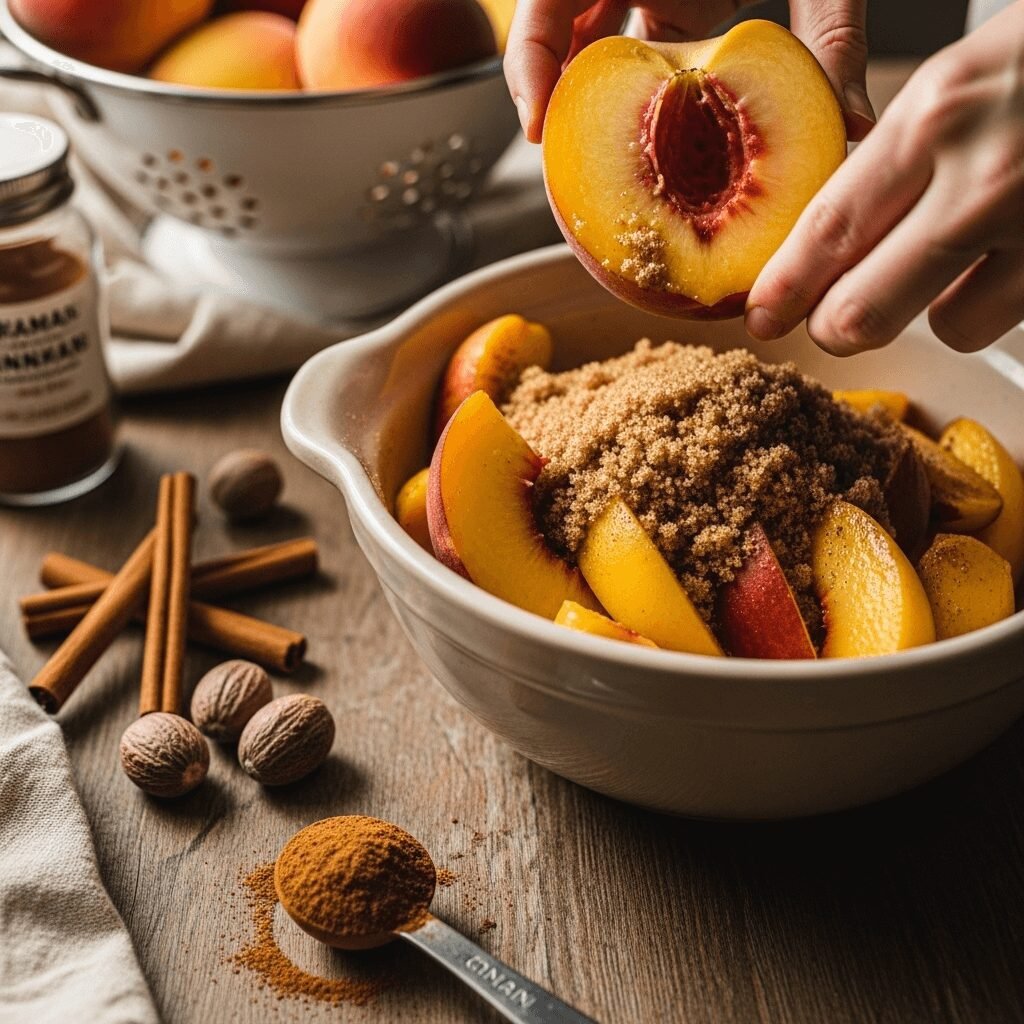
Step 2: Make the filling. In a large bowl, combine the granulated sugar, brown sugar, flour, cornstarch, cinnamon, nutmeg, allspice, salt, vanilla extract, and almond extract if using. Mix thoroughly. Add the peach slices and gently toss until all fruit is evenly coated with the sugar-spice mixture. Let sit for 5 minutes to allow the peaches to release their juices.
Step 3: Prepare your baking dish. Preheat your oven to 375°F. Pour the peach mixture into a 9×13 inch baking dish, spreading it in an even layer. Dot the top with 2 tablespoons of cold butter cut into small pieces. Set aside while you prepare the topping.
Step 4: Make the cobbler topping. In a medium bowl, whisk together flour, sugar, baking soda, and salt. Add the cold, cubed butter and use a fork or your fingertips to work it into the flour mixture until it resembles coarse breadcrumbs with pea-sized butter pieces throughout. This is important for a tender, flaky topping.
Step 5: Add the buttermilk. Create a small well in the center of the flour mixture and pour in the buttermilk and vanilla extract. Using a fork, gently stir just until the mixture comes together into a thick, slightly lumpy batter. Don’t overmix—lumps are good and create a better texture.
Step 6: Top the cobbler. Using a large spoon or cookie scoop, drop the batter in 8-10 irregular mounds over the peach filling, leaving some gaps visible. The filling should peek through in places, creating that rustic, homemade appearance. Sprinkle with coarse sugar if desired for a pretty, sparkly crust.
Step 7: Bake the cobbler. Place the baking dish on the middle oven rack and bake for 45-50 minutes until the topping is golden brown and the fruit filling bubbles around the edges. If the topping is browning too quickly, loosely tent with foil during the last 15 minutes of baking.
Step 8: Cool before serving. Remove from the oven and allow the cobbler to cool for at least 15 minutes before serving. This cooling time allows the filling to set slightly and makes serving much easier. The cobbler will continue to cook slightly as it cools.
Notes
- Don’t skip peeling the peaches—the skin becomes tough and chewy in the baked cobbler
- Frozen peaches work excellently if fresh aren’t available; thaw and drain well before using
- Keep the butter cold when making the topping for the most tender, flaky crust
- The cobbler topping should be lumpy and irregular—this creates the desired rustic texture
- Underbaking is better than overbaking; the cobbler continues to cook as it cools
- Serve warm for the best flavor and texture; room temperature is acceptable but not ideal
- Leftovers actually taste better the next day as flavors meld and deepen
Nutrition
- Serving Size: 1 serving (approximately 175g)
- Calories: 385
- Sugar: 48g
- Sodium: 195mg
- Fat: 195mg
- Saturated Fat: 7g
- Unsaturated Fat: 3g
- Trans Fat: 0g
- Carbohydrates: 68g
- Fiber: 2g
- Protein: 2g
- Cholesterol: 28mg
Note: Nutrition values are approximate and based on using fresh peaches and standard ingredients. Values may vary depending on specific brands and substitutions made.
Tips & Variations for Easy Peach Cobbler
The beautiful thing about peach cobbler is its adaptability. The basic framework remains constant, but you can customize it to match your preferences, dietary needs, or available ingredients.
Spice variations: Increase the cinnamon to 1.5 teaspoons for a spicier cobbler with more pronounced warm spice flavor. Try adding a pinch of ground ginger for a sophisticated twist, or experiment with a small amount of cardamom for a more exotic flavor. Some Southern bakers add just a tiny pinch of cayenne pepper—not enough to taste spicy, but enough to enhance the peach flavor.
Sweetness adjustments: If you prefer a less sweet cobbler, reduce the sugar in the filling by 2-3 tablespoons. Alternatively, add a tablespoon of lemon juice to the filling to provide brightness and balance the sweetness. For an extra-decadent version, replace some of the buttermilk with bourbon or peach schnapps for a grown-up dessert.
Topping variations: Make a crumble topping instead of biscuit by combining oats, brown sugar, flour, and butter. Try a cobbler with a drop-biscuit topping (as this recipe features) or a full crust by rolling out dough and cutting it into strips for a lattice pattern. For a shortcake-like topping, add an egg and reduce the buttermilk slightly to create a richer, cake-like topping.
Texture variations: For a thinner filling, reduce the cornstarch to 1 tablespoon. For an extra-thick filling that holds its shape when served, increase cornstarch to 3 tablespoons. Some cooks prefer a more rustic filling with larger, visible fruit chunks, while others prefer a more unified, softer filling.
Fruit combinations: Mix peaches with berries (blackberries and raspberries are gorgeous with peaches), add diced nectarines, or include a small amount of plum. Each fruit adds its own character while maintaining the essential peach cobbler experience.
Dietary adaptations: Make a vegan version using coconut oil instead of butter, dairy-free milk mixed with vinegar instead of buttermilk, and egg-free vegan baking powder. For gluten-free, substitute all-purpose flour with a quality gluten-free flour blend. Diabetic-friendly versions can use sugar substitutes, though they’ll affect the caramelization process slightly.
Pro Chef Tips for Perfect Peach Cobbler
Temperature is everything: Ensure your butter is cold when making the topping—warm butter creates a dense, heavy crust instead of a light, tender one. Conversely, if your peach filling is too cold when you add the topping, the bottom might not bake properly. Room temperature filling is ideal.
Don’t overmix the topping: Once you add the buttermilk, mix just until the streaks of flour disappear. Overmixing develops gluten, which creates a tough, dense topping instead of a tender, delicate one. Lumps are actually desirable here.
Release those peach juices: When you mix the peaches with sugar and spices, let them sit for 5 minutes. This allows the sugar to draw out the natural juices from the peaches, creating that delicious, saucy filling. This step is non-negotiable for proper texture.
Don’t skip the cooling time: I know you’re eager to dig in, but waiting 15-20 minutes before serving makes a huge difference. The filling sets up slightly, making it easier to serve without everything running all over the plate. The cobbler also tastes better when it’s warm but not piping hot.
Use coarse sugar on top: A sprinkle of coarse sugar (sometimes called sanding sugar or decorative sugar) on top of the batter before baking creates a beautiful, sparkly crust that looks impressive and adds a subtle crunch.
Peach selection matters: Aim for peaches that are fragrant and give slightly to pressure. Rock-hard peaches won’t have good flavor, and overripe mushy peaches will turn to mush during baking. The sweet spot is slightly soft but still holding their shape.
Common Mistakes to Avoid When Making Peach Cobbler
Mistake #1: Using underripe peaches. Hard, flavorless peaches create a disappointing cobbler. Always choose fragrant, ripe peaches or use quality frozen peaches instead. Ripeness affects the final flavor more than any other single factor.
Mistake #2: Overmixing the topping batter. This is the number one texture issue. Overmixing develops gluten and creates a dense, tough topping instead of a tender one. Mix just until the buttermilk is incorporated, leaving plenty of lumps.
Mistake #3: Using room-temperature or warm butter in the topping. Cold butter creates pockets of steam during baking that make the topping light and tender. Warm butter gets incorporated too thoroughly, creating a dense, cake-like texture. Keep your butter in the freezer until the last moment.
Mistake #4: Skipping the peach-and-sugar resting period. Allowing the peaches to sit with the sugar draws out natural juices that create the filling sauce. Skipping this step results in a dry, less flavorful filling.
Mistake #5: Overbaking the cobbler. A slightly underbaked cobbler is always better than an overbaked one. The filling continues to cook as it cools, and the topping will firm up. You want the top golden brown but not dark, and the filling bubbling around the edges but not completely evaporated.
Storage and Meal Prep for Peach Cobbler
Peach cobbler stores beautifully and actually improves after a day as the flavors continue to meld and deepen. Here’s how to handle storage for maximum enjoyment:
Room temperature storage: Peach cobbler can sit on the counter, covered loosely with a clean kitchen towel, for up to 8 hours. This is ideal if you’re serving it the same day you bake it, as the cobbler tastes best warm or at room temperature rather than straight from the refrigerator.
Refrigerator storage: Cover leftovers with plastic wrap or transfer to an airtight container and refrigerate for up to 4 days. The topping will soften slightly but still taste delicious. Cold cobbler actually has its own charm—it’s less messy to serve and makes a wonderful cold dessert on a hot day.
Reheating instructions: To restore the cobbler to warm, delicious perfection, cover loosely with foil and reheat in a 325°F oven for 15-20 minutes until warmed through. You can also reheat individual servings in the microwave for 30-45 seconds, though the oven method produces better results.
Shelf life insights: The cobbler is at its absolute best within 24-48 hours of baking, during which time the topping remains at its most tender and the fruit flavors are brightest. After 4 days, quality gradually declines, so plan to consume within this timeframe.
Make-Ahead and Freezer Notes
One of the best aspects of peach cobbler is its make-ahead flexibility. You have several options depending on your schedule:
Assemble and refrigerate: Prepare the entire cobbler—both filling and topping—in the baking dish, cover with plastic wrap, and refrigerate for up to 24 hours. When you’re ready to bake, remove from the refrigerator and add 5-10 minutes to the baking time, as it will need to come closer to room temperature.
Freezer storage: Yes, peach cobbler freezes beautifully! Prepare the unbaked cobbler completely in a disposable aluminum baking dish or transfer to a freezer-safe container. Cover tightly with plastic wrap and then foil, and freeze for up to 3 months. Label with the date so you remember when you made it.
Thawing and baking: Remove the frozen cobbler from the freezer about 30 minutes before baking to allow it to warm slightly. Bake as directed, adding 10-15 minutes to the baking time since it’s starting from cold. You can also bake it directly from frozen, but it will take 60-70 minutes instead of 45-50 minutes.
Baked cobbler freezing: If you’ve already baked the cobbler, you can freeze baked leftovers in an airtight container for up to 2 months. Reheat gently in a 325°F oven, covered with foil, for 20-25 minutes until warmed through.
Make-ahead prep: You can also prep components in advance—blanch and slice peaches up to 8 hours ahead, mix the filling ingredients separately, or mix the topping dry ingredients hours in advance. Keep the cold butter separate until you’re ready to combine.
Serving Suggestions for Peach Cobbler
Peach cobbler is spectacular on its own, but here are beautiful ways to enhance and present it:
With vanilla ice cream: This is the classic pairing—warm peach cobbler with cold vanilla ice cream melting over the top creates textural contrast and flavor harmony. Serve immediately upon plating so the ice cream begins to melt into the warm fruit.
With whipped cream: Dollop generously with fresh whipped cream mixed with a hint of vanilla. For a more decadent option, add a touch of bourbon or peach liqueur to the whipped cream.
With Greek yogurt: For a lighter but still indulgent option, serve with thick Greek yogurt sweetened with a touch of honey. The tanginess complements the sweet peaches beautifully.
Buttermilk biscuits on the side: Serve peach cobbler alongside warm buttermilk biscuits on the side. The biscuits can catch the delicious peach filling that spills over, creating an amazing bite.
Coffee pairing: Peach cobbler pairs wonderfully with strong coffee or espresso, making it perfect for morning or afternoon gatherings. The coffee’s slight bitterness balances the cobbler’s sweetness.
Summer beverage pairings: Serve with fresh lemonade, iced tea with peach, or sparkling peach cider. During cooler months, hot apple cider or hot chocolate with peach adds warmth.
Hosting suggestion: Present the cobbler in the baking dish at the center of the table with serving spoon, ice cream, and whipped cream on the side so guests can customize their servings. This creates a beautiful, inviting presentation.
FAQs About Easy Peach Cobbler
Q: Can I make peach cobbler with frozen peaches? A: Absolutely! Frozen peaches work beautifully in cobbler, sometimes even better than fresh if the fresh peaches aren’t perfectly ripe. Thaw frozen peaches completely and drain any excess liquid before using. They’ll give you consistent, delicious results.
Q: What if I don’t have buttermilk? A: Make a substitute by adding 1 tablespoon of lemon juice or white vinegar to 1 cup of regular milk and letting it sit for 5 minutes. It works identically to buttermilk in this recipe.
Q: Can I double the recipe? A: Yes, peach cobbler doubles beautifully! You’ll need two 9×13 baking dishes or one larger vessel. Increase all ingredients proportionally and may need to add a few extra minutes to the baking time depending on the depth of your dishes.
Q: How do I know when the cobbler is done baking? A: The topping should be golden brown and the peach filling should be bubbling around the edges. Insert a toothpick into the thickest part of the topping—it should come out relatively clean without much wetness.
Q: Can I use canned peaches instead of fresh or frozen? A: You can, though fresh or frozen generally provide better texture and flavor. If using canned, drain them well and use them in the same quantity as fresh. Reduce the sugar slightly since canned peaches are often packaged in syrup.
Q: Why is my cobbler topping gummy or undercooked inside? A: This usually means the oven temperature was too low or the cobbler wasn’t baked long enough. Make sure your oven is preheated properly and bake until the top is golden and filling bubbles. If the top is browning too quickly, tent loosely with foil.
Q: Can I use a cast iron skillet instead of a baking dish? A: Absolutely! Cast iron skillet cobblers are rustic and beautiful. You may need to adjust cooking time slightly depending on skillet size and thickness. A 10-inch cast iron skillet works perfectly for this recipe.
Conclusion: Make Your Own Southern Peach Cobbler Perfection
Creating an easy peach cobbler at home is one of those culinary achievements that feels special but isn’t actually complicated. Once you realize how straightforward the process truly is, you’ll find yourself making this classic Southern dessert regularly—for weeknight dinners, summer gatherings, holiday celebrations, or whenever the craving for warm, comforting fruit dessert strikes.
The beauty of peach cobbler lies in its simplicity and its ability to showcase simple, quality ingredients in the most delicious way possible. Fresh peaches, warm spices, and buttery topping come together to create something greater than the sum of their parts. Your kitchen will smell absolutely incredible while it bakes, and your family will gather around the table eager for their first bite.
I hope you’ll try this recipe and discover that making homemade peach cobbler is well within your abilities. You’re not just making dessert—you’re creating a warm memory, continuing a culinary tradition that spans generations, and discovering that restaurant-quality results are absolutely achievable in your own kitchen.
Have you made peach cobbler before, or is this your first time? I’d absolutely love to hear about your experience! Drop a comment below with any variations you try, tips you’d like to share, or photos of your gorgeous cobbler. If you make this recipe, please share it on Pinterest and tag me—I genuinely love seeing your creations and hearing how it turned out. And don’t forget to pin this recipe to your dessert board for whenever you need inspiration!
Happy baking, and enjoy every warm, delicious bite! 🍑