Classic New Orleans Beignets Recipe – Light, Fluffy & Dusted with Powdered Sugar

There’s something absolutely magical about biting into a warm, pillowy beignet fresh from the fryer, watching clouds of powdered sugar drift onto your lap as you savor that first heavenly bite. These French-style fried dough pastries are the crown jewel of New Orleans cuisine, and now you can recreate that iconic Café du Monde experience right in your own kitchen.
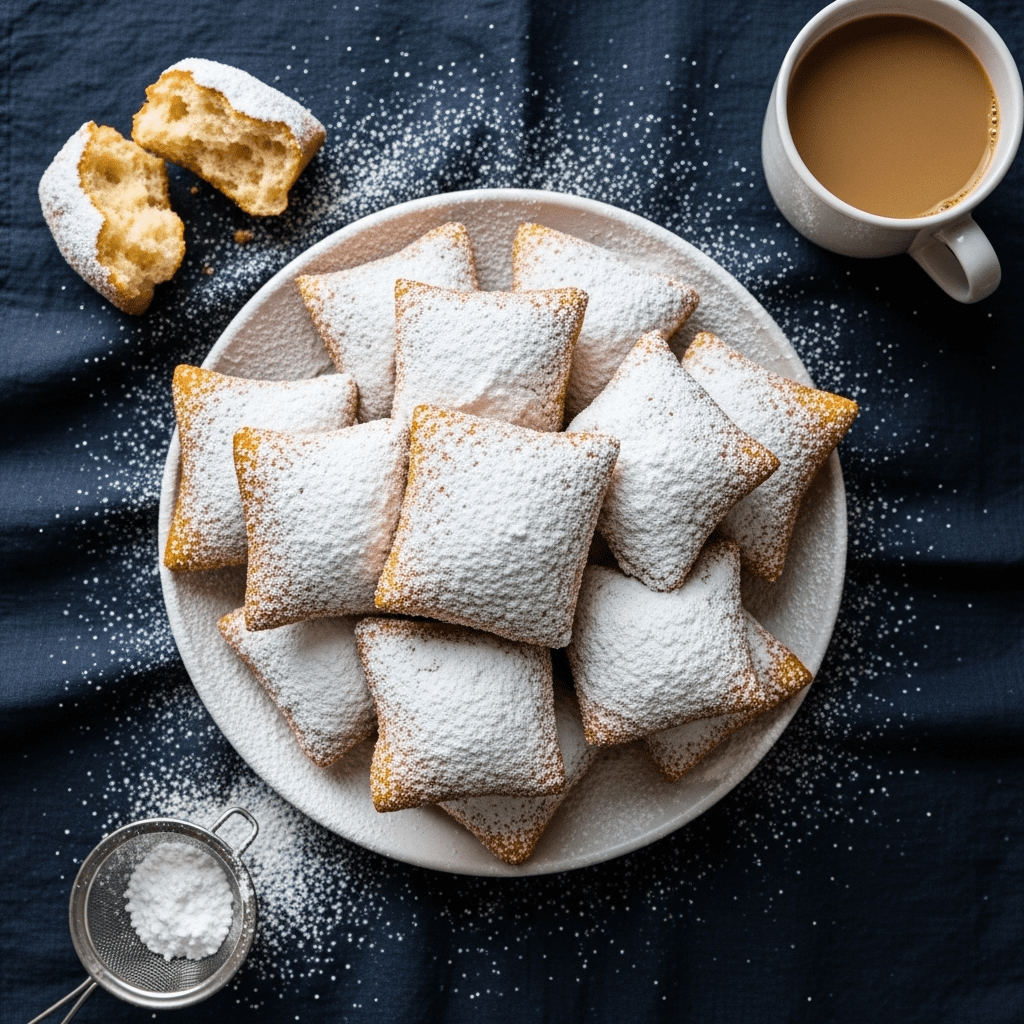
Beignets (pronounced “ben-YAYS”) are square-shaped, yeasted dough pastries that puff up beautifully when fried, creating a crispy golden exterior with an airy, tender interior. They’re generously dusted with powdered sugar – and I mean generously – until they look like they’ve been caught in a sweet snowstorm. While they’re traditionally enjoyed as a breakfast treat with chicory coffee, these delightful pastries work beautifully for brunch gatherings, holiday mornings, special celebrations, or whenever you’re craving something indulgent and utterly delicious.
The beauty of beignets lies in their versatility. Serve them for a leisurely Sunday brunch, make them the star of your Mardi Gras celebration, or surprise your family with a special weekend breakfast that’ll have everyone gathering around the kitchen. Trust me, once you master this recipe, you’ll find yourself making excuses to fry up a batch of these sweet, pillowy treats.
History / Background
Beignets have a rich history that travels across continents and centuries. The word “beignet” comes from the French term meaning “fritter” or “bump,” and these fried dough treats have been enjoyed in France since medieval times. French colonists brought their beloved beignet recipes to Louisiana in the 18th century, where they became deeply woven into the cultural fabric of New Orleans.
The Ursuline nuns who arrived in New Orleans in 1727 are often credited with popularizing beignets in the region, using them as a sweet treat that could be easily prepared and shared. Over time, beignets evolved from their French origins to become distinctly New Orleans, with the version we know and love today – square-shaped, made with yeasted dough, and absolutely buried in powdered sugar – becoming the city’s signature pastry.
The most famous purveyor of beignets is undoubtedly Café du Monde, which opened in the French Market in 1862 and has been serving these iconic treats 24 hours a day (except Christmas) ever since. A visit to New Orleans isn’t complete without sitting at one of their outdoor tables, ordering a plate of three beignets with a café au lait, and experiencing the pure joy of this simple yet perfect combination.
Today, beignets represent more than just a tasty pastry – they’re a symbol of New Orleans’ unique cultural heritage, blending French culinary traditions with Southern hospitality and Creole influences. Making beignets at home is a wonderful way to bring a piece of the Big Easy into your kitchen, no matter where you live.
Why You’ll Love This Recipe
This homemade beignet recipe captures all the magic of those famous New Orleans treats while being surprisingly approachable for home cooks. Once you taste these light, airy pillows of fried dough, you’ll understand why people line up at Café du Monde at all hours of the day.
Here’s what makes this recipe absolutely irresistible:
- Easier than you think – While they might seem intimidating, beignets are actually quite forgiving and don’t require any special pastry skills
- Incredible texture – Crispy and golden on the outside, impossibly light and fluffy on the inside
- Perfect for sharing – This recipe makes plenty for a crowd, making it ideal for brunch gatherings and special occasions
- Budget-friendly indulgence – Made with simple pantry staples, these taste like a million bucks without the hefty price tag
- Customizable sweetness – Adjust the powdered sugar to your preference, or experiment with fun variations
- Make-ahead friendly dough – The dough can be prepared the night before, making morning preparation a breeze
- Authentic taste – This recipe delivers that genuine New Orleans experience right from your home kitchen
- Kid-approved treat – Children absolutely love these sweet, fun-to-eat pastries (though be warned about the powdered sugar explosion!)
- Impressive presentation – These look and taste like something from a fancy bakery or restaurant
Ingredient Notes
Let’s talk about what goes into making these incredible beignets. The ingredient list is beautifully simple, but each component plays an important role in creating that signature texture and flavor.
Active Dry Yeast – This is what gives beignets their characteristic puffiness and light texture. Make sure your yeast is fresh and active. You can test it by dissolving it in the warm water with a pinch of sugar – it should become foamy within 10 minutes. If you only have instant yeast, you can substitute it in equal amounts, but you may need to adjust rising times slightly.
Granulated Sugar – This feeds the yeast and adds a subtle sweetness to the dough itself. The amount in the dough is moderate because the real sweetness comes from that generous dusting of powdered sugar at the end.
Whole Milk – Provides richness and creates a tender crumb. Whole milk is preferred for the best flavor and texture, but 2% milk will work in a pinch. Avoid skim milk as it doesn’t provide enough fat for proper texture.
Unsalted Butter – Adds flavor and tenderness to the dough. Using unsalted allows you to control the salt level precisely. Make sure it’s melted and slightly cooled before adding to avoid killing the yeast.
Egg – Provides structure, richness, and helps create that beautiful golden color when fried. Use a large egg at room temperature for best incorporation into the dough.
All-Purpose Flour – The foundation of your beignets. All-purpose flour provides the right protein content for a tender yet structured pastry. Bread flour will make them too chewy, while cake flour makes them too delicate.
Salt – Enhances all the other flavors and balances the sweetness. Don’t skip it!
Vegetable Oil – For frying. You’ll need a neutral oil with a high smoke point like vegetable, canola, or peanut oil. Avoid olive oil as its low smoke point and strong flavor aren’t suitable for this application.
Powdered Sugar – The crowning glory! You’ll use much more than you think. Authentic beignets are absolutely covered in powdered sugar – it should look like they’ve been caught in a blizzard. Some recipes call it confectioners’ sugar, but they’re the same thing.
Equipment Needed
Having the right tools makes the beignet-making process much smoother and more enjoyable. Here’s what you’ll need:
- Large mixing bowl – For combining and kneading the dough
- Measuring cups and spoons – Accurate measurements are important for proper dough consistency
- Whisk or wooden spoon – For mixing the dough ingredients
- Kitchen towel or plastic wrap – To cover the dough while it rises
- Rolling pin – For rolling out the dough to the proper thickness
- Sharp knife or pizza cutter – To cut the dough into squares (a pizza cutter makes this super easy)
- Heavy-bottomed pot or Dutch oven – A 4-5 quart pot works perfectly for frying. Cast iron works beautifully as it maintains temperature well
- Candy or deep-fry thermometer – Essential for monitoring oil temperature and ensuring perfectly cooked beignets
- Slotted spoon or spider strainer – For safely removing beignets from the hot oil
- Paper towel-lined baking sheet – For draining excess oil
- Fine-mesh sieve or flour sifter – For dusting powdered sugar evenly over the beignets
- Pastry mat or clean work surface – For rolling out the dough
Beignets Recipe

Light, fluffy, and impossibly delicious New Orleans-style beignets – crispy golden squares of fried dough generously dusted with powdered sugar. This authentic recipe brings the magic of Café du Monde straight to your kitchen!
- Prep Time: 2 hours (including rising time)
- Cook Time: 15 minutes
- Total Time: 2 hours 15 minutes
- Yield: 24-30 beignets 1x
- Category: Dessert, Breakfast
- Method: Frying
- Cuisine: Creole, French
- Diet: Vegetarian
Ingredients
- 1½ cups warm water (110°F)
- ½ cup granulated sugar
- 1 packet (2¼ teaspoons) active dry yeast
- 2 large eggs, room temperature
- 1¼ teaspoons salt
- 1 cup evaporated milk
- 7 cups all-purpose flour, plus more for dusting
- ¼ cup shortening or softened butter
- Vegetable oil for frying (about 2 quarts)
- Powdered sugar for dusting (at least 2 cups)
Instructions
- Activate the yeast: In a large mixing bowl, combine the warm water and granulated sugar, stirring until the sugar dissolves. Sprinkle the yeast over the top and let it sit for about 10 minutes until foamy and bubbly. This tells you the yeast is alive and active.
- Mix the wet ingredients: Add the eggs, evaporated milk, and salt to the yeast mixture. Whisk everything together until well combined and the eggs are fully incorporated.
- Add flour gradually: Add 4 cups of flour to the wet mixture, stirring with a wooden spoon or dough whisk until a shaggy dough forms. Add the shortening or butter and mix until incorporated.
- Form the dough: Gradually add the remaining 3 cups of flour, one cup at a time, mixing after each addition. The dough should be soft, slightly sticky, but manageable. You may not need all the flour, or you might need a bit more depending on humidity – the dough should pull away from the sides of the bowl but still feel tacky to the touch.
- Knead the dough: Turn the dough out onto a lightly floured surface and knead for about 5-8 minutes until it becomes smooth and elastic. The dough should feel soft and supple, not stiff.
- First rise: Place the dough in a greased bowl, turning once to coat all sides. Cover with a damp kitchen towel or plastic wrap and let rise in a warm, draft-free spot for about 1½ to 2 hours, or until doubled in size.
- Roll out the dough: Once risen, punch down the dough to release air bubbles. Turn it out onto a floured surface and roll it to about ¼-inch thickness. Don’t roll it too thin – you want those beignets to puff up beautifully!
- Cut into squares: Using a sharp knife or pizza cutter, cut the dough into 2½ to 3-inch squares. You can re-roll scraps once, but avoid overworking the dough.
- Rest the cut beignets: Let the cut squares rest on the floured surface for about 20-30 minutes. This second rise helps them puff up even more when fried.
- Heat the oil: While the squares rest, pour oil into your heavy-bottomed pot to a depth of 3-4 inches. Heat the oil to 370°F, using your thermometer to monitor the temperature. This temperature is crucial – too hot and they’ll brown before cooking through; too cool and they’ll absorb too much oil.
- Fry the beignets: Working in batches of 3-4 at a time (don’t crowd the pot), carefully slide the dough squares into the hot oil. They should sizzle immediately and begin to puff up. Fry for about 1-2 minutes per side until golden brown, flipping them with a slotted spoon when the first side is perfectly golden.
- Drain and dust: Remove the beignets with a slotted spoon and place them on the paper towel-lined baking sheet to drain briefly – just 15-20 seconds. While they’re still warm, generously dust them with powdered sugar using a fine-mesh sieve. I mean really generously – don’t be shy!
- Serve immediately: Beignets are best enjoyed warm and fresh. Serve them right away with café au lait or your favorite hot coffee for an authentic New Orleans experience.
Notes
- Temperature matters: Maintaining proper oil temperature is the key to perfect beignets. Use a thermometer and adjust the heat as needed between batches.
- Don’t skip the resting time: Both rises are important for achieving that light, airy texture.
- Work quickly: Once you start frying, keep moving. Have everything set up and ready before you begin.
- Sugar timing: Dust beignets with powdered sugar while they’re still warm so it adheres properly.
- Batch cooking: Keep fried beignets warm in a 200°F oven while you finish frying remaining batches.
Nutrition
- Serving Size: 2 beignets
- Calories: 285
- Sugar: 18g
- Sodium: 145mg
- Fat: 12g
- Saturated Fat: 3g
- Unsaturated Fat: 8g
- Trans Fat: 0g
- Carbohydrates: 38g
- Fiber: 1g
- Protein: 5g
- Cholesterol: 25mg
Note: Nutrition information is an estimate and will vary based on exact ingredients used and portion sizes.
Tips & Variations
Flavor Variations:
- Chocolate Beignets: Add ¼ cup cocoa powder to the dough and dust with a mixture of powdered sugar and cocoa
- Cinnamon Sugar: Replace powdered sugar with a cinnamon-sugar mixture for a different twist
- Filled Beignets: Inject chocolate, custard, or fruit preserves into cooled beignets using a piping bag
- Lemon Beignets: Add 2 tablespoons lemon zest to the dough and dust with lemon-powdered sugar
- Savory Version: Omit sugar from the dough, add herbs and cheese, and serve with honey or jam
Dietary Modifications:
- Dairy-Free: Use plant-based milk and vegan butter substitutes
- Reduced Sugar: Cut the sugar in the dough by half (but keep the powdered sugar – it’s tradition!)
- Whole Wheat: Replace up to half the all-purpose flour with whole wheat pastry flour for more fiber
Serving Style Ideas:
- Serve with chocolate or caramel dipping sauce
- Top with fresh berries and whipped cream for a dessert version
- Drizzle with maple syrup or honey
- Pair with ice cream for beignets à la mode
Pro Chef Tips
Temperature is everything: The single most important factor in perfect beignets is oil temperature. Invest in a good thermometer and maintain that 370°F sweet spot. If the oil is too cool, your beignets will be greasy and heavy. Too hot, and they’ll brown on the outside before cooking through.
The windowpane test: To check if your dough is properly kneaded, stretch a small piece between your fingers. If it stretches thin enough to see light through without tearing, you’ve achieved perfect gluten development.
Create a warm rising environment: If your kitchen is cool, create a proofing box by turning your oven on for just 1 minute, turning it off, and placing your covered bowl inside. The residual warmth creates the perfect rising environment.
Don’t overcrowd the pot: Frying too many beignets at once drops the oil temperature dramatically, resulting in greasy, undercooked pastries. Give each beignet room to float and puff up properly.
The flip test: Your beignets should naturally want to flip themselves. When the bottom side is properly golden, they’ll actually start trying to roll over on their own. That’s your cue to help them along.
Double-dust method: For that authentic powdered sugar avalanche, dust your beignets immediately after frying, then dust them again just before serving. This creates that iconic snow-covered look.
Oil recovery time: Between batches, give your oil a minute or two to come back up to temperature. Skim out any floating bits of dough with a fine-mesh strainer to keep the oil clean and prevent burnt bits.
Common Mistakes to Avoid
Using water that’s too hot or too cold: Water temperature is crucial for yeast activation. Too hot (above 120°F) will kill the yeast, while too cold (below 105°F) won’t activate it properly. Aim for 110°F – it should feel warm but not hot on your wrist.
Not letting the dough rise properly: Rushing the rising times results in dense, heavy beignets instead of light, airy ones. Be patient – that dough needs time to develop flavor and structure. If your kitchen is very cold, rising might take longer than expected.
Rolling the dough too thin: Quarter-inch thickness is the sweet spot. Thinner than that, and your beignets won’t puff up properly. Thicker, and they might not cook through evenly.
Skipping the second rest after cutting: Those 20-30 minutes aren’t optional. This rest time allows the gluten to relax and the cut squares to proof slightly, which contributes to that signature puff when they hit the hot oil.
Not maintaining consistent oil temperature: This is probably the most common mistake. If you’re not using a thermometer, you’re guessing – and guessing leads to inconsistent results. Monitor that temperature and adjust your heat between batches.
Being stingy with powdered sugar: When I say “dust generously,” I mean it should look like a snowstorm hit your beignets. Don’t be shy – use that entire cup of powdered sugar if you need to!
Letting beignets cool before sugaring: The powdered sugar adheres best to warm beignets. Dust them within a minute or two of removing them from the oil for maximum coverage and that iconic look.
Storage & Meal Prep
Short-term storage: Beignets are absolutely best enjoyed fresh and warm, but if you have leftovers (unlikely!), store them in an airtight container at room temperature for up to 24 hours. They’ll lose their crispy exterior but can be refreshed.
Reheating: To revive leftover beignets, place them on a baking sheet in a 350°F oven for about 5-7 minutes until warmed through. You can also reheat them in an air fryer at 350°F for 3-4 minutes. Dust with fresh powdered sugar before serving. Avoid microwaving as it makes them soggy.
Not recommended for long storage: Unfortunately, fried beignets don’t store well for more than a day. The moisture from the fried dough causes the powdered sugar to dissolve and the pastries to become soggy. These really are a “make and eat” kind of treat.
Room temperature is best: Don’t refrigerate cooked beignets – the cold temperature actually makes them stale faster. Keep them covered at room temperature if you must store them.
Make-Ahead & Freezer Notes
Prepare the dough ahead: This is where beignets shine for meal prep! You can make the dough through the first rise, then punch it down, wrap it tightly in plastic wrap, and refrigerate for up to 24 hours. When ready to use, let it come to room temperature for about 30 minutes, then proceed with rolling, cutting, and frying.
Overnight cold rise method: For even better flavor development, you can let the dough do its first rise slowly in the refrigerator overnight (8-12 hours). This slow fermentation creates more complex flavors. The next morning, bring to room temperature and proceed with the recipe.
Freeze the dough: Prepare the dough through the first rise, punch it down, and freeze in a well-wrapped, freezer-safe bag for up to 2 months. Thaw overnight in the refrigerator, bring to room temperature, then roll, cut, and fry as directed.
Freeze cut, unfried beignets: This is my favorite make-ahead method! Cut the beignets into squares, place them on a parchment-lined baking sheet, and freeze until solid. Transfer to a freezer bag and store for up to 1 month. When ready to cook, let them come to room temperature and rest for 20-30 minutes, then fry as normal. They might take an extra 30 seconds per side.
Don’t freeze cooked beignets: While you technically can freeze fried beignets, I don’t recommend it. They lose their wonderful texture and become somewhat tough when thawed. The dough freezes beautifully, but wait to fry them until you’re ready to eat.
Best reheating method: If working with frozen, pre-fried beignets (against my advice!), your best bet is the oven. Bake at 350°F for 10-12 minutes until heated through, then dust with fresh powdered sugar. They won’t be quite the same as fresh, but they’ll be acceptable.
Serving Suggestions
Traditional accompaniments: Serve your beignets with a steaming cup of café au lait, which is strong coffee with chicory mixed with an equal amount of hot milk. This is the authentic New Orleans way, and the slightly bitter coffee perfectly balances the sweet, sugary beignets.
Beverage pairings: Beyond café au lait, these pair wonderfully with regular coffee, hot chocolate, French press coffee, espresso, or even chai tea. For a lighter option, try them with fresh-squeezed orange juice or a fruit smoothie.
Create a brunch spread: Build an entire New Orleans-inspired brunch around your beignets. Serve them alongside scrambled eggs, bacon or sausage, fresh fruit salad, and maybe some shrimp and grits for a full Southern feast.
Dessert platter: Transform beignets into an elegant dessert by serving them with chocolate sauce, caramel sauce, berry coulis, or crème anglaise for dipping. Add some fresh berries and a dollop of whipped cream for a restaurant-worthy presentation.
Sweet and savory combination: Create an interesting brunch board with beignets, fresh fruit like strawberries and blueberries, a selection of jams and preserves, honey, maple syrup, and some crispy bacon for that perfect sweet-and-savory balance.
Make it a party: Set up a beignet bar with various toppings and dipping sauces – chocolate sauce, caramel, fruit compotes, flavored whipped creams, and different types of sugar for dusting (cinnamon sugar, vanilla sugar, cocoa powder mixed with powdered sugar).
FAQs Section
Can I make beignets without a stand mixer?
Absolutely! This recipe is designed to be made by hand. The dough is soft and relatively easy to work with using just a wooden spoon and your hands for kneading. It’ll take a bit more elbow grease, but the results are just as delicious.
Why didn’t my beignets puff up?
Several factors could be at play: the oil temperature was too low (they need that immediate sizzle to create steam and puff), you rolled the dough too thin (aim for ¼-inch thickness), you skipped the second rest period after cutting, or your yeast wasn’t active. Make sure to proof your yeast and maintain proper oil temperature.
Can I bake beignets instead of frying them?
While you can technically bake them at 375°F for about 12-15 minutes until golden, they won’t have the same texture or taste as traditional fried beignets. Fried versions have that signature crispy exterior and light, almost hollow interior that you just can’t replicate in the oven. That said, if you’re looking for a lower-fat option, baking is possible.
How do I know when the oil is the right temperature?
A candy or deep-fry thermometer is the most reliable method – aim for 370°F. If you don’t have a thermometer, you can drop a small piece of dough into the oil. If it sizzles immediately and rises to the surface within a few seconds, turning golden in about 2 minutes, your oil is ready.
Can I use instant yeast instead of active dry yeast?
Yes! You can substitute instant yeast in equal amounts. With instant yeast, you can skip the proofing step and mix it directly with the dry ingredients, though I still recommend using warm liquids. Your rise times might be slightly faster with instant yeast.
What’s the difference between beignets and donuts?
While both are fried dough, beignets are typically square-shaped (not round with holes), made with a lighter, airier yeasted dough, and always served fresh with powdered sugar rather than glazed or frosted. Beignets have a more delicate, almost hollow texture compared to the denser crumb of most donuts.
My beignets turned out greasy. What went wrong?
Greasy beignets usually mean your oil temperature was too low. When the oil isn’t hot enough, the dough absorbs more oil instead of quickly forming that crispy outer shell. Make sure you’re maintaining 370°F and not overcrowding the pot, which can cause the temperature to drop significantly.
Conclusion
There’s something truly special about making authentic New Orleans beignets in your own kitchen. These golden, pillowy squares of fried dough, buried under an avalanche of powdered sugar, bring a taste of the French Quarter right to your table. Whether you’re celebrating Mardi Gras, hosting a special brunch, or simply treating yourself to a weekend indulgence, homemade beignets deliver pure joy with every bite.
The beauty of this recipe is that it demystifies what might seem like an intimidating pastry and shows you that with a little patience and the right technique, you can create bakery-worthy results at home. Sure, there’s some rising time involved, but the active work is actually quite minimal, and the payoff is absolutely worth it. The look on your family’s faces when you serve up a plate of warm, sugar-dusted beignets will make you feel like a culinary rock star.
So grab your ingredients, heat up that oil, and get ready to experience the magic of homemade beignets. Don’t forget to have your camera ready – these beauties are definitely Instagram-worthy! And once you’ve mastered this classic recipe, come back and tell me about your experience in the comments. Did you try any fun variations? What did you serve alongside them? I’d love to hear about your beignet adventures!
Now it’s your turn to bring the taste of New Orleans home! Save this recipe to your Pinterest boards so you’ll have it ready for your next brunch gathering. And if you make these beignets, snap a photo and share it – I can’t wait to see your powdered-sugar-covered creations!