Homemade Boston Cream Donuts Recipe (Better Than Dunkin’!)

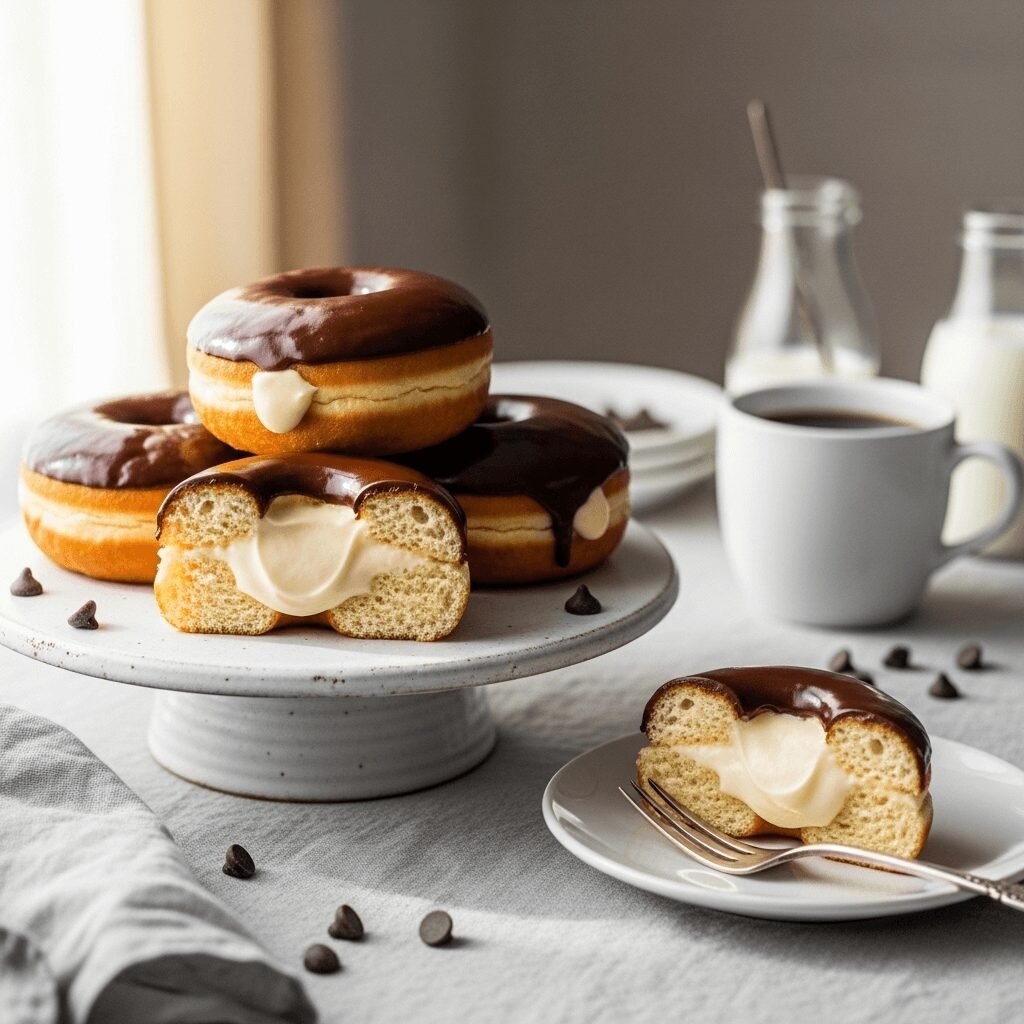
There’s something absolutely magical about biting into a Boston cream donut – that pillowy soft yeast donut filled with silky vanilla pastry cream and topped with rich chocolate ganache. It’s the perfect trifecal of textures and flavors that makes this classic American treat utterly irresistible. While you might think these bakery-style donuts are too complicated to make at home, I’m here to show you that with a little patience and the right technique, you can create Boston cream donuts that rival (or even surpass!) your favorite donut shop.
These homemade Boston cream donuts are perfect for weekend breakfast treats, special brunch gatherings, birthday celebrations, or whenever you want to impress your family and friends with your baking skills. The combination of fluffy fried dough, creamy vanilla filling, and glossy chocolate topping creates a dessert experience that’s truly unforgettable. Plus, there’s something incredibly satisfying about making these iconic donuts from scratch in your own kitchen.
History / Background
The Boston cream donut has a fascinating origin story that’s deeply rooted in American culinary history. This beloved treat is actually inspired by the famous Boston cream pie, which was created at Boston’s Parker House Hotel (now the Omni Parker House) in 1856 by French chef Monsieur Sanzian. Despite its name, Boston cream pie is actually a cake – two layers of sponge cake filled with vanilla custard and topped with chocolate glaze.
The Boston cream pie became so popular in Massachusetts that it was even declared the official state dessert in 1996. The donut version followed naturally as American donut culture exploded in the 20th century. Donut shops across the country began creating their own interpretations of the classic dessert by taking the essential elements – vanilla cream filling and chocolate topping – and applying them to a fried yeast donut base.
The genius of the Boston cream donut lies in its perfect balance of textures. The soft, airy donut provides a delicate vehicle for the smooth pastry cream, while the chocolate ganache adds richness and a slight firmness that contrasts beautifully with the tender crumb. This combination has made it one of the most popular donut varieties in America, with donut chains like Dunkin’ Donuts featuring it as a permanent menu item and home bakers constantly seeking to recreate that perfect bakery-style experience.
Why You’ll Love This Recipe
This homemade Boston cream donut recipe delivers bakery-quality results that will have everyone thinking you’ve secretly opened your own donut shop. The process is more approachable than you might think, and the result is absolutely worth the effort.
Here’s why this recipe will become your new favorite:
- Authentically delicious – These taste just like the donuts from your favorite bakery, with that perfect pillowy texture and rich flavor combination
- Surprisingly achievable – While they look impressive, the steps are straightforward and well worth the time
- Fresher than store-bought – Homemade means no preservatives, just pure, fresh ingredients you can pronounce
- Customizable sweetness – Control the sugar levels in each component to suit your taste preferences
- Perfect for special occasions – These show-stopping donuts make birthdays, brunches, and celebrations extra special
- Fun weekend project – This is a rewarding baking project that’s perfect for spending time in the kitchen
- Cost-effective – Make a full batch for less than buying individual donuts at a bakery
- Impressive presentation – The glossy chocolate glaze and cream filling look professionally made
Ingredient Notes
Let’s break down the key ingredients you’ll need for each component of these delicious donuts:
For the Donuts:
- All-purpose flour – Provides structure while maintaining tenderness. Bread flour can make them slightly chewier if you prefer
- Active dry yeast – Creates those beautiful air pockets for light, fluffy donuts. Make sure it’s fresh for best results
- Whole milk – Adds richness and helps create a tender crumb. Warm it to about 110°F for optimal yeast activation
- Granulated sugar – Feeds the yeast and adds subtle sweetness to the dough
- Eggs – Provides structure, richness, and helps create that beautiful golden color
- Butter – Adds flavor and creates a softer, more tender texture
- Vegetable oil for frying – Use a neutral oil with a high smoke point like canola, vegetable, or peanut oil
For the Pastry Cream Filling:
- Whole milk – The base of your custard; whole milk creates the richest, creamiest filling
- Egg yolks – These thicken the custard and add luxurious richness
- Cornstarch – Helps stabilize and thicken the pastry cream to the perfect consistency
- Pure vanilla extract – Use real vanilla, not imitation, for the best flavor
- Heavy cream – Whipped and folded in at the end for an extra-light, mousse-like texture
For the Chocolate Ganache:
- Semi-sweet chocolate chips – Provides the perfect balance of sweetness and chocolate flavor
- Heavy cream – Creates that smooth, glossy, pourable consistency
- Butter – Adds shine and a silky finish to the ganache
Equipment Needed
Having the right tools makes this recipe much easier to execute:
- Stand mixer with dough hook (or large mixing bowl and wooden spoon)
- Large, heavy-bottomed pot or Dutch oven for frying
- Candy/deep-fry thermometer – Essential for maintaining proper oil temperature
- Medium saucepan for making pastry cream
- Whisk and rubber spatula
- Rolling pin
- 3-inch round cookie cutter or donut cutter
- Baking sheets lined with parchment paper
- Kitchen towels or clean dish towels
- Piping bag with round tip (for filling the donuts)
- Wire cooling rack
- Slotted spoon or spider strainer for removing donuts from oil
- Measuring cups and spoons
- Fine-mesh strainer (for straining pastry cream)
Boston Cream Donut Recipe

These homemade Boston cream donuts feature fluffy yeast donuts filled with rich vanilla pastry cream and topped with silky chocolate ganache. Better than any bakery, these classic treats are perfect for special occasions or weekend baking projects!
- Prep Time: 30 minutes
- Cook Time: 20 minutes
- Total Time: 2 hours 50 minutes
- Yield: 12 donuts 1x
- Category: Dessert, Breakfast
- Method: Frying
- Cuisine: American
Ingredients
For the Donuts:
- 3 ¾ cups all-purpose flour, divided
- ¼ cup granulated sugar
- 1 packet (2 ¼ teaspoons) active dry yeast
- ¾ cup whole milk, warmed to 110°F
- 2 large eggs, room temperature
- 6 tablespoons unsalted butter, softened
- 1 teaspoon salt
- 1 teaspoon vanilla extract
- Vegetable oil for frying (about 8 cups)
For the Pastry Cream Filling:
- 2 cups whole milk
- 5 large egg yolks
- ½ cup granulated sugar
- ¼ cup cornstarch
- 2 tablespoons unsalted butter
- 2 teaspoons vanilla extract
- ½ cup heavy cream, cold
For the Chocolate Ganache:
- 1 cup semi-sweet chocolate chips
- ½ cup heavy cream
- 2 tablespoons unsalted butter
- 1 tablespoon light corn syrup (optional, for extra shine)
Instructions
Make the Pastry Cream (Do This First):
- In a medium saucepan, heat the milk over medium heat until it just begins to steam and small bubbles form around the edges. Do not boil.
- Meanwhile, whisk together egg yolks, sugar, and cornstarch in a medium bowl until smooth and pale yellow, about 2 minutes.
- Slowly pour about ½ cup of the hot milk into the egg mixture, whisking constantly to temper the eggs. Then pour the egg mixture back into the saucepan with the remaining milk, whisking constantly.
- Cook over medium heat, whisking constantly, until the mixture thickens and comes to a boil, about 3-5 minutes. Let it boil for 1 minute while continuing to whisk.
- Remove from heat and whisk in butter and vanilla extract until smooth. Strain through a fine-mesh sieve into a clean bowl to remove any lumps.
- Press plastic wrap directly onto the surface of the pastry cream to prevent a skin from forming. Refrigerate for at least 2 hours until completely chilled.
- Before using, whip the cold heavy cream to stiff peaks and gently fold it into the chilled pastry cream for an extra-light filling. Transfer to a piping bag fitted with a round tip.
Make the Donut Dough:
- In the bowl of a stand mixer, combine 1 cup flour, sugar, and yeast. Add the warm milk and stir to combine. Let stand for 5 minutes until foamy.
- Add eggs, butter, salt, and vanilla extract. Mix on low speed until combined.
- Gradually add remaining 2 ¾ cups flour, mixing on low speed until a soft dough forms. Increase to medium speed and knead for 5-7 minutes until the dough is smooth and elastic (it should be slightly sticky but pull away from the sides of the bowl).
- Place dough in a greased bowl, cover with a clean kitchen towel, and let rise in a warm place for 1-1.5 hours, or until doubled in size.
Shape and Fry the Donuts:
- Gently punch down the dough and turn it out onto a lightly floured surface. Roll to about ½-inch thickness.
- Using a 3-inch round cutter, cut out circles. Place them on parchment-lined baking sheets, spacing them 2 inches apart. Cover with towels and let rise for 30-45 minutes until puffy.
- Heat oil in a large, heavy-bottomed pot to 350°F (use a thermometer to monitor temperature).
- Carefully add 2-3 donuts at a time to the hot oil. Fry for 1-2 minutes per side until golden brown. Don’t overcrowd the pot.
- Remove with a slotted spoon and drain on a wire rack set over paper towels. Let cool completely before filling.
Make the Chocolate Ganache:
- Place chocolate chips in a heat-proof bowl. Heat heavy cream in a small saucepan until it just begins to simmer.
- Pour hot cream over chocolate chips and let sit for 1 minute. Add butter and corn syrup (if using), then whisk until smooth and glossy.
Assemble the Donuts:
- Using a skewer or chopstick, poke a hole in the side of each cooled donut and wiggle it around to create a pocket for the filling.
- Insert the piping bag tip into each hole and pipe pastry cream until you feel slight resistance (the donut will feel heavier and slightly fuller).
- Dip the top of each filled donut into the chocolate ganache, allowing excess to drip off. Place on a wire rack and let the chocolate set for 10-15 minutes.
- Serve immediately or store properly. These are best enjoyed within 24 hours!
Notes
- Oil temperature is crucial – too hot and the donuts brown too quickly on the outside while remaining raw inside; too cool and they absorb too much oil and become greasy.
- Make sure all ingredients for the donut dough are at room temperature for best results.
- The pastry cream can be made up to 2 days ahead and stored in the refrigerator.
- Don’t skip tempering the eggs in step 3 – adding hot milk directly to eggs will scramble them.
- If your ganache is too thick, gently rewarm it or add a splash of cream.
Nutrition
- Serving Size: 1 donut
- Calories: 385
- Sugar: 24g
- Sodium: 215mg
- Fat: 18g
- Saturated Fat: 9g
- Unsaturated Fat: 7g
- Trans Fat: 0g
- Carbohydrates: 48g
- Fiber: 1g
- Protein: 7g
- Cholesterol: 135mg
Tips & Variations
Flavor Variations:
- Chocolate Pastry Cream: Add 2 tablespoons cocoa powder to the pastry cream for a double chocolate version
- Espresso Boston Cream: Add 1 tablespoon instant espresso powder to the chocolate ganache
- Bavarian Cream: Replace half the pastry cream with whipped cream for a lighter, airier filling
- Salted Caramel Topping: Replace chocolate ganache with salted caramel sauce
- Maple Glaze: Use maple glaze instead of chocolate for a New England twist
Dietary Modifications:
- Baked Version: These can be baked at 375°F for 12-15 minutes, though they won’t have the same texture as fried donuts
- Lighter Option: Use 2% milk instead of whole milk in both the dough and pastry cream
- Dairy-Free Adaptations: While challenging, you can use non-dairy milk and butter substitutes, though the texture will differ
Pro Chef Tips
Temperature Control is Everything: Use a reliable thermometer and maintain oil temperature between 345-355°F. If it drops too low, wait before adding more donuts. This ensures even cooking and prevents greasy donuts.
Create Steam for Lighter Texture: Place a shallow pan of hot water in your rising area (like an oven that’s turned off). The humid environment helps create fluffier, more tender donuts.
Don’t Overwork the Dough: While you want well-kneaded dough, overworking creates tough, dense donuts. Stop kneading when the dough is smooth and passes the “windowpane test” – stretch a small piece thin enough to see light through it without tearing.
Perfect Pastry Cream Texture: Cook your pastry cream to a full boil for exactly 1 minute. This activates the cornstarch properly and ensures it won’t weep or become grainy later.
Ganache Temperature Matters: Let your ganache cool slightly before dipping – if it’s too hot, it will be too runny and slide right off. The perfect consistency should coat the back of a spoon and fall in a ribbon.
Fill Generously: Don’t be shy with the pastry cream filling! A properly filled Boston cream donut should feel substantial when you pick it up. You’ll know you’ve added enough when the donut feels noticeably heavier.
Common Mistakes to Avoid
Using Yeast That’s Past Its Prime: Old or improperly stored yeast won’t activate properly, resulting in dense, heavy donuts that don’t rise. Always check the expiration date and proof your yeast in the warm milk – it should become foamy within 5-10 minutes.
Frying at the Wrong Temperature: This is the #1 mistake home cooks make. Too hot (over 375°F) and your donuts will burn on the outside while remaining raw inside. Too cool (under 340°F) and they’ll absorb excessive oil and taste greasy. Invest in a good thermometer!
Not Letting Donuts Cool Completely Before Filling: If your donuts are even slightly warm, the pastry cream will melt and make everything soggy. Be patient and let them cool to room temperature.
Skipping the Egg Tempering Step: Adding hot milk directly to eggs will scramble them and create lumpy, grainy pastry cream. Always temper by adding hot liquid gradually while whisking constantly.
Overcrowding the Frying Pot: Adding too many donuts at once drops the oil temperature dramatically, resulting in greasy, undercooked donuts. Fry in small batches of 2-3 at a time for best results.
Storage & Meal Prep
Storing Filled Donuts: Filled Boston cream donuts are best enjoyed the day they’re made. However, you can store them in an airtight container in the refrigerator for up to 2 days. The donuts will soften and the chocolate may lose its shine, but they’ll still taste delicious.
Storing Components Separately: For maximum freshness, store components separately:
- Unfilled donuts: Room temperature in an airtight container for 2 days
- Pastry cream: Refrigerated in an airtight container for up to 3 days
- Chocolate ganache: Room temperature (if using within 24 hours) or refrigerated (up to 1 week; gently rewarm before using)
Reheating Tips: Unfilled donuts can be briefly warmed in a 300°F oven for 3-5 minutes to refresh them. Do not reheat filled donuts in the oven as the pastry cream will melt. Let refrigerated filled donuts come to room temperature for 20-30 minutes before serving for best flavor.
Make-Ahead & Freezer Notes
Make-Ahead Timeline:
- 2 days ahead: Prepare and refrigerate pastry cream
- 1 day ahead: Make and fry donuts (leave unfilled), store at room temperature
- Day of serving: Fill donuts, make ganache, and assemble
Freezing Instructions:
- Unfilled fried donuts: Freeze in a single layer on a baking sheet, then transfer to freezer bags. Store for up to 2 months. Thaw at room temperature for 1-2 hours before filling.
- Donut dough: After the first rise, punch down, shape into a disk, wrap tightly in plastic wrap, and freeze for up to 1 month. Thaw overnight in the refrigerator, then proceed with rolling, cutting, and frying.
- Pastry cream: Freeze for up to 1 month in an airtight container. Thaw overnight in the refrigerator and whisk vigorously to restore smooth texture before adding whipped cream.
- Do not freeze: Filled donuts or chocolate ganache (the texture suffers significantly)
Best Reheating Method: For frozen unfilled donuts, thaw at room temperature for 1 hour, then warm in a 300°F oven for 5 minutes. Let cool completely before filling and glazing.
Serving Suggestions
Boston cream donuts are a showstopper on their own, but here are some ways to serve them for maximum impact:
Beverage Pairings:
- Freshly brewed coffee or espresso (the slight bitterness balances the sweetness perfectly)
- Hot chocolate for an ultra-indulgent treat
- Cold glass of whole milk (classic and nostalgic)
- Irish breakfast tea or Earl Grey
- Cappuccino or latte with a dusting of cocoa
Occasion Ideas:
- Brunch Spread: Serve alongside fresh fruit, scrambled eggs, and crispy bacon
- Birthday Breakfast: Arrange on a cake stand with candles for a festive donut cake
- Dessert Board: Cut donuts into quarters and serve on a dessert platter with fresh berries and whipped cream
- Coffee Bar: Set up a coffee station with various brewing methods and serve donuts as the perfect accompaniment
- Afternoon Tea: Serve with finger sandwiches, scones, and tea for an American twist on British tradition
Plating Suggestions: Present donuts on a white serving platter garnished with fresh mint leaves and a light dusting of powdered sugar for an elegant look. For individual servings, place each donut on a small dessert plate with a coffee cup on the side.
FAQs Section
Can I bake these donuts instead of frying them? Yes, you can bake them at 375°F for 12-15 minutes, but the texture will be more like a sweet roll than a traditional donut. Fried donuts have a distinctive tender, slightly crispy exterior that’s impossible to replicate in the oven. If you prefer to bake, brush them with melted butter immediately after baking for added flavor.
Why are my donuts greasy? Greasy donuts are almost always caused by oil temperature that’s too low. When oil is below 340°F, donuts absorb excess oil instead of creating that quick seal on the outside. Use a thermometer and maintain consistent heat between 345-355°F. Also, make sure you’re draining them properly on a wire rack, not paper towels alone.
Can I make these without a stand mixer? Absolutely! You can mix and knead the dough by hand. It will take 10-12 minutes of kneading to develop the gluten properly. The dough should be smooth, elastic, and spring back when poked. Your arms will get a workout, but the results are identical.
Why didn’t my donuts rise properly? Several factors could cause this: expired yeast, liquid that was too hot (over 120°F kills yeast) or too cold (under 100°F doesn’t activate it), or insufficient rising time. Make sure your rising location is warm (75-80°F is ideal) and draft-free. If your kitchen is cold, turn your oven on for 1 minute, turn it off, and let the dough rise inside.
How do I know when the pastry cream is thick enough? Your pastry cream should coat the back of a spoon thickly and hold a line when you run your finger through it. It will thicken considerably as it cools, so don’t worry if it seems slightly loose while hot. The most important thing is to bring it to a full boil and let it bubble for 1 minute while whisking.
Can I use chocolate frosting instead of ganache? While you can, ganache is traditional and provides a smoother, more sophisticated finish with better flavor. Ganache is also easier to work with for dipping. If you prefer frosting, use a thin chocolate glaze rather than thick buttercream.
What’s the best oil for frying donuts? Use a neutral-flavored oil with a high smoke point: vegetable oil, canola oil, or peanut oil are all excellent choices. Avoid olive oil (too strong a flavor and low smoke point) or butter (burns easily). You need enough oil so donuts can float freely – usually 2-3 inches depth in your pot.
Conclusion
Making homemade Boston cream donuts is truly a labor of love, but one bite of these pillowy, cream-filled, chocolate-topped beauties makes every minute worthwhile. There’s an undeniable satisfaction that comes from creating these bakery-quality treats in your own kitchen, and the impressed faces of your family and friends are just the cherry on top (or should I say, the ganache on top?).
While the process involves multiple steps, each component is straightforward when broken down. The key is organization – make your pastry cream first, let your dough rise while it chills, and take your time with each step. Before you know it, you’ll have a platter of gorgeous donuts that rival anything you’d find at a professional bakery.
I’d love to hear how your Boston cream donuts turn out! Drop a comment below with your results, any creative variations you tried, or questions you might have. And don’t forget to save this recipe to your Pinterest boards so you can find it easily next time the donut craving strikes. If you make these beauties, snap a photo and share it – there’s nothing quite like inspiring others to try their hand at this classic American treat!
Happy baking, and enjoy every delicious bite! 🍩