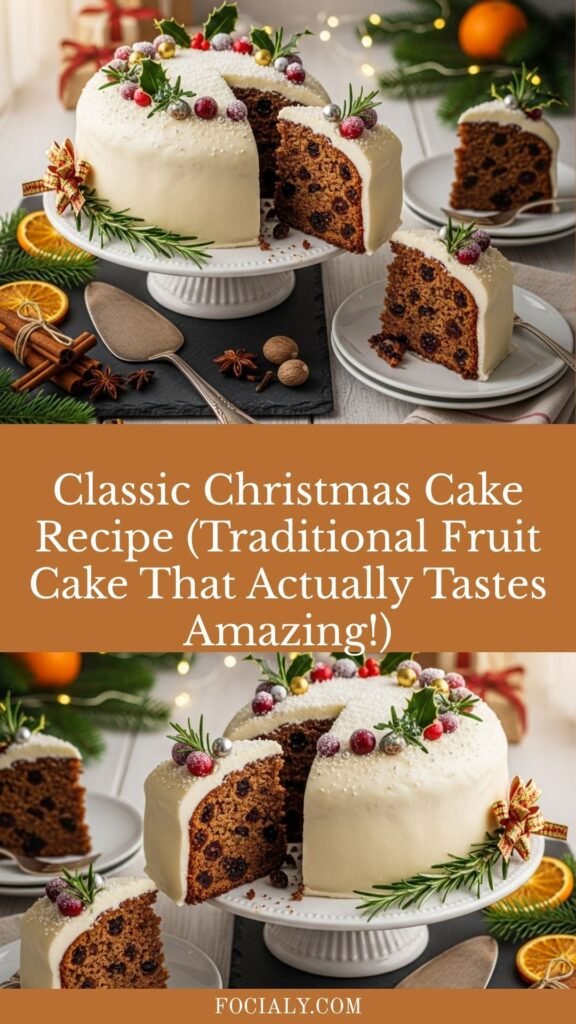
Classic Christmas Cake Recipe (Traditional Fruit Cake That Actually Tastes Amazing!)
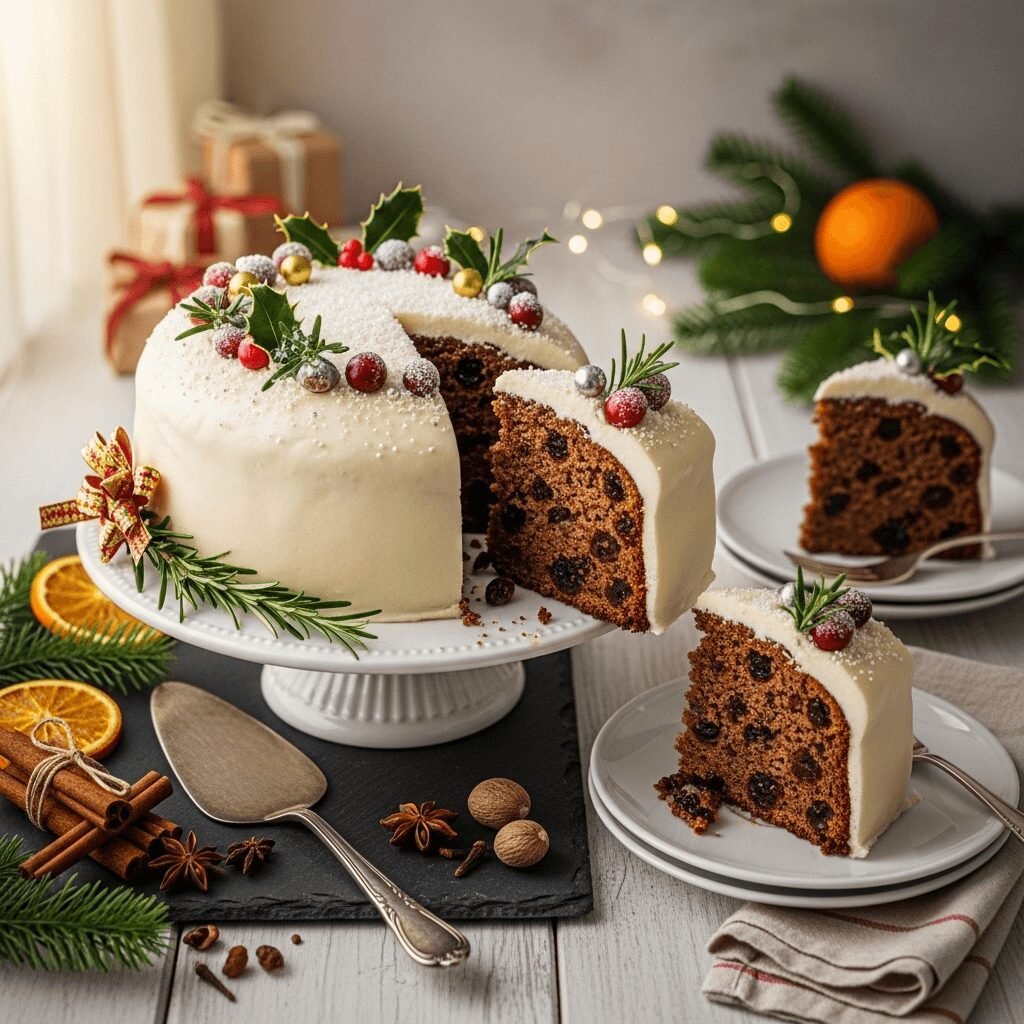
Get ready to bake the most incredible Christmas cake recipe that will become your holiday centerpiece for years to come! This traditional fruit cake is nothing like those dry, heavy doorstops you might remember – it’s moist, flavorful, beautifully spiced, and studded with jewel-like dried fruits and nuts. Whether you’re continuing a beloved family tradition or starting a new one, this easy Christmas fruit cake will fill your home with the warmth and aroma of the holidays.
What makes this homemade Christmas cake so special? It’s the perfect balance of rich butter, warming spices, and fruits that have been soaked in brandy or rum for incredible depth of flavor. This cake actually gets better with age – the longer it sits (properly stored with occasional “feedings” of spirit), the more moist and flavorful it becomes. It’s perfect for Christmas Day dessert, holiday gift-giving, or enjoying with afternoon tea throughout the festive season. Plus, making it weeks ahead means one less thing to worry about during the hectic holiday rush!
History / Background
Christmas cake holds a treasured place in British and Commonwealth holiday traditions, with roots stretching back centuries to medieval England. The story of this beloved dessert is a fascinating journey through history, religion, and culinary evolution.
The origins of Christmas cake can be traced to a dish called “plum porridge” – a thick, spiced porridge made with meat, dried fruits (called “plums” though they were actually various dried fruits), and fortified wine. This was traditionally eaten on Christmas Eve in medieval England. Over time, as baking techniques evolved and ovens became more common in households, this porridge gradually transformed into a solid pudding, then eventually into the fruit cake we know today.
By the Victorian era (mid-to-late 1800s), Christmas cake had evolved into something quite similar to what we bake today. The tradition of making it weeks in advance became popular for practical reasons – it allowed families to spread out the expense and work of holiday preparations. The cake was often made on “Stir-up Sunday” (the last Sunday before Advent, usually in late November), when families would gather to mix the ingredients together, with each person making a wish as they stirred.
The practice of “feeding” the cake with spirits (brandy, rum, or whiskey) developed both as a preservation method and to add flavor. Before modern refrigeration, alcohol helped prevent spoilage while keeping the cake moist. The tradition of covering the cake with marzipan and royal icing came from Victorian times, when elaborate white icing symbolized purity and celebration.
Christmas cake became particularly associated with British culture and spread throughout the British Empire to countries like Australia, New Zealand, Canada, and parts of Africa and the Caribbean, where it remains a holiday staple. Each region developed its own variations – some prefer dark muscovado sugar for a deeper color, others add tropical fruits, and some skip the marzipan layer entirely.
Today, traditional Christmas cake represents more than just a dessert – it embodies the spirit of preparation, anticipation, and the bringing together of family. The act of making it, feeding it, and decorating it has become as much a part of the holiday ritual as the eating itself. This recipe honors that beautiful tradition while making it accessible and achievable for modern home bakers.
Why You’ll Love This Recipe
This classic Christmas fruit cake is absolutely phenomenal, and once you make it, you’ll understand why it’s been treasured for generations!
Here’s why this recipe will become your holiday tradition:
- Make it weeks ahead – Actually improves with age, taking pressure off holiday week
- Rich and moist, never dry – Properly made fruit cake is luxuriously tender
- Beautifully spiced – Warm cinnamon, nutmeg, and cloves create festive flavor
- Customizable fruits and nuts – Use your favorite combination of dried fruits
- Perfect for gifting – Makes beautiful homemade Christmas presents
- Lasts for months – When properly stored and “fed,” keeps incredibly well
- Naturally preserves – The high fruit and alcohol content means no refrigeration needed
- Impressive centerpiece – Decorated cake is stunning on any holiday table
- Family tradition – Create memories making and decorating together
- Can be alcohol-free – Easily adapted for those who prefer no spirits
- Freezer-friendly – Can be frozen for up to a year
- Authentic taste – This is the real deal, not a bland commercial version
Whether you’re a experienced baker or trying your first Christmas cake, this recipe delivers that perfect balance of tradition and deliciousness that makes the holidays special!
Ingredient Notes
Let’s break down the ingredients that create this magnificent Christmas cake recipe:
Dried Fruits (Mixed) – The heart of the cake! Traditional mixes include raisins, currants, sultanas (golden raisins), candied cherries, and mixed candied peel. You’ll need about 3-4 cups total. The fruits should be plump and moist – if they’re dried out, soak them in hot water for 10 minutes, drain, and pat dry before using. Substitution: Use any combination you prefer – dried cranberries, chopped apricots, figs, or dates all work beautifully. For a tropical twist, add dried pineapple or mango.
Brandy or Rum – Used for soaking fruits and “feeding” the cake. Brandy is traditional, but dark rum, whiskey, or even sherry work wonderfully. The alcohol helps preserve the cake and adds complex flavor. Substitution: For alcohol-free version, use orange juice, apple juice, or strong black tea. The cake won’t keep quite as long but will still be delicious.
Butter (Unsalted) – Provides richness and moisture. Use room temperature butter for easy creaming. Substitution: For dairy-free, use vegan butter or coconut oil (though flavor will differ).
Dark Brown Sugar – Adds deep, molasses-rich sweetness and contributes to the dark color. Substitution: Light brown sugar works but creates lighter color. Muscovado sugar creates even deeper flavor.
Eggs (Large) – Provide structure and richness. Use room temperature eggs. Substitution: For egg-free, use commercial egg replacer following package directions for 4-5 eggs.
All-Purpose Flour – Provides structure. Substitution: For gluten-free, use 1:1 gluten-free baking flour.
Ground Almonds (Almond Flour) – Adds moisture, richness, and traditional flavor. Substitution: Finely ground hazelnuts or additional all-purpose flour work, though texture will differ.
Spices (Cinnamon, Nutmeg, Allspice, Cloves) – Create that warm, festive flavor profile. Freshly ground spices provide the best flavor. Substitution: Use 2 tablespoons of pre-mixed pumpkin pie spice or apple pie spice.
Zest (Orange and Lemon) – Adds bright citrus notes that balance the richness. Use organic citrus and finely grate only the colored part, not the bitter white pith.
Molasses or Black Treacle – Adds depth, color, and moisture. Black treacle is traditional in British recipes. Substitution: Use additional brown sugar if unavailable.
Chopped Nuts – Adds texture and flavor. Almonds, walnuts, or pecans are traditional. Toast them first for enhanced flavor!
Baking Powder – Provides slight lift without making the cake fluffy.
Equipment Needed
You’ll need these tools for the perfect Christmas cake:
Essential:
- 8-inch or 9-inch round deep cake pan (at least 3 inches deep) or square pan
- Large mixing bowl (for creaming butter and sugar)
- Medium bowl (for soaking fruits)
- Electric mixer or wooden spoon (mixer makes it easier but not essential)
- Measuring cups and spoons (for accuracy)
- Rubber spatula (for folding and scraping)
- Parchment paper (for lining pan)
- Aluminum foil (for covering during baking)
- Skewer or cake tester (for checking doneness)
- Wire cooling rack (for cooling)
- Pastry brush (for feeding the cake)
- Cheesecloth or clean kitchen towel (for wrapping stored cake)
- Airtight container or tin (for storage)
Optional but helpful:
- Kitchen scale (for more accurate measuring)
- Fine grater or microplane (for citrus zest)
- Double layer of brown paper (traditional for wrapping pan during baking)
Christmas Cake Recipe
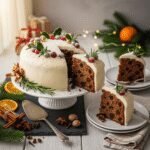
Rich, moist traditional Christmas cake loaded with brandy-soaked dried fruits, warming spices, and nuts. This classic fruit cake recipe gets better with age and makes a stunning holiday centerpiece. Can be made weeks ahead and “fed” with spirits for incredible depth of flavor!
- Prep Time: 30 minutes (plus overnight fruit soaking recommended)
- Cook Time: 2½-3 hours
- Total Time: 3-3½ hours (plus aging time)
- Yield: 12-16 servings 1x
- Category: Dessert
- Method: Baking
- Cuisine: British
- Diet: Vegetarian
Ingredients
For Soaking the Fruit (Start 1 day to 1 week ahead):
- 2 cups mixed raisins and sultanas (golden raisins)
- 1 cup currants
- ½ cup candied cherries, halved
- ½ cup mixed candied peel, chopped
- ½ cup dried cranberries or chopped apricots
- ¾ cup brandy or dark rum (plus extra for feeding)
- Zest of 1 large orange
- Zest of 1 lemon
For the Cake:
- 1 cup (2 sticks) unsalted butter, softened
- 1 cup dark brown sugar, packed
- 4 large eggs, room temperature
- 1¾ cups all-purpose flour
- ½ cup ground almonds (almond flour)
- 2 teaspoons ground cinnamon
- 1 teaspoon ground nutmeg
- ½ teaspoon ground allspice
- ¼ teaspoon ground cloves
- ½ teaspoon baking powder
- ¼ teaspoon salt
- 2 tablespoons molasses or black treacle
- 1 cup chopped almonds or walnuts, lightly toasted
- 2 tablespoons brandy or orange juice
For Feeding the Cake (Optional but Recommended):
- ¼ cup brandy or rum (for feeding over several weeks)
Instructions
Step 1: Soak the Fruit (1 Day to 1 Week Ahead)
In a large bowl, combine all the dried fruits, candied cherries, mixed peel, dried cranberries, orange zest, and lemon zest. Pour the brandy over the fruit and stir well. Cover tightly with plastic wrap and let sit at room temperature for at least overnight, or up to one week for even better flavor. Stir occasionally. The fruit will plump up and absorb most of the liquid.
Step 2: Prepare Pan and Preheat
Preheat oven to 300°F (150°C). Line an 8-inch or 9-inch round cake pan with a double layer of parchment paper on the bottom and sides, extending about 2 inches above the rim. This protects the cake during the long baking time. For extra protection (traditional method), you can also tie a double layer of brown paper around the outside of the pan.
Step 3: Cream Butter and Sugar
In a large bowl using an electric mixer (or by hand with a wooden spoon), cream together the softened butter and dark brown sugar until light and fluffy, about 3-4 minutes. The mixture should become paler in color and increase in volume.
Step 4: Add Eggs
Add eggs one at a time, beating well after each addition. If the mixture looks like it’s curdling, add a tablespoon of flour and continue mixing. Beat in the molasses until combined.
Step 5: Combine Dry Ingredients
In a separate bowl, whisk together the flour, ground almonds, cinnamon, nutmeg, allspice, cloves, baking powder, and salt. Make sure the spices are evenly distributed.
Step 6: Mix Everything Together
Using a rubber spatula or wooden spoon, gently fold the flour mixture into the butter mixture in three additions, mixing just until combined. Don’t overmix! Add the 2 tablespoons of brandy and mix gently. Fold in the soaked fruit mixture (along with any remaining liquid) and the chopped toasted nuts. Mix until everything is evenly distributed. The batter will be thick and packed with fruit.
Step 7: Fill Pan and Smooth Top
Spoon the batter into your prepared pan, spreading it evenly. Press down gently with the back of a spoon to eliminate air pockets. Smooth the top and make a slight depression in the center (this helps the cake bake flat). Tap the pan on the counter a few times to release air bubbles.
Step 8: Bake Low and Slow
Place the cake in the preheated oven. After 30 minutes, cover the top loosely with aluminum foil to prevent over-browning. Bake for 2½ to 3 hours total. The cake is done when a skewer inserted into the center comes out clean or with just a few moist crumbs, and the cake feels firm to touch. If using an 8-inch pan, it may need closer to 3 hours; a 9-inch pan may need 2½ hours.
Step 9: Cool in Pan
Remove from oven and let cool completely in the pan on a wire rack. This will take several hours. Once cool, poke about 10-15 holes in the top of the cake with a skewer.
Step 10: Feed the Cake (Optional but Recommended)
Drizzle 2-3 tablespoons of brandy over the surface, letting it soak into the holes. Wrap the cake (still in the pan) tightly in cheesecloth or a clean kitchen towel, then wrap in aluminum foil or place in an airtight container. Store in a cool, dark place.
Step 11: Age and Continue Feeding
For the best flavor, “feed” the cake with 1-2 tablespoons of brandy once a week for 3-4 weeks before decorating and serving. Unwrap, poke new holes if needed, drizzle with brandy, and rewrap. The cake will become more moist and flavorful over time.
Step 12: Decorate and Serve
When ready to serve, remove the cake from the pan. Traditionally, Christmas cakes are covered with marzipan and royal icing, but you can also dust with powdered sugar, serve plain, or top with decorative fruits and nuts. Slice thinly to serve – a little goes a long way!
Notes
- Soaking time matters: The longer fruits soak (up to a week), the better the flavor.
- Low and slow baking: Don’t rush by increasing temperature – slow baking keeps it moist.
- Covering prevents burning: Always cover with foil after 30 minutes to protect the top.
- Check doneness carefully: A skewer should come out clean, but a few crumbs are fine.
- Feeding is optional: The cake is delicious without feeding, but feeding makes it extraordinary.
- Alcohol-free version: Use orange juice for soaking and feeding instead of spirits.
- Aging improves flavor: Cake can be made 1-3 months ahead and gets better with age!
Nutrition
- Serving Size: 1 slice (1/14 of cake)
- Calories: 385
- Sugar: 42g
- Sodium: 95mg
- Fat: 15g
- Saturated Fat: 7g
- Unsaturated Fat: 7g
- Trans Fat: 0g
- Carbohydrates: 58g
- Fiber: 3g
- Protein: 5g
- Cholesterol: 75mg
Tips & Variations
The beauty of Christmas cake is how customizable it is! Here are wonderful ways to make it your own:
Tropical Christmas Cake: Replace some dried fruits with chopped dried mango, pineapple, and papaya. Use coconut rum for soaking. Add ½ cup shredded coconut to batter.
Chocolate Christmas Cake: Add ¼ cup cocoa powder to the flour mixture and fold in ½ cup dark chocolate chips. Reduce flour by ¼ cup to compensate.
Gluten-Free Christmas Cake: Use 1:1 gluten-free flour blend and ensure all other ingredients are certified gluten-free. The texture will be nearly identical!
Vegan Christmas Cake: Use vegan butter, replace eggs with flax eggs (4 tablespoons ground flaxseed + 12 tablespoons water, let sit 5 minutes), and use maple syrup instead of honey if any recipe variation calls for it.
Light Christmas Cake: Use light brown sugar and golden raisins for a paler cake with milder flavor. This is popular in some regions.
Spiced Rum Cake: Use dark rum instead of brandy and increase the amount of nutmeg and allspice for Caribbean-inspired flavor.
Nut-Free Version: Omit ground almonds and nuts, replacing ground almonds with additional all-purpose flour. Still delicious!
Individual Christmas Cakes: Bake in muffin tins lined with paper cases. Reduce baking time to 45-60 minutes. Perfect for gifts!
Dundee Cake Style: Arrange whole blanched almonds in concentric circles on top of the batter before baking. This creates a beautiful, traditional look.
Pro Chef Tips
Want a truly spectacular Christmas cake? Here are professional secrets:
Toast your nuts before adding them. Spread nuts on a baking sheet and toast at 350°F for 8-10 minutes until fragrant. This deepens their flavor dramatically and adds a subtle crunch to the cake.
Toss fruits in a little flour before adding to batter. This prevents them from sinking to the bottom during baking. Use about 2 tablespoons of flour from your measured amount to coat the drained, soaked fruits.
Line your pan properly for even baking. Use a double layer of parchment paper, and consider the traditional method of tying brown paper around the outside of the pan. This insulates the cake and prevents the edges from over-baking while the center cooks.
Weigh your ingredients for accuracy. Christmas cake is dense and rich – small variations in measurements can affect texture. A kitchen scale ensures consistent results every time.
Bring all ingredients to room temperature. Room temperature butter creams better, room temperature eggs incorporate more easily, and the batter comes together more uniformly.
Don’t rush the creaming process. Properly creamed butter and sugar should be light, fluffy, and pale. This takes at least 3-4 minutes with an electric mixer, longer by hand. This step incorporates air and creates better texture.
Make a depression in the center before baking. Use the back of a spoon to create a slight well in the center of the batter. The cake will dome as it bakes, and this helps it bake flat.
Use a flower nail trick for even baking. Place a clean flower nail (from cake decorating) in the center of the batter. The metal conducts heat to the center, helping it bake evenly with the edges.
Feed the cake from the bottom too. When feeding your aged cake, carefully turn it over occasionally and feed from the bottom as well. This ensures even moisture distribution.
Test internal temperature for doneness. For perfect results, use an instant-read thermometer. The center should reach 200-205°F (93-96°C).
Common Mistakes to Avoid
Even experienced bakers can stumble with Christmas cake. Here are pitfalls to watch for:
Baking at too high a temperature: Christmas cake needs low, slow baking (300°F). Higher temperatures cause the outside to over-brown and dry out while the center remains undercooked. Be patient with the long baking time – it’s essential for proper texture.
Not covering the cake during baking: The long baking time means the top will burn without protection. Always cover loosely with foil after the first 30 minutes. Check occasionally and add extra foil if edges are browning too much.
Cutting into the cake too soon: Fresh Christmas cake is good, but aged Christmas cake is extraordinary. Try to wait at least 1-2 weeks before cutting (though I know it’s tempting!). The flavors mellow and blend beautifully over time.
Over-feeding the cake: While feeding adds moisture and flavor, too much alcohol too frequently can make the cake soggy and overly boozy. Stick to 1-2 tablespoons once a week. The cake should be moist, not wet.
Storing in a warm place: Heat can cause the cake to spoil or become overly soft. Store in a cool, dark place like a pantry or cupboard – never near a heat source. Room temperature (around 65-70°F) is ideal.
Using old, dried-out fruit: Quality ingredients matter! If your dried fruits are hard and desiccated, your cake will suffer. Use plump, fresh dried fruits for the best results.
Skipping the parchment paper lining: With such a long baking time, proper pan lining is non-negotiable. The cake will stick without adequate parchment protection, and removing it will be a disaster.
Storage & Meal Prep
Christmas cake stores exceptionally well – that’s part of its magic!
Room Temperature Storage (Undecorated): Wrap cooled cake tightly in cheesecloth or a clean kitchen towel, then wrap in aluminum foil or place in an airtight tin. Store in a cool, dark place for up to 3 months. Feed with brandy weekly for best results.
Room Temperature Storage (Decorated with Marzipan/Icing): Once decorated, the cake can still be stored at room temperature in an airtight container for up to 2 weeks. The icing creates a protective seal that helps preserve the cake.
Refrigerator Storage: Not recommended for undecorated cakes as it can dry them out. However, once decorated with marzipan and royal icing, you can refrigerate if your kitchen is very warm, though room temperature is preferable. Let come to room temperature before serving.
Serving from Storage: When ready to serve, unwrap the cake and let it breathe for an hour before cutting. This allows the alcohol to dissipate slightly and the cake to come to room temperature for best flavor and texture.
Cutting and Serving: Use a sharp, serrated knife and wipe it clean between slices for neat cuts. Christmas cake is rich – thin slices (about ½ inch) are traditional.
Make-Ahead & Freezer Notes
Christmas cake is THE ultimate make-ahead dessert!
Make-Ahead Timeline: Ideally, make Christmas cake 4-6 weeks before Christmas for optimal flavor development. Many bakers make it in late October or early November. However, you can make it as little as one week ahead and it will still be delicious.
Freezing Undecorated Cake: Wrap cooled cake tightly in plastic wrap, then aluminum foil. Freeze for up to 12 months. Thaw overnight at room temperature, still wrapped. Once thawed, you can begin feeding it with brandy if desired before decorating.
Freezing Decorated Cake: Once decorated with marzipan and royal icing, wrap carefully in plastic wrap and freeze for up to 3 months. Thaw overnight in the refrigerator, then bring to room temperature before serving. The icing may crack slightly during freezing but will still taste wonderful.
Freezing Individual Slices: Wrap individual slices tightly in plastic wrap, place in freezer bags. Freeze up to 6 months. Thaw at room temperature for 1-2 hours. Perfect for enjoying throughout the year!
Best Make-Ahead Strategy: Bake the cake 4-6 weeks ahead, wrap and store properly, feed weekly with brandy. Decorate with marzipan 1-2 weeks before Christmas, then add royal icing 3-5 days before Christmas. This spreads out the work and produces the best flavor.
Reviving a Dry Cake: If your Christmas cake seems dry (perhaps stored too long or in a warm environment), poke holes and feed it with brandy or fruit juice. Let it rest wrapped for a few days – it should absorb the moisture and revive beautifully.
Serving Suggestions
Traditional Christmas cake is versatile and pairs beautifully with many accompaniments:
Classic British Style: Serve thin slices with a wedge of sharp cheddar cheese and a cup of hot tea. This traditional pairing dates back centuries – the salty, tangy cheese beautifully contrasts the sweet, rich cake.
Afternoon Tea: Present on a tiered cake stand with other holiday treats. Serve with Earl Grey, English Breakfast, or Christmas-spiced tea.
Dessert Course: Serve with a dollop of brandy butter (butter creamed with powdered sugar and brandy), clotted cream, or vanilla ice cream.
With Coffee: A thin slice pairs perfectly with strong black coffee or espresso for an after-dinner treat.
Gift Presentation: Wrap individual slices or small cakes in cellophane tied with festive ribbon. Include a card with feeding and storage instructions.
Perfect Accompaniments:
- Brandy butter or hard sauce
- Clotted cream or heavy whipped cream
- Vanilla ice cream
- Sharp cheddar cheese (traditional!)
- Custard sauce
- Hot tea or coffee
- Port wine or dessert wine
- Eggnog or mulled wine
Decorating Ideas:
- Traditional: Marzipan layer + royal icing + Christmas decorations
- Simple: Dust with powdered sugar + arrange dried fruits and nuts on top
- Modern: Drizzle with white chocolate + fresh cranberries + rosemary sprigs
- Rustic: Leave plain + wrap with ribbon + top with holly decoration
Occasion Ideas:
- Christmas Day dessert
- Boxing Day tea
- Holiday party centerpiece
- Edible gifts for neighbors/teachers
- New Year’s celebration
- Enjoy throughout January
FAQs Section
How far in advance should I make Christmas cake?
Ideally 4-6 weeks before you plan to serve it, though you can make it anywhere from 1 week to 3 months ahead. The cake improves with age as the flavors mellow and blend. Many traditional bakers make it on “Stir-up Sunday” in late November.
Do I have to feed the cake with alcohol?
No! While feeding with brandy or rum is traditional and adds flavor while keeping the cake moist, it’s completely optional. If you skip the feeding, the cake will still be delicious – just wrap it tightly and store it properly. For alcohol-free feeding, use orange juice or apple juice instead.
Can I make Christmas cake without alcohol?
Absolutely! Soak the fruits in orange juice, apple juice, or strong black tea instead of brandy. The cake won’t keep quite as long (2-4 weeks instead of months) and the flavor will be different, but it will still be a delicious fruit cake.
Why did my fruit sink to the bottom?
This happens when the batter is too thin or the fruits are too wet. Make sure to drain soaked fruits well, pat them dry, and toss them in a tablespoon of flour before adding to the batter. Also ensure your batter is thick enough – it should be heavy and dense, not pourable.
Can I decorate the cake immediately after baking?
It’s best to let the cake mature for at least a week before decorating with marzipan and icing. The cake needs time to settle and develop flavor. If you decorate too soon, the moisture from the cake can make the marzipan/icing soft or cause them not to adhere properly.
How do I know when the cake is done?
The cake is done when a skewer inserted into the center comes out clean or with just a few dry crumbs, the top feels firm to touch, and the cake has pulled away slightly from the sides of the pan. Because of the long baking time, start checking at 2 hours, then every 15 minutes after that.
Can I use fresh fruit instead of dried?
No, fresh fruit contains too much moisture and will make the cake soggy. The beauty of dried fruit is that it’s concentrated in flavor and won’t release excess liquid during baking. However, you can add a little finely diced fresh apple or pear to the soaked dried fruits if you like.
What’s the difference between Christmas cake and fruitcake?
They’re essentially the same thing! “Christmas cake” is the British/Commonwealth term, while “fruitcake” is used more generally (particularly in America). Christmas cake traditionally refers to the style that’s decorated with marzipan and royal icing, while fruitcake might be any dense cake with dried fruits and nuts.
Conclusion
And there you have it – everything you need to create a magnificent traditional Christmas cake that will become the centerpiece of your holiday celebrations! This isn’t just any fruitcake – it’s a lovingly crafted, thoughtfully spiced, beautifully moist cake that honors centuries of tradition while being completely achievable in your own kitchen.
Making Christmas cake is about more than just baking – it’s about creating memories, continuing traditions, and filling your home with the warm spices and anticipation that define the holiday season. Whether you’re continuing a family tradition or starting a new one, whether you decorate it elaborately or keep it simple, this homemade Christmas cake will bring joy to your holiday table.
I’d love to hear about your Christmas cake adventures! Did you make it weeks ahead and feed it regularly? What decorations did you choose? Are you starting a new tradition or continuing an old one? Drop a comment below and share your experience – I read every one and love connecting with fellow bakers! If this recipe inspired you to try Christmas cake, please save it to your Pinterest boards and share it with friends who love holiday baking. Let’s keep this beautiful tradition alive!
Now grab those dried fruits and start soaking – your best Christmas cake awaits! Happy baking and happy holidays!