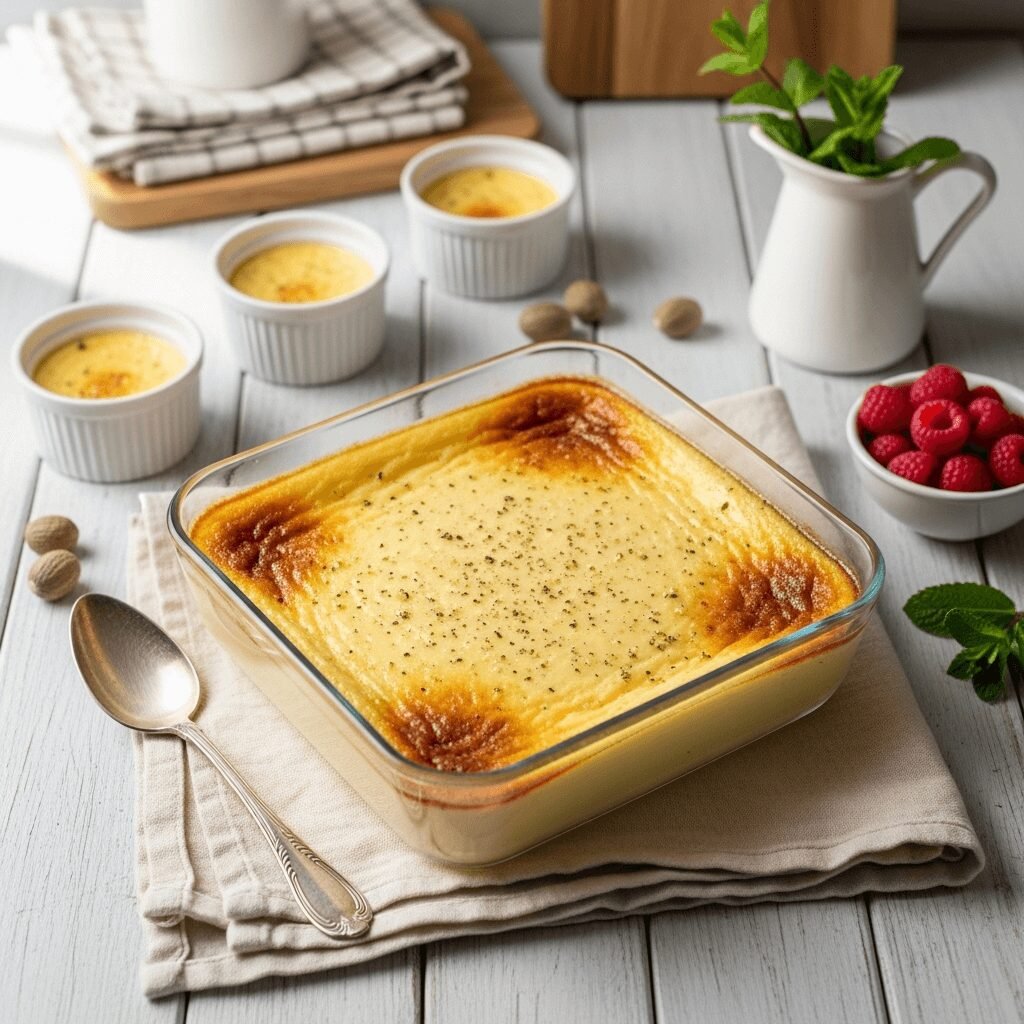
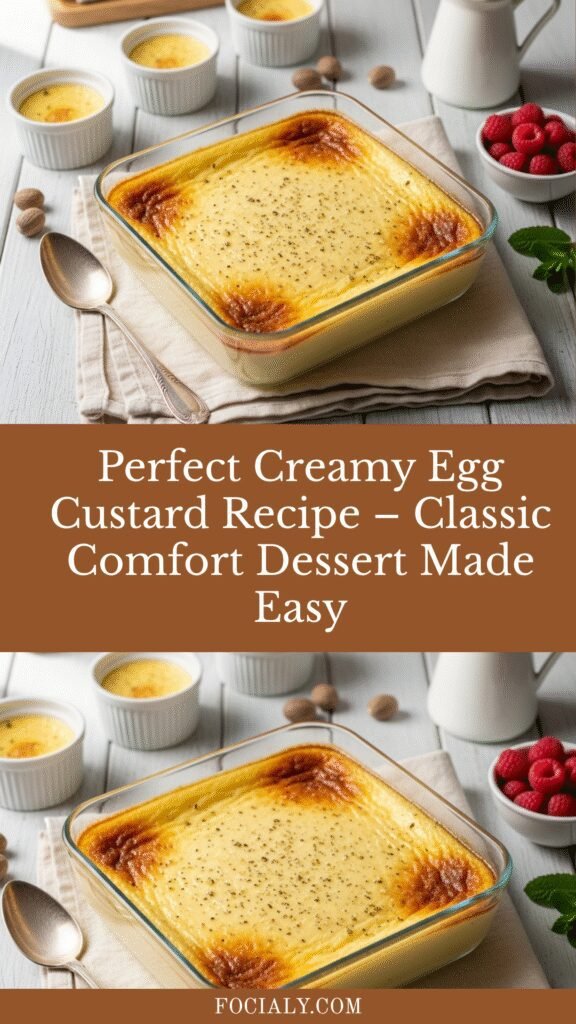
Perfect Creamy Egg Custard Recipe – Classic Comfort Dessert Made Easy
There’s something wonderfully nostalgic about a perfectly smooth, creamy egg custard. This timeless dessert has graced dinner tables for generations, offering that melt-in-your-mouth texture and delicate sweetness that never goes out of style. Whether you’re serving it after Sunday dinner, bringing comfort to a loved one, or simply craving something homemade and wholesome, this classic egg custard recipe delivers every single time.
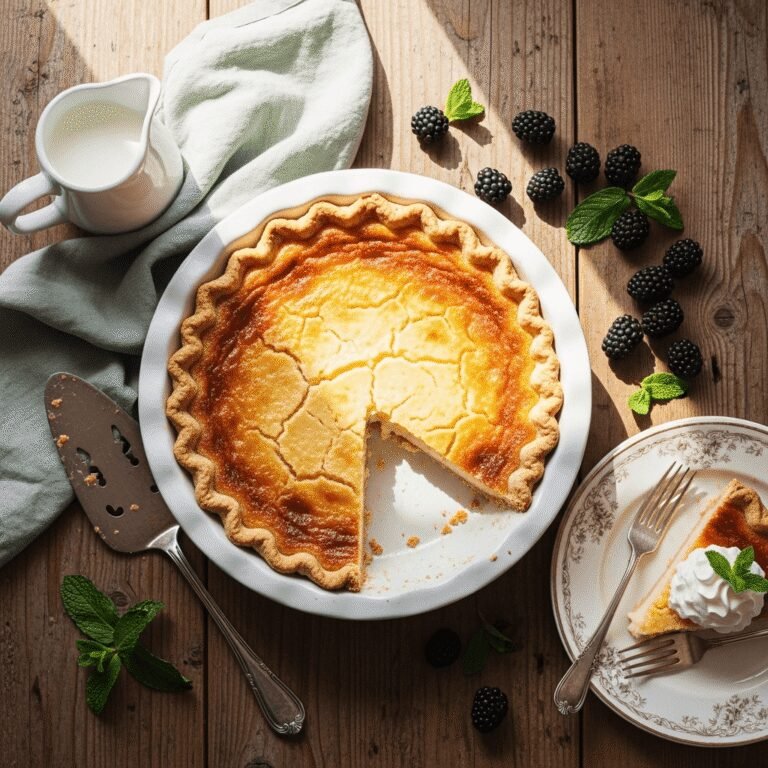
What makes egg custard so special is its beautiful simplicity. With just a handful of basic ingredients—eggs, milk, sugar, and vanilla—you can create a dessert that tastes luxurious without any fuss. The gentle baking process transforms these humble ingredients into silky, spoon-tender perfection with that signature golden top that tells you it’s ready.
This recipe is perfect for holiday gatherings, potluck dinners, or whenever you want to treat your family to something truly special. It’s the kind of dessert that makes people pause, close their eyes, and remember their grandmother’s kitchen. And the best part? It’s surprisingly easy to make, even if you’ve never attempted custard before.
History / Background
Egg custard has a rich culinary history that spans centuries and crosses countless cultural boundaries. The Romans were among the first to discover that eggs could thicken and set when heated gently, creating early versions of custard-based dishes. However, it wasn’t until medieval Europe that custard truly came into its own as a beloved dessert.
In England, custard became a staple of the aristocratic table during the Middle Ages, often baked in ornate pastry shells. The word “custard” itself comes from the Old French “croustade,” referring to the crust that originally held the creamy filling. As sugar became more accessible and recipes traveled across continents, custard evolved into many regional variations.
In America, baked egg custard became a Southern tradition, passed down through generations as a symbol of home cooking and comfort. Church socials, family reunions, and Sunday dinners wouldn’t be complete without a dish of creamy custard. It represented resourcefulness during harder times—a way to create something special from eggs, milk, and pantry staples.
The beauty of egg custard lies in its democratic nature. Unlike fancier French crème brûlée or Spanish flan, American egg custard doesn’t require special equipment or technique. It’s honest, straightforward baking that produces consistently delicious results. This accessibility made it a favorite across all economic backgrounds, cementing its place as a true American comfort food classic.
Today, egg custard continues to hold a special place in our hearts and kitchens. It reminds us of simpler times while still feeling special enough for any occasion. It’s the dessert grandmothers made with love, and now it’s your turn to carry on this delicious tradition.
Why You’ll Love This Recipe
This egg custard recipe strikes the perfect balance between elegance and ease. It’s the kind of recipe that makes you look like a baking expert while requiring minimal effort and basic ingredients you probably already have in your kitchen. The result is a dessert that’s greater than the sum of its parts—smooth, creamy, and absolutely divine.
Here’s what makes this recipe a winner:
- Foolproof technique – The water bath method ensures even cooking and prevents curdling, giving you perfect results every time
- Budget-friendly – Uses simple, inexpensive ingredients that won’t break the bank
- Make-ahead friendly – Prepare it the day before and chill overnight for effortless entertaining
- Crowd-pleaser – Appeals to all ages, from toddlers to great-grandparents
- Versatile serving options – Delicious warm, room temperature, or chilled
- Minimal cleanup – Just one mixing bowl and your baking dish
- No special equipment required – If you can whisk and bake, you can make this custard
- Naturally gluten-free – Perfect for guests with dietary restrictions
- Customizable flavor – Easy to add your favorite extracts or spices
- Impressive presentation – Looks beautiful with minimal styling effort
Whether you’re new to baking or a seasoned pro, this egg custard recipe will become your go-to comfort dessert. It’s the perfect introduction to custard-making for beginners, yet refined enough to satisfy the most discerning palates.
Ingredient Notes
The magic of egg custard lies in the quality and proportion of just a few key ingredients. Let’s break down what you’ll need and why each component matters:
Eggs – The star of the show! Eggs provide structure, richness, and that signature silky texture. Use large eggs at room temperature for best results. The proteins in eggs set during baking to create that perfect custard consistency. Cold eggs can be quickly warmed by placing them in a bowl of warm water for 5-10 minutes. Fresh eggs work best, but eggs up to three weeks old are perfectly fine.
Whole Milk – Provides the creamy base and helps create that smooth, luxurious mouthfeel. Whole milk is ideal because the fat content contributes to richness without being overly heavy. You can substitute with 2% milk if needed, though the custard will be slightly less rich. Half-and-half creates an ultra-creamy version, while skim milk produces a lighter (though less flavorful) result.
Granulated Sugar – Sweetens the custard and helps tenderize the texture. The amount in this recipe creates a pleasantly sweet but not cloying dessert. You can reduce the sugar slightly if you prefer less sweetness, or substitute with coconut sugar for a subtle caramel note.
Pure Vanilla Extract – Adds warmth and depth of flavor that elevates the simple ingredients. Always use pure vanilla extract rather than imitation for the best taste. Vanilla bean paste or scraped vanilla bean seeds create an even more luxurious version with beautiful speckles throughout.
Salt – Just a pinch enhances all the other flavors and balances the sweetness. Don’t skip it! Salt is a flavor amplifier that makes the vanilla and sweetness more pronounced.
Ground Nutmeg (optional but traditional) – The classic finishing touch that adds aromatic warmth. Freshly grated nutmeg tastes infinitely better than pre-ground. If you don’t have nutmeg, cinnamon works beautifully as a substitute.
Equipment Needed
You don’t need a fancy kitchen to make perfect egg custard. Here’s what you’ll use:
- Large mixing bowl – For whisking together your custard mixture
- Whisk or electric mixer – A whisk works perfectly fine, but an electric mixer makes the job even easier
- Measuring cups and spoons – For accurate ingredient proportions
- 8×8-inch baking dish or 6-8 individual ramekins – Glass or ceramic works best for even heat distribution
- Large roasting pan – To create the water bath for gentle, even baking
- Fine-mesh strainer (optional but recommended) – For removing any egg solids and ensuring ultra-smooth custard
- Kettle or pot for boiling water – For your water bath
- Oven thermometer (optional) – Ensures accurate oven temperature for perfect results
Egg Custard Recipe
This classic egg custard recipe delivers silky-smooth, creamy perfection in every spoonful. Made with simple pantry ingredients and baked in a gentle water bath, this traditional American dessert is comfort food at its finest. The delicate vanilla flavor and melt-in-your-mouth texture make it an instant family favorite that’s perfect for any occasion.
- Prep Time: 10 minutes
- Cook Time: 45-55 minutes
- Total Time: 1 hour
- Yield: 6 servings 1x
- Category: Dessert
- Method: Baking
- Cuisine: American
- Diet: Vegetarian
Ingredients
- 4 large eggs, at room temperature
- ⅓ cup granulated sugar
- ¼ teaspoon salt
- 2 cups whole milk, warmed
- 1 teaspoon pure vanilla extract
- ⅛ teaspoon ground nutmeg (plus extra for topping)
- Boiling water for water bath
Instructions
- Preheat and prepare: Preheat your oven to 325°F (165°C). Lightly butter or spray an 8×8-inch baking dish or 6-8 individual ramekins. Place your baking dish inside a larger roasting pan and set aside.
- Warm the milk: Heat the milk in a saucepan over medium-low heat or in the microwave until warm but not hot (about 110-120°F). This prevents the eggs from cooking when you combine them. Set aside to cool slightly.
- Whisk the eggs: In a large mixing bowl, whisk together the eggs, sugar, and salt until well combined and slightly frothy, about 1-2 minutes. You want the mixture smooth but not over-beaten.
- Combine wet ingredients: Gradually pour the warm milk into the egg mixture while whisking constantly. This tempering process prevents the eggs from scrambling. Add the vanilla extract and nutmeg, whisking until everything is fully incorporated.
- Strain for smoothness (optional but recommended): Pour the custard mixture through a fine-mesh strainer into another bowl or directly into your prepared baking dish. This removes any egg solids or foam for ultra-smooth custard.
- Pour and sprinkle: Pour the strained custard into your prepared baking dish or divide evenly among ramekins. Sprinkle a light dusting of additional nutmeg over the top for that classic look.
- Create water bath: Place the roasting pan with your custard dish in the preheated oven. Carefully pour boiling water into the roasting pan until it reaches halfway up the sides of your custard dish. The water bath ensures gentle, even cooking.
- Bake: Bake for 45-55 minutes for an 8×8 dish (35-40 minutes for individual ramekins) until the custard is set around the edges but still slightly jiggly in the center. The center should register 170-175°F on an instant-read thermometer.
- Cool properly: Carefully remove the roasting pan from the oven. Lift the custard dish out of the water bath using oven mitts or tongs. Let cool on a wire rack for 30 minutes, then cover and refrigerate for at least 2 hours or until fully chilled.
- Serve: Serve chilled or at room temperature. The custard will continue to firm up as it cools. Enjoy this creamy, comforting dessert on its own or with a dollop of whipped cream and fresh berries.
Notes
- Temperature is key: Don’t skip warming the milk—it prevents the eggs from cooking prematurely and ensures smooth texture.
- Water bath is non-negotiable: This gentle cooking method is what prevents curdling and creates that silky consistency.
- Don’t overbake: The custard should still jiggle slightly in the center when you remove it. It will continue cooking and setting as it cools.
- Storage: Covered custard keeps in the refrigerator for up to 4 days.
- Flavor variations: Try adding almond extract, maple extract, or a tablespoon of bourbon for different flavor profiles.
Nutrition
- Serving Size: 1 piece (⅙ of recipe)
- Calories: 138
- Sugar: 13g
- Sodium: 165mg
- Fat: 6g
- Saturated Fat: 2.5g
- Unsaturated Fat: 3g
- Trans Fat: 0g
- Carbohydrates: 14g
- Fiber: 0g
- Protein: 7g
- Cholesterol: 135mg
Tips & Variations
Make this classic egg custard your own with these creative twists and customizations:
Chocolate Custard: Add 2 tablespoons of cocoa powder to the egg mixture for a chocolate version. You might want to increase the sugar by 1-2 tablespoons to balance the cocoa’s bitterness.
Coconut Custard: Replace 1 cup of the milk with coconut milk and add ½ cup of sweetened shredded coconut to the mixture. Top with toasted coconut before serving.
Maple Custard: Substitute ¼ cup of the sugar with pure maple syrup for a lovely autumn-inspired flavor. The custard will be slightly less firm but incredibly delicious.
Citrus Custard: Add the zest of one lemon or orange to the mixture for bright, fresh flavor. This pairs beautifully with summer berries.
Coffee Custard: Dissolve 1 tablespoon of instant espresso powder in the warm milk for a sophisticated coffee-flavored dessert.
Spiced Custard: Add ¼ teaspoon cinnamon and a pinch of ground ginger along with the nutmeg for a warming spice blend.
Individual Portions: Bake in vintage teacups or mason jars for charming, portion-controlled servings perfect for parties.
Caramel Layer: Pour 1-2 tablespoons of caramel sauce in the bottom of each ramekin before adding the custard mixture for a flan-inspired treat.
Pro Chef Tips
Take your egg custard from good to absolutely spectacular with these professional techniques:
Temperature control is everything: Use an instant-read thermometer to monitor your custard. Remove it from the oven when the center reaches 170-175°F. Carryover cooking will bring it to perfect doneness without overbaking.
Room temperature ingredients: Bring eggs to room temperature before mixing. This helps them blend more smoothly with the milk and creates a more uniform texture. Place cold eggs in warm water for 10 minutes.
The gentle whisk technique: Mix your custard gently to avoid incorporating too much air, which can create bubbles and foam. Slow, steady whisking is better than vigorous beating.
Strain for perfection: Always strain your custard mixture before baking. This removes any chalazae (the egg whites’ stringy bits) and creates an incredibly smooth, professional texture.
Water bath setup: Pour the custard into your dish first, place it in the roasting pan, then add the hot water once it’s in the oven. This prevents spills and makes the process much easier.
The jiggle test: Your custard is ready when the edges are set but the center still jiggles like Jell-O when you gently shake the pan. It should move as one cohesive mass, not ripple like liquid.
Chill thoroughly: For the best texture and easiest slicing, refrigerate your custard for at least 4 hours or overnight. The flavors also meld and improve with time.
Fresh nutmeg makes a difference: Invest in a small nutmeg grater and whole nutmeg. The flavor difference between freshly grated and pre-ground is remarkable.
Common Mistakes to Avoid
Even experienced bakers can encounter custard troubles. Here’s how to sidestep the most common pitfalls:
Overbeating the mixture: Whisking too vigorously incorporates excess air, creating bubbles and foam that result in a spongy rather than creamy texture. Mix just until combined—smooth and gentle wins the race.
Skipping the water bath: Baking custard directly in the oven exposes it to harsh, dry heat that causes the edges to overcook while the center remains liquid. The water bath provides gentle, humid heat for even cooking. Never skip it!
Using too-high temperature: High heat causes eggs to curdle and creates a grainy, separated custard. Always bake at 325°F or lower. Low and slow is the custard mantra.
Overbaking: This is the number one custard killer. An overbaked custard becomes watery, curdled, and develops an unpleasant eggy taste. Remember, it continues cooking after you remove it from the oven, so take it out when there’s still a slight jiggle.
Not straining the mixture: Those white stringy bits from the eggs and any foam will mar your custard’s silky texture. Take the extra 30 seconds to strain—it makes a visible difference in the final product.
Cold ingredients: Adding cold milk to the eggs can shock them and create lumps. Always warm your milk first for smooth incorporation.
Cutting into hot custard: Patience! Let your custard cool completely before cutting. Hot custard is too soft and won’t hold its shape. The texture improves dramatically after chilling.
Storage & Meal Prep
Refrigerator Storage: Cover your cooled custard tightly with plastic wrap or aluminum foil, pressing it directly against the surface to prevent a skin from forming. Properly stored, egg custard keeps beautifully in the refrigerator for 4-5 days. The texture actually improves after the first day as the flavors meld and develop.
Reheating: While custard is traditionally served cold or at room temperature, you can gently rewarm it if desired. Place individual portions in the microwave for 15-20 seconds at 50% power, or let the entire dish sit at room temperature for 30-45 minutes before serving. Avoid overheating, which can cause the custard to break.
Maintaining quality: For the best texture, store custard in an airtight container rather than leaving it loosely covered. This prevents it from absorbing refrigerator odors and keeps the surface from drying out.
Single servings: If you baked in ramekins, you can cover each one individually with plastic wrap for convenient grab-and-go desserts throughout the week.
Signs of spoilage: Discard custard if you notice any off smells, mold, or if the texture becomes excessively watery or separated. When in doubt, throw it out.
Make-Ahead & Freezer Notes
Make-Ahead Success: Egg custard is actually better when made in advance! Prepare it 1-2 days before you plan to serve it for the best flavor and texture. The resting time allows the vanilla to infuse fully and the texture to become perfectly firm. Simply cover tightly and refrigerate until ready to serve.
Day-Before Strategy: Bake your custard in the evening, let it cool to room temperature, then refrigerate overnight. It will be perfectly set and ready to serve the next day with no last-minute stress.
Freezing Considerations: Honestly, I don’t recommend freezing baked egg custard. The delicate texture changes significantly when frozen and thawed—it becomes grainy and weepy as the water separates from the proteins. Custard is best enjoyed fresh or refrigerated.
If you must freeze: Should you have leftover custard and can’t bear to waste it, freeze it in an airtight container for up to 1 month. Thaw overnight in the refrigerator. The texture won’t be as smooth, but you can blend it and use it as a base for smoothies, ice cream, or custard bread pudding.
Freezing unbaked custard: You can freeze the custard mixture before baking for up to 1 month. Thaw completely in the refrigerator, give it a gentle stir, then bake according to the recipe instructions. This works better than freezing already-baked custard.
Best reheating method: If serving warm custard from the refrigerator, let it come to room temperature naturally for 30-45 minutes rather than microwaving. This preserves the silky texture better than rapid reheating.
Serving Suggestions
Egg custard is delicious on its own, but these accompaniments take it to the next level:
Classic Pairings: Serve with a dollop of freshly whipped cream and a sprinkle of cinnamon. The light, airy cream contrasts beautifully with the dense, creamy custard. Add a few fresh berries—strawberries, blueberries, or raspberries—for color and a tart counterpoint to the sweet custard.
Fruit Compotes: A warm berry compote, caramelized peaches, or sautéed apples with cinnamon make elegant toppings that add textural interest and bright fruit flavor.
Cookie Accompaniments: Crisp vanilla wafers, shortbread cookies, or gingersnaps provide a delightful crunch alongside the smooth custard. They’re perfect for scooping up every last bit.
Caramel Drizzle: A simple caramel sauce drizzled over the top adds decadent sweetness and creates a beautiful presentation for special occasions.
Coffee Service: Egg custard pairs wonderfully with coffee or tea for an afternoon treat. The mild sweetness complements a strong espresso or Earl Grey tea perfectly.
Breakfast Option: Surprisingly, custard makes a protein-rich breakfast when served with granola, nuts, and fresh fruit. It’s like a more indulgent version of yogurt parfait.
Holiday Presentation: During holidays, garnish with a mint sprig, candied ginger, or a dusting of edible gold for festive flair.
Ice Cream Addition: Serve slightly warm custard with a scoop of vanilla ice cream on top for a temperature contrast that’s absolutely heavenly.
FAQs Section
Q: Why is my custard watery or curdled?
A: This usually happens from overbaking or using too-high temperature. The proteins in the eggs tighten too much and squeeze out the liquid, creating a watery, curdled texture. Always use a water bath and remove the custard when it’s still slightly jiggly in the center. It will finish setting as it cools.
Q: Can I make egg custard without a water bath?
A: While technically possible, I strongly advise against it. The water bath provides gentle, even heat that prevents the edges from overcooking before the center sets. Without it, you’ll likely end up with rubbery edges and an undercooked center. The water bath is what creates that signature silky-smooth texture.
Q: How do I know when my custard is done?
A: The custard is ready when the edges are completely set but the center still jiggles slightly when you gently shake the pan (about a 2-inch diameter area in the middle). It should move as one cohesive mass. An instant-read thermometer inserted in the center should read 170-175°F. Remember, it continues cooking as it cools.
Q: Can I use non-dairy milk alternatives?
A: Yes, but results vary. Full-fat coconut milk works beautifully and creates rich, creamy custard. Almond milk and oat milk can work but produce a thinner, less creamy result—choose barista-style versions with higher fat content for best results. Avoid low-fat or “light” versions of any milk alternative.
Q: Why does my custard have a skin on top?
A: A skin forms when the surface is exposed to air while cooling. To prevent this, press plastic wrap directly onto the custard’s surface while it’s still warm. The skin is harmless and can be eaten, but most people prefer to remove it before serving.
Q: Can I double this recipe?
A: Absolutely! Double all ingredients and bake in a 9×13-inch pan. You’ll need to increase the baking time by 10-15 minutes. Check for doneness using the jiggle test and temperature rather than relying solely on time.
Q: Is egg custard safe for pregnant women?
A: Yes, when properly baked to 160°F internal temperature or higher (this recipe reaches 170-175°F), the eggs are fully cooked and safe during pregnancy. Always ensure your custard is baked through with no liquid center.
Q: My custard has tiny holes throughout. What happened?
A: Those holes come from air bubbles that formed during mixing. To prevent them, whisk gently rather than vigorously, and always strain your mixture before baking. The straining step removes trapped air and creates that perfectly smooth texture.
Conclusion
There you have it—the ultimate guide to creating silky, smooth, absolutely perfect egg custard right in your own kitchen! This timeless dessert proves that the simplest recipes are often the most satisfying. With just a handful of basic ingredients and a gentle touch, you can create a dessert that tastes like it came straight from grandma’s kitchen.
The beauty of this egg custard recipe is its versatility. Serve it for Sunday dinner, bring it to potlucks, make it for the holidays, or simply treat yourself on a quiet Tuesday evening. It’s equally at home at elegant dinner parties and casual family meals. The make-ahead nature makes it perfect for busy home cooks who want to impress without the stress.
I hope this recipe becomes a beloved staple in your dessert rotation. There’s something truly special about mastering a classic like this—it connects us to generations of home bakers who came before us while creating new memories with our own families.
Now it’s your turn! I’d love to hear how your egg custard turns out. Did you try any of the flavor variations? What did your family think? Drop a comment below and share your experience. And if you loved this recipe, please pin it to your favorite Pinterest board so you can find it again and share it with fellow baking enthusiasts!
Happy baking, and here’s to many delicious spoonfuls of creamy, dreamy egg custard! 🍮