Buttery Shortbread Cookies Recipe (Classic Scottish Style)

There’s something absolutely magical about a perfectly made shortbread cookie. With its melt-in-your-mouth texture, rich buttery flavor, and delicate crumb, shortbread represents the beautiful simplicity of baking at its finest. These classic shortbread cookies require just a handful of pantry staples, yet they deliver an incredibly sophisticated taste that feels special enough for holiday gift boxes and elegant enough for afternoon tea.
Unlike other cookies loaded with chocolate chips, nuts, or frosting, shortbread lets the quality of butter shine through in every tender bite. The beauty of this recipe is that it’s incredibly versatile—you can shape them into traditional rounds, elegant fingers, or festive cutouts depending on the occasion. Whether you’re baking for Christmas cookie exchanges, Valentine’s Day celebrations, wedding showers, or simply because you deserve a homemade treat with your afternoon coffee, these buttery shortbread cookies never disappoint.
What makes this recipe particularly wonderful for home bakers is its forgiving nature. There’s no leavening agent to worry about, no eggs to bring to room temperature, and no complex techniques to master. It’s pure, straightforward baking that rewards you with cookies that taste like they came from a fancy bakery. The subtle sweetness and sandy texture make them absolutely addictive—trust me, it’s nearly impossible to eat just one!
History / Background
Shortbread has a rich history that dates back to medieval Scotland, where it evolved from “biscuit bread”—a twice-baked leftover bread that was dried out in the oven to create a crunchy rusk. Over time, Scottish bakers began adding butter to the dough, transforming these humble biscuits into the luxurious treat we know today. By the 16th century, shortbread had become a prized delicacy, often reserved for special occasions like Christmas, Hogmanay (Scottish New Year), and weddings.
The term “short” in shortbread actually refers to the crumbly texture achieved by using a high proportion of fat (butter) to flour. This high fat content creates a “short” or tender crumb that breaks apart easily rather than bending like bread. Mary, Queen of Scots is credited with popularizing one particular shape called “petticoat tails”—wedge-shaped cookies that resembled the pattern of a lady’s full skirt.
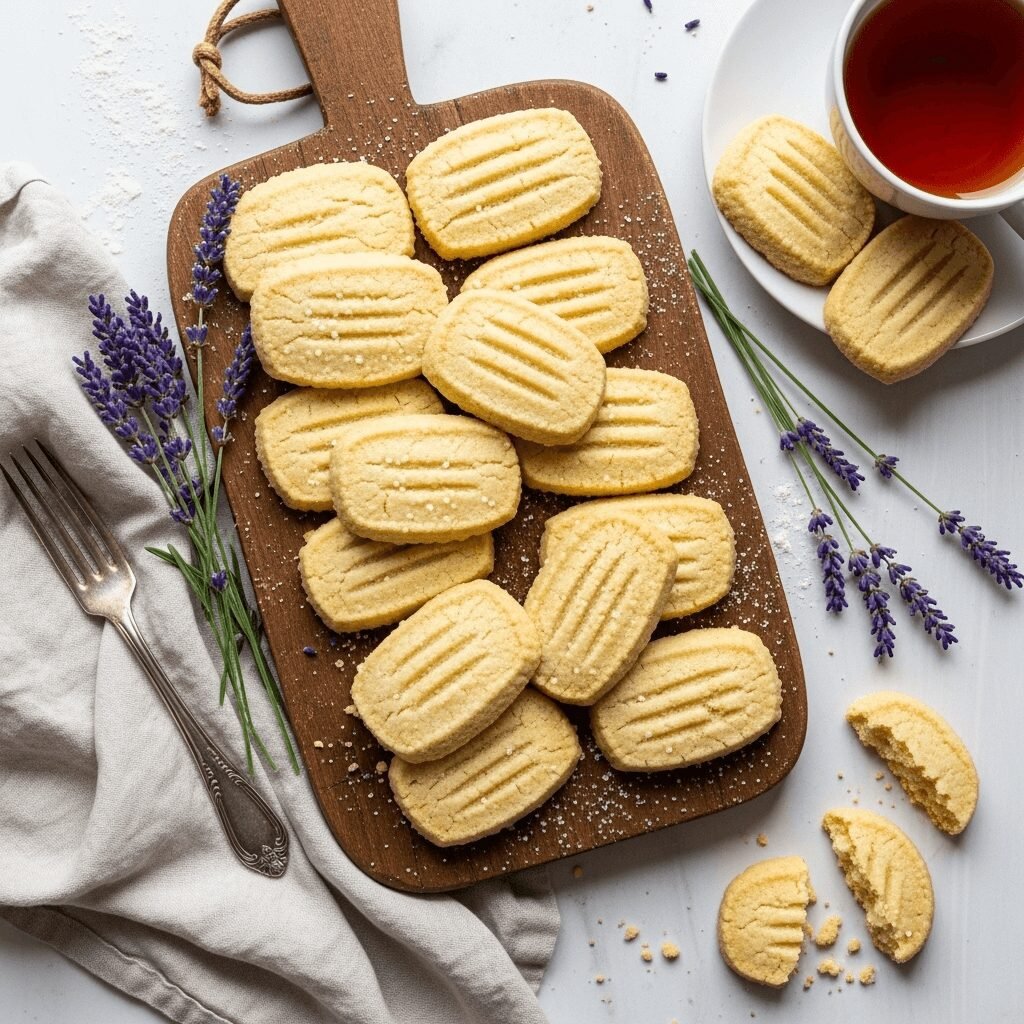
Traditional Scottish shortbread follows a sacred ratio: one part sugar, two parts butter, and three parts flour (sometimes called the “1-2-3” rule). The cookies were often baked in decorative wooden molds featuring intricate designs of thistles (Scotland’s national flower), Celtic knots, or clan symbols. These molded shortbreads were traditionally scored and pricked with a fork to prevent the dough from rising and to create the signature shortbread appearance we still love today.
In Scotland, shortbread remains deeply connected to celebrations and gift-giving. It’s customary to offer shortbread to first-footers (the first person to enter a home after midnight on New Year’s) and to serve it at Christmas alongside tea. The famous Walkers Shortbread company, founded in 1898 in the Scottish Highlands, helped spread this beloved treat worldwide, making shortbread synonymous with quality Scottish baking.
Why You’ll Love This Recipe
This classic shortbread cookie recipe honors the traditional Scottish method while being perfectly suited for modern American kitchens. The result is a cookie that’s crisp on the edges, tender in the middle, and bursting with pure butter flavor that simply cannot be replicated with substitutes.
Here’s why this recipe will become your go-to:
- Minimal ingredients – Just four simple ingredients you probably already have in your pantry
- No fancy equipment needed – Mix by hand or with a basic mixer, no food processor required
- Foolproof for beginners – The dough is extremely forgiving and easy to work with
- Naturally elegant – These cookies look and taste expensive without requiring advanced decorating skills
- Make-ahead friendly – The dough refrigerates beautifully and can be frozen for up to three months
- Customizable – Easily adapt with different flavors like vanilla, almond extract, lavender, or citrus zest
- Perfect for gifting – Shortbread stays fresh for weeks, making it ideal for holiday cookie boxes
- Allergy-friendly option – Naturally egg-free, making them suitable for those with egg allergies
- Budget-friendly luxury – Creates an impressive batch of cookies without expensive ingredients
- Crowd-pleaser – The mild, buttery flavor appeals to both kids and sophisticated palates
Whether you’re a nervous beginner baker or a seasoned pro looking for a reliable classic, this shortbread recipe delivers consistent, bakery-quality results every single time. The simple preparation also makes this an excellent recipe to bake with children—they’ll love cutting shapes and pressing designs into the dough!
Ingredient Notes
The beauty of shortbread lies in its simplicity, which means the quality of each ingredient really matters. Let’s break down what you’ll need:
Unsalted Butter – This is the star of the show! Use high-quality European-style butter with higher fat content (82% vs. 80%) if possible, as it creates an even richer flavor and more tender texture. The butter must be softened to room temperature but not melted or greasy. If you only have salted butter, reduce the added salt by half. Don’t even think about using margarine—it simply won’t produce that authentic shortbread taste and texture.
Granulated Sugar – Regular white sugar provides just the right amount of sweetness without overwhelming the butter flavor. Some bakers prefer superfine (caster) sugar because it dissolves more easily and creates a slightly finer texture. You can make your own by pulsing regular sugar in a food processor for 30 seconds. Avoid using powdered sugar as your only sweetener, as it contains cornstarch that can affect the texture.
All-Purpose Flour – Standard all-purpose flour works perfectly for this recipe. Some traditional recipes call for a portion of rice flour (about 1/4 cup flour replaced with rice flour), which creates an even more delicate, sandy texture. If you want to try this variation, it’s absolutely authentic and delicious. For a gluten-free version, use a 1:1 gluten-free baking flour blend, though the texture will be slightly different.
Salt – Just a pinch of fine sea salt or table salt enhances the butter flavor and prevents the cookies from tasting flat. Even though you’re using unsalted butter, this small amount of salt is essential for balancing the sweetness and bringing out all the flavors. Flaky sea salt sprinkled on top before baking also adds a lovely gourmet touch.
Optional Add-ins – While purists keep shortbread simple, you can add 1 teaspoon of vanilla extract, 1/2 teaspoon of almond extract, 1 tablespoon of finely grated citrus zest (lemon, orange, or lime), or 1 tablespoon of finely chopped fresh lavender or rosemary for creative variations. Chocolate-dipped shortbread is also divine!
Equipment Needed
You don’t need a fancy kitchen to make perfect shortbread cookies. Here’s what you’ll use:
- Large mixing bowl – For combining your ingredients
- Electric mixer or wooden spoon – A hand mixer or stand mixer makes quick work of creaming the butter and sugar, but a wooden spoon and some elbow grease work perfectly fine
- Measuring cups and spoons – Accurate measurements ensure consistent results
- Rubber spatula – For scraping down the bowl and folding in flour
- Rolling pin – If you’re rolling out the dough for cutouts (optional)
- Cookie cutters – Any shapes you like for cut-out cookies (optional)
- Baking sheets – Two standard half-sheet pans work best
- Parchment paper or silicone baking mats – Prevents sticking and ensures easy cleanup
- Fork – For creating the traditional pricked pattern on top
- Sharp knife – If you’re making shortbread fingers or wedges
- Wire cooling rack – Essential for cooling cookies properly to maintain crispness
- Small bowl – For the optional sugar coating
- Pastry brush – If you’re adding an egg wash or butter wash (optional)
Shortbread Cookies Recipe

These classic buttery shortbread cookies feature a tender, crumbly texture and rich flavor with just four simple ingredients. Perfect for holidays, gift-giving, or afternoon tea, this traditional Scottish recipe creates melt-in-your-mouth cookies that taste like pure luxury.
- Prep Time: 15 minutes
- Cook Time: 18-22 minutes
- Total Time: 1 hour 5 minutes
- Yield: 24 cookies (2-inch rounds) 1x
- Category: Dessert, Cookies
- Method: Baking
- Cuisine: Scottish
- Diet: Vegetarian
Ingredients
- 1 cup (226g) unsalted butter, softened to room temperature
- 1/2 cup (100g) granulated sugar, plus 2 tablespoons for coating (optional)
- 2 cups (240g) all-purpose flour, spooned and leveled
- 1/4 teaspoon fine sea salt
- 1 teaspoon vanilla extract (optional)
- 1-2 tablespoons heavy cream or milk (only if dough is too crumbly)
Instructions
- Prepare your workspace: Preheat your oven to 325°F (165°C). Line two baking sheets with parchment paper or silicone baking mats. Set aside.
- Cream the butter and sugar: In a large mixing bowl, beat the softened butter with an electric mixer on medium speed for about 2 minutes until it’s light and fluffy. Add the 1/2 cup sugar and continue beating for another 2-3 minutes until the mixture is pale and creamy. Scrape down the sides of the bowl as needed. This creaming process incorporates air and ensures your cookies will have the right texture.
- Add the dry ingredients: In a separate bowl, whisk together the flour and salt. With your mixer on low speed (or stirring with a wooden spoon), gradually add the flour mixture to the butter mixture. Mix until just combined and the dough starts to come together. Be careful not to overmix, as this can make the cookies tough. The dough should be crumbly but hold together when pressed. If it’s too dry and won’t form a ball, add heavy cream or milk one tablespoon at a time.
- Knead gently: Turn the dough out onto a clean work surface and knead it gently 3-4 times with your hands until it forms a smooth ball. The warmth of your hands will help bring the dough together. Don’t overwork it.
- Chill the dough (optional but recommended): Wrap the dough in plastic wrap and refrigerate for 30 minutes. This makes the dough easier to handle and helps the cookies maintain their shape during baking. If you’re short on time, you can skip this step, but chilled dough yields better results.
- Shape the cookies: You have several options here:
- For classic rounds: Roll the dough to 1/2-inch thickness on a lightly floured surface. Cut into 2-inch circles using a cookie cutter or drinking glass. Re-roll scraps and continue cutting.
- For shortbread fingers: Pat the dough into a rectangle about 1/2-inch thick. Cut into strips approximately 3 inches long and 1 inch wide.
- For traditional wedges: Press dough into an 8 or 9-inch round cake pan or tart pan. Score into 8-12 wedges with a knife. Prick all over with a fork.
- Add finishing touches: Place shaped cookies on prepared baking sheets, spacing them about 1 inch apart (they don’t spread much). Use a fork to prick each cookie 3-4 times in a decorative pattern—this is traditional and prevents bubbling. If desired, sprinkle the tops lightly with the remaining 2 tablespoons of sugar for a sweet, sparkly finish.
- Bake: Bake for 18-22 minutes, depending on size and thickness. The cookies should be set and just barely golden around the edges—they should remain quite pale on top. If they brown too much, they’ll taste slightly burnt. Start checking at 15 minutes if your cookies are on the smaller side.
- Cool properly: Remove from the oven and let the cookies cool on the baking sheet for 5 minutes. They’ll be very fragile when hot. Then carefully transfer them to a wire cooling rack to cool completely. The cookies will firm up as they cool and develop that classic shortbread snap.
- Serve or store: Once completely cool, serve immediately or store in an airtight container. The flavor actually improves after a day as the butter mellows.
Notes
- Room temperature butter is crucial – It should be soft enough to leave an indent when pressed but still hold its shape. If it’s too cold, the cookies will be tough; too warm, and they’ll spread.
- Don’t overmix the dough – Mix just until the flour disappears to avoid developing gluten, which creates tough cookies.
- Thickness matters – Keep cookies at least 1/2 inch thick. Thinner cookies brown too quickly and can become hard rather than tender.
- Watch the oven temperature – If your oven runs hot, reduce to 300°F. Shortbread should bake gently and remain pale.
- Scoring while warm – If baking in a pan, score the wedges as soon as it comes out of the oven while still warm, then let cool completely before separating.
Nutrition
- Serving Size: 1 cookie (based on 24 cookies)
- Calories: 112 kcal
- Sugar: 4g
- Sodium: 50mg
- Fat: 7.5g
- Saturated Fat: 4.7g
- Unsaturated Fat: 2.3g
- Trans Fat: 0.2g
- Carbohydrates: 11g
- Fiber: 0.3g
- Protein: 1.2g
- Cholesterol: 20mg
Nutritional information is an estimate based on standard ingredient measurements and may vary based on specific brands and modifications.
Tips & Variations
Flavor Variations:
- Lemon Shortbread: Add 2 tablespoons finely grated lemon zest and 1/2 teaspoon lemon extract to the dough
- Chocolate-Dipped: Once cooled, dip half of each cookie in melted dark chocolate and let set on parchment
- Lavender Shortbread: Add 1 tablespoon finely chopped culinary lavender (not too much or it becomes soapy)
- Almond Shortbread: Replace 1/2 cup flour with finely ground almonds and add 1/2 teaspoon almond extract
- Brown Butter Shortbread: Brown the butter first, let it cool to room temperature, then proceed with the recipe for a nutty, caramel flavor
- Spiced Shortbread: Add 1 teaspoon cinnamon, 1/4 teaspoon nutmeg, and 1/4 teaspoon ginger for a cozy holiday version
- Orange Cranberry: Add orange zest and fold in 1/2 cup finely chopped dried cranberries
- Rosemary Shortbread: Add 1 tablespoon finely minced fresh rosemary for a savory-sweet combination
Texture Modifications:
- For extra-tender cookies, replace 1/4 cup of the all-purpose flour with cornstarch or rice flour
- For a sandier texture (traditional Scottish style), use superfine sugar and add 2 tablespoons of rice flour
- For crispy edges with tender centers, increase baking temperature to 350°F and reduce baking time slightly
Decorating Ideas:
- Press a whole almond or pecan half into the center of each cookie before baking
- Drizzle cooled cookies with white chocolate or caramel
- Sandwich two cookies together with jam, lemon curd, or chocolate ganache
- Dust with powdered sugar for an elegant presentation
- Add a few drops of food coloring to create pastel shortbread for Easter or baby showers
Pro Chef Tips
Temperature control is everything: The most common mistake home bakers make is using butter that’s too soft or even melted. Professional bakers know that butter should be around 65°F—cool to the touch but pliable. If your butter is too warm, the cookies will spread and lose their shape. Pop the dough in the fridge for 15 minutes if you notice it’s getting greasy while you work.
The flour matters: While all-purpose flour works beautifully, pastry chefs often use a combination of all-purpose and cake flour (or add cornstarch) to reduce the protein content and create an even more tender crumb. The lower protein means less gluten development, which equals melt-in-your-mouth texture.
Invest in quality butter: Since butter is 50% of this recipe by weight, its quality dramatically impacts the final flavor. European-style butters like Kerrygold, Plugrá, or any butter with 82% butterfat content create noticeably richer, more flavorful cookies. The extra 2% fat makes a difference you can actually taste.
Use the reverse creaming method: For an even more tender texture, try adding the softened butter to the flour mixture first (reverse creaming), then adding the sugar. This coats the flour particles with fat before gluten can develop, resulting in a more delicate cookie. Professional bakers use this technique for the most tender shortbread.
Chill between steps: After shaping your cookies, pop the entire baking sheet in the refrigerator or freezer for 10-15 minutes before baking. This firms up the butter again and helps cookies maintain their shape better. Pastry chefs never skip this step for cut-out cookies.
Finish with flaky salt: Just before baking, brush cookies with a tiny bit of cream and sprinkle with flaky Maldon sea salt. This gourmet touch enhances the butter flavor and adds sophisticated contrast. It’s what separates homemade from artisan bakery-level shortbread.
Low and slow wins: Professional bakers often bake shortbread at even lower temperatures (300°F) for longer times (25-30 minutes) to ensure the cookies dry out slightly and develop maximum crispness without any browning. The goal is pale golden cookies that snap cleanly when broken.
Common Mistakes to Avoid
1. Overmixing the dough: Once you add the flour, mix only until it’s just incorporated. Overmixing develops gluten, which makes cookies tough and chewy rather than tender and crumbly. If using a stand mixer, switch to low speed or finish mixing by hand with a spatula.
2. Rolling the dough too thin: Shortbread needs to be at least 1/2 inch thick to achieve that perfect tender-crisp texture. Thinner cookies bake too quickly, brown too much, and become hard and crunchy rather than delicate. When in doubt, go thicker!
3. Baking at too high a temperature: Shortbread should bake gently at 325°F or lower. Higher temperatures cause the cookies to spread, brown too quickly on the outside while remaining raw in the middle, and lose their delicate texture. Patience pays off with shortbread—it’s not a cookie you want to rush.
4. Not letting them cool on the pan first: Shortbread cookies are extremely fragile when hot. If you try to move them immediately, they’ll crumble or break. Always let them set up for 5 minutes on the baking sheet before transferring to a cooling rack. Even better, let smaller cookies cool completely on the pan.
5. Using a cookie scoop or making them too uniform: This isn’t really a mistake, but traditional shortbread should have a rustic, handmade appearance. Don’t worry about making every cookie identical—slight variations are part of the charm. The fork pricks should be visible and the edges slightly irregular.
6. Storing them too soon: Make sure cookies are completely cool before storing, or condensation will form inside your container and make them soft and potentially moldy. Room temperature cookies only, please!
Storage & Meal Prep
Room Temperature Storage: Store completely cooled shortbread cookies in an airtight container at room temperature for up to 2 weeks. Layer cookies between sheets of parchment paper to prevent them from sticking together. Don’t refrigerate them, as this can actually make them soft rather than crisp due to moisture.
Long-Term Storage: For longer storage, shortbread freezes beautifully. Place cooled cookies in a freezer-safe container or bag with parchment between layers, and freeze for up to 3 months. Thaw at room temperature for about 30 minutes before serving—they’ll taste freshly baked!
Keeping Cookies Crisp: The enemy of crisp shortbread is moisture. Store cookies in a completely airtight container, and consider adding a food-safe silica packet (like those that come in vitamin bottles) to absorb any ambient moisture. If cookies do soften slightly, you can re-crisp them by placing on a baking sheet in a 300°F oven for 5 minutes.
Gift Packaging: Shortbread is perfect for gift-giving because it stays fresh for weeks. Package cooled cookies in decorative tins, cellophane bags tied with ribbon, or stack them in clear boxes. They’ll maintain their quality at room temperature for at least 2 weeks, making them ideal for shipping to loved ones.
Dough Storage: Unbaked shortbread dough keeps in the refrigerator for up to 1 week when tightly wrapped. Let it sit at room temperature for 10-15 minutes before rolling if it’s too firm.
Make-Ahead & Freezer Notes
Make-Ahead Dough: Shortbread dough is incredibly freezer-friendly and actually benefits from resting. Prepare the dough through step 4, shape it into a disk or log, wrap tightly in plastic wrap and then aluminum foil, and freeze for up to 3 months. When you’re ready to bake, thaw in the refrigerator overnight, let it sit at room temperature for 15 minutes to soften slightly, then proceed with rolling and cutting.
Freezing Shaped Cookies Before Baking: For ultimate convenience, cut out your cookies and freeze them on a baking sheet until solid (about 2 hours). Then transfer to a freezer bag. You can bake frozen cookies directly from the freezer—just add 2-3 minutes to the baking time. This method is perfect for holidays when you want to bake fresh cookies without the prep work.
Freezing Baked Cookies: Fully baked and cooled shortbread cookies freeze exceptionally well. Stack them with parchment paper between layers in an airtight container, and freeze for up to 3 months. Thaw at room temperature still sealed (to prevent condensation) for about 1 hour. The texture and flavor will be just as good as the day they were baked.
Best Reheating Method: While shortbread doesn’t need reheating, if you want to serve warm cookies or refresh day-old ones, place them on a baking sheet in a 300°F oven for 5-7 minutes. This will restore their crispness and make the butter flavor more pronounced. Let cool for just 2-3 minutes before serving so they’re warm but not hot.
Holiday Planning: Bake shortbread up to 4 weeks ahead of Christmas and store in airtight containers at room temperature, or bake 2 weeks ahead and freeze. This is a tremendous time-saver during the busy holiday season, and the cookies actually taste even better after a few days as the flavors meld.
Serving Suggestions
Shortbread cookies are wonderfully versatile and pair beautifully with so many things:
Beverages:
- Traditional afternoon tea (English Breakfast, Earl Grey, or Lady Grey)
- Rich hot chocolate or cocoa
- Espresso, cappuccino, or latte (Italian style—dip the cookie in your coffee!)
- Mulled wine or hot apple cider in winter
- Iced tea or lemonade in summer
- After-dinner port, sherry, or dessert wine
Accompaniments:
- Fresh berries (strawberries, raspberries, or blueberries)
- Lemon curd or orange marmalade for spreading
- Vanilla ice cream or gelato (make an ice cream sandwich!)
- Whipped cream and fresh fruit for a simple dessert
- Chocolate ganache or caramel sauce for dipping
- Clotted cream and jam (cream tea style)
- Greek yogurt and honey for breakfast
Dessert Presentations:
- Crumble shortbread over panna cotta or mousse
- Serve alongside fruit tarts or custards as a textural contrast
- Layer with whipped cream and berries for a simple trifle
- Use as a crust for cheesecake by crushing and mixing with melted butter
- Serve with cheese plates (shortbread pairs surprisingly well with sharp cheddar or blue cheese)
- Create a cookie butter by blending crushed shortbread with softened butter and a pinch of cinnamon
Occasion-Specific Ideas:
- Holiday cookie platters: Arrange with other Christmas cookies for variety
- Wedding favors: Package in clear cellophane bags with personalized ribbons
- Tea parties: Serve on tiered stands with finger sandwiches and petit fours
- Hostess gifts: Present in a decorative tin with a pretty bow
- Care packages: Ship to college students or military personnel (they travel well!)
FAQs Section
Q: Can I make shortbread without a mixer? A: Absolutely! Traditional shortbread was made entirely by hand for centuries. Simply cream the butter and sugar together using a wooden spoon and some elbow grease (this takes about 5 minutes of vigorous stirring), then mix in the flour until combined. The warmth of your hands actually helps bring the dough together when you knead it at the end.
Q: Why did my shortbread spread or lose its shape? A: This usually happens because the butter was too warm when mixing, or the dough wasn’t chilled before baking. Shortbread needs cold, firm butter to hold its shape. Next time, make sure your butter is cool room temperature (not greasy or shiny), and refrigerate the shaped cookies for 15-30 minutes before baking. Also check your oven temperature with an oven thermometer—if it’s running too hot, that can cause spreading.
Q: Can I make these cookies gluten-free? A: Yes, you can substitute the all-purpose flour with a 1:1 gluten-free baking flour blend (like Bob’s Red Mill or King Arthur Measure for Measure). The texture will be slightly different—perhaps a bit more crumbly—but still delicious. Some gluten-free bakers add 1 tablespoon of cornstarch to help with the texture. Rice flour is traditionally used in some Scottish shortbread, so gluten-free versions are actually quite authentic!
Q: My shortbread turned out hard and crunchy instead of tender. What went wrong? A: This typically happens from one of three issues: overmixing the dough (which develops gluten), baking at too high a temperature, or baking for too long. Shortbread should bake low and slow (325°F or lower) until just set. It should remain very pale—if it’s golden brown all over, it’s overbaked. The cookies should be tender enough to bite through easily but still snap cleanly when broken.
Q: Do I have to use unsalted butter, or can I use salted? A: You can absolutely use salted butter! Just reduce or omit the added salt in the recipe. I recommend reducing the salt to just a pinch (about 1/8 teaspoon) if using salted butter. The reason unsalted butter is preferred in baking is that salt levels vary by brand, so using unsalted gives you more control over the final flavor.
Q: Can I reduce the sugar to make healthier shortbread? A: You can reduce the sugar by up to 2 tablespoons, but I don’t recommend cutting it more than that. Sugar isn’t just for sweetness in this recipe—it also contributes to the tender, crisp texture. Shortbread with too little sugar can be dry and lack that delicate snap. If you’re looking for a less sweet cookie, shortbread is actually already on the subtle end of the sweetness spectrum compared to most cookies!
Q: Why do we prick shortbread with a fork? A: The fork pricks serve two purposes: they’re decorative (giving shortbread its traditional appearance), and they’re functional—preventing the cookies from puffing up or forming air bubbles as they bake. Since shortbread has no leavening agents, the butter creates steam that needs somewhere to escape. The holes also help the cookies bake more evenly throughout.
Q: How do I know when shortbread is done baking? A: Shortbread is done when the edges are just barely starting to turn golden and the centers are set (no longer shiny or wet-looking). The tops should remain quite pale—they shouldn’t brown. Gently touch the top of a cookie; it should feel firm and dry rather than soft and doughy. Remember, the cookies will firm up considerably as they cool, so don’t overbake trying to get them completely crisp in the oven.
Conclusion
There you have it—the ultimate classic shortbread cookie recipe that’s been perfected over centuries! These buttery, tender cookies prove that the simplest recipes are often the most sublime. With just a few basic ingredients and straightforward technique, you can create something truly special that brings warmth and joy to any occasion.
Whether you’re baking these classic shortbread cookies for a holiday cookie exchange, packaging them as heartfelt homemade gifts, serving them at an elegant tea party, or simply treating yourself to something wonderful with your afternoon coffee, I hope this recipe becomes a treasured staple in your baking repertoire. The beauty of shortbread is that it never goes out of style—it’s timeless, elegant, and absolutely delicious every single time.
I’d love to hear how your shortbread turns out! Did you stick with the classic version or try one of the flavor variations? Leave a comment below with your experience, and if you’re feeling generous, rate this recipe to help other home bakers. And don’t forget to save this recipe to your Pinterest boards so you can find it easily when the baking mood strikes—your future self will thank you when you’re searching for that perfect cookie recipe!
Happy baking, and may your kitchen always smell like butter and sugar! 🍪✨