Authentic Tres Leches Cake Recipe: Ultra-Moist Latin Dessert Perfection
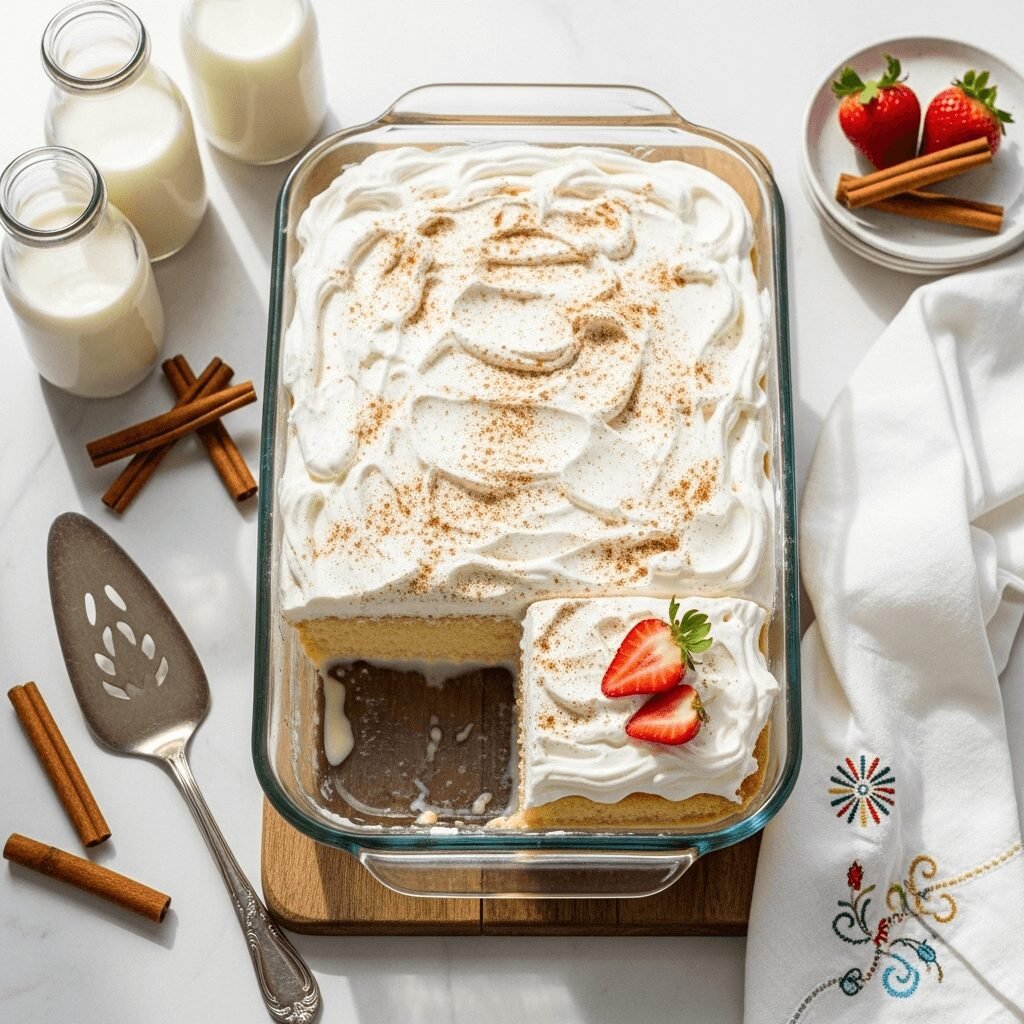
Tres Leches Cake is the crown jewel of Latin American desserts—a cloud-like sponge cake soaked in a luscious combination of three milks, topped with billowy whipped cream, and finished with a sprinkle of cinnamon. This isn’t just any cake; it’s an experience that transforms simple ingredients into something absolutely magical. Each forkful delivers an impossibly moist, melt-in-your-mouth texture that seems almost defiant of physics—how can something be this saturated yet so light and airy?
What makes this authentic tres leches cake recipe truly special is its perfect balance. The sponge cake is delicate enough to absorb every drop of the milk mixture without becoming soggy or falling apart, while the sweetness level hits that perfect spot where it’s indulgent without being cloying. It’s the kind of dessert that makes guests go quiet for a moment as they savor their first bite, followed inevitably by requests for the recipe.
Perfect for birthday celebrations, Cinco de Mayo parties, summer barbecues, quinceañeras, or simply when you want to impress with an authentic Latin dessert, this tres leches cake serves a crowd and actually tastes better after sitting overnight. The make-ahead nature makes it ideal for stress-free entertaining—you can prepare it the day before your gathering and let the flavors meld beautifully in the refrigerator. Whether you’re celebrating your heritage, exploring new cuisines, or just craving something incredibly delicious, this recipe delivers restaurant-quality results in your own kitchen.
History / Background
The origins of Tres Leches Cake are deliciously contested, with several Latin American countries claiming to be its birthplace. While the exact origin remains a sweet mystery, most food historians agree that the cake gained widespread popularity in the mid-20th century, likely emerging somewhere in Central America or Mexico during the 1940s and 1950s.
One compelling origin story traces tres leches to Nicaragua, where it’s considered a national treasure and features prominently at celebrations and family gatherings. Nicaraguans are fiercely protective of their claim to this dessert, and the cake holds deep cultural significance in the country. However, Mexico, Guatemala, and other Central American nations also have strong historical connections to the recipe, each adding their own regional touches.
The commercial influence on tres leches cannot be ignored. In the 1930s and 1940s, condensed milk and evaporated milk companies—particularly Nestlé—were expanding throughout Latin America and actively promoting recipes that used their products. Many believe that tres leches cake recipes appeared on the backs of these milk cans as a marketing strategy to encourage product sales. This commercial push helped standardize the recipe and spread it throughout Spanish-speaking countries.
The name “tres leches” literally translates to “three milks,” referring to the trinity of dairy that makes this cake legendary: evaporated milk (leche evaporada), sweetened condensed milk (leche condensada), and heavy cream or whole milk (crema o leche entera). Some traditional recipes also include a splash of rum or vanilla, though the three-milk soak remains the defining characteristic.
The cake gained popularity in the United States during the 1980s and 1990s as Latin American immigration increased and authentic restaurants began introducing American diners to traditional desserts. Today, tres leches cake has transcended its cultural origins to become a beloved dessert across diverse communities, appearing on restaurant menus from Miami to Los Angeles and everywhere in between. It’s celebrated for its incredible texture, simple elegance, and the way it brings people together—much like the cultures that created it.
What makes tres leches particularly special in Latin American culture is its role as a celebration cake. It’s not everyday dessert; it’s what you serve for birthdays, baptisms, graduations, and important family gatherings. The act of preparing tres leches for someone demonstrates love and care, as it requires patience and attention to detail. This cultural significance has been carefully preserved even as the recipe has spread globally.
Why You’ll Love This Recipe
This authentic tres leches cake recipe has been perfected to give you that incredibly moist, delicate texture that makes this dessert so legendary. Unlike many Americanized versions that can be heavy or overly sweet, this recipe stays true to its Latin American roots while being completely approachable for home bakers of all skill levels.
Here’s why this recipe will become your go-to celebration cake:
- Impossibly moist texture – That signature tres leches consistency where the cake is thoroughly soaked yet maintains perfect structure without falling apart
- Not overly sweet – Perfectly balanced sweetness that lets the milky richness shine through without being cloying
- Feeds a crowd easily – One 9×13-inch cake serves 12-15 people generously, making it ideal for parties and gatherings
- Make-ahead friendly – Actually tastes better the next day after the milk mixture fully soaks in, making it perfect for stress-free entertaining
- Authentic flavor – This recipe delivers the genuine taste you’d find in Latin American bakeries and family kitchens
- Simple ingredients – Uses everyday pantry staples and readily available dairy products with no exotic ingredients needed
- Foolproof sponge cake – Step-by-step instructions ensure your cake base comes out light, airy, and perfect for soaking
- Impressive presentation – Looks stunning with its snowy whipped cream topping and elegant simplicity
- Customizable – Easy to adapt with different flavors, fruits, or toppings while maintaining the classic tres leches foundation
- Budget-friendly – Costs a fraction of what you’d pay at a bakery and serves many people
- Cultural connection – Experience authentic Latin American cuisine and share this treasured dessert tradition with your family
- No special equipment – Made with basic baking tools you likely already own
Ingredient Notes
Understanding your ingredients is essential for tres leches success. Here’s what makes this cake so special:
For the Sponge Cake:
All-Purpose Flour – Creates the structure for your cake. Don’t overmix once you add flour, as this develops gluten and creates a tough cake. We want light and airy! Substitution: Cake flour makes an even more delicate crumb.
Baking Powder – The leavening agent that makes the cake rise and creates that light, spongy texture essential for absorbing the milk mixture. Make sure it’s fresh (test by adding to water—it should fizz).
Eggs – Separated into yolks and whites. The yolks add richness and color, while whipped egg whites create incredible volume and lightness. Room temperature eggs separate more easily and whip to greater volume.
Granulated Sugar – Sweetens the cake base. We use less sugar in the cake itself since the milk soak adds plenty of sweetness. No substitutions recommended here.
Whole Milk – Adds moisture to the batter. Don’t use skim milk; you need the fat for proper texture. Substitution: 2% milk works in a pinch.
Vanilla Extract – Essential for flavor depth. Use pure vanilla extract, never imitation. Mexican vanilla is traditional and adds authentic flavor if you can find it.
For the Tres Leches Mixture (The Three Milks):
Evaporated Milk – Milk with 60% of the water removed, creating a creamy, slightly caramelized flavor. This is NOT the same as condensed milk! It’s unsweetened and essential for authentic taste.
Sweetened Condensed Milk – Thick, sweet, and sticky, this provides much of the dessert’s signature sweetness and richness. Don’t use “eagle brand” fat-free versions; you need the full-fat product.
Heavy Cream or Whole Milk – The third milk! Traditional recipes vary—some use heavy cream for extra richness, others use whole milk for a lighter version. Heavy cream is most common and creates the most luxurious texture.
Optional: Rum or Vanilla – Many authentic recipes add a splash of white rum (1-2 tablespoons) to the milk mixture for depth. Dark rum or additional vanilla extract also works beautifully.
For the Topping:
Heavy Whipping Cream – Must be cold and full-fat to whip properly. Creates that signature cloud-like topping. No substitutions work as well, though stabilized whipped cream lasts longer.
Powdered Sugar – Sweetens and helps stabilize the whipped cream. The cornstarch in powdered sugar prevents the cream from deflating quickly.
Ground Cinnamon – The traditional finishing touch. Just a light dusting adds warmth and visual appeal. Some regions use cinnamon sticks or fresh strawberries instead.
Equipment Needed
Gathering your tools before starting makes the baking process smooth and stress-free:
- 9×13-inch baking dish (glass or ceramic works best for even heat distribution)
- Large mixing bowls (at least 3—one for dry ingredients, one for wet, one for egg whites)
- Electric mixer (stand mixer or hand mixer—essential for whipping egg whites and cream)
- Measuring cups and spoons (for accurate measurements)
- Fine-mesh sieve or flour sifter (for sifting dry ingredients)
- Rubber spatula (for folding ingredients gently)
- Fork or wooden skewer (for poking holes in the cake)
- Whisk (for combining milk mixture)
- Plastic wrap or aluminum foil (for covering cake while it soaks)
- Offset spatula or butter knife (for spreading whipped cream topping)
- Cooling rack (for cooling the cake before adding milk mixture)
PrintAuthentic Tres Leches Cake Recipe: Ultra-Moist Latin Dessert Perfection

An authentic, ultra-moist Tres Leches Cake featuring light sponge cake soaked in a sweet mixture of three milks and topped with billowy whipped cream. This traditional Latin American dessert is perfect for celebrations and actually improves overnight, making it ideal for make-ahead entertaining.
- Prep Time: 25 minutes
- Cook Time: 30 minutes
- Total Time: 4 hours 55 minutes (including soaking time)
- Yield: 12-15 servings 1x
- Category: Dessert
- Method: Baking
- Cuisine: Latin American
- Diet: Vegetarian
Ingredients
ScaleFor the Sponge Cake:
- 1 1/2 cups all-purpose flour
- 1 teaspoon baking powder
- 1/2 teaspoon salt
- 5 large eggs, separated (room temperature)
- 1 cup granulated sugar, divided
- 1/3 cup whole milk
- 1 teaspoon vanilla extract
For the Tres Leches Mixture:
- 1 can (12 oz) evaporated milk
- 1 can (14 oz) sweetened condensed milk
- 1 cup heavy cream (or whole milk)
- 2 tablespoons rum or 1 teaspoon vanilla extract (optional)
For the Whipped Cream Topping:
- 2 cups heavy whipping cream, cold
- 3 tablespoons powdered sugar
- 1/2 teaspoon vanilla extract
- Ground cinnamon for dusting
Instructions
- Prepare your pan and oven: Preheat oven to 350°F (175°C). Grease a 9×13-inch baking dish with butter or cooking spray, then lightly flour it, tapping out excess. This prevents sticking and ensures easy serving.
- Sift dry ingredients: In a medium bowl, sift together flour, baking powder, and salt. Sifting is crucial for a light texture—it aerates the flour and removes lumps. Set aside.
- Separate eggs carefully: Separate egg whites and yolks into two large bowls, ensuring no yolk gets into the whites (even a tiny bit prevents proper whipping). Let both come to room temperature if they aren’t already.
- Beat egg yolks: Using an electric mixer on medium-high speed, beat egg yolks with 3/4 cup sugar for 2-3 minutes until pale yellow and creamy. Add milk and vanilla extract, beating until well combined.
- Make meringue: In a separate clean, dry bowl, beat egg whites on medium speed until soft peaks form. Gradually add remaining 1/4 cup sugar while continuing to beat on high speed until stiff, glossy peaks form (about 3-4 minutes). This is crucial for cake lightness!
- Fold gently: Pour egg yolk mixture into flour mixture, gently folding with a rubber spatula just until combined. Don’t overmix! Now gently fold in the whipped egg whites in three additions, being careful not to deflate them. Use a folding motion rather than stirring.
- Bake the cake: Pour batter into prepared pan, smoothing the top gently. Bake for 25-30 minutes until the top is golden and a toothpick inserted in the center comes out clean. The cake should spring back when lightly touched.
- Cool completely: Remove from oven and let cool in the pan on a wire rack for at least 30 minutes. The cake must be completely cool before adding the milk mixture, or it will become mushy.
- Prepare tres leches mixture: In a large bowl or pitcher, whisk together evaporated milk, sweetened condensed milk, heavy cream, and rum or vanilla if using. Mix until completely smooth and well combined.
- Poke holes: Once cake is cool, use a fork or wooden skewer to poke holes all over the surface, spacing them about 1/2 inch apart. Poke all the way to the bottom—this allows the milk to penetrate throughout.
- Pour milk mixture slowly: Gradually pour the tres leches mixture over the entire cake, allowing it to absorb before adding more. Start at the edges and work your way to the center. Pour slowly and evenly to ensure complete absorption. Reserve about 1/4 cup if you want to add more later.
- Refrigerate and soak: Cover the cake tightly with plastic wrap and refrigerate for at least 4 hours or preferably overnight. This soaking time is essential—the longer it sits, the better it tastes!
- Make whipped cream topping: When ready to serve, beat cold heavy cream with powdered sugar and vanilla on medium-high speed until stiff peaks form (3-4 minutes). Don’t overbeat or you’ll make butter!
- Top and serve: Spread whipped cream evenly over the soaked cake. Dust lightly with ground cinnamon using a fine-mesh sieve. Slice and serve cold. Optional: garnish with fresh strawberries or maraschino cherries.
Notes
- Cake must be completely cool before adding milk mixture to prevent sogginess
- For best flavor, make at least 4 hours ahead or preferably overnight
- Don’t skip poking holes—this is essential for milk absorption
- Use full-fat dairy products for authentic taste and texture
- Fold egg whites gently to maintain airiness in the batter
- Store covered in refrigerator; whipped cream topping lasts 2-3 days
- Can make without rum for family-friendly version
- For extra stability, add 1 tablespoon cornstarch to whipped cream
Nutrition
- Serving Size: 1 slice (1/12 of cake)
- Calories: 385
- Sugar: 42g
- Sodium: 185mg
- Fat: 18g
- Saturated Fat: 11g
- Unsaturated Fat: 6g
- Trans Fat: 0g
- Carbohydrates: 48g
- Fiber: 0.5g
- Protein: 9g
- Cholesterol: 135g

Tips & Variations
The beauty of tres leches is that once you master the basic technique, you can create countless delicious variations:
Flavor Variations:
- Coconut Tres Leches – Replace heavy cream in the milk mixture with coconut milk and add 1/2 cup shredded coconut to the batter. Top with toasted coconut flakes
- Chocolate Tres Leches – Add 1/4 cup cocoa powder to the dry ingredients and reduce flour by 1/4 cup. Drizzle with chocolate sauce before serving
- Coffee Tres Leches – Add 2 tablespoons instant espresso powder to the milk mixture for a sophisticated twist
- Dulce de Leche Tres Leches – Swirl 1/2 cup dulce de leche into the milk mixture before pouring over cake
- Strawberry Tres Leches – Top with fresh macerated strawberries or strawberry sauce along with whipped cream
Topping Variations:
- Add fresh berries (strawberries, raspberries, or mixed berries) on top of whipped cream
- Drizzle with caramel or chocolate sauce for extra decadence
- Garnish with toasted almonds or pecans for crunch contrast
- Use cream cheese frosting instead of plain whipped cream for tangy richness
- Top with maraschino cherries for a traditional Latin American presentation
- Sprinkle with cocoa powder instead of cinnamon for chocolate lovers
Dietary Adaptations:
- Lighter version – Use 2% milk instead of heavy cream in the milk mixture and use light whipped topping
- Rum-free – Simply omit rum and increase vanilla extract to 2 teaspoons
- Gluten-free – Replace all-purpose flour with gluten-free 1:1 baking flour
- Individual servings – Bake in muffin tins or ramekins for portion-controlled single servings
Regional Variations:
- Mexican-style – Add a touch of ground cinnamon to the cake batter itself
- Caribbean-style – Increase rum to 1/4 cup and add lime zest to whipped cream
- Colombian-style – Soak with arequipe (Colombian dulce de leche) mixed into milk
Pro Chef Tips
These professional techniques will elevate your tres leches from good to absolutely extraordinary:
Perfect your meringue: The secret to ultra-light sponge cake is properly whipped egg whites. Beat them in a completely clean, dry bowl (any fat prevents proper whipping). Start on medium speed until foamy, then increase to high as you add sugar gradually. They’re ready when you can turn the bowl upside down without them moving—but don’t overbeat or they’ll become grainy and deflate.
Temperature matters: All ingredients should be room temperature for best incorporation, except the heavy cream for whipping—that must be cold. Room temperature eggs separate more easily, beat to greater volume, and incorporate more smoothly into batter.
Fold, don’t stir: When incorporating egg whites into the batter, use a gentle folding motion with a rubber spatula. Cut down through the center, sweep across the bottom, and bring the spatula up along the side. Rotate the bowl and repeat. This preserves the air bubbles you worked so hard to create.
Strategic hole-poking: Use a sturdy fork or wooden skewer to poke holes about 1/2 inch apart, going all the way to the bottom. Pay special attention to the corners and edges where milk tends to pool. More holes mean better absorption and more even distribution of the tres leches mixture.
Pour in stages: Don’t dump all the milk mixture at once! Pour about 1/3 of the mixture over the cake, let it absorb for 2-3 minutes, then add another third, and finally the rest. This prevents overflow and ensures the entire cake—not just the edges—gets properly soaked.
Let it rest overnight: While 4 hours is the minimum soaking time, overnight refrigeration transforms this cake. The milk mixture distributes more evenly, flavors meld beautifully, and the texture becomes impossibly creamy. Professional bakers always make tres leches at least 12 hours ahead.
Stabilize your whipped cream: To prevent weeping and deflating, add 1 tablespoon of cornstarch or 1 teaspoon of unflavored gelatin (bloomed in 2 tablespoons water) to your whipped cream. This keeps it fluffy and beautiful for days.
Presentation perfection: For clean slices, wipe your knife between cuts. A hot, wet knife glides through the soaked cake more easily and creates pristine edges. Dry it thoroughly before the next cut.
Common Mistakes to Avoid
Even experienced bakers can stumble with tres leches. Here’s how to avoid the most common pitfalls:
Adding milk mixture to hot cake: This is the number one mistake! If the cake isn’t completely cool, adding liquid causes it to become mushy, fall apart, and develop an unpleasant texture. Always wait at least 30 minutes for cooling, and the cake should feel room temperature to touch.
Not poking enough holes: Insufficient holes mean poor milk absorption, resulting in a dry cake with pools of liquid on top. Be aggressive with your fork or skewer—you want holes every 1/2 inch covering the entire surface. Don’t worry about the appearance; the whipped cream topping covers everything.
Deflating the egg whites: Overmixing or stirring too vigorously after adding egg whites destroys all those air bubbles, resulting in a dense, heavy cake that can’t absorb milk properly. Use gentle folding motions and accept that you’ll see some white streaks—they’ll disappear during baking.
Using the wrong milk products: Evaporated milk is NOT the same as condensed milk! Evaporated milk is unsweetened; condensed milk is very sweet. Make sure you’re using the correct cans. Also, don’t use low-fat versions—you need full-fat dairy for proper texture and authentic taste.
Overbaking the cake: A dry sponge cake can’t absorb milk properly. Remove the cake when a toothpick comes out clean but the top still looks slightly moist and springs back when touched. It will continue cooking slightly from residual heat.
Forgetting to grease AND flour the pan: Greasing alone isn’t enough for this delicate cake. You need both butter/oil and flour to ensure the cake releases cleanly. Alternatively, use parchment paper on the bottom.
Serving too cold: While tres leches should be refrigerated, serving it directly from the fridge mutes flavors. Let it sit at room temperature for 10-15 minutes before serving for best taste and texture.
Storage & Meal Prep
Proper storage keeps your tres leches cake fresh and delicious:
Refrigerator Storage: Tres leches MUST be stored in the refrigerator due to the dairy content. Cover tightly with plastic wrap or aluminum foil (or use a cake carrier) to prevent it from absorbing refrigerator odors. With the whipped cream topping, the cake stays fresh for 3-4 days. Without topping, the soaked cake lasts up to 5 days.
Best Container: If you have a cake carrier with a tight-fitting lid, this is ideal. Otherwise, tent aluminum foil over the cake without letting it touch the whipped cream, or use toothpicks to create a “roof” that keeps plastic wrap from sticking to the topping.
Preventing Soggy Bottom: Some people worry about the cake becoming too soggy, but authentic tres leches should be very moist! If you prefer slightly less saturation, reserve about 1/4 cup of the milk mixture and add it only if needed after the initial soak.
Serving Cold: Unlike many cakes, tres leches is best served chilled. The cold temperature enhances the refreshing quality and maintains the whipped cream topping. Let it sit at room temperature for just 5-10 minutes before serving for optimal flavor.
Without Whipped Cream: If you know you won’t finish the cake within a couple days, consider adding the whipped cream topping just before serving. The soaked cake without topping lasts longer (up to 5 days) and you can top individual slices as needed.
Leftover Slices: Individual slices can be covered and stored for easy grab-and-go desserts. They’re perfect for packing in lunch boxes or enjoying as an afternoon treat.
Make-Ahead & Freezer Notes
Tres leches is one of the best make-ahead desserts, actually improving with time:
Make-Ahead Timeline (Highly Recommended):
- Day 1: Bake the sponge cake, let cool completely, poke holes, and add the tres leches mixture. Cover and refrigerate overnight.
- Day 2: Add whipped cream topping 2-4 hours before serving. This allows flavors to meld while keeping the whipped cream fresh and fluffy.
Up to 2 Days Ahead: You can make the entire cake (including whipped cream topping) up to 2 days before serving. Cover carefully and refrigerate. The whipped cream may lose some volume over time, but the taste remains excellent.
Freezing the Sponge Cake: The unfilled sponge cake freezes beautifully! Wrap cooled cake tightly in plastic wrap, then aluminum foil. Freeze for up to 3 months. Thaw overnight in refrigerator, then proceed with poking holes and adding milk mixture.
Freezing Assembled Cake: While possible, freezing the milk-soaked cake isn’t ideal. The texture changes slightly upon thawing—it becomes somewhat icier. If you must freeze it, do so WITHOUT the whipped cream topping. Wrap tightly and freeze for up to 1 month. Thaw in refrigerator overnight and add fresh whipped cream before serving.
Freezing Individual Slices: Cut the soaked cake (without whipped cream topping) into individual portions, wrap each tightly in plastic wrap, then place in a freezer bag. Freeze for up to 1 month. Thaw individual slices in the refrigerator for 4-6 hours, add fresh whipped cream, and serve.
Best Practice: For make-ahead entertaining, prepare the soaked cake 1-2 days before your event. Add the whipped cream topping the morning of or a few hours before serving for the freshest presentation and best texture.
Serving Suggestions
Tres leches is a complete dessert on its own, but here are some delicious accompaniments:
Traditional Pairings:
- Strong coffee – Café con leche or espresso cuts through the sweetness perfectly
- Hot chocolate – Traditional Mexican hot chocolate with cinnamon complements the cake beautifully
- Horchata – This sweet rice drink is a classic Mexican pairing
- Fresh fruit – Sliced strawberries, mango, or mixed berries add freshness and color contrast
Beverage Pairings:
- Sweet dessert wines like Moscato or late harvest Riesling
- Coffee-based cocktails like Mexican coffee with Kahlúa
- Champagne or prosecco for celebrations
- Sweet iced tea for casual summer gatherings
- Cold milk (particularly popular with children)
Serving Occasions:
- Birthday parties and quinceañeras
- Cinco de Mayo celebrations
- Summer barbecues and potlucks
- Holiday gatherings (Christmas, Easter, Mother’s Day)
- Bridal and baby showers
- Family reunions
- Cultural heritage celebrations
Presentation Ideas:
- Serve on colorful Mexican talavera plates for authentic flair
- Garnish each slice with a cinnamon stick
- Add fresh edible flowers like orchids or roses for elegant events
- Create a dessert bar with various toppings (berries, chocolate sauce, caramel)
- Serve in individual glass cups or mason jars for parfait-style presentation
Side Additions:
- Cajeta (Mexican caramel) drizzled on the plate
- Fresh whipped cream dollop on the side
- Chocolate shavings for chocolate lovers
- Toasted coconut flakes for tropical flair
- Crushed graham crackers for textural contrast
FAQs Section
Q: Why is my tres leches cake soggy and falling apart?
A: This usually happens when the cake is still warm when you add the milk mixture, or if you poured it too quickly without letting it absorb gradually. Always wait until the cake is completely cool (at least 30 minutes), and pour the milk mixture in stages, allowing absorption between additions. Also ensure your cake was fully baked—an underbaked cake can’t hold structure when soaked.
Q: Can I make tres leches cake without eggs?
A: Eggs are essential for the traditional sponge cake structure, especially since you need whipped egg whites for that light, airy texture. While egg substitutes exist, they won’t create the same delicate crumb that absorbs milk so perfectly. For best results, stick with eggs or look for a specifically developed vegan tres leches recipe that uses different techniques.
Q: How do I know when the cake has absorbed enough milk?
A: You’ll pour all the milk mixture over the cake—that’s the whole point of tres leches! The cake should look completely saturated, possibly with a thin layer of liquid on top (which will absorb during refrigeration). If after 4 hours there’s still significant pooling, you can carefully spoon some off, but usually the cake absorbs everything given enough time.
Q: Can I use a different size pan?
A: The 9×13-inch pan is traditional and works best, but you can adapt. For an 8×8-inch pan, cut the recipe in half. For two 9-inch round pans, use the full recipe and divide batter between pans. The key is maintaining the proper cake thickness (about 1-1.5 inches) so it can absorb milk without falling apart. Adjust baking time accordingly—thinner cakes bake faster.
Q: Why does my whipped cream topping deflate or become watery?
A: This happens when cream isn’t cold enough, is overbeaten (turning into butter), or sits too long without stabilization. Use cream straight from the refrigerator and beat just until stiff peaks form. For longer-lasting topping, add 1 tablespoon cornstarch or dissolved gelatin to stabilize it. Also ensure you’re using heavy whipping cream (not half-and-half or whipping cream), which has sufficient fat content.
Q: Is tres leches supposed to be this wet?
A: Yes! Authentic tres leches is extremely moist—almost pudding-like in texture. It should be thoroughly soaked but still hold together when sliced. If you prefer less saturation, reserve about 1/4 of the milk mixture, but understand this isn’t traditional. The name literally means “three milks,” celebrating that ultra-moist characteristic.
Q: Can I make tres leches ahead for a party?
A: Absolutely! Tres leches is one of the best make-ahead desserts. In fact, it tastes better after sitting overnight as flavors meld and milk distributes evenly. Make the soaked cake 1-2 days ahead and refrigerate covered. Add whipped cream topping the morning of your event or a few hours before serving for freshest presentation.
Conclusion
Congratulations! You now have everything you need to create an authentic, show-stopping Tres Leches Cake that will transport your taste buds straight to Latin America. This isn’t just a recipe; it’s a piece of culinary history that you’re bringing into your kitchen and sharing with the people you love. The magic of tres leches lies not just in its impossibly moist texture or its perfect sweetness, but in the joy it brings to gatherings and the memories created around each slice.
Whether you’re honoring your cultural heritage, exploring new cuisines, or simply craving something extraordinary, this tres leches cake delivers every single time. The best part? It’s surprisingly simple to make, especially now that you understand all the techniques, tips, and secrets that professional bakers use. That light, airy sponge soaked in the sweet trinity of milks and crowned with pillowy whipped cream is within your reach—and it’s absolutely worth the minimal effort required.
Remember, tres leches actually tastes better the next day, making it the ultimate stress-free dessert for entertaining. Prepare it the night before your celebration, and you’ll have one less thing to worry about while enjoying a dessert that looks and tastes like it came from an upscale Latin American bakery.
Now it’s your turn to experience the magic! Head to your kitchen, gather your ingredients, and create this beloved dessert. Don’t forget to save this recipe to your Pinterest boards so you can find it easily whenever a celebration calls for something special (which, let’s be honest, is often!).
I’d absolutely love to hear about your tres leches adventures! Drop a comment below telling me how your cake turned out, any creative variations you tried, or share it with friends who need this recipe in their lives. Did you make it for a special occasion? Did your family go back for seconds? Share your experience—I read every comment and your feedback helps other home bakers succeed!
Now go forth and create some tres leches magic! ¡Buen provecho! 🍰✨