Perfect Swiss Roll Recipe: Light, Fluffy & Easier Than You Think!

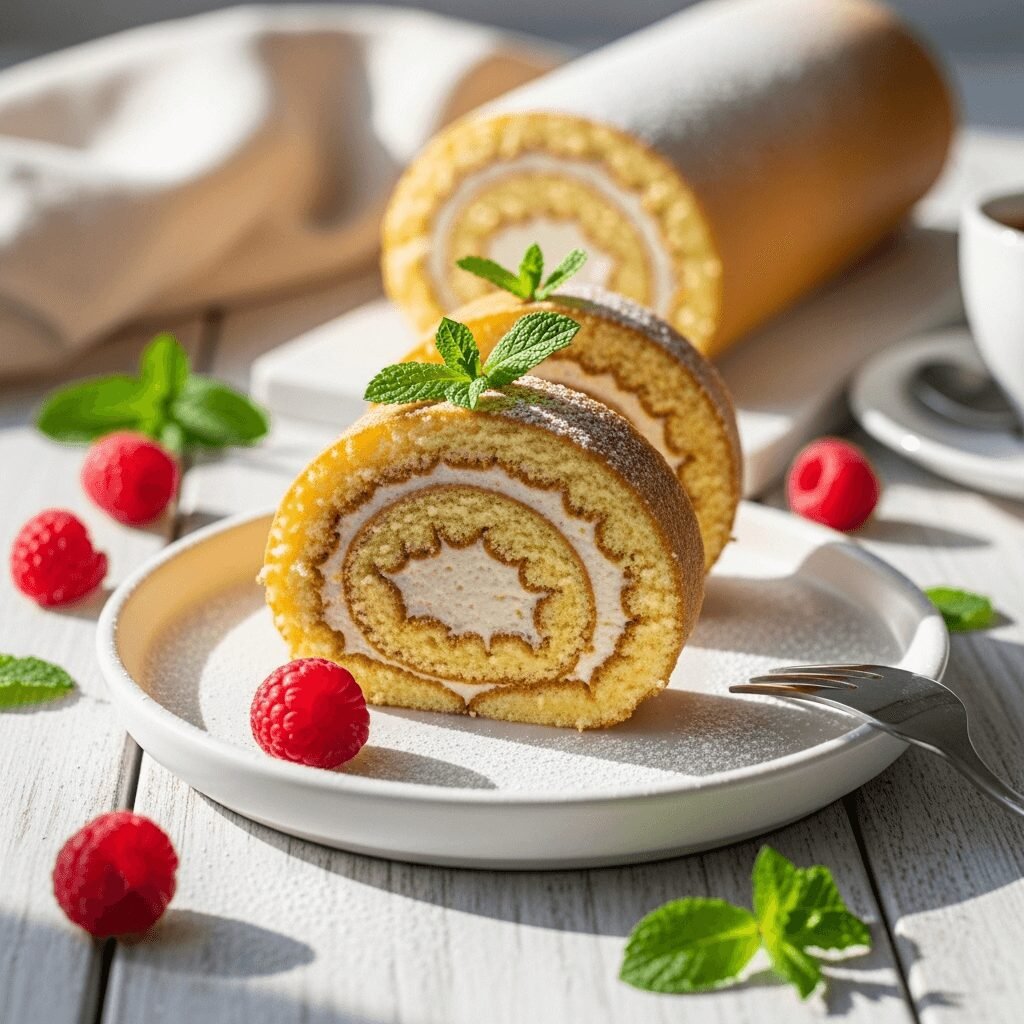
There’s something absolutely magical about slicing into a perfectly swirled Swiss roll and revealing those gorgeous spiral layers inside. This classic dessert—a thin, airy sponge cake rolled around sweet filling—looks incredibly impressive but is surprisingly achievable for home bakers of all skill levels.
A Swiss roll (also called a jelly roll in America or a roulade in France) is essentially a flat sponge cake baked in a shallow pan, spread with filling while still warm, then carefully rolled into a cylinder. The result? A stunning dessert that’s perfect for afternoon tea, birthday celebrations, holiday gatherings, or any time you want to wow your guests without spending hours in the kitchen.
What makes this recipe truly special is that it produces a cake that’s tender enough to roll without cracking, yet sturdy enough to hold its beautiful shape. Whether you fill yours with classic jam and whipped cream, chocolate ganache, buttercream, or fresh fruit, you’ll have a showstopping dessert that tastes every bit as good as it looks.
History / Background
The Swiss roll has a fascinatingly unclear origin story, despite its confident name. Surprisingly, this beloved dessert didn’t actually originate in Switzerland! The term “Swiss roll” is primarily used in the UK and Commonwealth countries, while Americans know it as a “jelly roll” and the French call it a “roulade.”
Most food historians believe the Swiss roll was invented in Central Europe during the 19th century, when rolled cakes became fashionable in Austrian and German bakeries. The technique of rolling a thin sponge cake spread with filling became popular across Europe during the Victorian era, when afternoon tea culture was at its height.
The name “Swiss roll” likely comes from the cake’s resemblance to Swiss rolls of fabric or carpet, rather than any connection to Switzerland itself. By the early 1900s, rolled cakes had become a staple in British and American home baking, with recipes appearing in popular cookbooks of the era.
During World War II, when ingredients were rationed, Swiss rolls became even more popular because they required relatively few eggs compared to traditional layer cakes. The technique spread globally, and today you’ll find variations everywhere—from Japan’s fluffy roll cakes to Latin America’s brazo de reina to the classic American Ho-Ho snack cakes.
What started as an elegant teatime treat has evolved into a versatile dessert canvas. Modern bakers create Swiss rolls in every flavor imaginable, from traditional raspberry jam to decadent chocolate, matcha green tea, pumpkin spice, and everything in between.
Why You’ll Love This Recipe
This Swiss roll recipe strikes the perfect balance between impressive presentation and manageable technique. I’ve tested this recipe dozens of times to ensure it works beautifully every single time, even for nervous first-time bakers.
Here’s why this recipe will become your go-to:
- Surprisingly simple – Despite looking fancy, you only need basic ingredients and about 30 minutes of active time
- Foolproof rolling technique – My step-by-step method prevents cracking and ensures a tight, beautiful spiral
- Light and fluffy texture – The cake is tender and airy, not dense or dry like some Swiss rolls can be
- Endlessly customizable – Use any filling you love, from classic jam to chocolate ganache to cream cheese frosting
- Make-ahead friendly – Bake the cake a day ahead and assemble when you’re ready
- Budget-friendly – Uses pantry staples without expensive or specialty ingredients
- Perfect for any occasion – Elegant enough for holidays, easy enough for weeknight desserts
- Freezer-friendly – Make extras and freeze for unexpected guests or future celebrations
Ingredient Notes
Let’s talk about what makes this Swiss roll so wonderfully light and rollable. Each ingredient plays a crucial role in creating that perfect texture.
Eggs – The foundation of your Swiss roll. You’ll separate the eggs because whipping the whites creates the airy structure that makes the cake light enough to roll. Use room temperature eggs—they whip up much better than cold ones.
Granulated Sugar – Sweetens the cake and helps stabilize the egg whites. The sugar gets divided between the yolks and whites for optimal texture.
All-Purpose Flour – Provides just enough structure. I don’t recommend cake flour here; all-purpose gives you the perfect balance of tenderness and strength. Sift it to avoid lumps and ensure an even texture.
Baking Powder – Gives a little extra lift to help the cake stay tender. Don’t skip this even though the whipped eggs provide most of the rise.
Vanilla Extract – Adds warmth and depth of flavor. Use pure vanilla extract for the best taste, not imitation.
Salt – Enhances all the other flavors and balances the sweetness. Just a pinch makes a noticeable difference.
Powdered Sugar – Used for dusting the towel before rolling. This prevents sticking and adds a touch of sweetness to the outside of your roll.
Filling – This recipe is incredibly versatile. Classic options include jam or jelly (raspberry, strawberry, or apricot are traditional), whipped cream, buttercream frosting, chocolate ganache, lemon curd, or cream cheese frosting. You’ll need about 1 to 1½ cups of filling.
Substitutions: For a gluten-free version, use a 1:1 gluten-free baking flour blend. If you’re avoiding refined sugar, you can use coconut sugar in the cake, though the texture will be slightly denser.
Equipment Needed
Having the right tools makes rolling a Swiss roll much easier and more successful. Here’s what you’ll need:
- 15×10-inch jelly roll pan or rimmed baking sheet – The specific size matters for getting the right cake thickness
- Parchment paper – Essential for easy release; don’t use wax paper as it can stick
- Electric mixer (stand or hand-held) – You need good volume in those egg whites, which is hard to achieve by hand
- Large mixing bowls – At least two for separating egg whites and yolks
- Clean kitchen towel or tea towel – For rolling the cake while it’s warm
- Fine-mesh sieve – For sifting flour and dusting powdered sugar
- Rubber spatula – For folding ingredients gently without deflating the batter
- Wire cooling rack – Allows air circulation while the cake cools
- Sharp knife – For trimming edges and slicing the finished roll
- Offset spatula – Makes spreading filling easier and more even
Swiss Roll Recipe

A classic Swiss roll with light, fluffy sponge cake rolled around your favorite filling. This foolproof recipe creates a tender cake that rolls beautifully without cracking, perfect for any celebration or afternoon tea.
- Prep Time: 20 minutes
- Cook Time: 12 minutes
- Total Time: 32 minutes (plus cooling)
- Yield: 10-12 slices 1x
- Category: Dessert
- Method: Baking
- Cuisine: European
- Diet: Vegetarian
Ingredients
For the Cake:
- 4 large eggs, separated, room temperature
- ¾ cup granulated sugar, divided
- 1 teaspoon vanilla extract
- ¾ cup all-purpose flour, sifted
- 1 teaspoon baking powder
- ¼ teaspoon salt
- ¼ cup powdered sugar (for dusting)
For the Filling:
- 1 to 1½ cups filling of choice (jam, whipped cream, buttercream, chocolate ganache, etc.)
Instructions
- Preheat and prepare pan: Preheat your oven to 375°F (190°C). Line a 15×10-inch jelly roll pan with parchment paper, making sure it extends slightly over the edges for easy removal. Lightly spray the parchment with cooking spray.
- Prepare your rolling towel: Lay a clean kitchen towel flat on your counter. Generously dust it with powdered sugar using a fine-mesh sieve. Set aside—this is crucial for the rolling process later.
- Beat egg yolks: In a large bowl using an electric mixer, beat the egg yolks with ½ cup of the granulated sugar for 3-4 minutes until thick, pale yellow, and ribbony. When you lift the beaters, the mixture should fall in thick ribbons that hold their shape for a few seconds. Beat in the vanilla extract.
- Whip egg whites: In a separate clean, grease-free bowl, beat the egg whites on medium speed until foamy. Gradually add the remaining ¼ cup sugar, one tablespoon at a time, while continuing to beat. Increase speed to high and beat until stiff, glossy peaks form, about 3-4 minutes. The peaks should stand straight up when you lift the beaters.
- Combine wet ingredients: Gently fold about one-third of the beaten egg whites into the yolk mixture using a rubber spatula. Use a gentle folding motion from the bottom up and around to maintain as much air as possible.
- Add dry ingredients: Sift the flour, baking powder, and salt over the yolk mixture. Gently fold in using the same folding technique until just barely combined—you should still see a few flour streaks.
- Fold in remaining whites: Add the remaining egg whites and fold gently until no white streaks remain. Be careful not to overmix or you’ll deflate the batter. The batter should be light, airy, and voluminous.
- Bake the cake: Pour the batter into your prepared pan and gently spread it to the edges with an offset spatula, ensuring even thickness. Bake for 10-12 minutes until the top is golden and springs back when lightly touched. The edges should just start to pull away from the pan.
- Roll while warm (critical step!): As soon as the cake comes out of the oven, run a knife around the edges to loosen it. Immediately invert the hot cake onto your prepared powdered sugar-dusted towel. Carefully peel off the parchment paper. Starting from one short end, roll the cake up with the towel inside (the towel gets rolled into the cake). This trains the cake to hold its rolled shape.
- Cool completely: Place the rolled cake (still in the towel) seam-side down on a wire rack and let it cool completely, about 30-45 minutes. This step is essential—the cake needs to cool in its rolled shape to prevent cracking later.
- Unroll and fill: Once completely cool, gently unroll the cake and remove the towel. The cake should unroll easily with a gentle spiral shape. Spread your chosen filling evenly over the cake, leaving about a ½-inch border around the edges.
- Final roll: Carefully roll the cake back up (without the towel this time), starting from the same short end. Roll slowly and firmly, but not too tightly or the filling will squeeze out. Place seam-side down.
- Finish and serve: Dust with additional powdered sugar, or frost with a thin layer of frosting if desired. Trim the ends with a sharp knife for a clean presentation. Refrigerate for at least 30 minutes before slicing to help the roll hold its shape. Slice with a serrated knife using a gentle sawing motion.
Notes
- Room temperature eggs are crucial – They whip up with much more volume than cold eggs. Set them out 30 minutes before baking.
- Don’t overbake – An overbaked cake will crack when rolled. The cake is done when it springs back lightly to touch and just starts to pull from the pan edges.
- Roll while hot – This is the secret to preventing cracks. The warm cake is pliable and sets in the rolled shape as it cools.
- Support while rolling – Use the towel to help guide and support the cake as you roll to prevent tears.
- Filling temperature matters – Make sure your filling is spreadable but not warm, which could make the cake soggy.
Nutrition
- Serving Size: 1 slice (1/10 of roll, unfilled cake only)
- Calories: 95
- Sugar: 16g
- Sodium: 95mg
- Fat: 2g
- Saturated Fat: 0.6g
- Unsaturated Fat: 1.2g
- Carbohydrates: 17g
- Fiber: 0.2g
- Protein: 3g
- Cholesterol: 74mg
Note: Nutrition information varies significantly based on your filling choice. Values above are for the cake only. Add your filling’s nutritional information separately.
Tips & Variations
The beauty of a Swiss roll is how easily you can customize it to match your preferences or the occasion. Here are some delicious ways to make this recipe your own:
Chocolate Swiss Roll: Reduce flour to ⅔ cup and add 2 tablespoons of cocoa powder sifted with the dry ingredients. Fill with whipped cream or chocolate buttercream for a classic chocolate roll cake.
Lemon Swiss Roll: Add 1 tablespoon of lemon zest to the egg yolk mixture and reduce vanilla to ½ teaspoon. Fill with lemon curd and whipped cream for a bright, refreshing dessert.
Pumpkin Spice Roll: Reduce flour to ⅔ cup and add ¼ cup pumpkin puree to the egg yolks. Add 1 teaspoon pumpkin pie spice to the dry ingredients. Fill with cream cheese frosting for a fall favorite.
Berry Cream Roll: Fill with a mixture of whipped cream and fresh diced berries. This is lighter and fresher than jam alone.
Coffee Swiss Roll: Add 1 tablespoon instant espresso powder dissolved in 1 teaspoon hot water to the egg yolk mixture. Fill with coffee buttercream or mascarpone cream.
Healthier Version: Use half whole wheat pastry flour, reduce sugar slightly, and fill with Greek yogurt mixed with honey and fresh fruit.
Pro Chef Tips
These professional techniques will take your Swiss roll from good to bakery-quality:
Use a scale for precision: Weighing your flour (96g for ¾ cup) ensures consistent results every time. Too much flour makes the cake dry and prone to cracking.
Check egg white bowl cleanliness: Even a tiny bit of grease will prevent egg whites from whipping properly. Wipe your bowl and beaters with white vinegar or lemon juice before starting.
Don’t skip the sifting: Sifting the flour and powdered sugar isn’t just to remove lumps—it aerates them so they incorporate more easily without deflating your batter.
Master the fold: When folding in egg whites or flour, cut down through the center of the mixture, sweep along the bottom, and bring the spatula up along the side. Rotate the bowl a quarter turn and repeat. This preserves maximum air.
Create even thickness: Use an offset spatula to spread batter evenly into corners. Uneven thickness means uneven baking, which can cause cracking.
Cool in a draft-free spot: Sudden temperature changes can cause the cake to deflate or crack. Let it cool at room temperature away from windows or air vents.
Support while slicing: For clean slices, chill the roll thoroughly and wipe your knife between cuts. A slight sawing motion works better than pressing down.
Common Mistakes to Avoid
Even experienced bakers can run into issues with Swiss rolls. Here’s how to avoid the most common pitfalls:
Cracking when rolling: This usually happens because the cake is overbaked, rolled when too cool, or baked in too hot an oven. Always roll while the cake is still hot from the oven, and check your oven temperature with a thermometer—many run hot.
Deflated, dense cake: This occurs when you overmix the batter after adding the egg whites or flour, or if you don’t beat the egg whites to stiff peaks. Fold gently and ensure those whites are properly whipped before incorporating them.
Sticking to the pan: Always line your pan with parchment paper and spray it lightly with cooking spray. Don’t use wax paper—it will stick to the cake and can melt in the oven.
Filling squeezes out: You’re either using too much filling, spreading it too close to the edges, or rolling too tightly. Leave a border and roll firmly but not aggressively.
Soggy bottom: This happens when your filling is too wet or warm, or you don’t let the cake cool completely before unrolling. Make sure fillings are at room temperature and have a spreadable (not runny) consistency.
Storage & Meal Prep
Proper storage keeps your Swiss roll fresh and beautiful for several days.
Room Temperature Storage: If your filling doesn’t require refrigeration (like jam), you can keep the Swiss roll wrapped in plastic wrap at room temperature for up to 2 days. Store it seam-side down to maintain its shape.
Refrigerator Storage: For fillings containing dairy (whipped cream, buttercream, cream cheese frosting), wrap the Swiss roll tightly in plastic wrap and refrigerate. It will keep for 3-4 days. The cake actually tastes better after a day in the fridge as the flavors meld together.
Preventing Drying Out: Swiss rolls can dry out quickly. Always wrap tightly in plastic wrap, pressing the wrap directly against any cut ends. For extra protection, place the wrapped roll in an airtight container.
Reheating: Swiss rolls are typically served chilled or at room temperature. If you’ve refrigerated yours, let it sit out for 15-20 minutes before serving for the best texture and flavor.
Make-Ahead & Freezer Notes
Swiss rolls are actually excellent make-ahead desserts, perfect for stress-free entertaining.
Make the Cake Ahead: You can bake the sponge cake, roll it with the towel, and let it cool completely. Then wrap the rolled cake (still in the towel) tightly in plastic wrap and refrigerate for up to 2 days. When ready to serve, unroll, fill, and re-roll.
Freezing Unfilled Cake: Freeze the cooled, rolled cake (in its towel) wrapped tightly in plastic wrap and then aluminum foil for up to 2 months. Thaw overnight in the refrigerator, still wrapped, then fill as directed.
Freezing Filled Swiss Roll: You can freeze the completely assembled Swiss roll! Wrap it tightly in plastic wrap, then aluminum foil. Freeze for up to 1 month. This works best with buttercream, cream cheese, or ganache fillings—avoid freezing cakes with fresh whipped cream or fresh fruit.
Best Thawing Method: For filled rolls, thaw overnight in the refrigerator, still wrapped. Let it come to room temperature for 20-30 minutes before slicing for the cleanest cuts and best texture.
Quick Tip: Slice the roll before freezing individual portions! Wrap each slice separately for grab-and-go desserts. They thaw in about 30 minutes at room temperature.
Serving Suggestions
A Swiss roll is elegant enough to stand alone, but here are some lovely ways to serve it:
Classic Afternoon Tea: Serve slices alongside hot tea or coffee, with fresh berries and a dollop of whipped cream on the side. Add scones and finger sandwiches for a complete tea service.
Dessert Plate: Place a slice on a pretty plate, drizzle with chocolate or fruit sauce, and garnish with fresh mint leaves and a few berries. A small scoop of vanilla ice cream or gelato takes it over the top.
Holiday Centerpiece: For Christmas, make a chocolate Swiss roll to resemble a yule log (Bûche de Noël). Frost the outside with chocolate buttercream, drag a fork through to create bark texture, and decorate with sugared cranberries and rosemary “pine branches.”
Party Buffet: Cut the Swiss roll into thick slices and stand them upright on a platter to show off the beautiful spiral. Dust with extra powdered sugar just before serving.
Beverage Pairings: Coffee and espresso are classic choices. For something special, serve with dessert wine like Moscato, champagne, or a sweet Riesling. Hot chocolate is perfect with chocolate Swiss rolls during winter months.
Fresh Accompaniments: Serve with macerated strawberries, mixed berry compote, or a simple fruit salad to balance the sweetness of the cake.
FAQs Section
Q: Why did my Swiss roll crack when I rolled it?
A: Cracking usually happens for three reasons: the cake was overbaked (making it dry and brittle), you waited too long to roll it after baking, or your oven temperature was too high. Always roll the cake immediately while it’s still warm and pliable, and use an oven thermometer to verify your temperature is accurate.
Q: Can I make Swiss roll without a jelly roll pan?
A: While a 15×10-inch jelly roll pan gives the best results, you can use a regular rimmed baking sheet if it’s close to those dimensions. The key is having a pan that’s large enough to create a thin, even layer of cake. Avoid using a pan that’s too small, as thicker cake is more likely to crack.
Q: Do I have to use parchment paper?
A: Yes, parchment paper is essential for this recipe. It allows you to release the cake cleanly from the pan without tearing. Wax paper will stick and potentially melt, and greasing alone doesn’t provide enough insurance for a clean release with such a delicate cake.
Q: Can I use a filling that needs to be cooked or cooled first?
A: Absolutely! Just make sure any cooked fillings (like pastry cream, ganache, or lemon curd) are completely cooled to room temperature before spreading on your cake. Warm fillings can make the cake soggy or cause it to tear.
Q: My egg whites won’t whip up. What went wrong?
A: This almost always comes down to fat contamination. Even a tiny bit of egg yolk or grease in your bowl will prevent egg whites from whipping. Make sure your bowl and beaters are spotlessly clean and completely dry. Wiping them with vinegar or lemon juice can help remove any residual grease.
Q: How do I know when my cake is done baking?
A: The cake is ready when the top is golden and springs back when lightly touched with your fingertip. The edges should just start to pull away from the sides of the pan. It typically takes 10-12 minutes. Don’t overbake—better to err on the side of slightly underdone than overbaked.
Q: Can I make mini Swiss rolls?
A: Yes! Spread the batter in the same pan, bake as directed, then cut the cake into thirds or quarters before rolling each piece separately. Mini rolls are perfect for individual servings at parties. Adjust your filling amount accordingly—you’ll need less per roll.
Conclusion
There’s truly nothing quite like the satisfaction of slicing into a homemade Swiss roll and seeing those perfect spiral layers you created. While this classic dessert might look intimidating, I hope this detailed guide has shown you that it’s absolutely achievable with the right technique and a little confidence.
The secret is all in the timing—rolling while the cake is warm and giving it time to cool in its rolled shape. Once you master that technique, you’ll find yourself making Swiss rolls for every occasion, experimenting with different flavors and fillings to create your own signature versions.
Whether you stick with the traditional jam and cream filling or venture into chocolate ganache, lemon curd, or cream cheese frosting territory, you’re creating a dessert that’s sure to impress everyone at your table. And the best part? They’ll think you spent hours on it when you know it only took about 30 minutes of active work.
I’d love to see how your Swiss roll turns out! Snap a photo of your beautiful creation and share it on Pinterest so other home bakers can be inspired. Don’t forget to save this recipe to your dessert board so you can find it easily whenever you need an impressive yet doable sweet treat. Have you tried this recipe? Drop a comment below and let me know which filling you chose—I’m always looking for new flavor combinations to try!
Happy baking, and here’s to many perfectly rolled spirals in your future!