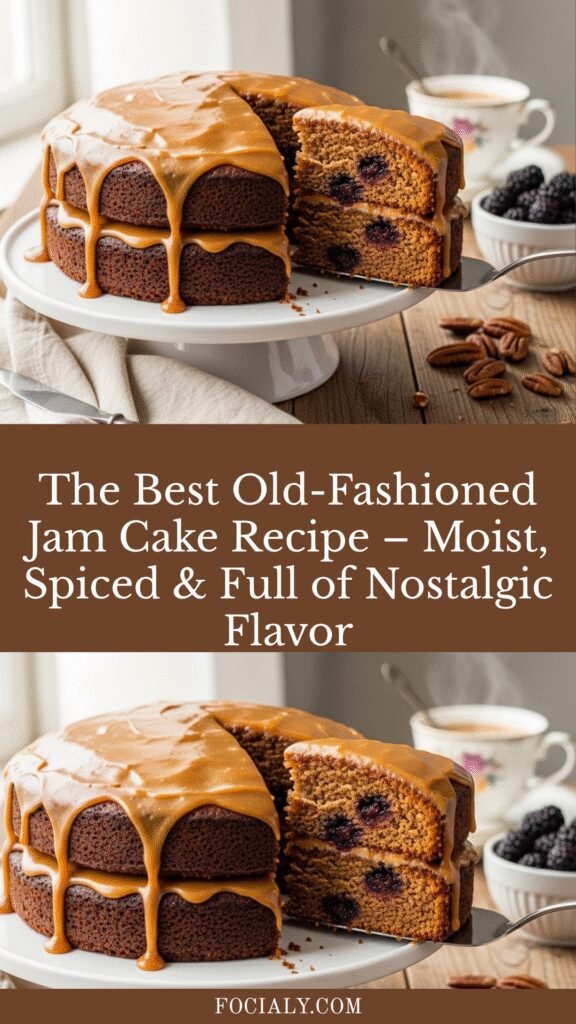
The Best Old-Fashioned Jam Cake Recipe – Moist, Spiced & Full of Nostalgic Flavor
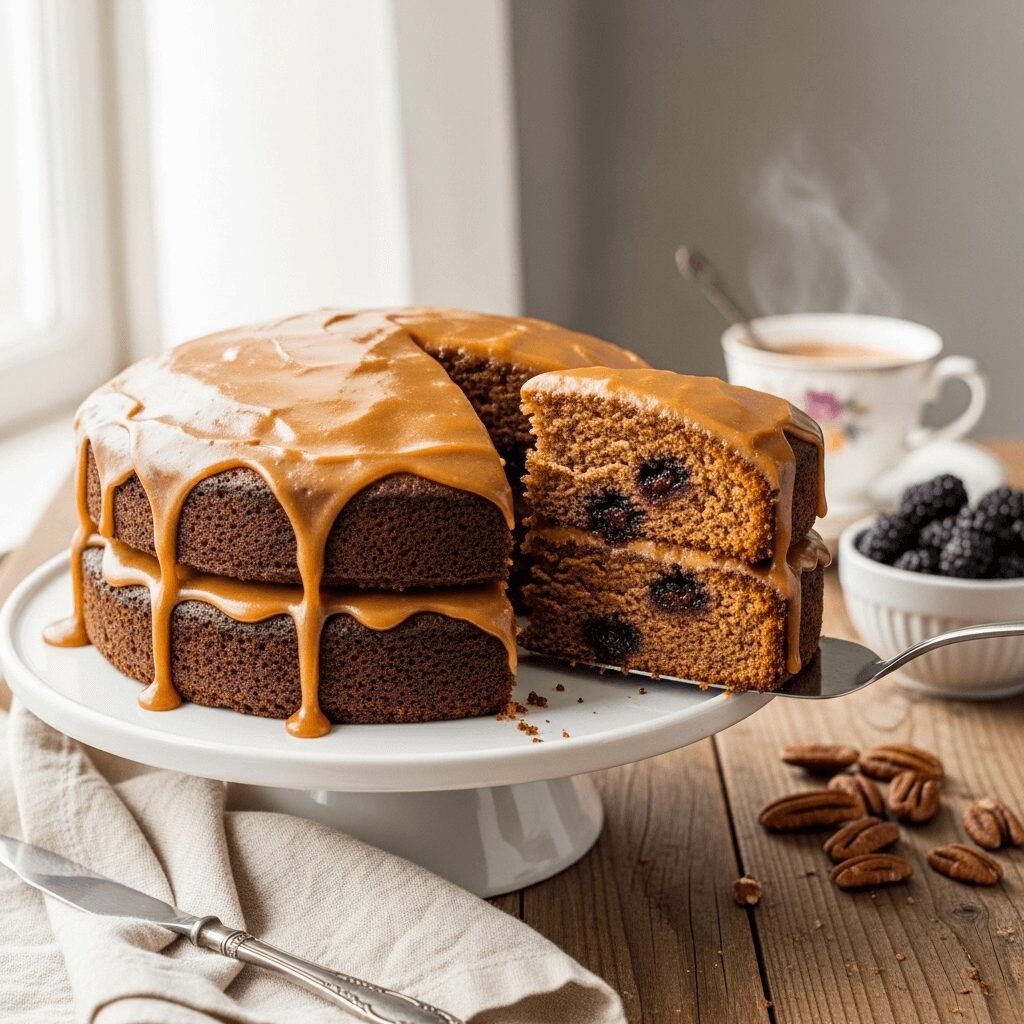
There’s something deeply comforting about a slice of old-fashioned jam cake. This isn’t your typical layer cake—it’s a rich, densely spiced cake studded with blackberry jam and warm spices like cinnamon, cloves, and nutmeg. Popular throughout the American South, particularly in Kentucky and Tennessee, jam cake is a beloved heritage dessert that graces holiday tables, church potlucks, and family reunions.
What makes jam cake truly special is its unique texture and flavor profile. The jam doesn’t just add sweetness—it creates an incredibly moist crumb and a subtle fruity complexity that pairs beautifully with the warming spices. Traditionally served with caramel frosting or a simple cream cheese icing, this cake is perfect for fall gatherings, Thanksgiving dessert tables, Christmas celebrations, or any time you want to bake something truly memorable that tells a story.
If you’ve never tried jam cake before, prepare to fall in love with this rustic, flavorful dessert that tastes like a warm hug from your grandmother’s kitchen.
History / Background
Jam cake has deep roots in Southern Appalachian baking traditions, dating back to the late 1800s and early 1900s. During this era, home cooks were masters of resourcefulness, creating delicious desserts from pantry staples and preserved goods that could last through long winters.
The cake emerged during a time when fresh fruit wasn’t always available, but nearly every household had jars of homemade jam preserved from summer’s bounty. Blackberry jam was the traditional choice—blackberries grew wild throughout the hillsides of Kentucky, Tennessee, and surrounding states, making them accessible to even the most modest households.
Jam cake became particularly associated with Kentucky, where it’s considered a state treasure. The famous Beaumont Inn in Harrodsburg, Kentucky, has been serving their signature two-layer jam cake with caramel icing since 1919, cementing the dessert’s place in culinary history.
What’s fascinating about jam cake is how it represents Depression-era ingenuity and mountain hospitality. The jam served multiple purposes: it added sweetness (reducing the need for expensive sugar), provided moisture, contributed flavor, and helped the cake stay fresh longer—crucial in days before modern refrigeration.
Different families developed their own closely guarded recipes, with some adding raisins, nuts, or even a splash of bourbon. The spice blend varied by household, but the warm combination of cinnamon, cloves, allspice, and nutmeg remained constant, creating that signature flavor that makes jam cake instantly recognizable.
Today, jam cake is experiencing a beautiful renaissance as home bakers rediscover heritage recipes and appreciate the connection to simpler times. It’s a cake that carries memories, traditions, and the kind of authentic flavor you simply can’t buy in a bakery.
Why You’ll Love This Recipe
This jam cake recipe delivers everything you want in a nostalgic Southern dessert while being surprisingly approachable for modern home bakers. The combination of pantry-friendly ingredients and straightforward techniques means you can create an impressive, deeply flavorful cake without any complicated steps or special skills.
Here’s why this recipe will become your new favorite:
- Incredibly moist texture – The jam creates an ultra-tender crumb that stays fresh for days
- Complex, warming spice flavor – Cinnamon, cloves, and nutmeg create layers of cozy flavor
- Uses simple pantry ingredients – No exotic items or hard-to-find components
- Perfect make-ahead dessert – Actually tastes better the next day as flavors meld
- Impressive presentation – Looks beautiful with minimal decorating effort
- Budget-friendly – Uses affordable ingredients you likely already have
- Feeds a crowd – Makes generous servings perfect for gatherings
- Nostalgic and unique – Something different from typical chocolate or vanilla cakes
- Adaptable to dietary needs – Easy to modify for various preferences
- Not overly sweet – The jam provides natural sweetness without being cloying
Ingredient Notes
All-Purpose Flour – The foundation of your cake structure. Measure carefully using the spoon-and-level method for best results. You can substitute up to 1/4 of the flour with whole wheat flour for a nuttier flavor, though the texture will be slightly denser.
Granulated Sugar – Provides sweetness and helps create the cake’s tender crumb. Don’t reduce the sugar significantly, as it also affects texture and moisture retention.
Blackberry Jam – The star ingredient! Use seedless jam for the smoothest texture, though seeded works too and adds rustic charm. Blackberry is traditional, but strawberry, raspberry, or even fig jam work beautifully. Choose a good-quality jam with real fruit—the better your jam, the better your cake.
Buttermilk – Creates tender crumb and adds subtle tang that balances the sweetness. If you don’t have buttermilk, make your own by adding 1 tablespoon of white vinegar or lemon juice to 1 cup of regular milk and letting it sit for 5 minutes.
Unsalted Butter – Adds richness and flavor. Make sure it’s softened to room temperature for proper creaming. If you only have salted butter, reduce the added salt in the recipe by half.
Eggs – Provide structure, moisture, and richness. Use large eggs at room temperature for best incorporation into the batter.
Baking Soda – The primary leavening agent that reacts with the buttermilk’s acidity to create lift and tender texture.
Spices (Cinnamon, Cloves, Allspice, Nutmeg) – The warming spice blend that defines jam cake’s signature flavor. Freshly ground spices will give the most vibrant flavor, but pre-ground works perfectly fine. Don’t skip the cloves—they’re essential to authentic jam cake flavor.
Vanilla Extract – Enhances all the other flavors and adds depth. Use pure vanilla extract rather than imitation for best results.
Salt – Balances sweetness and enhances all the other flavors in the cake.
Equipment Needed
- Two 9-inch round cake pans (or one 9×13-inch baking dish)
- Parchment paper
- Stand mixer or electric hand mixer
- Large mixing bowls (2-3)
- Measuring cups and spoons
- Rubber spatula
- Wire cooling racks
- Sifter or fine-mesh strainer
- Toothpick or cake tester
- Offset spatula (for frosting)
- Microplane grater (if using fresh nutmeg)
Jam Cake Recipe
This Old-Fashioned Jam Cake is a moist, spiced Southern heritage dessert made with blackberry jam and warm spices. Perfect for holidays, special occasions, or any time you want to bake something truly memorable with nostalgic flavor.
- Prep Time: 20 minutes
- Cook Time: 30-35 minutes
- Total Time: 50-55 minutes (plus cooling time)
- Yield: 12-14 servings 1x
- Category: Dessert
- Method: Baking
- Cuisine: American
- Diet: Vegetarian
Ingredients
For the Cake:
- 3 cups all-purpose flour
- 1 teaspoon baking soda
- 1 teaspoon ground cinnamon
- 1 teaspoon ground cloves
- 1 teaspoon ground allspice
- 1/2 teaspoon ground nutmeg
- 1/2 teaspoon salt
- 1 cup (2 sticks) unsalted butter, softened
- 2 cups granulated sugar
- 4 large eggs, room temperature
- 1 cup seedless blackberry jam
- 1 cup buttermilk, room temperature
- 2 teaspoons vanilla extract
- 1 cup chopped pecans or walnuts (optional)
- 1/2 cup raisins (optional)
For the Caramel Frosting (Traditional):
- 1/2 cup (1 stick) unsalted butter
- 1 cup packed brown sugar
- 1/4 cup whole milk
- 2 cups powdered sugar, sifted
- 1 teaspoon vanilla extract
- Pinch of salt
Instructions
- Prepare your pans: Preheat oven to 350°F (175°C). Grease two 9-inch round cake pans generously with butter or cooking spray, then line the bottoms with parchment paper circles. Grease the parchment as well. Lightly dust with flour and tap out excess. This ensures easy cake release.
- Mix dry ingredients: In a medium bowl, sift together the flour, baking soda, cinnamon, cloves, allspice, nutmeg, and salt. Sifting helps distribute the spices evenly and prevents lumps. Set this mixture aside.
- Cream butter and sugar: In a large mixing bowl using a stand mixer or hand mixer, beat the softened butter on medium speed until creamy, about 1 minute. Gradually add the sugar and continue beating on medium-high speed for 4-5 minutes until the mixture is light, fluffy, and pale in color. This step incorporates air for a tender cake.
- Add eggs: Add eggs one at a time, beating well after each addition (about 30 seconds per egg). Make sure each egg is fully incorporated before adding the next. The mixture should look smooth and slightly increased in volume.
- Mix in jam: Add the blackberry jam to the butter mixture and beat on medium speed until well combined and smooth, about 1 minute. The batter will look slightly curdled—this is completely normal.
- Combine wet ingredients: In a measuring cup or small bowl, combine the buttermilk and vanilla extract. Stir together briefly.
- Alternate dry and wet ingredients: With the mixer on low speed, add the flour mixture in three additions, alternating with the buttermilk mixture in two additions. Begin and end with the flour mixture. Mix each addition only until just combined—overmixing creates a tough cake. After the final addition, use a rubber spatula to scrape down the sides and bottom of the bowl and gently fold everything together.
- Add optional mix-ins: If using nuts and/or raisins, gently fold them into the batter with a rubber spatula using a few broad strokes.
- Fill pans and bake: Divide the batter evenly between the prepared pans (they’ll be about 2/3 full). Smooth the tops with a spatula. Tap the pans gently on the counter 2-3 times to release any air bubbles. Bake for 30-35 minutes, or until a toothpick inserted into the center comes out clean or with just a few moist crumbs. The cake should spring back when lightly pressed and be pulling away slightly from the pan edges.
- Cool cakes: Remove from oven and let cakes cool in the pans on wire racks for 15 minutes. Run a knife around the edges to loosen, then carefully invert onto wire racks. Peel off parchment paper and flip cakes right-side up. Let cool completely before frosting, at least 1 hour.
- Make caramel frosting: In a medium saucepan over medium heat, melt the butter. Add brown sugar and milk, stirring constantly. Bring to a gentle boil and boil for 2 minutes, stirring continuously. Remove from heat and let cool for 10 minutes. Gradually whisk in powdered sugar, vanilla, and salt until smooth. If frosting becomes too thick, add milk 1 teaspoon at a time. If too thin, add more powdered sugar.
- Assemble and frost: Place one cake layer on a serving plate. Spread about 1/3 of the frosting on top. Place the second layer on top and frost the top and sides with the remaining frosting. Work relatively quickly, as caramel frosting sets faster than other frostings.
Notes
- Cake layers can be baked a day ahead, wrapped tightly in plastic wrap, and stored at room temperature.
- For a 9×13-inch sheet cake version, bake for 40-45 minutes.
- If you don’t want to make caramel frosting, cream cheese frosting works beautifully with this cake.
- The cake tastes even better on day 2 as the flavors meld together.
- Make sure all ingredients are at room temperature for smoothest batter and best texture.
Nutrition
- Serving Size: 1 slice (1/12 of cake with frosting)
- Calories: 485
- Sugar: 52g
- Sodium: 245mg
- Fat: 20g
- Saturated Fat: 11g
- Unsaturated Fat: 7g
- Trans Fat: 0g
- Carbohydrates: 74g
- Fiber: 2g
- Protein: 5g
- Cholesterol: 110mg
Tips & Variations
Spice Variations: Adjust the spice blend to your preference. Add 1/2 teaspoon cardamom for a more exotic flavor, or increase the cinnamon and reduce the cloves if you prefer a milder spice profile.
Jam Alternatives: While blackberry is traditional, experiment with raspberry, strawberry, blueberry, or fig jam. Each creates a slightly different flavor profile. Apricot preserves add a beautiful tang.
Make it Boozy: Add 2-3 tablespoons of bourbon or rum to the batter for an adult twist. Reduce the buttermilk by the same amount.
Lighter Version: Substitute half the butter with unsweetened applesauce, use reduced-fat buttermilk, and top with a lighter cream cheese frosting instead of caramel.
Gluten-Free Option: Use a 1:1 gluten-free baking flour blend. Add 1/2 teaspoon xanthan gum if your blend doesn’t include it.
Vegan Adaptation: Use plant-based butter, flax eggs (1 tablespoon ground flaxseed + 3 tablespoons water per egg, let sit 5 minutes), and non-dairy milk with 1 tablespoon vinegar for “buttermilk.”
Cupcake Version: Divide batter among 24 lined muffin cups and bake for 18-22 minutes. Perfect for parties and easier portion control.
Extra Fruity: Fold in 1/2 cup of chopped dried cherries or cranberries along with the nuts for additional texture and tartness.
Pro Chef Tips
Toast your nuts: If using pecans or walnuts, toast them in a dry skillet over medium heat for 3-4 minutes until fragrant before adding to the batter. This intensifies their flavor and adds a pleasant crunch.
Room temperature matters: Cold eggs and buttermilk can cause the butter to seize and create a lumpy batter. Let ingredients sit out for 30-60 minutes before baking, or quick-warm eggs in a bowl of warm water for 5 minutes.
Don’t overmix: Once you add the flour, mix only until you can’t see dry streaks. Overmixing develops gluten and creates a tough, dense cake instead of a tender crumb.
Test for doneness properly: A toothpick should come out with a few moist crumbs—not wet batter, but not completely clean. Overbaking creates a dry cake. Start checking at 28 minutes.
Level your layers: If your cakes domed during baking, use a serrated knife to carefully slice off the rounded top for perfectly flat, professional-looking layers.
Crumb coat technique: Apply a thin layer of frosting first (the crumb coat), refrigerate for 20 minutes, then apply the final layer. This traps crumbs and creates a cleaner finish.
Flavor enhancement: Add 1 teaspoon of espresso powder to the dry ingredients. It won’t make the cake taste like coffee, but it will deepen and enhance all the other flavors.
Common Mistakes to Avoid
Using cold ingredients: This is the number one mistake that leads to lumpy batter and uneven texture. Always bring eggs, buttermilk, and butter to room temperature before starting. Cold ingredients don’t emulsify properly with the butter.
Skimping on the creaming time: Properly creaming the butter and sugar for a full 4-5 minutes is crucial for creating a light, tender cake. This process incorporates air that helps the cake rise and creates that melt-in-your-mouth texture. If you rush this step, you’ll end up with a dense, heavy cake.
Overmixing the batter: Once you add the flour, resist the urge to beat it until smooth. Mix only until the ingredients are just combined. Overmixing develops too much gluten, resulting in a tough, rubbery texture instead of the tender crumb you want.
Opening the oven door too early: Resist peeking for at least the first 25 minutes of baking. Opening the oven door causes temperature fluctuations that can make your cake sink in the middle. Trust the process and only check when you’re near the minimum baking time.
Frosting a warm cake: This is tempting when you’re excited to finish, but frosting will melt, slide off, and make a mess if the cake isn’t completely cool. Be patient—it’s worth the wait for a beautifully frosted cake. If you’re in a hurry, refrigerate the layers for 30 minutes to speed cooling.
Storage & Meal Prep
Room Temperature Storage: Store jam cake in an airtight container or cake dome at room temperature for up to 4 days. The cake actually improves after a day as the flavors meld and the crumb becomes even more moist. Make sure it’s completely covered to prevent drying out.
Refrigerator Storage: If your kitchen is very warm or humid, you can refrigerate the cake for up to 1 week. Store in an airtight container. Let it sit at room temperature for 20-30 minutes before serving for best flavor and texture. The cold cake is delicious, but you’ll taste more nuance when it’s closer to room temperature.
Unfrosted Layers: Baked cake layers can be wrapped tightly in plastic wrap and stored at room temperature for 2 days, or refrigerated for up to 5 days. This is actually a great make-ahead strategy that makes assembly easier.
Reheating: Individual slices can be microwaved for 10-15 seconds to warm slightly and enhance the spices. Don’t overdo it—you want warm, not hot.
Portion Control: Cut the entire cake into slices and wrap individual portions in plastic wrap. Store in an airtight container or freezer bag. This makes it easy to grab a single serving whenever the craving strikes.
Make-Ahead & Freezer Notes
Bake Ahead: You can bake the cake layers up to 2 days in advance. Let them cool completely, wrap tightly in two layers of plastic wrap, and store at room temperature. This actually makes assembly easier because the layers are less delicate.
Freeze Unfrosted Layers: Cake layers freeze beautifully for up to 3 months. Wrap each cooled layer individually in plastic wrap, then aluminum foil. Label with the date. Thaw overnight in the refrigerator, still wrapped, then bring to room temperature before frosting.
Freeze Frosted Cake: Yes, you can freeze the completely assembled and frosted cake! Place the frosted cake in the freezer uncovered for 1 hour until the frosting is firm. Then wrap carefully in plastic wrap and aluminum foil. Freeze for up to 2 months. Thaw in the refrigerator overnight, then bring to room temperature before serving.
Freeze Individual Slices: This is my favorite method! Cut the cake into slices, wrap each slice individually in plastic wrap, then place all slices in a freezer-safe container or bag. Freeze for up to 3 months. Thaw individual slices at room temperature for 30-45 minutes, or microwave from frozen for 20-30 seconds.
Best Reheating Method: For frozen slices, let thaw at room temperature for the best texture. If you’re impatient, microwave for 15-20 seconds. The spices become even more fragrant when warmed.
Frosting Ahead: The caramel frosting is best made the day you plan to frost the cake, as it firms up quickly. If you need to make it ahead, store it in an airtight container at room temperature for up to 2 days. Before using, let it come to room temperature and stir vigorously (or briefly microwave for 10-15 seconds) to restore spreadable consistency.
Serving Suggestions
Jam cake is wonderfully versatile and pairs beautifully with both simple and elegant accompaniments. Here are my favorite ways to serve it:
Classic Pairings:
- Serve with freshly whipped cream or a dollop of vanilla ice cream for contrast against the spiced cake
- A cup of hot coffee or spiced chai tea enhances the warming spices
- Pair with a glass of sweet tea or milk for a traditional Southern experience
Elevated Presentations:
- Serve plated with a drizzle of additional caramel sauce and fresh berries
- Add a small scoop of butter pecan or cinnamon ice cream alongside
- Garnish with candied pecans and a dusting of cinnamon
Holiday Table:
- Serve as an alternative to traditional spice cake at Thanksgiving
- Present as part of a Christmas dessert buffet alongside pies and cookies
- Offer at fall gatherings with apple cider or hot chocolate
Brunch Service:
- Cut into smaller squares and serve as part of a dessert spread
- Pair with fresh fruit salad to balance the richness
- Serve with strong black coffee for a perfect mid-morning treat
Southern Comfort Meal:
- Follow a hearty dinner of fried chicken or pot roast with a generous slice
- Serve with bourbon-spiked whipped cream for adult gatherings
- Present family-style on a cake stand for guests to help themselves
FAQs Section
Can I use homemade jam instead of store-bought?
Absolutely! Homemade jam works beautifully and often creates an even better flavor. Just make sure your homemade jam has a similar consistency to store-bought—not too runny or too thick. If your jam is very runny, you might need to reduce it slightly by simmering it until it thickens. The flavor will be more vibrant with homemade preserves, which is wonderful.
Why is my jam cake dry?
A dry jam cake usually results from overbaking or overmixing the batter. Check your cake at the minimum time (30 minutes) and remember that a few moist crumbs on the toothpick are perfect—you don’t want it completely clean. Also, make sure you’re measuring flour correctly using the spoon-and-level method, not scooping directly from the bag, which packs in too much flour.
Can I make this without buttermilk?
Yes! Make a buttermilk substitute by adding 1 tablespoon of white vinegar or lemon juice to 1 cup of regular milk. Stir and let it sit for 5 minutes before using. You can also use plain yogurt thinned with a bit of milk, or sour cream mixed with milk. The acid is important because it reacts with the baking soda for proper rise and tender texture.
What’s the best frosting for jam cake?
Traditional caramel frosting is classic and complements the spices perfectly. However, cream cheese frosting is also excellent and easier to make. Some people prefer a simple buttercream, brown sugar icing, or even a maple frosting. Honestly, jam cake is so flavorful that even a dusting of powdered sugar is lovely if you want to keep it simple.
Can I reduce the sugar in this recipe?
I don’t recommend reducing the sugar by more than 1/4 cup. Sugar doesn’t just add sweetness—it contributes to the cake’s texture, moisture retention, and tenderness. If you reduce it too much, the cake will be dry and dense. The jam already provides some natural sweetness, and the spices balance the sugar nicely, so the cake isn’t overly sweet despite the amount of sugar in the recipe.
How do I know when my jam cake is done baking?
Look for these signs: the cake should be pulling away slightly from the sides of the pan, spring back when lightly pressed in the center, and a toothpick inserted in the middle should come out with a few moist crumbs (not wet batter, but not completely clean). The top should be golden brown and set. Start checking at 30 minutes, but don’t be surprised if it needs the full 35 minutes.
Can I make this as a sheet cake instead of layers?
Definitely! Use a greased and floured 9×13-inch baking pan and increase the baking time to 40-45 minutes. Test for doneness the same way. Sheet cake is perfect for casual gatherings and potlucks, and it’s easier to transport. Frost right in the pan for convenience.
Conclusion
This Old-Fashioned Jam Cake is more than just a dessert—it’s a delicious piece of culinary history that connects us to generations of Southern bakers who created magic with simple ingredients. The combination of warming spices, sweet jam, and tender crumb creates a cake that’s both nostalgic and timeless.
Whether you’re baking this for a special holiday gathering, a family reunion, or just because you want something different and wonderful, this jam cake will not disappoint. It’s the kind of recipe that becomes a family favorite, the one people request for birthdays and celebrations, the one you’ll be proud to serve.
I’d love to hear how your jam cake turns out! Did you use blackberry jam or try a different flavor? Did you add nuts or keep it simple? Leave a comment below with your experience, and don’t forget to share photos of your beautiful creation.
Please save this recipe to your Pinterest boards so you can find it easily when you’re ready to bake! Your support helps me continue sharing delicious, tried-and-true recipes. Happy baking, friends!