Elegant Petit Four Recipe: Classic French Bite-Sized Cakes

Petit fours are exquisite miniature French cakes that epitomize elegance and sophistication in the pastry world. These delicate, bite-sized confections are perfectly portioned individual treats, typically consisting of layers of moist cake, sweet filling, and a glossy coating of fondant or glaze. The name “petit four” translates to “small oven” in French, referring to the low temperature traditionally used to bake these delightful morsels.
These charming little cakes are the ultimate showstopper for special occasions like bridal showers, baby showers, afternoon tea parties, weddings, holiday gatherings, and elegant dinner parties. Despite their fancy appearance, homemade petit fours are surprisingly achievable for home bakers who want to impress their guests with something truly special. While they do require patience and attention to detail, the result is absolutely worth the effort—professional-looking miniature cakes that taste as divine as they look.
History / Background
The history of petit fours dates back to 18th century France, where these miniature delicacies were born out of practical ingenuity in French patisseries. After bakers finished using their large ovens for baking bread and large cakes, the ovens would still retain residual heat. Rather than letting this warmth go to waste, resourceful French bakers created small, delicate cakes that could bake at lower temperatures in these cooling ovens—hence the name “petit four,” meaning “small oven.”
Originally, petit fours were exclusively the domain of royal courts and aristocratic households, where they were served during elaborate banquets and formal gatherings. French royalty particularly favored these elegant treats because they could be eaten delicately without utensils, making them perfect for social occasions where conversation and mingling were priorities.
Over time, petit fours became categorized into different types: petit fours glacés (iced or glazed), petit fours secs (dry, like cookies and macarons), and petit fours frais (fresh, like mini éclairs and tartlets). The glazed variety, which we’re focusing on today, became especially popular in high-end patisseries throughout France and eventually spread worldwide.
By the Victorian era, petit fours had become a staple of afternoon tea service in England and throughout Europe. Today, these miniature masterpieces continue to grace dessert tables at upscale events, weddings, and celebrations worldwide, maintaining their reputation as symbols of refinement and culinary artistry.
Why You’ll Love This Recipe
This homemade petit four recipe brings the elegance of French patisserie right into your kitchen. While these little cakes may look intimidating, this recipe breaks down the process into manageable steps that any dedicated home baker can master. The result is a dessert that not only tastes phenomenal but also impresses everyone who sees it.
Here’s why this petit four recipe deserves a place in your baking repertoire:
- Impressive presentation – These gorgeous miniature cakes look like they came from an expensive bakery and will make you look like a professional pastry chef
- Perfect for special occasions – Ideal for weddings, showers, tea parties, holidays, and any celebration that calls for something extraordinary
- Customizable flavors – You can adapt the cake flavor, filling, and glaze colors to match any theme or preference
- Make-ahead friendly – Components can be prepared in stages over several days, making the process less overwhelming
- Individual portions – No need for cutting and serving; guests can simply pick up their own perfect little cake
- Beautiful gift idea – Package these in pretty boxes for thoughtful homemade gifts that recipients will treasure
- Fun project – While detailed work, the assembly process is actually quite enjoyable and meditative
- Freezer-friendly – The cake layers freeze beautifully, so you can prep ahead for stress-free entertaining
Ingredient Notes
Understanding your ingredients is key to creating perfect petit fours. Here’s what you’ll need and why each component matters:
For the Cake:
- All-purpose flour – Provides structure while keeping the cake tender. Cake flour can be substituted for an even more delicate crumb.
- Granulated sugar – Sweetens and helps create a fine cake texture; don’t reduce the amount or the cake may be dry.
- Butter – Use unsalted butter at room temperature for the best creaming and flavor control.
- Eggs – Large eggs at room temperature incorporate better and create a lighter texture.
- Vanilla extract – Pure vanilla extract gives the best flavor; imitation will work but won’t taste as rich.
- Baking powder – Helps the cake rise properly; make sure yours is fresh for best results.
- Salt – Enhances all the other flavors and balances the sweetness.
- Milk – Whole milk creates the most tender crumb, but 2% milk works in a pinch.
For the Buttercream Filling:
- Butter – Again, unsalted and at room temperature for smooth, creamy filling.
- Powdered sugar – Creates the silky texture of buttercream; sift it to avoid lumps.
- Heavy cream – Helps achieve the perfect spreading consistency.
- Jam or preserves – Raspberry, apricot, or strawberry add fruity brightness; seedless varieties work best.
For the Poured Fondant Glaze:
- Powdered sugar – The base of your glossy coating.
- Corn syrup – Creates shine and prevents the glaze from cracking.
- Milk or water – Thins the glaze to pouring consistency; milk adds richness.
- Vanilla extract – Flavors the fondant beautifully.
- Food coloring – Optional gel colors let you create any shade you desire.
Equipment Needed
Having the right tools makes creating petit fours much easier. Here’s what you’ll need:
- 9×13-inch baking pan – For baking the cake layers
- Parchment paper – Essential for easy cake removal
- Electric mixer (stand or hand) – Makes creaming butter and sugar effortless
- Mixing bowls – Various sizes for different components
- Measuring cups and spoons – Accuracy matters in baking
- Rubber spatula – For folding and scraping
- Sharp serrated knife – For trimming cake edges and cutting layers
- Ruler – For measuring precise cake squares
- Wire cooling rack – Set over a baking sheet to catch glaze drips
- Small offset spatula – Helps spread filling evenly
- Small saucepan – For warming the fondant glaze
- Fork or dipping tool – For coating cakes in glaze
- Piping bags (optional) – For decorative details
- Kitchen thermometer – Ensures glaze is at the right temperature
Petit Four Recipe
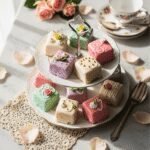
Elegant French petit fours featuring layers of tender vanilla cake, raspberry buttercream filling, and glossy poured fondant glaze. These beautiful miniature cakes are perfect for special occasions and celebrations.
- Prep Time: 1 hour
- Cooling & Assembly Time: 2 hours
- Cook Time: 25 minutes
- Total Time: 3 hours 25 minutes
- Yield: 48 petit fours 1x
- Category: Dessert
- Method: Baking
- Cuisine: French
- Diet: Vegetarian
Ingredients
For the Vanilla Cake:
- 2 cups all-purpose flour
- 2 teaspoons baking powder
- ½ teaspoon salt
- ¾ cup unsalted butter, softened
- 1½ cups granulated sugar
- 4 large eggs, room temperature
- 2 teaspoons vanilla extract
- ¾ cup whole milk, room temperature
For the Buttercream Filling:
- ½ cup unsalted butter, softened
- 2 cups powdered sugar, sifted
- 2 tablespoons heavy cream
- 1 teaspoon vanilla extract
- ½ cup seedless raspberry jam
For the Poured Fondant Glaze:
- 6 cups powdered sugar, sifted
- ⅓ cup light corn syrup
- ⅓ cup milk (plus more as needed)
- 1 teaspoon vanilla extract
- Gel food coloring (optional, various colors)
Instructions
Prepare the Cake:
- Preheat your oven to 350°F (175°C). Line a 9×13-inch baking pan with parchment paper, leaving overhang on the sides for easy removal. Lightly grease the parchment.
- In a medium bowl, whisk together flour, baking powder, and salt. Set aside.
- In a large mixing bowl using an electric mixer, cream the softened butter and granulated sugar together on medium-high speed for 3-4 minutes until light and fluffy. The mixture should be pale and increased in volume.
- Add eggs one at a time, beating well after each addition. Scrape down the sides of the bowl as needed. Mix in the vanilla extract.
- With the mixer on low speed, add the flour mixture in three additions, alternating with the milk in two additions, beginning and ending with the flour. Mix just until combined—don’t overmix.
- Pour the batter into the prepared pan and spread evenly with a spatula. Tap the pan gently on the counter to remove air bubbles.
- Bake for 23-27 minutes, until the cake is golden and a toothpick inserted in the center comes out clean. The cake should spring back when lightly touched.
- Cool the cake in the pan for 10 minutes, then use the parchment overhang to lift it onto a wire rack to cool completely.
Prepare the Filling:
- In a mixing bowl, beat the softened butter on medium speed until creamy, about 2 minutes.
- Gradually add the sifted powdered sugar, beating on low speed to prevent a sugar cloud, then increase to medium speed.
- Add heavy cream and vanilla extract, beating until the buttercream is light and fluffy, about 3 minutes. Set aside.
Assemble the Layers:
- Once the cake is completely cool, use a sharp serrated knife to trim all four edges to create straight sides. Cut the cake horizontally into three equal rectangles (approximately 4×12 inches each).
- Place one cake layer on a clean work surface. Spread half of the raspberry jam evenly over the top, then spread half of the buttercream over the jam.
- Place the second cake layer on top and repeat with the remaining jam and buttercream.
- Top with the third cake layer and press down gently. Wrap the assembled cake tightly in plastic wrap and refrigerate for at least 1 hour or overnight to firm up.
Cut and Prepare for Glazing:
- Remove the chilled cake from the refrigerator. Using a sharp knife dipped in hot water and dried (for clean cuts), trim the edges again if needed, then cut the cake into 1½-inch squares. You should get approximately 48 petit fours.
- Place the cake squares on a wire rack set over a large baking sheet (to catch glaze drips). Space them about 1 inch apart.
Prepare and Apply the Glaze:
- In a medium saucepan over low heat, combine the powdered sugar, corn syrup, milk, and vanilla. Stir constantly until smooth and the mixture reaches 92-98°F on a kitchen thermometer. The glaze should be thin enough to pour but thick enough to coat the cakes.
- If desired, divide the glaze into separate bowls and tint with gel food coloring. Add more milk a teaspoon at a time if the glaze becomes too thick.
- Working quickly, pour the warm glaze over each petit four, covering the tops and sides completely. You can use a fork or dipping tool to turn the cakes if needed. Let excess glaze drip off.
- Allow the glaze to set for about 30 minutes at room temperature. You can carefully lift each petit four with a small offset spatula and transfer to a serving platter.
- Once the first coat is set, apply a second thin coat of glaze for complete coverage if desired. Let set completely.
- Decorate with royal icing, edible flowers, gold leaf, or other embellishments if desired.
Notes
- The cake layers can be baked up to 2 days ahead and stored wrapped in plastic wrap.
- Use gel food coloring rather than liquid for more vibrant colors without thinning the glaze.
- Keep the glaze warm while working—if it cools too much, it will become too thick. Reheat gently if needed.
- A dipping fork (or regular fork) can help coat the sides more evenly.
- Work quickly when glazing, as the fondant sets fast.
- For cleaner cuts, freeze the assembled cake for 30 minutes before cutting into squares.
- The glaze that drips onto the baking sheet can be reheated and reused.
Nutrition
- Serving Size: 1 petit four
- Calories: 145
- Sugar: 21g
- Sodium: 45mg
- Fat: 5g
- Saturated Fat: 3g
- Unsaturated Fat: 1.5g
- Trans Fat: 0g
- Carbohydrates: 25g
- Fiber: 0.3g
- Protein: 1.5g
- Cholesterol: 28mg
Tips & Variations
Flavor Variations:
- Chocolate Petit Fours – Replace ¼ cup of flour with cocoa powder and use chocolate ganache as filling
- Lemon – Add lemon zest to the cake and use lemon curd as the filling for bright citrus flavor
- Almond – Replace vanilla extract with almond extract and add a thin layer of almond paste between layers
- Strawberry – Use strawberry jam and add freeze-dried strawberry powder to the glaze
- Champagne – Brush cake layers with champagne simple syrup for an elegant adult version
Dietary Adaptations:
- Gluten-Free – Use a 1:1 gluten-free flour blend; the texture will be slightly different but still delicious
- Dairy-Free – Substitute vegan butter and use almond or oat milk throughout
- Lower Sugar – You can reduce cake sugar by ¼ cup, though the glaze needs to remain as written for proper consistency
Decoration Ideas:
- Pipe delicate royal icing designs on top in contrasting colors
- Add edible gold or silver leaf for luxury appeal
- Top with crystallized flowers or rose petals
- Use different colored glazes for an ombre effect
- Drizzle with contrasting chocolate for modern style
- Add tiny fresh berries or mint leaves as garnish
Pro Chef Tips
Temperature Control is Everything – Professional pastry chefs know that temperature makes or breaks petit fours. Your cake must be completely cold before cutting (preferably chilled), and your glaze needs to be at exactly 92-98°F for the perfect consistency. Too hot and it will be too thin; too cool and it won’t flow smoothly.
The Secret to Clean Cuts – Freeze the assembled cake for 20-30 minutes before cutting. This firms up the filling and makes cutting perfect squares infinitely easier. Dip your knife in hot water, dry it off, and make one smooth cut per side—no sawing motion. Clean the knife between each cut.
Double Glazing Creates Perfection – Professional petit fours always have at least two coats of glaze. The first coat seals in any crumbs and creates a smooth base. The second coat creates that flawless, glass-like finish. Wait for the first coat to fully set (about 30 minutes) before applying the second.
Strain Your Glaze – Before using your fondant glaze, pour it through a fine-mesh strainer to remove any lumps. This ensures an ultra-smooth, professional finish without any imperfections.
Room Temperature Ingredients – This isn’t optional—room temperature butter, eggs, and milk emulsify properly, creating a tender, even crumb structure. Cold ingredients can cause the batter to curdle or not mix properly, resulting in a dense cake.
The Offset Spatula Technique – When transferring glazed petit fours, slide a small offset spatula underneath at an angle, supporting the cake from below. This prevents your fingers from touching the glaze and creating marks.
Save and Reuse Excess Glaze – The glaze that drips onto your baking sheet can be scraped up, reheated gently, strained, and used again. Professional bakeries never waste their fondant!
Common Mistakes to Avoid
Cutting the Cake While Warm – One of the biggest mistakes is trying to cut and assemble the cake before it’s completely cool. Warm cake crumbles easily, won’t hold its shape, and will cause the filling to melt and slide. Always refrigerate the assembled cake before cutting into squares for the cleanest edges.
Making the Glaze Too Thick or Thin – If your fondant glaze is too thick, it won’t coat smoothly and will leave ridges and gaps. If it’s too thin, it will run off completely and won’t provide coverage. The consistency should be like warm honey—flowing but not watery. Always test on one cake first and adjust with milk (to thin) or powdered sugar (to thicken).
Overmixing the Cake Batter – Once you add the flour, mix only until just combined. Overmixing develops too much gluten, resulting in a tough, dense cake instead of the tender, delicate crumb you want for petit fours. The batter may look slightly lumpy—that’s okay!
Not Leveling the Cake Layers – Uneven layers create lopsided petit fours that tip over and look unprofessional. After baking, if your cake domed in the center, carefully trim the top to create a flat surface before assembling layers.
Rushing the Setting Time – Don’t try to decorate or move the petit fours before the glaze is completely set. Touching them too soon will leave fingerprints, smudges, or cause the glaze to slide off. Patience is key—give them at least 30 minutes to set properly at room temperature.
Storage & Meal Prep
Room Temperature Storage:
Glazed petit fours can be stored at room temperature in an airtight container for up to 3 days. Layer them carefully with parchment paper between layers to prevent sticking. Keep them away from direct sunlight and humidity, which can cause the glaze to become sticky or melt.
Refrigerator Storage:
For longer storage, petit fours can be refrigerated in an airtight container for up to 5 days. However, note that refrigeration can sometimes cause the glaze to “sweat” or become slightly sticky when brought back to room temperature. Let them sit out for 30 minutes before serving for the best texture and flavor.
Reheating:
Petit fours are best served at room temperature and don’t require reheating. If you’ve refrigerated them, simply remove from the fridge 30 minutes to 1 hour before serving to allow them to come to room temperature naturally.
Leftover Glaze:
Unused fondant glaze can be stored in an airtight container in the refrigerator for up to 1 week. Reheat gently in a saucepan over low heat, stirring constantly, and thin with milk as needed to return to the proper consistency.
Make-Ahead & Freezer Notes
Component Prep Timeline:
Petit fours are perfect for make-ahead preparation. You can bake the cake layers up to 2 days in advance, wrap them tightly in plastic wrap, and store at room temperature. The buttercream can be made up to 1 week ahead and refrigerated (bring to room temperature and rewhip before using).
Freezing Unfrosted Cake:
The baked cake layers freeze beautifully for up to 3 months. Wrap each layer tightly in plastic wrap, then in aluminum foil, and place in a freezer bag. Thaw overnight in the refrigerator before assembling.
Freezing Assembled Cake:
The fully assembled (but not glazed) cake can be frozen for up to 1 month. Wrap the entire assembled cake tightly in plastic wrap and foil. Thaw in the refrigerator overnight, then let come to room temperature, cut into squares, and glaze as directed.
Freezing Finished Petit Fours:
While possible, freezing glazed petit fours is not recommended as the glaze can crack or become sticky upon thawing. If you must freeze them, place glazed petit fours on a baking sheet in a single layer and freeze until solid, then transfer to an airtight container with parchment between layers. Thaw in the refrigerator.
Best Make-Ahead Strategy:
For the least stress and best results, bake and assemble the cake (through step 15) up to 2 days before your event and refrigerate. The day of your event, cut into squares and apply the glaze. This ensures the glaze is fresh and perfectly set.
Serving Suggestions
Petit fours are elegant on their own, but the right accompaniments can elevate the entire experience:
Beverage Pairings:
- Tea – Earl Grey, English Breakfast, or delicate white tea for traditional afternoon tea service
- Coffee – Espresso or cappuccino for a European-inspired dessert course
- Champagne – Brut or Prosecco for celebrations and special occasions
- Dessert Wine – Late harvest Riesling or Moscato d’Asti complements the sweetness beautifully
- Hot Chocolate – Rich and creamy for a cozy winter treat
Complementary Desserts:
Create a beautiful dessert table by serving petit fours alongside:
- French macarons in coordinating colors
- Chocolate truffles or bonbons
- Fresh berries with whipped cream
- Mini fruit tarts
- Lemon bars or shortbread cookies
Presentation Ideas:
- Arrange on a tiered serving stand for elegant height variation
- Display on vintage china plates or cake stands for afternoon tea
- Place each petit four in individual gold or silver foil cups for easy serving
- Arrange by color for an ombre or rainbow effect
- Garnish the serving platter with fresh flowers, berries, or mint leaves
- Provide small dessert forks and cocktail napkins for easy eating
Occasion-Specific Serving:
- Weddings – Display as part of a dessert bar or give as edible favors in pretty boxes
- Bridal/Baby Showers – Match glaze colors to the party theme
- Holiday Parties – Use seasonal colors and decorations (red and green for Christmas, pastels for Easter)
- Afternoon Tea – Serve as the final sweet course alongside scones and finger sandwiches
FAQs Section
Can I make petit fours without corn syrup?
Yes, though corn syrup creates the signature glossy, smooth finish. You can substitute with an equal amount of golden syrup or honey, though the glaze may be slightly less shiny. For a corn-free option, make a simple powdered sugar glaze with milk, but note it won’t have the same professional poured fondant appearance.
Why is my fondant glaze not smooth?
Several factors affect glaze smoothness: temperature (it should be 92-98°F), consistency (thin enough to pour but thick enough to coat), and technique (pour in one smooth motion rather than spooning it on). Also ensure you’ve sifted your powdered sugar well to remove any lumps. If lumps persist, strain the glaze through a fine-mesh sieve before using.
Can I use store-bought cake mix?
Absolutely! Using a boxed white or yellow cake mix is a great time-saver. Prepare according to package directions, bake in a 9×13-inch pan, and proceed with the recipe from step 12. The homemade cake has better flavor and texture, but a mix works well for beginners or time-crunched bakers.
How far in advance can I make petit fours?
For best results, glaze the petit fours the day you plan to serve them or the day before. The glazed cakes stay fresh at room temperature for 2-3 days. However, you can prep components well in advance: bake the cake up to 2 days ahead, make buttercream up to 1 week ahead (refrigerate), or freeze unglazed cake layers up to 3 months.
Why are my petit fours falling apart when I glaze them?
This usually happens when the cake hasn’t been chilled long enough before cutting. The assembled cake should be refrigerated for at least 1 hour (or frozen for 20-30 minutes) to firm up completely. Also ensure you’re making clean cuts with a sharp knife, not sawing back and forth, which can create crumbs and weak edges.
Can I use chocolate ganache instead of fondant glaze?
Yes! Chocolate ganache creates beautiful, professional-looking petit fours. Use a ratio of 2 parts chocolate to 1 part heavy cream, heat until smooth, and let cool slightly until it reaches a pourable but coating consistency. The technique is the same—pour over the chilled cake squares on a wire rack.
What’s the best way to transport petit fours?
Wait until the glaze is completely set (at least 1 hour). Place petit fours in a single layer in a rigid container, making sure they don’t touch each other or the sides. You can place them in individual paper or foil cups for extra protection. Keep them in an air-conditioned space during transport, as heat and humidity can cause the glaze to become sticky.
Conclusion
Creating homemade petit fours is a labor of love that yields truly spectacular results. These elegant French miniature cakes may require patience and attention to detail, but the stunning finished product makes every step worthwhile. Whether you’re hosting an afternoon tea party, celebrating a special occasion, or simply want to try your hand at classic French pastry, this petit four recipe gives you all the tools and knowledge you need to succeed.
The beauty of petit fours lies not just in their delicate appearance but in their versatility. You can customize the flavors, colors, and decorations to suit any event or personal preference. Once you master the basic technique, you’ll find yourself creating these impressive treats for every celebration on your calendar.
Remember, even professional pastry chefs take their time with petit fours—this is not a recipe to rush. Embrace the process, enjoy the creative aspects of decorating, and take pride in knowing you’ve created something truly special from scratch.