Perfect Chocolate Soufflé Recipe – Impressive French Dessert Made Easy at Home
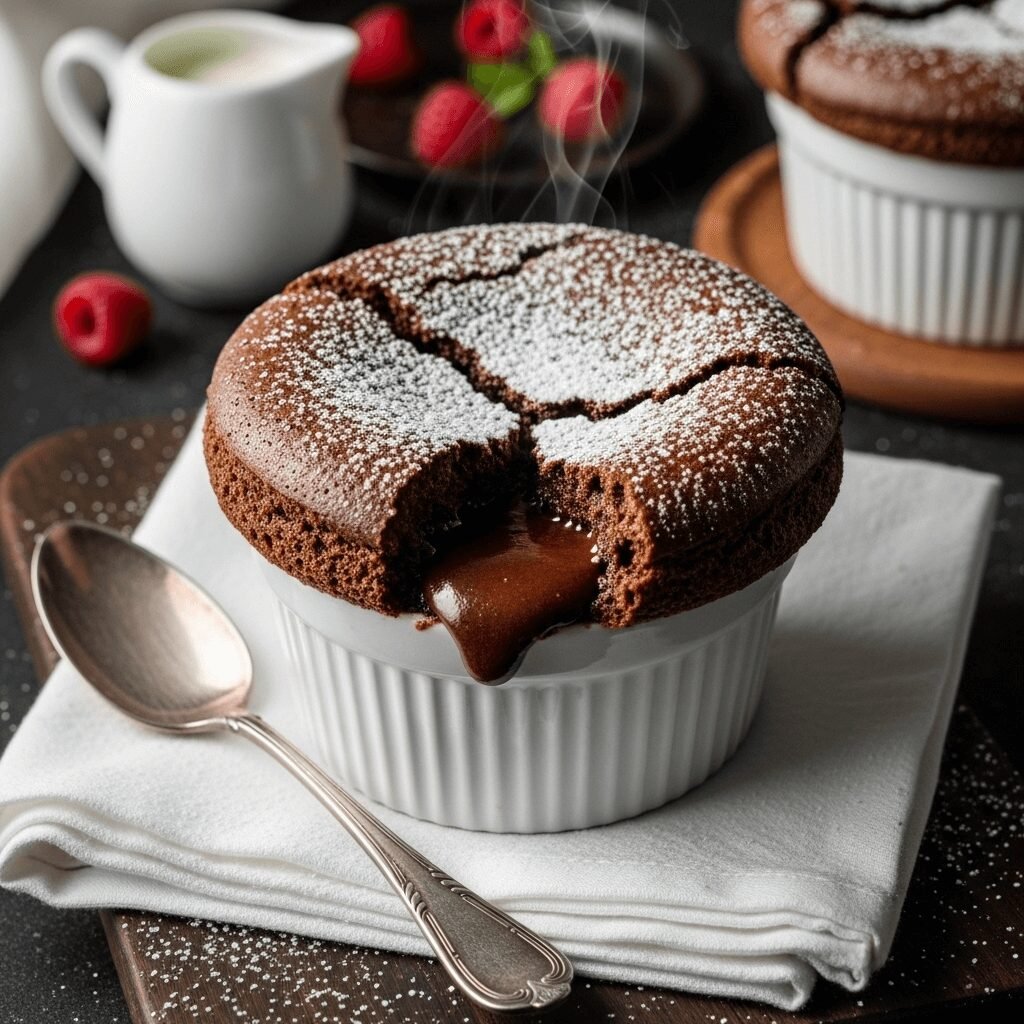
A chocolate soufflé is the pinnacle of elegant French desserts – a warm, airy cloud of rich chocolate that rises dramatically in the oven and arrives at the table with theatrical flair. Despite its reputation for being intimidating, this classic chocolate soufflé recipe is surprisingly achievable for home cooks who follow a few key techniques. The magic happens when whipped egg whites are carefully folded into a silky chocolate base, creating a dessert that’s crispy on the outside, with a molten, pudding-like center that makes every spoonful absolutely heavenly.
This showstopping dessert is perfect for romantic dinners, special celebrations, holiday meals, or any time you want to impress your guests with restaurant-quality elegance. The best part? While it looks and tastes incredibly sophisticated, the actual hands-on time is only about 20 minutes. The soufflé does require immediate serving – it deflates within minutes of leaving the oven – but that urgency only adds to the excitement and drama of presenting this spectacular French dessert.
Whether you’re celebrating an anniversary, hosting a dinner party, or simply want to treat yourself to something extraordinary, this chocolate soufflé recipe delivers an unforgettable dessert experience that proves you don’t need culinary school training to create magic in your kitchen.
History / Background
The soufflé has a fascinating history that dates back to early 18th century France, though its exact origins are debated among culinary historians. The word “soufflé” comes from the French verb “souffler,” meaning “to blow” or “to puff,” which perfectly describes what happens to this airy creation in the oven. Most food historians credit French chef Vincent La Chapelle with creating the first soufflé recipe around 1742, though it was the legendary chef Marie-Antoine Carême who elevated and refined the technique in the early 1800s, establishing the soufflé as haute cuisine.
Carême, often called the “King of Chefs and the Chef of Kings,” served European royalty and is considered one of the first celebrity chefs. He perfected the art of the soufflé, creating both savory and sweet versions that became symbols of French culinary excellence. The soufflé represented the pinnacle of technical skill – a dish that required precise timing, perfect technique, and an understanding of how heat, eggs, and air interact to create something ethereal.
Chocolate soufflé specifically became popular in the late 19th and early 20th centuries as chocolate became more widely available and affordable. It appeared on the menus of grand Parisian restaurants and became synonymous with romantic dining and special occasions. The soufflé’s reputation for difficulty actually added to its mystique – being able to successfully produce a risen soufflé became a mark of culinary prowess.
In reality, while soufflés do require attention to technique, they’re far less temperamental than their reputation suggests. The key myths – that you must whisper in the kitchen, that opening the oven door will cause collapse, that they’re impossible to master – have been largely debunked by modern cooking science. Today, the chocolate soufflé remains a beloved classic that represents the beautiful intersection of chemistry and artistry in cooking.
Why You’ll Love This Recipe
This chocolate soufflé recipe takes the mystery out of French pastry and puts an impressive, restaurant-quality dessert within your reach. It strikes the perfect balance between technical precision and home-cook friendliness, giving you clear guidance for success while celebrating the magic of this iconic dessert.
Key Benefits:
- Impressive yet achievable – Looks and tastes like it came from a French bistro, but uses straightforward techniques any home cook can master
- Rich chocolate flavor – Deep, intense dark chocolate taste that’s sophisticated without being bitter, satisfying true chocolate lovers
- Individual servings – Baked in ramekins, each guest gets their own perfectly portioned dessert with the dramatic presentation intact
- Gluten-free naturally – Contains no flour, making it perfect for gluten-sensitive guests without any recipe modifications
- Quick preparation – Only 20 minutes of active prep time, with most of the work done by your oven
- Romantic and elegant – The ultimate date-night dessert that sets a sophisticated, intimate mood
- Customizable sweetness – Easy to adjust sugar levels to match your taste preference for bittersweet or sweeter chocolate flavor
- Special occasion worthy – Perfect for anniversaries, Valentine’s Day, dinner parties, birthdays, or holiday celebrations
- Teaches valuable technique – Mastering egg white whipping and folding is a fundamental pastry skill you’ll use in countless other recipes
- Interactive dessert experience – The requirement to serve immediately creates a memorable, theatrical dining moment
Ingredient Notes
Understanding your ingredients is crucial for soufflé success. Each component plays a specific role in creating that signature rise and texture:
Dark Chocolate: The foundation of flavor in your soufflé. Use high-quality chocolate with 60-70% cacao content for the best balance of intense chocolate flavor and sweetness. Brands like Ghirardelli, Lindt, or Valrhona work beautifully. Avoid chocolate chips, which contain stabilizers that prevent smooth melting. For a more bitter, sophisticated flavor, use 70-85% cacao. For sweeter results, stick to 55-60% cacao. The chocolate must be chopped finely for even melting.
Unsalted Butter: Provides richness and helps create the silky base. It also coats the ramekins to help the soufflé climb the sides as it rises. Always use unsalted so you can control the salt level. The butter should be at room temperature for the base but cold for preparing the ramekins.
Granulated Sugar: Sweetens the soufflé and stabilizes the egg whites. The sugar is divided between the chocolate base and the meringue. Superfine sugar (also called caster sugar) dissolves even more quickly in the egg whites if you have it, but regular granulated works perfectly. Don’t substitute with powdered sugar, which contains cornstarch.
Large Eggs: The star ingredient that creates the rise. You’ll separate the yolks from the whites. The yolks enrich the chocolate base with fat and emulsifiers, while the whites provide structure and lift when whipped. Use room temperature eggs, which separate more easily and whip to greater volume. Each large egg should yield about 2 tablespoons of yolk and 2 tablespoons of white.
Heavy Cream: Adds luxurious richness and helps create a smooth, glossy chocolate base. It also tempers the chocolate’s intensity. Whole milk can substitute in a pinch, but heavy cream provides superior texture and flavor.
Vanilla Extract: Enhances the chocolate flavor without adding competing taste. Use pure vanilla extract rather than imitation for the best flavor depth.
Salt: A small pinch brightens all the flavors and balances the sweetness. Salt also strengthens the protein structure in egg whites, creating more stable foam.
Cocoa Powder (for dusting): Unsweetened cocoa powder coats the buttered ramekins, providing a non-stick surface that helps the soufflé rise while adding extra chocolate flavor. Dutch-process or natural cocoa both work well.
Cream of Tartar (optional but recommended): Stabilizes egg whites and creates more reliable, voluminous meringue. Just ¼ teaspoon per egg white makes a noticeable difference. You can substitute with ½ teaspoon lemon juice or white vinegar if needed.
Equipment Needed
Having the right tools ensures smooth preparation and perfect results:
- Six 6-ounce ramekins – Individual ceramic baking dishes specifically designed for soufflés. The straight sides are essential for proper rise. Standard ceramic ramekins work perfectly.
- Large baking sheet – To hold the ramekins and make transferring to/from the oven easier and safer
- Double boiler or heatproof bowl over saucepan – For gently melting chocolate without scorching. A glass or metal bowl that fits snugly over a saucepan works perfectly.
- Two large mixing bowls – One for the chocolate base, one for whipping egg whites. Make sure the egg white bowl is completely clean and grease-free.
- Electric hand mixer or stand mixer – Essential for whipping egg whites to proper peaks. While possible to whip by hand, it requires significant arm strength and time.
- Rubber spatula – For folding egg whites into the chocolate base without deflating them. A large, flexible spatula works best.
- Whisk – For combining egg yolks into the chocolate mixture smoothly
- Small brush (pastry brush) – For applying softened butter to coat the ramekins evenly
- Fine mesh sieve or small strainer – For dusting cocoa powder evenly over the buttered ramekins
- Measuring cups and spoons – For accurate ingredient measurements
- Sharp knife or offset spatula – For leveling the soufflé mixture in ramekins before baking
- Kitchen towel – For handling hot ramekins when serving
Perfect Chocolate Soufflé Recipe – Impressive French Dessert Made Easy at Home
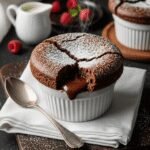
This classic chocolate soufflé features a rich, intense chocolate flavor with a crispy exterior and a molten, pudding-like center. Whipped egg whites create the signature dramatic rise that makes this French dessert so impressive, while a silky chocolate base delivers pure chocolate indulgence in every spoonful.
- Prep Time: 20 minutes
- Cook Time: 12-15 minutes
- Total Time: 35 minutes
- Yield: 6 individual soufflés 1x
- Category: Dessert
- Method: Baking
- Cuisine: French
- Diet: Gluten Free
Ingredients
For the Ramekins:
- 1 tablespoon unsalted butter, softened
- 2 tablespoons unsweetened cocoa powder
For the Soufflé:
- 6 ounces dark chocolate (60-70% cacao), finely chopped
- 3 tablespoons unsalted butter, at room temperature
- ¼ cup heavy cream
- 4 large egg yolks, at room temperature
- 6 large egg whites, at room temperature
- ½ cup granulated sugar, divided
- 1 teaspoon vanilla extract
- ¼ teaspoon salt
- ¼ teaspoon cream of tartar (optional but recommended)
For Serving:
- Powdered sugar for dusting
- Fresh whipped cream or vanilla ice cream (optional)
- Fresh berries (optional)
Instructions
Step 1: Prepare the Ramekins
Position an oven rack in the lower third of your oven and preheat to 375°F (190°C). Using a pastry brush, generously coat the inside of six 6-ounce ramekins with softened butter, brushing upward in vertical strokes from the bottom to the rim. This upward motion is crucial as it helps the soufflé climb the sides. Pay special attention to the rim and corners. Place cocoa powder in a small sieve and dust the inside of each buttered ramekin, rotating to coat evenly. Tap out excess cocoa. Place prepared ramekins on a large baking sheet and set aside.
Step 2: Melt the Chocolate
Fill a medium saucepan with 1-2 inches of water and bring to a simmer over medium heat. Place chopped chocolate and 3 tablespoons butter in a heatproof bowl that fits snugly over the saucepan without touching the water. Place bowl over the simmering water and stir occasionally until chocolate and butter are completely melted and smooth, about 3-4 minutes. Remove bowl from heat and stir in heavy cream until fully combined and glossy. Set aside to cool slightly, about 5 minutes. The mixture should be warm but not hot when you add the egg yolks.
Step 3: Add Egg Yolks
Whisk egg yolks briefly in a small bowl. Add 2 tablespoons of the granulated sugar to the yolks and whisk until slightly thickened and pale yellow, about 1 minute. Stir vanilla extract into the chocolate mixture, then add the egg yolk mixture. Whisk vigorously until completely smooth and well combined. The mixture will be thick and glossy. Set aside at room temperature while you whip the egg whites.
Step 4: Whip the Egg Whites
In a large, completely clean and grease-free mixing bowl, combine egg whites, salt, and cream of tartar (if using). Using an electric mixer, beat on medium speed until the whites become foamy and opaque, about 1 minute. With the mixer running, gradually add the remaining sugar (6 tablespoons) one tablespoon at a time, allowing about 10 seconds between additions. Once all sugar is added, increase speed to medium-high and continue beating until stiff, glossy peaks form, about 3-4 minutes total. The peaks should stand straight up when you lift the beaters, and the meringue should look smooth and shiny, not grainy or dry.
Step 5: Fold the Mixtures Together
Add about one-third of the whipped egg whites to the chocolate mixture. Using a rubber spatula, stir vigorously to lighten the chocolate base – you can be rough with this first addition. Add half of the remaining egg whites and fold gently using a cutting and turning motion: Cut down through the center of the mixture, sweep across the bottom, then bring the spatula up the side and fold over the top. Rotate the bowl a quarter turn and repeat. Continue folding just until you see a few white streaks remaining, about 15-20 strokes. Add the final portion of egg whites and fold just until no white streaks remain and the mixture is uniform in color, about 10-15 more gentle strokes. The batter should be fluffy, airy, and voluminous.
Step 6: Fill the Ramekins
Divide the soufflé mixture evenly among the prepared ramekins, filling each to about ¼ inch below the rim. Gently tap the baking sheet on the counter once or twice to release any large air bubbles. Using your thumb, run it around the inside rim of each ramekin, creating a shallow groove between the soufflé mixture and the edge – this helps the soufflé rise straight up rather than mushrooming over the sides.
Step 7: Bake the Soufflés
Immediately place the baking sheet in the preheated oven on the lower rack. Bake without opening the oven door for 12-15 minutes. The soufflés are done when they’ve risen about 2 inches above the rim, the tops are set and slightly cracked, and they jiggle just slightly when gently shaken. For a more molten center, bake for 12 minutes. For a more set center, bake for 15 minutes.
Step 8: Serve Immediately
Remove the baking sheet from the oven and dust the tops of the soufflés lightly with powdered sugar using a fine mesh sieve. Serve immediately – place each ramekin on a small plate with a dessert spoon. Instruct guests to crack the top with their spoon and enjoy the molten center. If desired, serve with a dollop of whipped cream, a scoop of vanilla ice cream, or fresh berries on the side.
Notes
- Room Temperature Eggs: This is crucial for maximum volume in egg whites. Remove eggs from the refrigerator 30-60 minutes before starting, or place them in a bowl of warm (not hot) water for 5 minutes.
- Grease-Free Bowl: Even a tiny amount of fat will prevent egg whites from whipping properly. Wipe your mixing bowl and beaters with white vinegar or lemon juice, then dry thoroughly before using.
- Don’t Over-Fold: The most common mistake is over-mixing the egg whites into the chocolate base, which deflates the air bubbles and reduces rise. Stop folding the moment no white streaks remain.
- Timing is Everything: Have your guests seated and ready before you pull the soufflés from the oven. They begin deflating within 3-5 minutes and should be enjoyed immediately for the full experience.
- Oven Temperature Accuracy: Use an oven thermometer to ensure accurate temperature. Too low and soufflés won’t rise properly; too high and the exterior sets before the center cooks.
Nutrition
- Serving Size: 1 soufflé
- Calories: 285
- Sugar: 24g
- Sodium: 145mg
- Fat: 18g
- Saturated Fat: 11g
- Unsaturated Fat: 6g
- Trans Fat: 0g
- Carbohydrates: 28g
- Fiber: 2g
- Protein: 6g
- Cholesterol: 155mg
Note: Nutrition information is approximate and calculated without optional toppings. Values will vary based on specific chocolate brand and cacao percentage used.
Tips & Variations
Flavor Variations:
- Mocha Soufflé: Add 1 tablespoon instant espresso powder to the chocolate mixture for sophisticated coffee-chocolate flavor
- Orange Chocolate: Add 1 tablespoon orange zest and 1 teaspoon orange extract to the chocolate base; dust with candied orange peel
- Mint Chocolate: Stir ½ teaspoon peppermint extract into the chocolate mixture; garnish with crushed peppermint candies
- Mexican Chocolate: Add ½ teaspoon cinnamon and a pinch of cayenne pepper to the chocolate base for warming spice
- White Chocolate Raspberry: Substitute white chocolate for dark, fold in 2 tablespoons raspberry puree, and serve with fresh raspberries
- Salted Caramel Chocolate: Drizzle salted caramel sauce into the center before baking; sprinkle sea salt on top before serving
Dietary Adaptations:
- Dairy-Free: Use dairy-free dark chocolate and substitute coconut cream for heavy cream; use coconut oil instead of butter for coating ramekins
- Lower Sugar: Reduce sugar to ⅓ cup total; use darker chocolate (75-85% cacao) for intense flavor with less sweetness
- Individual Flavor Customization: Make the chocolate base, divide it, then fold different flavored extracts into separate portions of egg whites
Presentation Variations:
- Molten Center: Place a square of chocolate or a spoonful of Nutella in the center of each ramekin before baking for an extra gooey middle
- Sugar Crust: Sprinkle granulated sugar on top before baking for a crispy, caramelized crust
- Layered Effect: Make both chocolate and vanilla bases, layer them in ramekins for a stunning visual when served
Pro Chef Tips
The Temperature Dance: Professional pastry chefs know that temperature control is everything in soufflé making. Your chocolate base should be warm (about 90-100°F) when folding in the egg whites – too hot and it will deflate the whites, too cold and it won’t incorporate smoothly. Test by touching the outside of the bowl; it should feel warm but comfortable to touch.
The Whipping Window: There’s a perfect moment when egg whites reach ideal consistency – they should form peaks that stand straight up with just a slight curl at the tip. Under-whipped whites are too soft and won’t provide structure; over-whipped whites become grainy and dry, making folding difficult. Watch closely during the final minute of whipping. The moment the meringue becomes glossy and smooth with stiff peaks, stop immediately.
The Folding Technique: French chefs use a specific folding motion that preserves maximum air: plunge the spatula straight down through the center, sweep across the bottom of the bowl, then bring it up the side and fold over the top. Each complete fold should incorporate mixture from the bottom while maintaining airiness. Rotate the bowl a quarter turn after each fold. Count your folds – aim for about 30-35 total strokes to fully incorporate everything without over-mixing.
The Ramekin Preparation Secret: The way you butter and sugar (or cocoa) your ramekins directly impacts rise. Brush the butter in vertical strokes from bottom to top, creating tiny grooves that help the soufflé climb. The thumb groove around the rim isn’t just tradition – it prevents the soufflé from forming a “mushroom top” that can topple over. This small detail makes the difference between a dramatic straight rise and an uneven puff.
Oven Positioning Matters: Professional kitchens always bake soufflés on the lower rack of the oven. The stronger bottom heat provides the initial lift that sets the rise, while the upper heat cooks the top. Too high in the oven and the top sets before the soufflé can fully rise. The lower third position creates the most dramatic, even rise.
The Silent Kitchen Myth: Contrary to popular belief, you don’t need to tiptoe around soufflés. Modern ovens are well-insulated, and soufflés in the oven won’t collapse from noise or vibration. However, avoid opening the oven door during the first 10 minutes of baking when the structure is still setting – the rapid temperature drop can interfere with the rise.
Common Mistakes to Avoid
Using Cold Eggs: Cold egg whites don’t whip to the same volume as room temperature ones, and they take significantly longer to reach stiff peaks. The proteins in room temperature eggs unfold more easily, trapping more air and creating more stable foam. Additionally, cold eggs are much harder to separate cleanly. Always plan ahead and bring eggs to room temperature, or use the warm water method to speed the process.
Greasy Bowl or Beaters: This is the number one reason egg whites fail to whip properly. Even a tiny amount of fat – from butter residue, egg yolk contamination, or unwashed equipment – will prevent egg white proteins from forming stable foam. Professional kitchens always wipe bowls and beaters with vinegar or lemon juice before whipping whites. If you notice your whites aren’t increasing in volume after 2 minutes of beating, you likely have a grease contamination problem – start over with a clean bowl.
Over-Folding the Batter: The most heartbreaking moment is pulling flat soufflés from the oven because you deflated all the air during folding. The mixing should be gentle and purposeful, not timid but not aggressive. Stop the moment you don’t see any more white streaks, even if the mixture doesn’t look perfectly uniform. Those last few faint streaks will blend during baking. Remember: 30-35 total folds is usually sufficient. More mixing will only destroy the air bubbles you worked so hard to create.
Opening the Oven Door Too Early: During the first 10 minutes of baking, the soufflé structure is still setting. Opening the door creates a temperature drop that can interrupt the rise and cause collapse. Fight the temptation to peek! Modern ovens have windows and lights for a reason. Only open the door after 12 minutes when checking for doneness.
Incorrect Oven Temperature: An oven that runs hot will set the exterior too quickly, preventing full rise and creating a dense interior. An oven that runs cool won’t provide enough lift, resulting in a flat, disappointing soufflé. Always use an oven thermometer to verify your oven’s actual temperature matches the dial setting. This $10 tool prevents countless baking disasters.
Storage & Meal Prep
Immediate Consumption: Chocolate soufflés are meant to be enjoyed straight from the oven at their peak height and texture. They begin deflating within 3-5 minutes of leaving the oven as the air inside cools and contracts. While this is part of their charm, it means soufflés don’t store well in their risen form.
Deflated Soufflé Storage: If you have leftover soufflés (which is rare!), they can be covered and refrigerated for up to 2 days. The texture transforms into something similar to flourless chocolate cake – dense, fudgy, and quite delicious in a different way. They won’t rise again if reheated, but they’re still tasty served cold or at room temperature with whipped cream.
Reheating Method: Individual soufflés can be reheated in a 300°F oven for 5-8 minutes until warmed through. They won’t rise again, but gentle heating can restore some softness to the center. Alternatively, microwave individual portions for 15-20 seconds on 50% power.
Refrigerated Soufflé Storage: Because deflated soufflés are dense and moist, they keep relatively well. Store in an airtight container in the refrigerator where they’ll maintain quality for 2-3 days. The chocolate flavor actually intensifies after a day, making them a legitimate “next day” treat even if they’re not as visually dramatic.
Not Freezer-Friendly: Baked soufflés don’t freeze well due to their delicate structure and moisture content. Freezing and thawing causes significant texture degradation, resulting in a grainy, separated mess. This is one dessert best enjoyed fresh.
Make-Ahead & Freezer Notes
Preparing Components Ahead: While soufflés must be baked immediately before serving, you can streamline the process significantly by preparing components in advance, making day-of execution much faster and less stressful.
Make-Ahead Timeline:
- Up to 3 days ahead: Prepare and butter/cocoa the ramekins, then refrigerate covered with plastic wrap
- Up to 1 day ahead: Make the chocolate base (through step 3), transfer to an airtight container, and refrigerate. Bring to room temperature before continuing.
- Up to 4 hours ahead: Separate eggs and let egg whites come to room temperature
- 20 minutes before serving: Whip egg whites, fold into chocolate base, fill ramekins, and bake
The Best Make-Ahead Strategy: For dinner parties, prepare the chocolate base earlier in the day and have your ramekins ready. When you clear the main course, whip the egg whites (takes just 5 minutes), fold everything together (3 minutes), fill ramekins (2 minutes), and pop them in the oven (12-15 minutes). Your guests can enjoy coffee or chat while the soufflés bake, building anticipation for the grand finale.
Unbaked Soufflé Freezing Method: This is a game-changer! You can fill the prepared ramekins with soufflé mixture and freeze them solid, then bake directly from frozen. Place filled ramekins on a baking sheet and freeze uncovered until solid (about 2 hours), then wrap each individually in plastic wrap and store in a freezer bag for up to 1 month. To bake from frozen, unwrap, place on a baking sheet, and bake at 375°F for 18-20 minutes without thawing. The rise won’t be quite as dramatic as fresh, but this method is brilliant for make-ahead entertaining.
Rewarming the Chocolate Base: If you’ve made the chocolate base ahead and refrigerated it, rewarm gently in a double boiler or microwave in 10-second bursts, stirring frequently, until it reaches that ideal warm (not hot) temperature of about 90-100°F. It should be liquid enough to fold smoothly but not so hot that it deflates the egg whites.
Serving Suggestions
Chocolate soufflé is a complete dessert that needs little accompaniment, but thoughtful pairings can enhance the experience:
Classic Accompaniments:
- Crème Anglaise (vanilla custard sauce) – The traditional French pairing; pool it on the plate around the soufflé or serve in a small pitcher for guests to pour into the crater
- Whipped cream – Lightly sweetened with a touch of vanilla; the cool creaminess contrasts beautifully with warm chocolate
- Vanilla ice cream – Place a small scoop on the side; guests can push it into the molten center for a hot-and-cold experience
- Fresh berries – Raspberries, strawberries, or mixed berries add brightness and cut through the richness
Beverage Pairings:
- Espresso or strong coffee – The classic choice that mirrors the bittersweet chocolate notes
- Port or dessert wine – Ruby port, late-harvest Zinfandel, or Banyuls pair beautifully with dark chocolate
- Irish coffee – For a decadent, boozy pairing at special celebrations
- Hot chocolate – For serious chocolate lovers, doubling down on cocoa richness
- Champagne or sparkling wine – Surprisingly wonderful; the bubbles and acidity cut through the richness
Plating Suggestions:
- Dust the plate with cocoa powder before placing the ramekin for an elegant presentation
- Add a sprig of fresh mint beside the ramekin for color and aroma
- Drizzle a simple chocolate or caramel sauce in an artistic pattern on the plate
- Garnish with a few chocolate shavings or a small piece of chocolate tuile cookie
- Place the hot ramekin on a folded cloth napkin on the plate to prevent sliding and protect hands
Dinner Party Strategy: Serve soufflés as a shared experience. Bring all the ramekins to the table at once on a large platter, dimming the lights slightly for drama. The “oohs and aahs” from your guests as they see the risen soufflés is part of the joy. This communal presentation moment creates a memory far beyond just eating dessert.
FAQs Section
Can I make chocolate soufflé without cream of tartar?
Absolutely! Cream of tartar stabilizes egg whites and helps create more reliable foam, but it’s not essential. If you don’t have it, simply omit it or substitute with ½ teaspoon of lemon juice or white vinegar per egg white. Your meringue might be slightly less stable, so work a bit more carefully during folding, but the soufflé will still rise beautifully. Millions of soufflés were made before cream of tartar became a common ingredient!
Why did my soufflé collapse right after coming out of the oven?
All soufflés deflate as they cool – it’s completely normal and expected! The air inside expands with heat, creating the dramatic rise. As it cools, the air contracts, and the structure softens, causing the inevitable deflation. This typically begins 3-5 minutes after leaving the oven, which is why immediate serving is crucial. A soufflé that collapses during baking or immediately upon removal usually indicates under-whipped egg whites, over-folded batter that lost too much air, or oven temperature issues.
Can I use milk chocolate instead of dark chocolate?
You can, but the results will be very different. Milk chocolate contains more sugar and less cocoa, creating a much sweeter, less sophisticated flavor profile. It also has different melting properties due to the milk solids. If using milk chocolate, reduce the sugar in the recipe by 2-3 tablespoons to compensate for the chocolate’s sweetness. Most pastry chefs prefer dark chocolate (60-70% cacao) for the most balanced, elegant result.
How do I know when the soufflé is done?
The soufflé should rise about 2 inches above the rim of the ramekin, with a slightly cracked top that looks set but still jiggles gently when you shake the pan. The edges should pull slightly away from the ramekin. For a more molten center, bake for 12 minutes. For a more cake-like interior, bake for 15 minutes. You can gently press the top with your finger – it should feel set with slight give, not liquidy. Remember, the center continues cooking briefly from residual heat after you remove it from the oven.
Can I make one large soufflé instead of individual ones?
Yes! Use a 1.5 to 2-quart soufflé dish instead of individual ramekins. Prepare the dish the same way (butter and cocoa), fill it about three-quarters full, and bake at 375°F for 25-30 minutes instead of 12-15. The larger size requires more baking time to cook through. A large soufflé has a different dramatic effect – less individual-portion elegance but more family-style sharing experience as everyone digs in together.
My egg whites won’t whip. What went wrong?
This almost always comes down to fat contamination. Even a tiny speck of egg yolk in your whites or any grease residue on your bowl or beaters will prevent proper whipping. To fix: separate your eggs very carefully (crack over a small bowl, then transfer each white to the mixing bowl individually so one broken yolk doesn’t ruin the whole batch). Wipe your bowl and beaters with white vinegar or lemon juice and dry completely. Use a glass, metal, or ceramic bowl – plastic bowls can retain grease even after washing.
Can I make this recipe ahead and bake the soufflés later?
The best make-ahead method is to prepare and freeze unbaked soufflés. Fill prepared ramekins, freeze them solid uncovered (about 2 hours), then wrap each tightly and store up to 1 month. Bake directly from frozen at 375°F for 18-20 minutes without thawing. The chocolate base can be made a day ahead and rewarmed to room temperature before folding in freshly whipped egg whites. However, once egg whites are folded in, the batter must be baked immediately – it cannot sit or the air will deflate.
Conclusion
Mastering chocolate soufflé is a rite of passage for any home cook who loves French cuisine and wants to create truly impressive desserts. While its reputation might be intimidating, you now have all the knowledge and techniques to succeed brilliantly. The key is understanding the science behind the rise – properly whipped egg whites gently folded into a silky chocolate base – and respecting the timing that makes this dessert so special.
There’s something magical about pulling a tray of perfectly risen soufflés from the oven, their tops crowned and cracked, knowing you created that restaurant-quality result in your own kitchen. The impressed faces of your dinner guests, the theatrical presentation, and that first spoonful of warm, molten chocolate center make every moment of attention to technique worthwhile.
Remember, even if your first attempt isn’t picture-perfect, it will still taste absolutely delicious. The beauty of soufflé is that even a slightly deflated one delivers incredible chocolate flavor
This chocolate soufflé recipe isn’t just about dessert – it’s about creating moments. It’s the centerpiece of romantic dinners, the grand finale of celebration meals, and proof that you can master techniques that once seemed impossible. The next time a special occasion calls for something truly extraordinary, you’ll know exactly what to make.
Ready to impress everyone with this show-stopping chocolate soufflé? Save this recipe to your Pinterest dessert board so you’ll have it ready when the perfect occasion arises! After you make it, I’d absolutely love to hear how it turned out – did your soufflés rise beautifully? What did your guests say when you brought them to the table? Leave a comment below sharing your experience, and don’t forget to rate the recipe. Tag me in your soufflé photos on social media – I celebrate every single success story! Now go forth and conquer the soufflé! 🍫✨